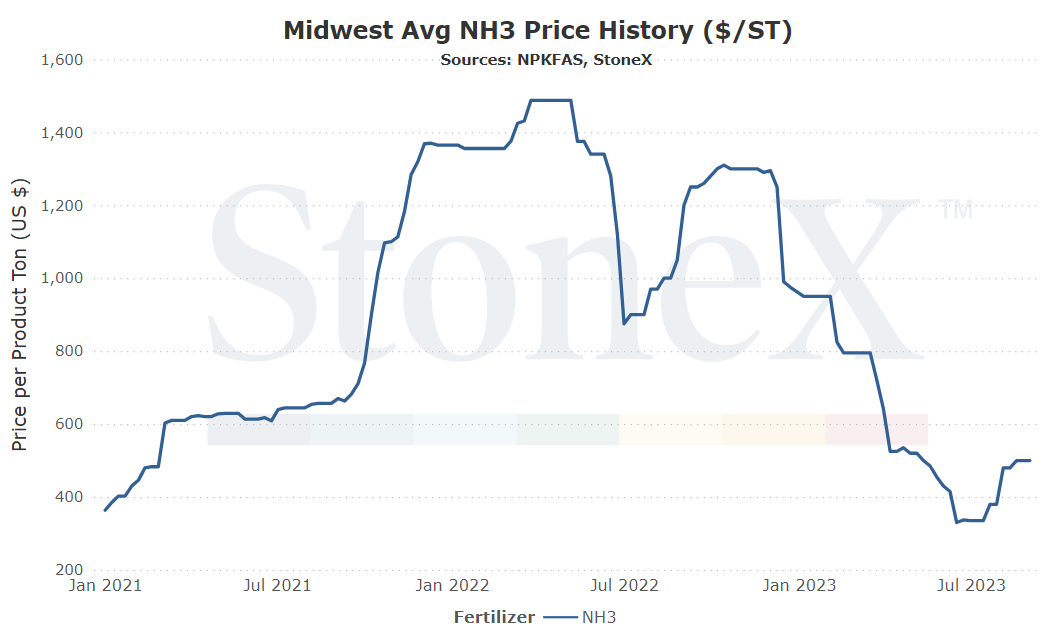
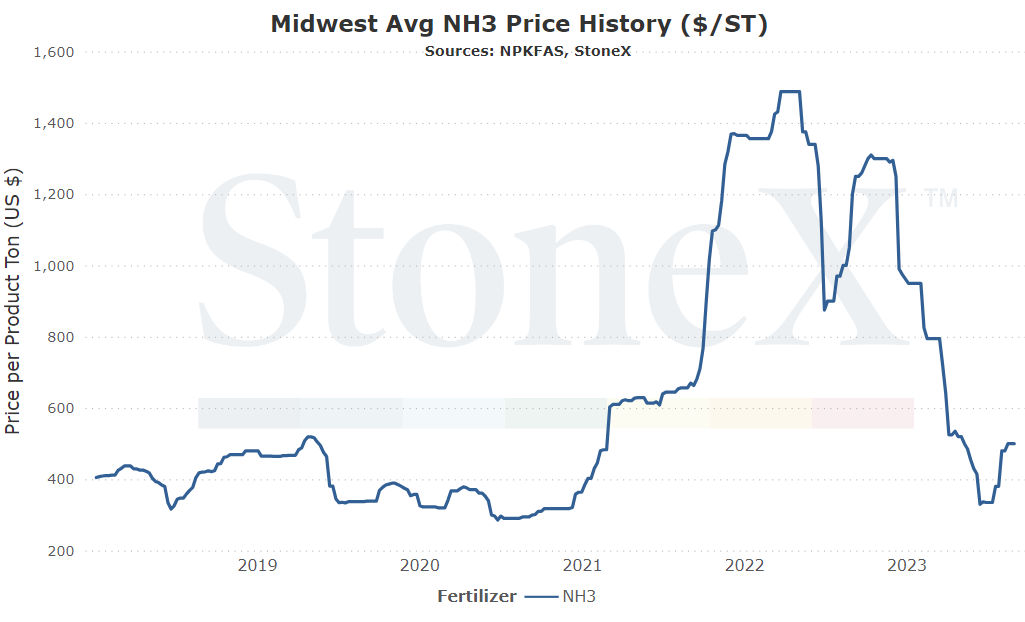
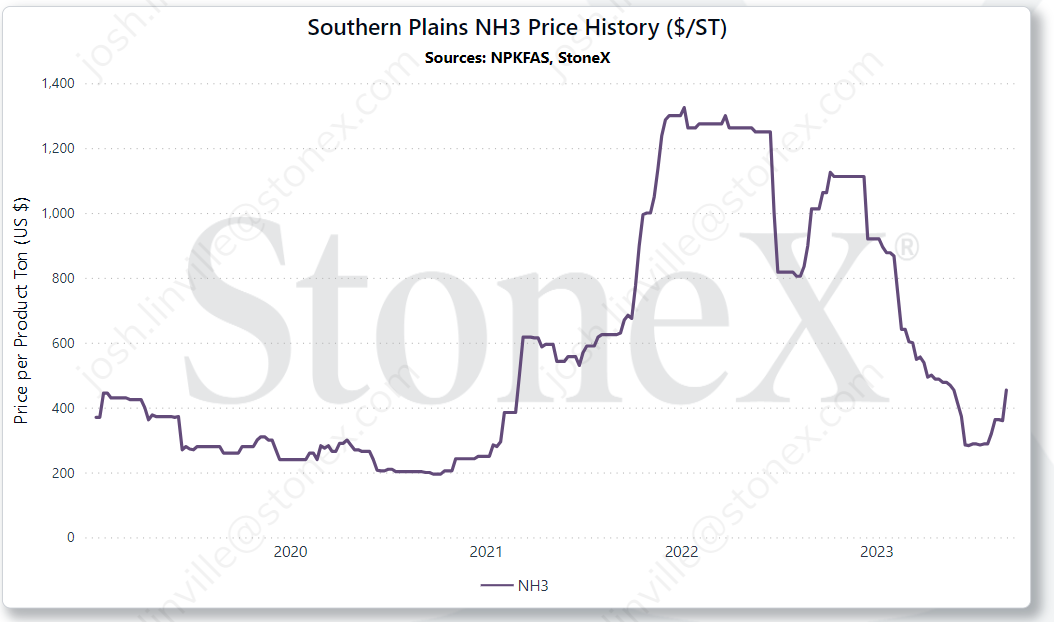
The first graph is the AVERAGE of the entire Midwest U.S. region. That means your local value WILL be different than what the graph reflects. Please do not take this into your retailer and say "why isn't my price the same as here". That is comparing apples to oranges. You might be on the cheaper or more expensive side of this graph. This doesn't take into account logistics/storage/interest/insurance/shrink/etc.
This graph looks at the price from a short ton and USD currency POV.
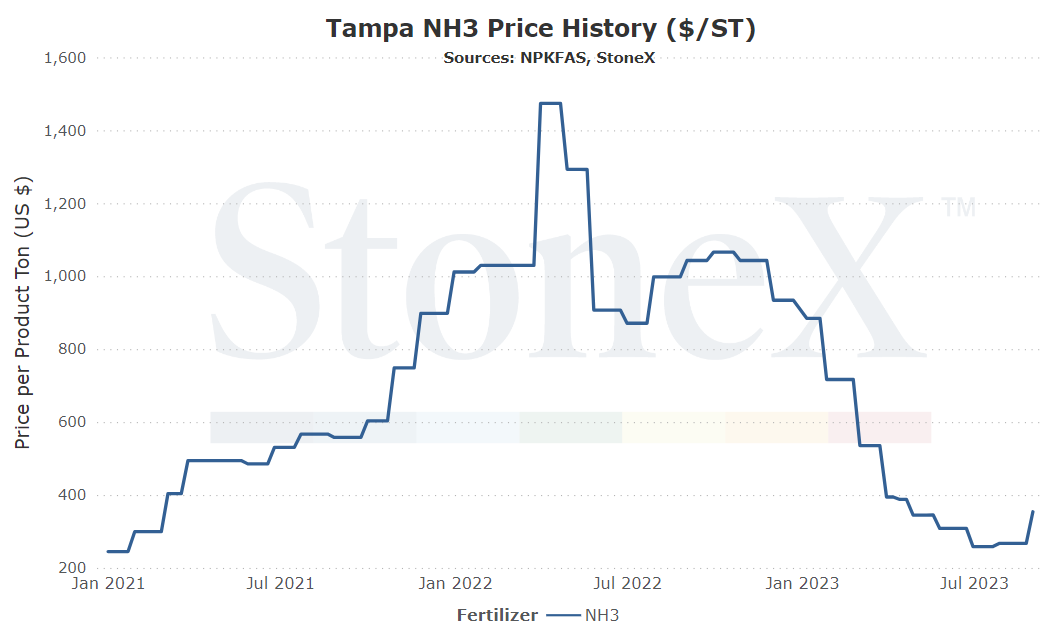
This second graph looks at the price set for Tampa NH3. This value does not have a high correlation to Midwest values. It is a talking point used when prices are rallying...yet somehow gets skipped on the way down. This price is more an indication of the global price. This price is set by two parties (purchaser - phosphate producer in Florida / seller - international producer providing NH3 to FL phosphate production).
This graph CAN be used as an indication of global market price direction/trends. This graph SHOULD NOT be used to determine a Midwest value. Tonnage is listed in short ton and currency in USD.
What everyone wants to know first, what do we think will happen going forward
Global
Global values have come off hard from their lows. Economies seem to remain in decent shape (even though I still have worries). The ag outlook remains solid for now.
We are in the camp that NH3 values should be relatively flat to bullish short term.
If we go further back on the global price charts, today's values are a bit inflated which is concerning but ultimately, so are a lot of grains. NH3 prices look solid and demand looks solid.
North America
We have a big fall run coming just around the corner and NH3 looks like it is ready to play.
Hard to see values soft between now and December 1 with current values attractive.
Now, if we start seeing grain values fall hard or see urea/UAN prices dip hard, we might have a different story. So far, that isn't the case. Heck, even the manufacturers have been indicating that prices should go up...just seems like they are worried to do so and scare off demand!
should you buy your nh3 needs today?
If the current values work for your operation/region/etc., then that is your answer. Your local market needs to be considered as things like supply availability, demand timing and logistical issues can change the view. Just because we see the market strong or weak going forward does not mean it will translate to where you live. We are all a part of the world, but we live at home.
Global
If you need it relatively soon, yes.
Values are solid and short term, appears that demand will remain in place. The global market is still dealing with Russian exports not being available.
However, longer term, we think Russia returns so if your timeframe includes 2024, might be worth watching and waiting.
North America
For fall, if you are sure you will get in the fields and get it applied, yes.
Price of Midwest NH3 has gone up pretty well in the last several weeks...and yet I'm still bullish. I think it is a matter of when, not if, manufacturers raise their prices. My only fear at this point is poor weather conditions in November/December.
general global nh3 information
What has happened in the last 30 days?
Global values turn higher slightly with production issues in Trinidad/China/etc.
Prices cannot fall forever.
Since October 2022, NH3 values have been in freefall. Actually, the freefall started April 2022, bounced in July, and then started to slide once again until recently. The transformation of values have been astounding.
So while the fact that prices completed their freefall and have actually started to turn higher shouldn't come as a surprise. That doesn't mean we shouldn't wonder why.
All in all, it appears to be more production related than it has to do with demand related. For those in North America, it actually has to do with solid fall NH3 demand and the discount to urea/UAN. However, the Midwest NH3 market can and does disconnect from the world market as it is its own S&D controlled mostly by 2 parties (more on that below).
For the world, we have continued to hear production issues not only in China but also in Trinidad. China is heard to have had some unplanned downtime that is affecting their output levels. While not the biggest player in the world, they are big enough. Also hearing that some production is affected in Trinidad who IS a big player on the world stage...but it was a shorter time frame situation.
Ultimately, we will see if this bump higher has much longevity to it. Frankly, I am still a bit biased to the steady/softer side going forward but there are a lot of factors to consider that will ultimately tell the story.
Russian exports remain near zero as their invasion continues
Alright kids, gather round for story time!!!
For those of you who have been on the newsletter for a while, you can skip to the end. For those new, it is important to know what has happened.
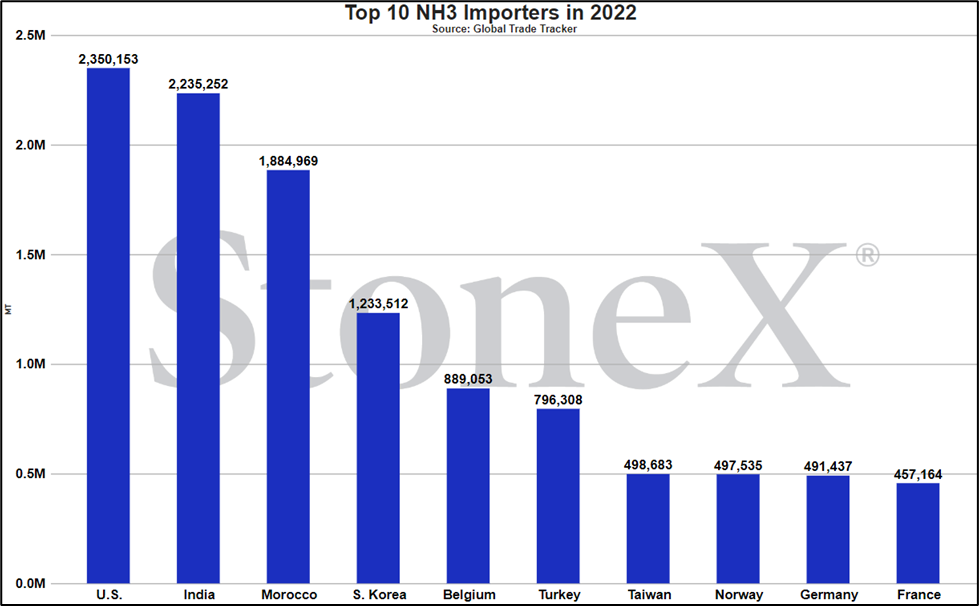
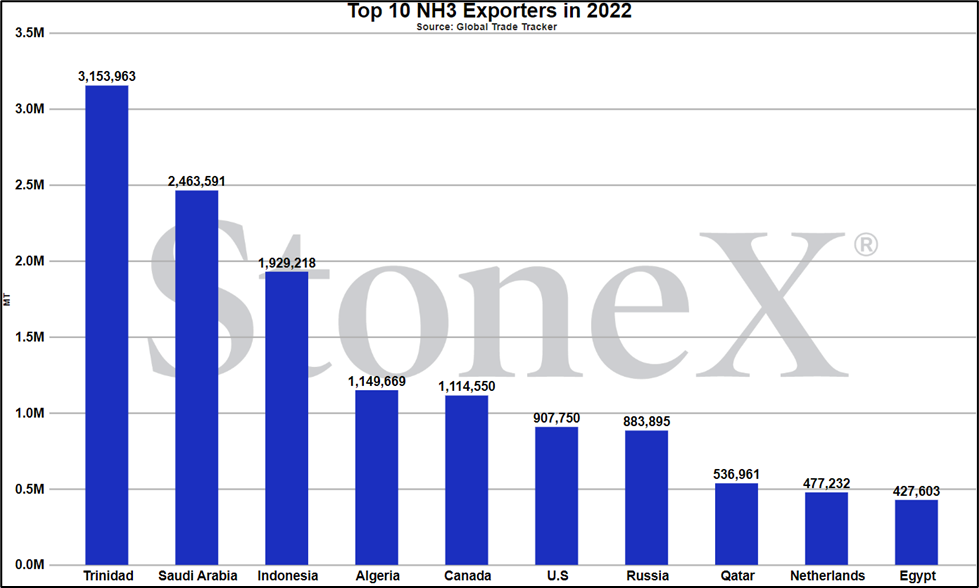
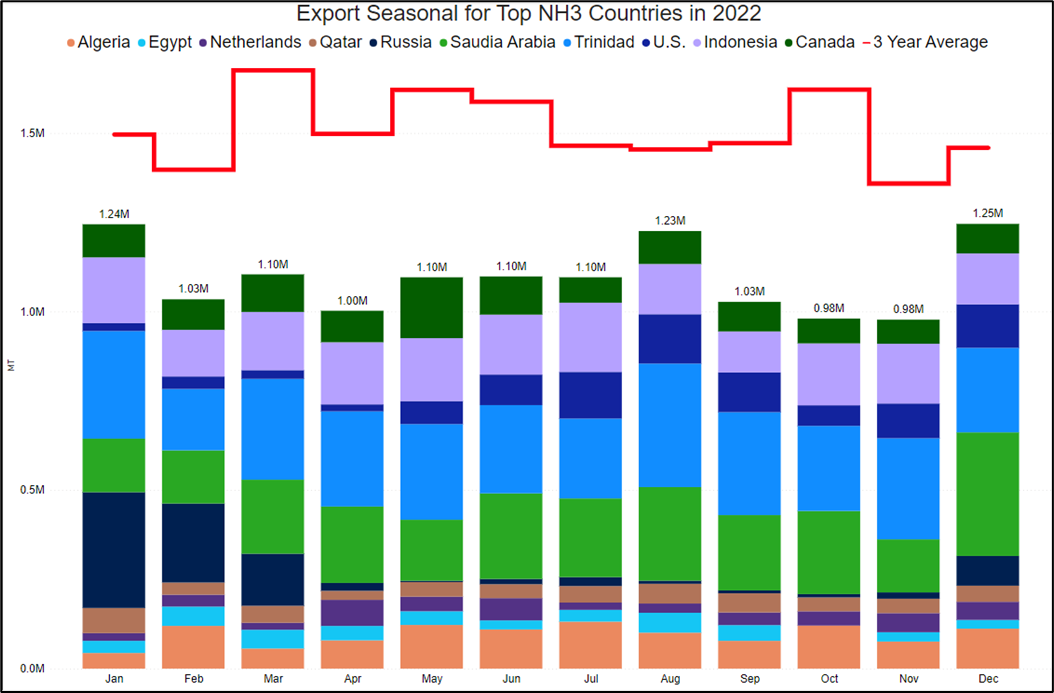
Normally, Russia is the largest exporter of NH3 in the world. In 2021, they were number one by a sizeable amount. However, in 2022, they fell to 7th in the world. One heck of a fall from the top spot. So the natural question should be "why". The short answer "hard to ship product thru a country you are invading/fighting."
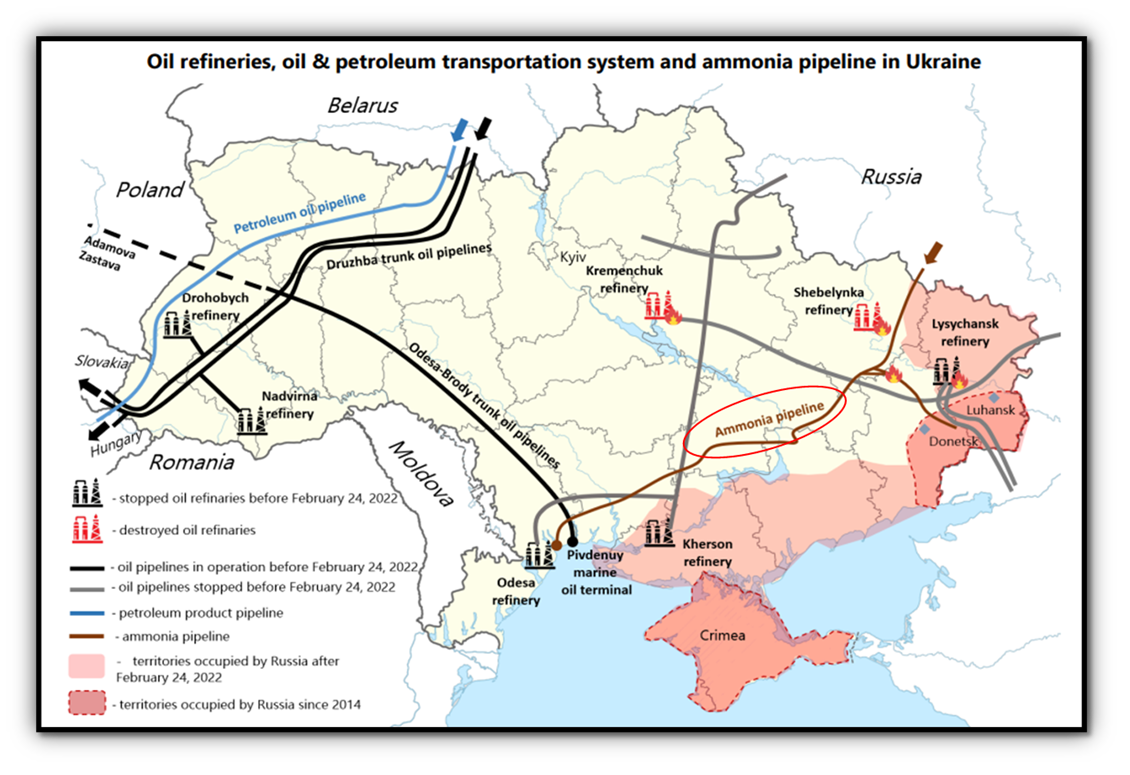
Russia has always been reliant on Ukraine to export their NH3. A pipeline was built that runs from Russian manufacturing sites, goes thru the southeast of Ukraine, ends in the Odessa region and then fills vessels from deep sea ports. For years and years, this worked seamlessly and Russia was able to reach the world with no hiccups.
However, that all changed with the invasion. Obviously, Ukraine had no intention of allowing Russia to load vessels in Odessa after the fight started. Strictly from an NH3 viewpoint, as Russian troops continued to push into Ukraine, there was a small belief that exports would resume. If Russia could control the territory that the pipeline and port sat in, they could allow shipments. Ukraine had other ideas.
Russian troops started to see their progress stagnate...then they started to lose ground. They were being pushed back. As they started losing ground, they made populations pay. Most notably, they started to attack the electrical grid. A pipeline that long means you cannot shove product in and expect it to push out the end. It takes a series of pumps to move that product along. Guess what pumps require...electricity. So as the electrical grid/production was attacked and destroyed, the ability to flow product was destroyed as well.
Since then, Ukraine has made tremendous strides to return power, but more damage has been done. Explosions were heard to have damaged the pipeline on points closer to the border. With damage, even if both parties agreed to allow shipments, those repairs would need to be made. Seems difficult to do in the middle of war.
Today, Russian exports continue to be a shell of their former self. That means the global S&D is much more tight than it normally would be. Most likely, if Russia was exporting normal flows, prices would be even cheaper than they have been.
Rumors/reports continue to be heard that Russia is taking steps to develop new logistical routes to reach the world. These routes sound as though they will be reliant on rail. It can be done...but it takes time. New deep sea ports need to be built. Infrastructure has to be developed. These are not short time frames so there is little hope of these being opened in 2023. Even earlier 2024 seem a stretch.
The return of Russian exports is a "small chance/huge ramifications" situation. We have little faith they return short term. However, if they did/do, it changes the scope of the world almost overnight. Once again, things happening halfway around the world affect every farmer around the world.
European production steady, though fears are rising with higher Dutch TTF values
Unlike Russia, Europe has never been a substantial power player when it came to NH3 production. That does not mean that they do not matter.
A quick background on the situation across Europe:
Russia has historically been the largest single provider of natural gas to Europe. However, explosions on the Nordstream pipelines and strained relations following Russia's invasion of Ukraine (because who would ever think to oppose an invasion of a country that did nothing to deserve it..." caused those supply shipments to cease. That left Europe on an island for a while.
The Dutch TTF, the main natural gas market in Europe, saw values which were normally in the single digits on an MMBtu basis climb to a high of $103MMbtu in August 2022. The combination of the loss of Russian shipments, a looming winter season, and tons of questions about the ability to import nat gas from the world shocked the market to price levels never even discussed. As a result, European nitrogen production dropped to approximately 25 - 35% of normal. As bad as that was, the outlook was worse.
However, as markets always tend to do, they found a new normal.
One of the biggest helps was a mild winter. The market had forecasted a rather cold winter which would boost demand for natural gas. In the end, it was relatively warm and that demand never appeared. More importantly, the world rallied behind Europe and developed new processes for bringing large amounts of natural gas to Europe. Part was a snub to Russia. A bigger part probably had to do with insanely huge profit margins for imports!!
Regardless the reasoning, Dutch TTF values are now back to reasonable levels. While still higher than "normal", they are much lower than the high's. Today, nearby months are in the lower $10's while winter months linger closer to $20. Nitrogen production has improved from the previous 25 - 35% of normal to a current 75% of normal.
Today, it looks like TTF values have found their low and are not showing signs of dropping further. That means that the chance of further production restarts is waning, especially with global nitrogen values in urea falling. There is also a certain amount of fear that if winter is cold, values will shoot higher, dragging production rates of N lower with it.
Again, Europe is far from the largest producing region in the world...but there has been a lot of correlation between the Dutch TTF and global N values due to the fact that Europe is seen as the high cost producer of the world. Effectively, they are the swing producer. Because of that, we need to continue watching that region for signs of global NH3 going higher or lower.
N.A. inland values continue higher but still very well priced
Manufacturers and distributors are well aware of how well priced current fall NH3 programs are priced...and they really seem to want to do something about it. However, the last couple years is giving them pause of further price hikes out of fear of losing demand.
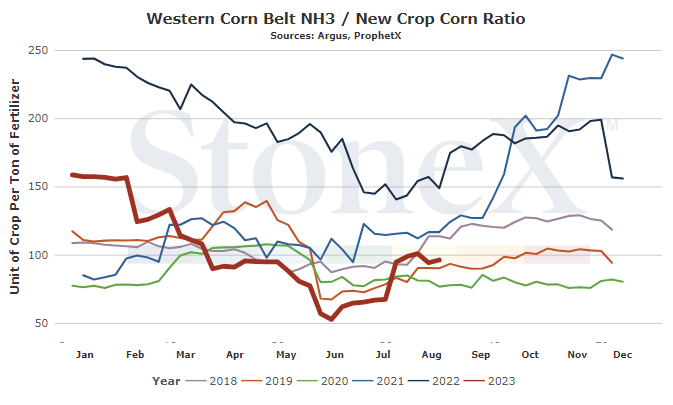
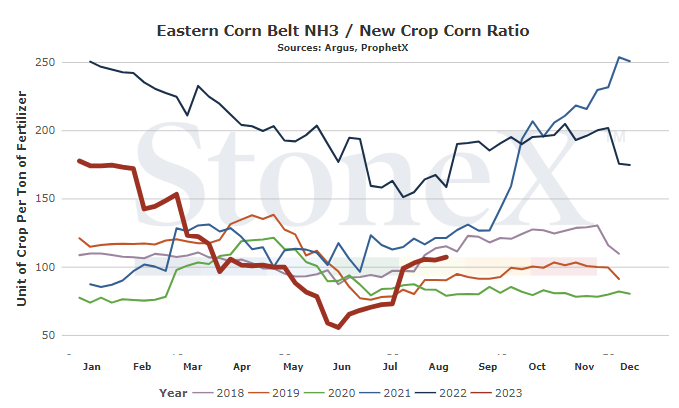
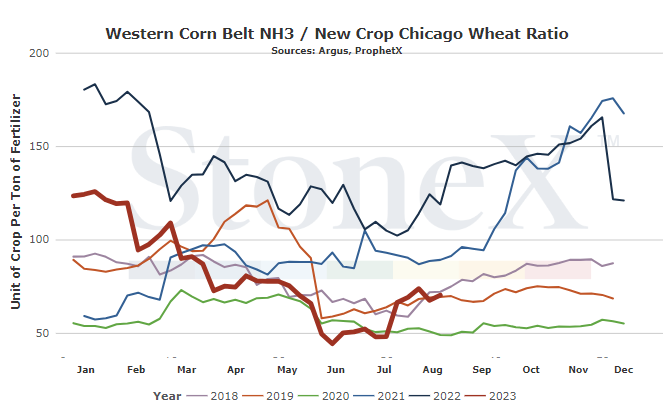
Today, even though values are up over the last several weeks, current prices are solid. They are good vs urea. They are good vs UAN. They are good vs historical values. They are good vs grain values.
The market is gearing up for one of the bigger fall seasons in a while (mother nature pending).
New green NH3 production expectations being lowered
One of the obvious world stories is the coming of age for "green energy". Well, that conversation has made its way into the fertilizer markets over the last couple years.
When fertilizer values skyrocket, there gets to be a lot of outside interest as they foam at the mouth at the possible margins. The last time we saw this (early 2010's), the announcements were centered around new conventional nitrogen production facilities being built. However, just like today, values eventually fell and the outside interest fell with it. Very few of the expansions/new builds ever saw the light of day.
Up until now, we saw a very similar situation. Outside money was very interested...but they were interested in building green produced nitrogen rather than more efficient production methods. On the surface, it is a good look for a company as they can check the "saving the earth" box. However, deeper into some of these plans, you start to find that they make sense because government subsidies are HUGE.
Now, I'm not going to say this covers all the plans/announcements/etc. There may be some where it works on its own. However, some of the things I have seen (and can talk about) do not.
We are even seeing this with some of the established fertilizer companies back peddling plans.
We need to continue tracking this new avenue of production because even if only part of the announcements come true, it will change the structure of the marketplace.
Where are current values in relation to the past