Going into this fertilizer year (July 1), we had factored in global production problems. The EU being lower on production rates is no surprise. Brazilian production being offline has been the case for a bit and continues to be. In fact, even a certain amount of production downtime as global plants shut down for repairs is factored in.
However, it is the surprise ones that always hurt and in this case, it is China.
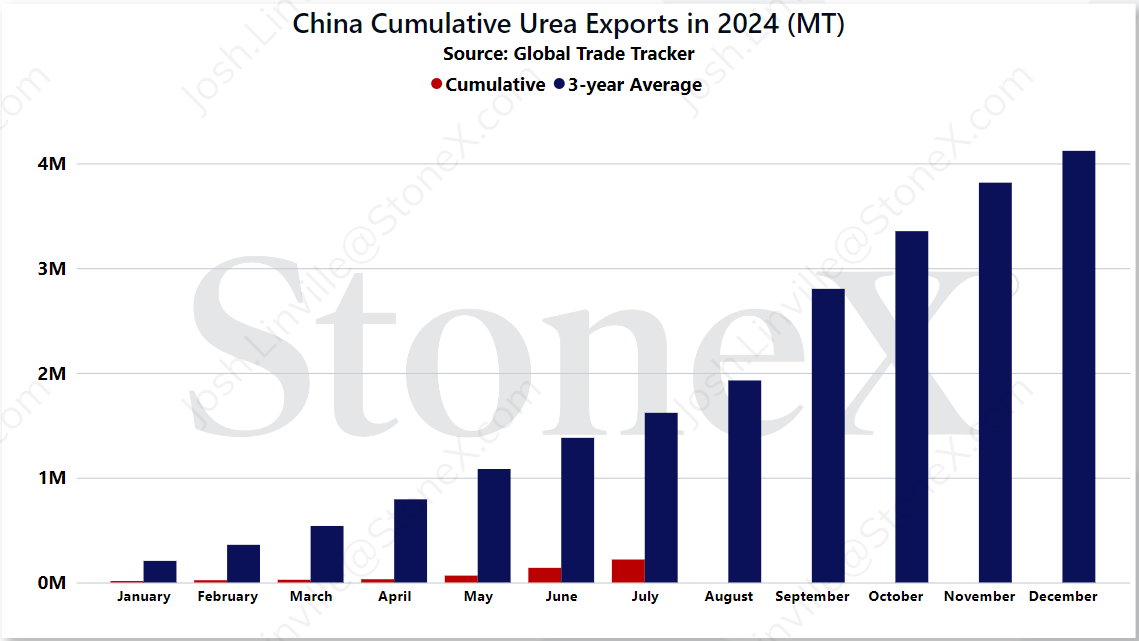
We went into this year fully expecting Chinese urea export rates to be lower than historically normal. Given how the government has been treating fertilizer, it was hard to build a fertilizer year 2025 outlook that didn't include a little scale back. However, January thru July only has their exports at 219K vs an annual normal of 5 - 5.5M tons...that is a huge shock.
Near term, it seems that values should remain relatively flat to even slightly bearish as buyers refuse to step forward. The economics just are not there to excite buyers to step forward. That stalemate continues today.
However, eventually I am afraid the lack of supply story will take over. Buyers eventually have to step forward and we are about to exit what is widely considered the normal "dead demand" period of the year. When that demand steps forward, my fear is that manufacturers get back on solid footing and supplies will quickly take over the conversation.
That said, short term flat to bearish but longer term I am still leaning bullish...I really wish I wasn't given grain values.
Global Production Update
In the world of urea, there have been several changes to production. Some good for buyers. Some bad for buyers. Unfortunately, the worst one will be covered in the next section. Still, thought it would be good to walk thru our list as we have seen it:
Egypt (good) - after struggling with natural gas supplies due to hot temps/higher domestic public demand, it appears most of the pain has gone away and nitrogen production is either back to normal or incredibly close to normal. This is a big boost for European based farmers who are so reliant on these tonnages to backfill what is not being produced in the EU region as expected supplies have improved.
EU (bad) - unfortunately, the EU region continues to see nitrogen production at 75% of normal. If I am being honest, I'm getting worried that the percentage is going to drop. Dutch TTF (European natural gas values) are back to the $12 - $13 range after falling all the way to $7...and winter is coming. The last couple years, winters have been warmer than normal so nat gas demand has been lower (less need to heat homes) and that has helped to lower values. Can Europe be lucky a 3rd winter in a row? Maybe, but it is hard to trade off of hope. Fortunately, production has not gotten significantly worse but the hope of it getting better is pretty low right now.
Brazil (good...maybe) - there was a report that a Brazilian company was planning on investing nearly $150M to restart nitrogen production based in Brazil. On the surface, this would be fantastic for not only Brazilian farmers who would have locally produced product available, but also for world buyers as it would remove some of Brazil's demand. However, we approach this very cautiously. Nat gas values in Brazil are extremely high and without the help of subsidies or beneficial natural gas contracts, it is hard to see these plants actually operating. If they come online, this is good for buyers...if.
Ukraine (good) - in the report that surprised me the most in the last month is that Ukraine has restarted its nitrogen production. Now, Ukraine isn't exactly the biggest manufacturing country in the world, but the fact that they have been able to restart in the face of the ongoing Russian invasion is fantastic news for the country and its farmers.
Romania (bad) - unfortunately, to counter the good news from Ukraine, it was reported that Romanian production had gone offline. I cannot say for sure for how long or how many tons will be lost, but obviously any loss is tough in the current environment.
China (very bad) - I'll go into more detail next section, but Chinese exports are VERY behind normal. Typically, they export between 5 - 5.5M tons per year. This year January thru July they have only exported 219K...we are not hearing much in the way of August exports...not hearing much in the way of September expectations. That leaves a whole quarter to "catch up".
So all of these events have happened over the last 30 days at the same time the market is trying to figure out when demand is going to return. The result has been relatively flat markets with a trend lower (because demand has been quiet).
What does this mean for Aussie farmers?
At this point, not much. There are some wins in that list and there are some losses in that list. With very little demand, prices have stayed relatively steady with a slight bearish tint to them. I think that remains the story until demand returns...and then I believe the China story will become front and center for why prices should go higher.
If nothing else, this piece is meant to show how much can change in a very short amount of time and why it is so difficult to forecast markets.
Chinese exports continue WELL behind normal
Now for the big dog story of the month.
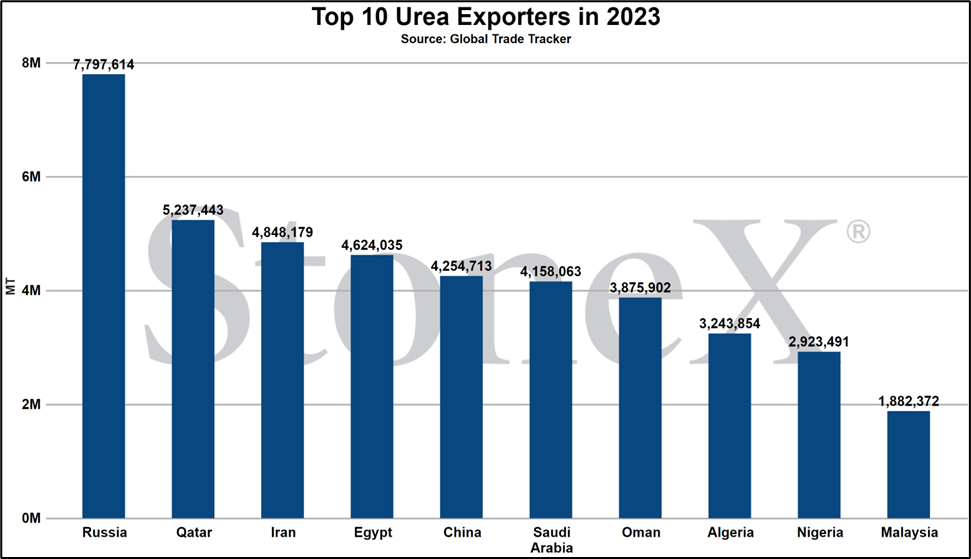
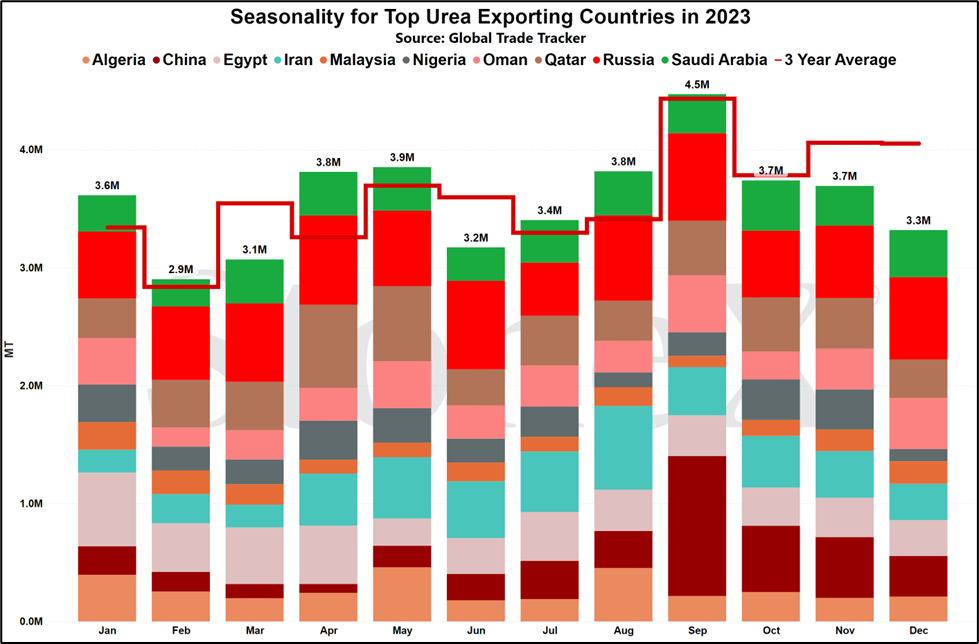
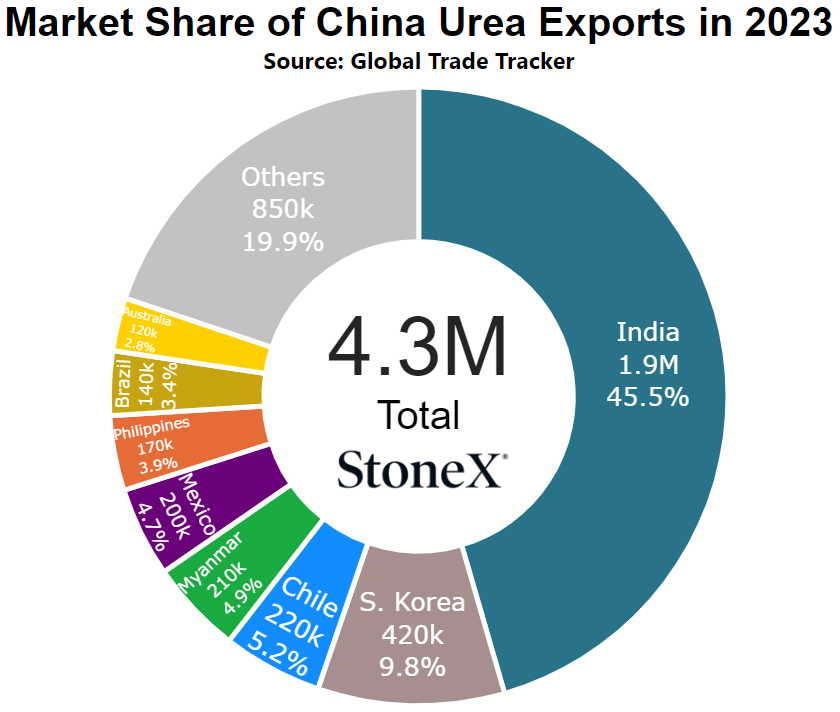
In recent history, China would export somewhere between 5 - 5.5M tons in a calendar year. That roughly equates to around 10% of the global export marketplace. That does not make them the largest exporter, but they are up there.
However, in recent years as global supplies got tight and prices got stupidly high, the government started to step in and play a part in restriction those export flows. Their approach was that by restricting exports, it ensured adequate domestic supplies at a lower than global market price. If exporters cannot participate in the global market and have to compete at home only, prices in theory would fall...and unfortunately for the world, they did.
Fast forward to today. Values and supplies are significantly improved from early 2022...but restrictions continue to be in place as China appears to be shutting its doors in favor of their own farmers. This has not only been a story on fertilizer but also on grains.
So how bad is it?
The January thru July cumulative total only sits at 219K tons...
We have not seen/heard their participation in August so we believe that total will continue low.
We also have not seen/heard any indication that September will see a reversing of their approach.
Everyone, that means we could enter the last quarter of the year with exports well below 500K.
Now, there are questions that we have had:
- Are operating rates really as high as being reported?
- Are there other exports occurring that just are not being reported?
- If operating rates are high and exports are low, will we see China start puking product in the 4th quarter?
- If operating rates are high and exports remain low, where the hell are they putting it all?
Honestly, I do not know the answer. This is my biggest sticking point today because the math is not mathing. There is a missing piece of the puzzle that is driving me nuts. Eventually, the answer will come out...eventually. Until then, one of the largest urea exporters in the world is closed for business.
What does this mean for Aussie farmers?
Unfortunately, this is not good. It is hard to see a market that has lost one of its largest suppliers doing anything but rising in the future. Today, we have been fortunate that values have been flat to slightly bearish because of a lack of demand. Well...fortunate may not be the right term but hopefully you understand my point. Farmers around the world are pushing back against high input prices because of poor farm economics. It is very hard to rally price ideas when buyers/demand refuses to participate.
However, eventually buyers do have to step forward. I do not know when, but at some point we have to start getting ready for next year. When we do, I am afraid this story will be front and center of every negotiation in the world.
India is in the middle of another purchase tender
Another newsletter, another India purchase tender!!!
If you remember reading thru the last one, it was full of twists and turns.
- Offered tonnage totals were high (lot of tons can indicate oversupplied market)
- Prices offered were very narrow (indicating heavy negotiation/participation)
- India lowered its tonnage goal to "only" 600K
- Then offers started shockingly to me saying no in negotiations
In the end, they secured less than 400K with most of the tonnage destined for the east coast (they had wanted more west coast). The thing that still stands out is that a firm that had offered 300K for the west coast at only $0.50 over the lowest price eventually said no. That was insane in my book.
At the conclusion, the market quickly started to theorize the timing and size of the next tender. While domestic stockpiles were healthy and their production running well, more tons were needed secured.
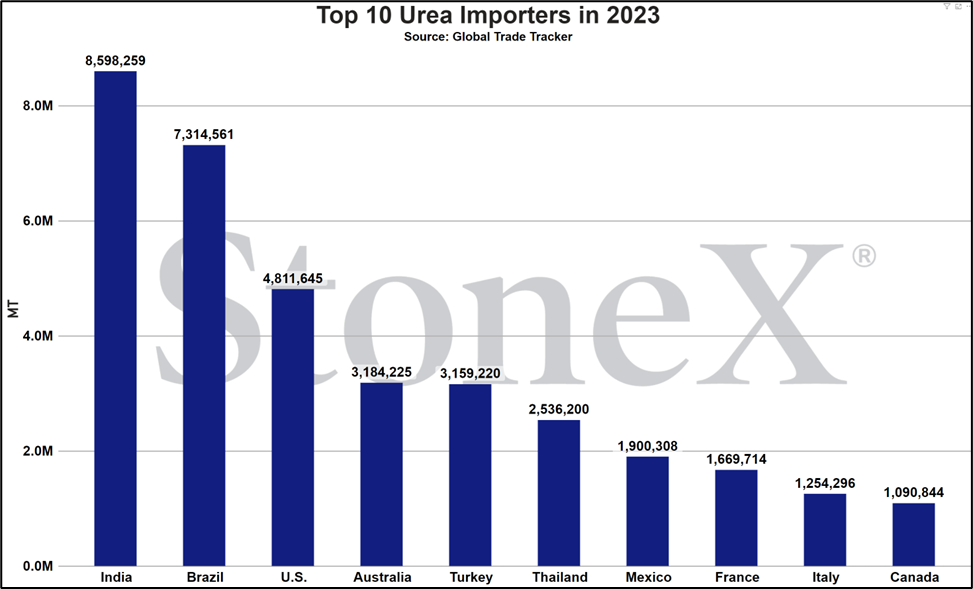
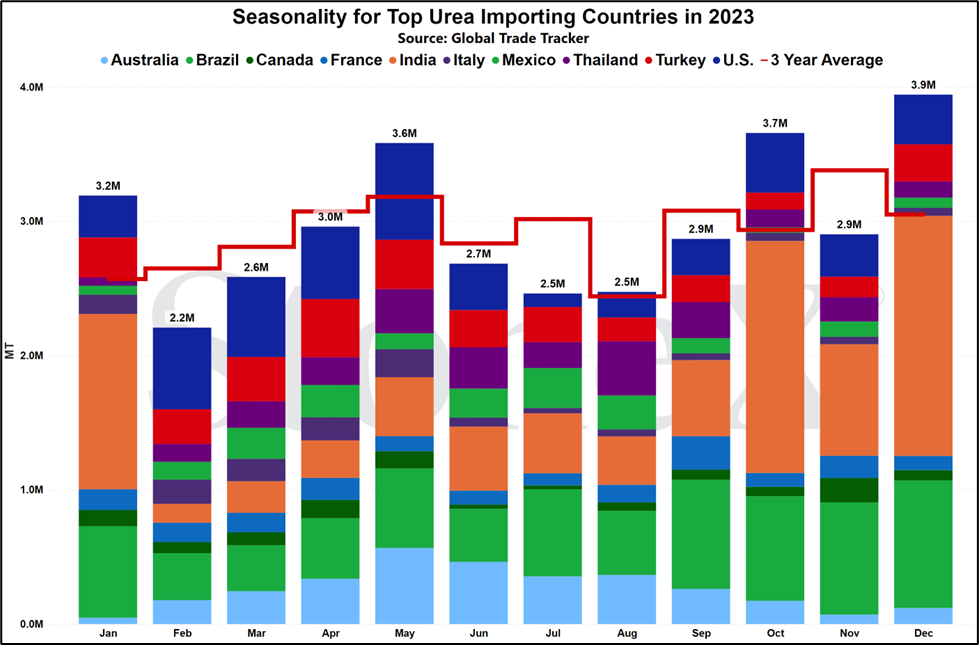
That brings us to today. I can tell you that I have seen a huge range of how many tons they will need. Rumor was that India was telling certain folks they only intended to lock up 700K. Others in the market thought it would be well over 1M. Personally, I think it depends (way to go me on drawing a hard and clear line, right?!). If the offered values are decent (we have seen values under pressure of late), I would not be surprised to see India lock up over 1M just to build inventories at a solid price. However, if offers get proud once again, I do not think India "needs" the tons short term. I think they could handle minimum participation with the plan to tender once again in the next 2 - 4 weeks.
At this point, we are sitting and waiting for the information to be released.
What does this mean for Aussie farmers?
India typically does a great job of laying the current market bare. The time for talk/theories/etc. is done. India receives the offers and then opens them to the world. It is a great way of seeing what traders/manufacturers are really thinking. Are they lower than expected which indicates a lack of faith in the coming weeks/months? Are they higher than expected which indicates their belief that values are going to be higher very soon?
I see this tender being a very short term story. What I mean by that is that this will indicate the market for the next month or two due to how quiet demand is. However, once we get back to buyers stepping forward, I think it fundamentally changes. So while the results will be a great indicator of where we are today, with the next application season so far away, I'm not concerned with longer term ramifications.
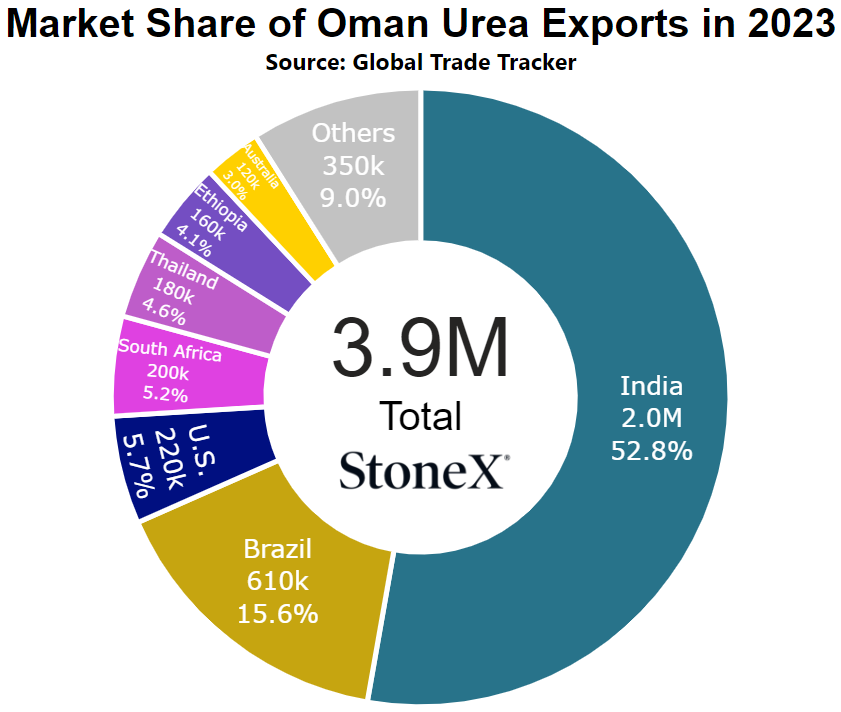
Price comparisons
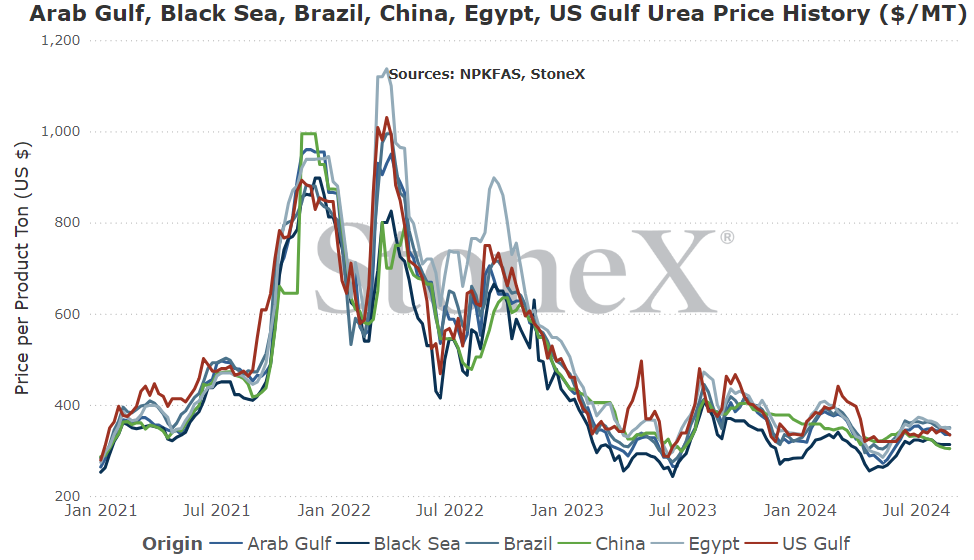
Vs 30 days ago - -4% or approximately $13 lower
Vs 90 days ago - 14% or approximately $40 higher
Vs 6 months ago - -12% or approximately $45 lower
Vs 1 year ago - -13% or approximately $50 lower
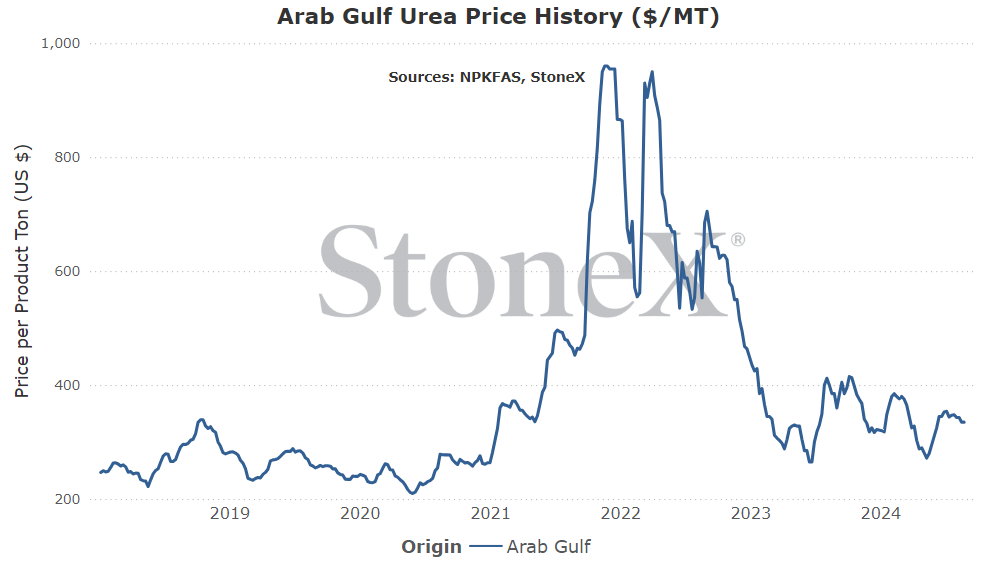
Egypt
Number 4 global exporter in 2022
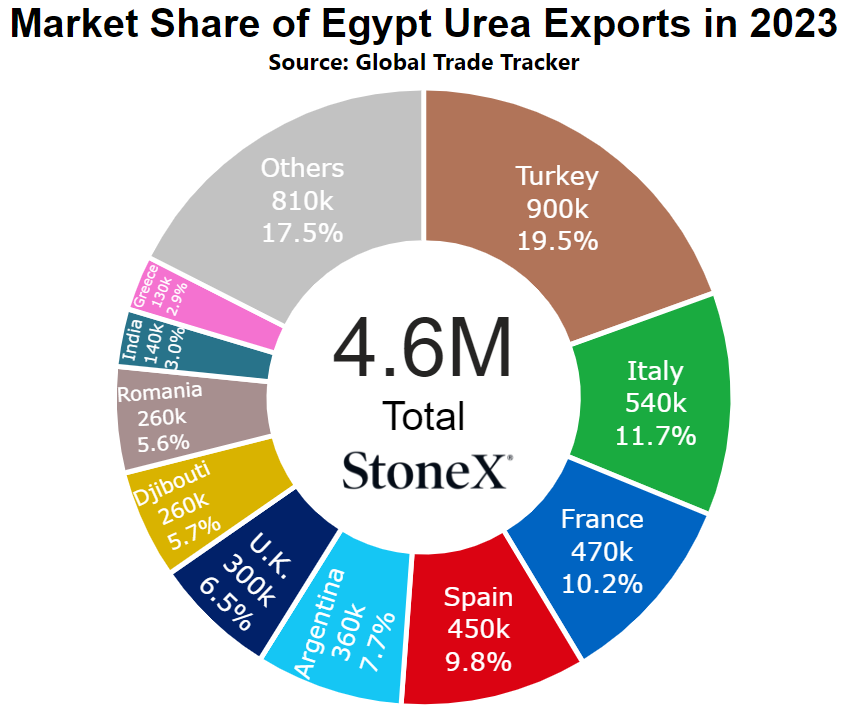
Price comparisons
Vs 30 days ago - -4% or approximately $16 lower
Vs 90 days ago - 9% or approximately $29 higher
Vs 6 months ago - -10% or approximately $38 lower
Vs 1 year ago - -13% or approximately $53 lower
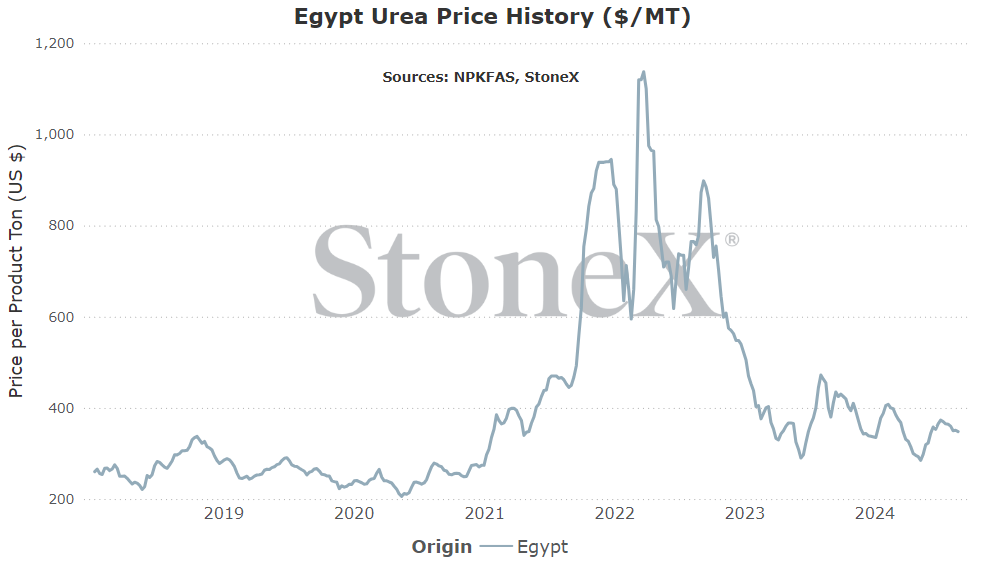
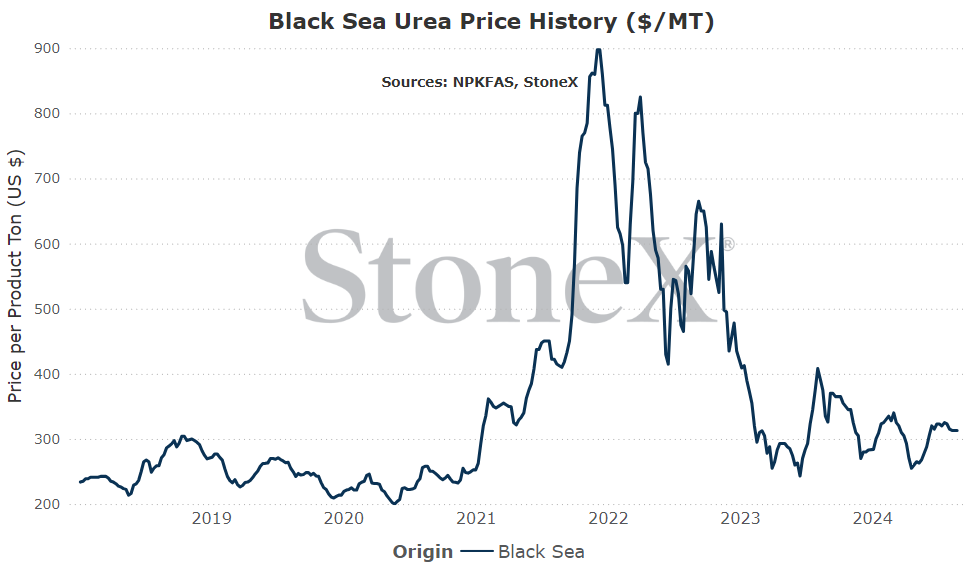
Black Sea
Number 1 global exporter in 2022
Price comparisons
Vs 30 days ago - -3% or approximately $10 lower
Vs 90 days ago - 13% or approximately $35 higher
Vs 6 months ago - -8% or approximately $28 lower
Vs 1 year ago - -7% or approximately $23 lower
China
Number 9 global exporter in 2022
Price comparisons
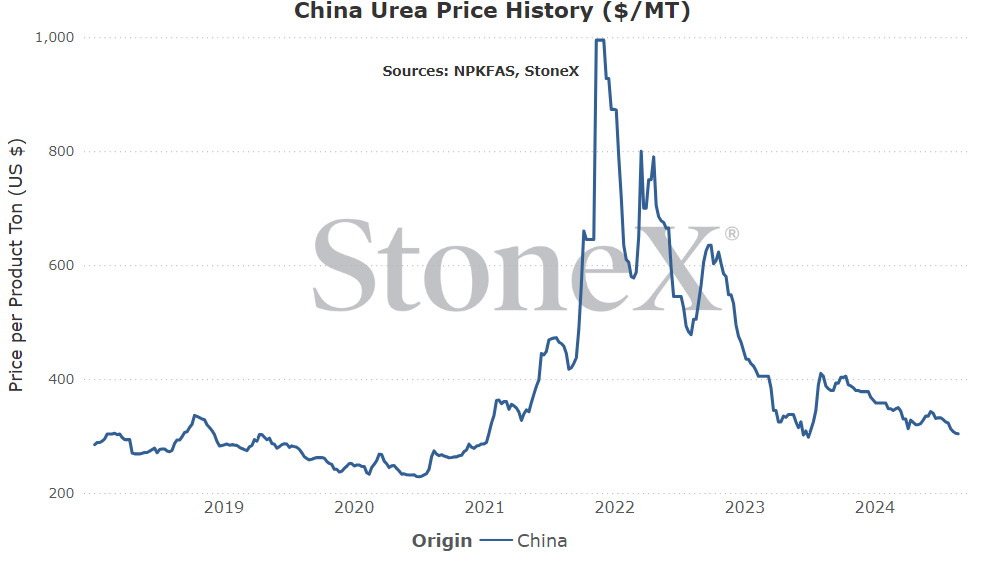
Vs 30 days ago - -6% or approximately $19 lower
Vs 90 days ago - -9% or approximately $31 lower
Vs 6 months ago - -13% or approximately $44 lower
Vs 1 year ago - -21% or approximately $79 lower
- Chinese exports continue to fall further behind - "normally", China exports between 5 - 5.5M tons per year. We just got their July trade data. January thru July cumulative total sits at 219K. No, that is not a mistype on the cumulative. No, that is not a mistype on the historical norm. Every month that this happens helps the global S&D get a little bit tighter.
- 2025 demand outlook remains solid - some farmers can reduce/eliminate their phosphate rates. Some farmers can reduce/eliminate their potash rates. However, nitrogen is needed. As we look to 2025, everything points to relatively unchanged crop mixes which should mean solid N demand.
- Global/regional conflicts could still impact supplies - while things have cooled off in recent weeks, that doesn't mean that certain regions are still not on the brink of war. Israel continues to fend off different parties in the Middle East region. Russia continues to invade Ukraine. The China/Taiwan story is still there. I know calling for a war to impact values is a bit out there. We are not in the business of calling and marketing on Black Swan events but that doesn't mean we do not stay aware to the possibilities.
- Farmers/buyers are dragging their feet hard - the farming economic outlook for 2024 is poor. The farmer economic outlook for 2025 is poor. Farmers are...well, poor. That doesn't exactly scream a customer who is spending money early and that is the prevailing story today. Without demand, it is hard to push prices higher. It doesn't mean the demand isn't there, it is just lying in wait.
- China could shock the world in the last 3 - 4 months of 2024 - so far in 2024, Chinese exports are a measly 219K tons. At the same time, we continue to see reports that operating rates are solid...so where are the tons going? One theory is that they are being consumed/stored domestically. Another is that you will see China puke in Q4 in a way not seen in a while. Doesn't seem likely but if it happens, watch out.
- India could buy shockingly low amount in this tender - tonnage expectations for this tender are all over the place. I have heard as low as 600K and I have heard well north of 1M tons. In the end, which we should see/find out next week, we could see India step in for even less tonnage. Their stockpiles have started at very solid levels and their production continues at a solid pace. If they only locked up 300 - 400K, that would push a lot of hope back to offers...and we could see values lower.
We believe that only looking at the flat price of either grains or fertilizer can be misleading:
-
Only selling grain can hurt you if fertilizer prices rise substantially
-
Only buying fertilizer can hurt you if grain prices fall
We look at the ratio "value" to get a better indication of where we are or how many bushels of X does it take to pay for 1 ton of fertilizer.
Would you rather:
-
Spend 135 bushels to pay for 1 ton of urea
-
Spend 55 bushels to pay for 1 ton of urea
When we compare the current ratio value against recent years, we start to see if we are high or low.
YOUR VALUES MAY LOOK DIFFERENT
This is a work in progress section! We plan on looking at the relationship between Aussie grains and global price points (and hopefully Aussie specific locations, though that data is hard to secure, very protected). Big reason why we are still in the "trial" stage of this newsletter!!!!
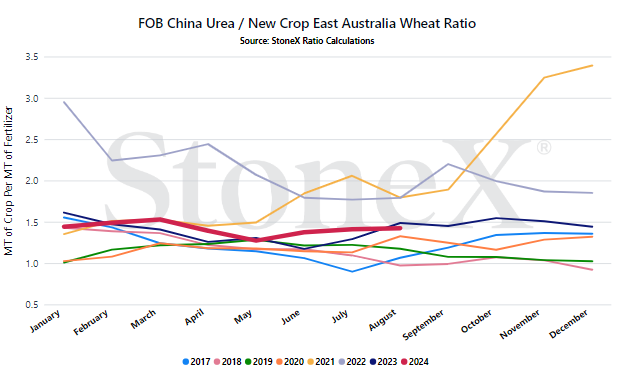
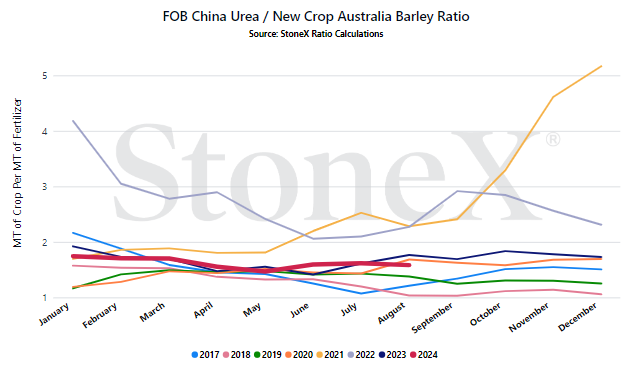
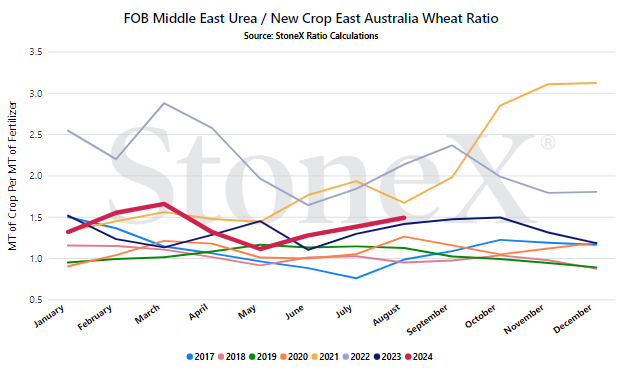
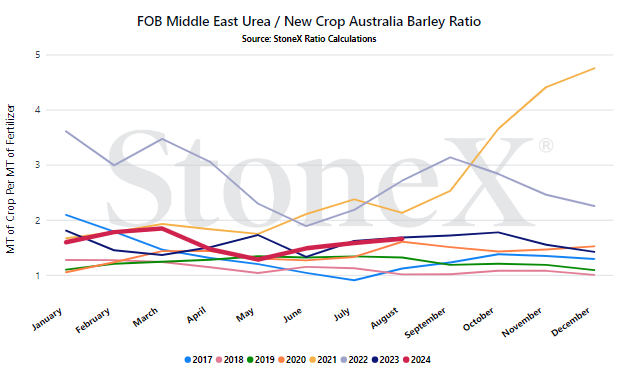
- Do not underestimate China - I mean this from both sides of the coin. Do not underestimate their ability to suddenly start spewing out exports in a way not seen in a long time. Given good operating rates and low exports, I keep wondering where the product is going. On the other side, they just may not come back. They built a hospital in 10 days...I'm pretty sure they can rig up some urea storage.
- Remember you are part of the global market - when things get tough like they are now, it is easy to get blinders on and only think about things from "here". That said, even if things look bearish at home, a bullish global market will drag your prices higher.
StoneX Ratio Calculation
The ratio calculation is derived from Bloomberg historical grains values as well as fertilizer values from StoneX, NPKFAS, and Argus.
The calculation is simply dividing the fertilizer price by each grain price.
All data was sourced from StoneX unless otherwise noted.