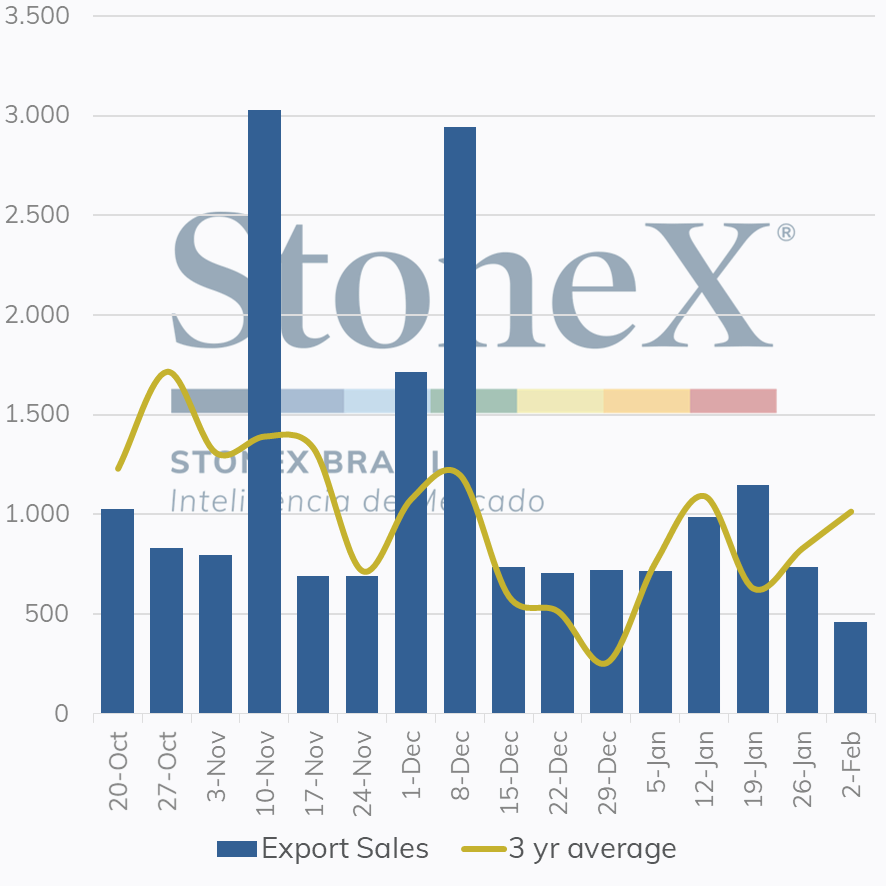
In any case, Chinese purchases of US soybeans have guaranteed accumulated US sales earlier in the 22/23 crop compared to the previous year. In the week ended 02/02, net export sales of 22/23 soybeans from the US stood at 459.4 thousand tonnes, a volume within the range of expectations, between 400 thousand and 1 million tonnes, but very close to the bottom of estimates. Despite the much lower level than that recorded in the same period last year, when it reached 1,6 million tonnes, China responded to 520 thousand tonnes in the week, but there were net cancellations of 390 thousand tonnes from unknown destinations.
Season-to-date, US sales reached 47.7 million tonnes, up from 46.8 last year. China bought 3.85 million more than in the same period last year, while negotiations with other destinations are 2.9 million weaker.
Another highlight is that shipments have recovered from the delays previously observed. In the week ended 02/02, the country's export inspections reached 1.8 million tonnes, which amounted to 37.9 million, 200 thousand tonnes above that registered a year ago.
Weekly export sales - US (TMT)
Source: USDA. Design: StoneX.
In its monthly report, the USDA chose not to adjust North American exports for 22/23 at 54.2 million tonnes, 4.5 million less than that seen in the 21/22 crop. This lack of change may indicate that the Department is betting on strong competition from Brazilian soybeans, with shipments from Brazil possibly extending well into the second half of the year at higher volumes than usual as the Brazilian crop moves towards a record harvest.
On the other hand, the USDA cut the US 22/23 crushing estimate to 60.69 million tonnes, 408 thousand tonnes less than the previous number, and closer to the trend that the monthly data have brought. As there were no adjustments on the supply side, this lower domestic consumption of soybeans expected for the country directly impacted ending stocks, which rose to 6.13 million.
But the big expectation for the report was related to Argentina's crop, and the USDA brought a reduction of 4.5 million tonnes in the country's production, which fell to 41 million. However, it is noteworthy that other institutions are revising their numbers, bringing the Argentine production outlook even lower. For example, the Buenos Aires Exchange lowered its estimate to 38 million tonnes, while the Rosario Exchange was even more aggressive, with its number at 34.5 million.
As a result, concerns about the world soybean supply and demand balance and the supply of by-products, since Argentina is the largest exporter of Bran and oil, gained strength.
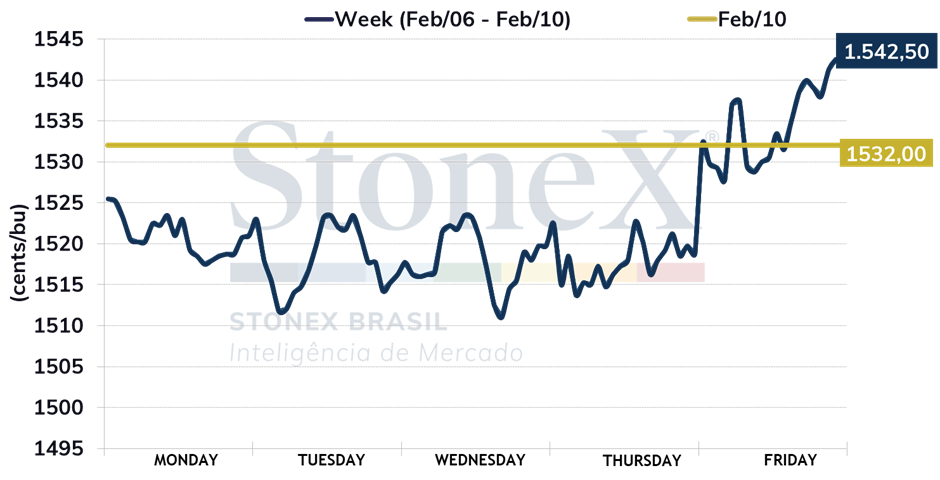
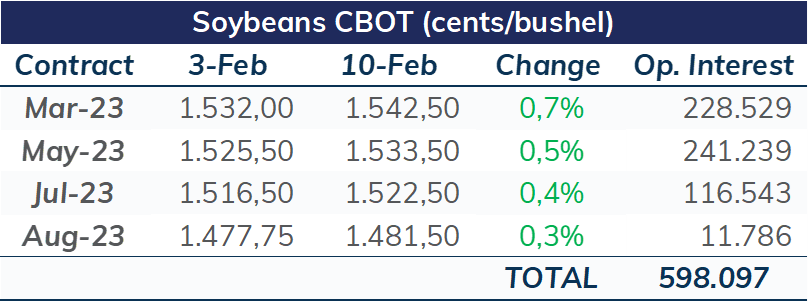
Soybean meal is supported at CBOT because of the prospects of breakdown in the country, and that is what conditioned the rise of soybeans in grain last week, with the advances seen on Friday (10). Argentina directs most of its soybeans to crush. With crop losses, there is speculation about how much the country will be able to process, especially if production falls far below potential.
Given this scenario, there are already rumors in the market that Argentina bought 300-400 thousand tonnes of Brazilian soybeans for shipment in February-March and that 1 million tonnes have already been sold to our neighbor.
In addition, some atypical routes are being recorded, with Brazilian soybeans leaving Arco Norte ports for Argentina, as indicated by the lineup data. It should also be noted that soybeans from Brazil can reach Argentina through the Paraguay River, loaded in Porto Murtinho (Mato Grosso do Sul), and the possibility of export via highways, depending on distances and freight costs.
Thus, even if Brazil harvests a record crop, noting that the USDA maintained its estimate for Brazilian production at 153 million tonnes, the weather in the coming weeks and months will be decisive in determining whether the world soybean balance will move toward a situation of restriction. It is important to highlight that the crop in Rio Grande do Sul is also with part of the crops in key periods, in which moisture is fundamental.