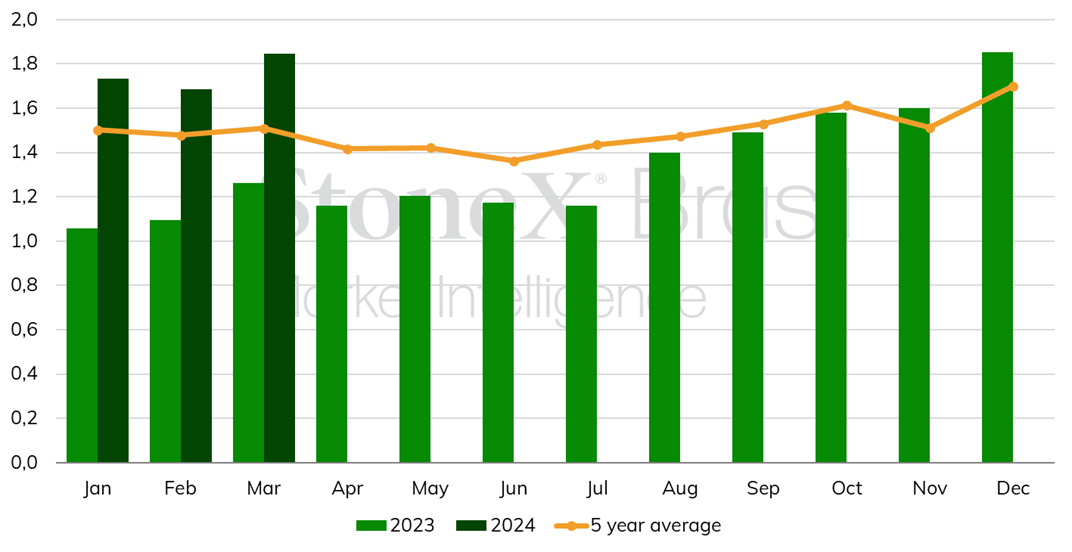
Despite the sharp increase in hydrous ethanol sales at gas stations, gasoline, which directly competes with biofuel in consumer choice, also saw growth in sales. This indicates increased demand for the Otto cycle (ethanol + gasoline), roughly representing Brazil's energy demand for light vehicles.
According to ANP data, in March, gasoline C sales reached 3.6 million m³, an increase of 11.5% versus the previous month. However, on an annual basis, gasoline sales in March still indicate a 6.9% decrease due to the market share gain of hydrous ethanol. Nonetheless, it is important to emphasize that the figure stood 12% above the average of the last 5 years, which had a biocomponent share more in line with that observed in 2024 due to the increase in Otto cycle consumption.
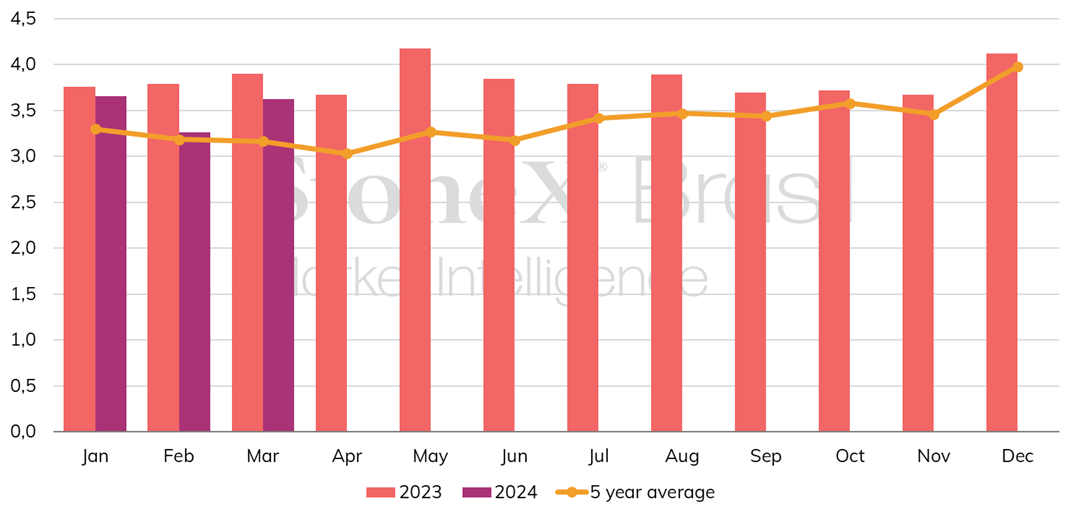 Source: ANP. Design: StoneX.
Given the scenario presented for both fuels, the total Otto cycle consumed in March/24 reached 4.91 million m³, the highest value ever recorded for March. This was 2.9% above the annual comparison and 11% higher than February 24. It is also worth noting that the share of hydrous ethanol posted a slight decrease compared to the previous month, mainly due to the significant increase in gasoline consumption, as both fuels increased their sales volumes.
Therefore, the national hydrous share went from 26.6% in February/24 to 26.3% in March, a figure still much higher than the previous year, which indicated a share of only 18.5% of hydrous ethanol in the same period.
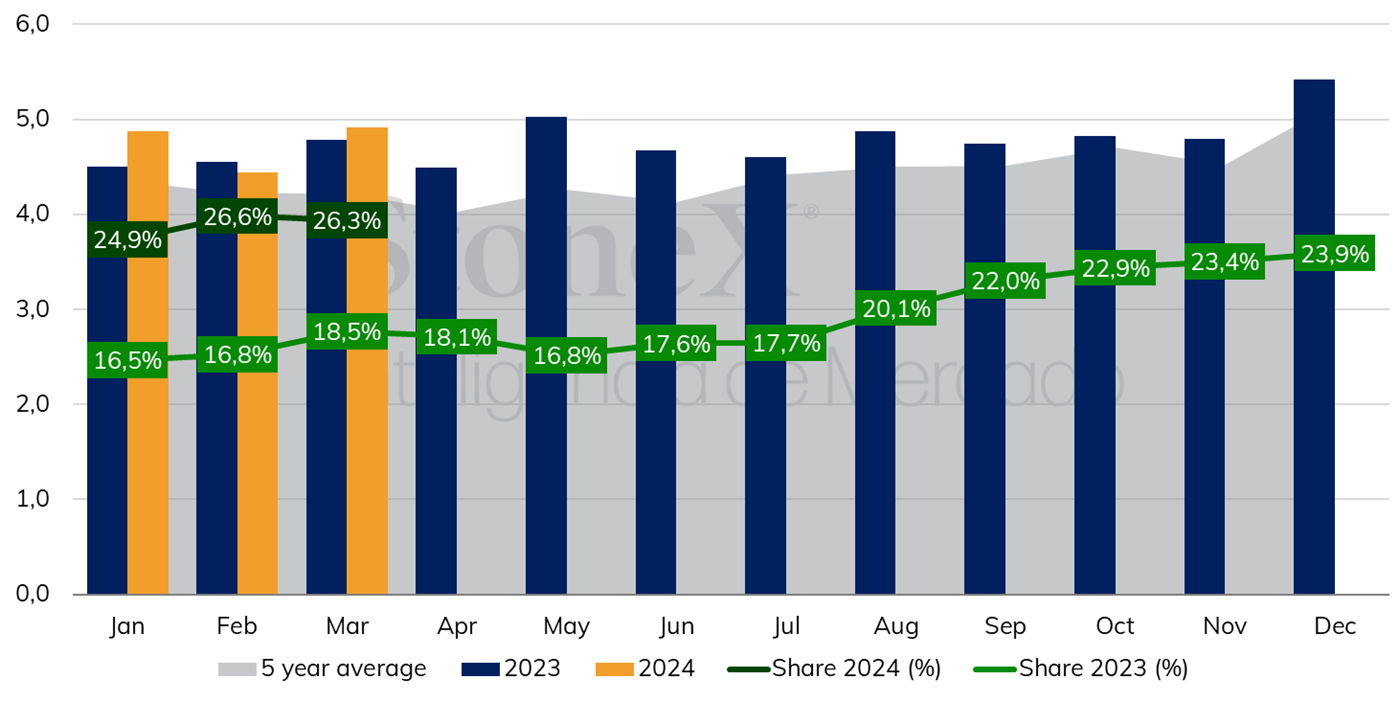 Source: ANP. Design: StoneX.
Despite the high share compared to the previous year, it is important to note that ethanol's competitiveness versus gasoline has decreased in the last few weeks, although it remains advantageous. Since March 15, the hydrous ethanol price sold by the plants has already increased by more than 30 cents. When writing this report, it was trading at around R$2.80/L, reaching up to R$3.00/L in smaller trading volumes.
The end consumer has already absorbed this movement at the pumps. In April, the parity between gasoline and hydrous ethanol rose by more than 5 p.p. in the state of São Paulo, going from close to 60% to 65.7% by the end of April. Accordingly, it will be up to the coming months to indicate the consumer response to the new parity levels at gas stations.
However, with the start of the 2024/25 sugarcane crop and the parity still comfortably below 70% in São Paulo, high demand for hydrous ethanol in 2024 is expected. According to the latest estimate from StoneX, this should reach 20.1 million m³, an annual increase of 25.3%. To access the full report, click here.
Daily recap
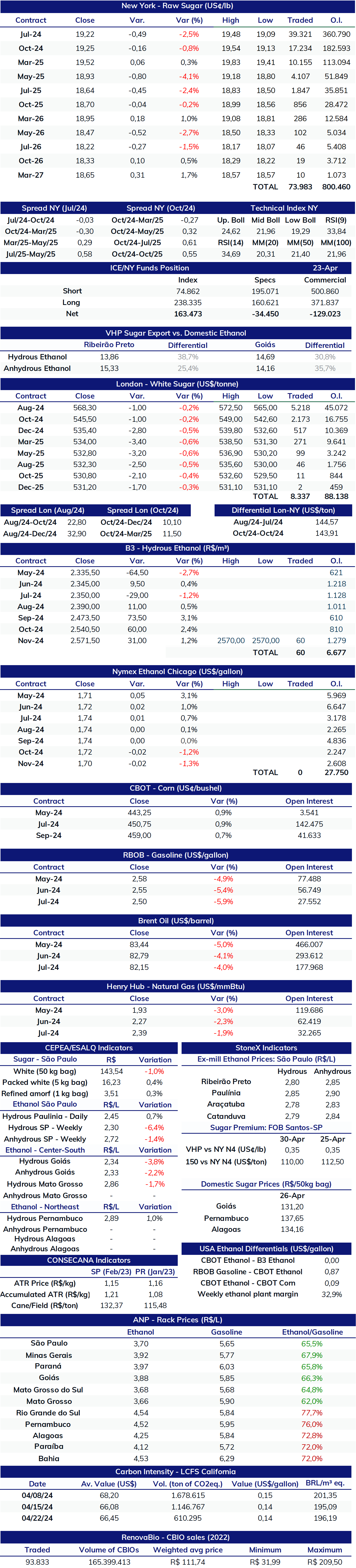
This Wednesday (01), raw sugar May/24 added to yesterday's losses. At the end of today's session, July 24 was priced at US¢ 19.22/lb, a daily decline of 19 points (-0.98%). Not much has changed; the fundamentals support a bearish sentiment, as seen in April, such as the strong start to the 2024/25 crop (Apr-Mar) and better-than-expected production towards the end of the season in Thailand, albeit lower than last year.
According to the National Federation of Cooperative Sugar Factories Limited (NFCSF), only 23 units were operating in India by late April. In the cumulative 2023/24 (Oct-Sep), the country produced around 31.6 million tonnes of sugar, well above initial estimates, especially in Maharashtra. This state produced 11.0 million tonnes of sugar, about 500 thousand more than in 2022/23.