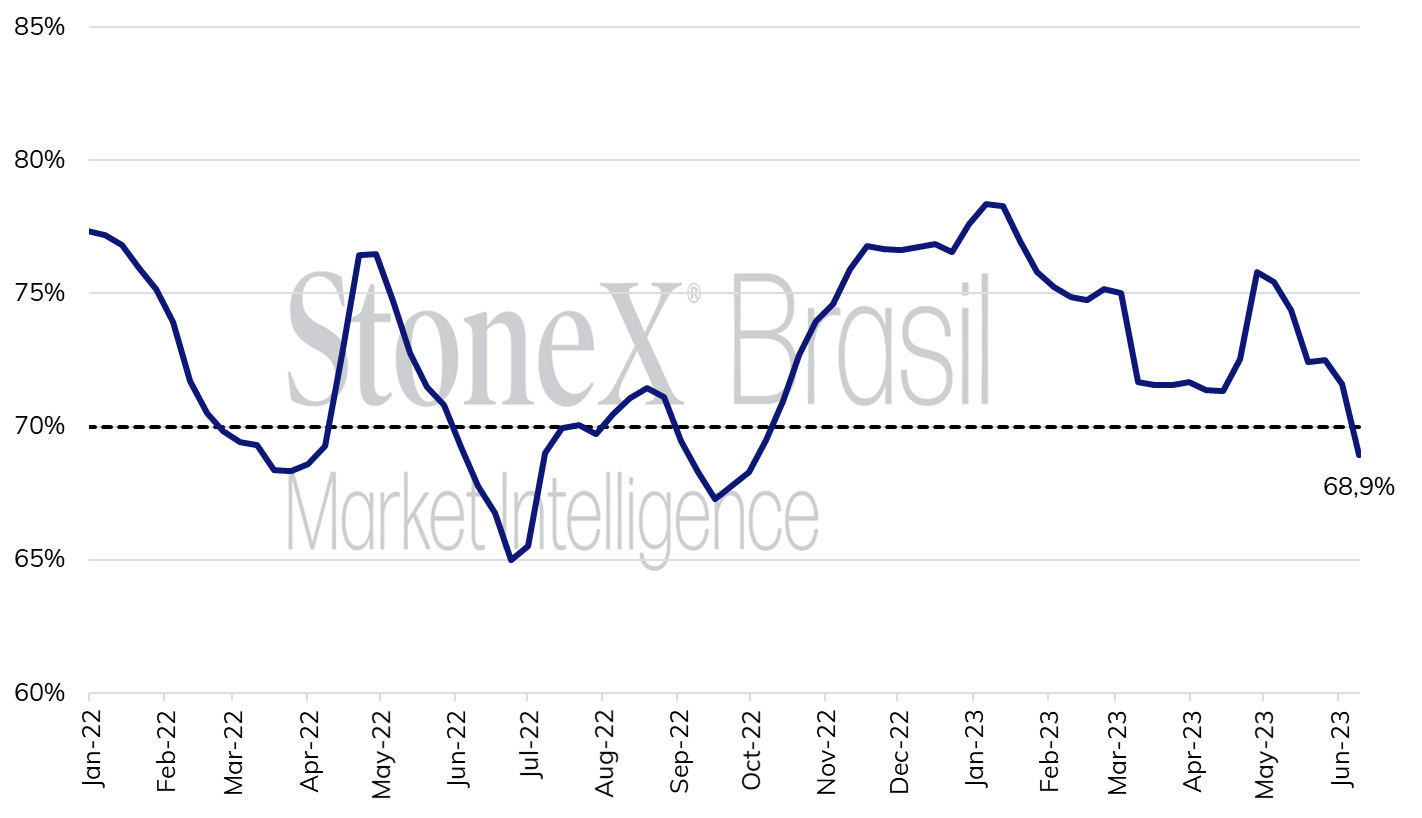
On Tuesday (13), the National Gas, Petroleum and Biofuels Agency (ANP) released the weekly average prices for fuels in the various regions of Brazil. For the state of São Paulo, the largest consumer of Otto Cycle fuels, the average parity between hydrous and gasoline at fuel stations was below 70% in the last week for the first time since October 2022, when ethanol prices were influenced by the 2022/23 season (Apr-Mar).
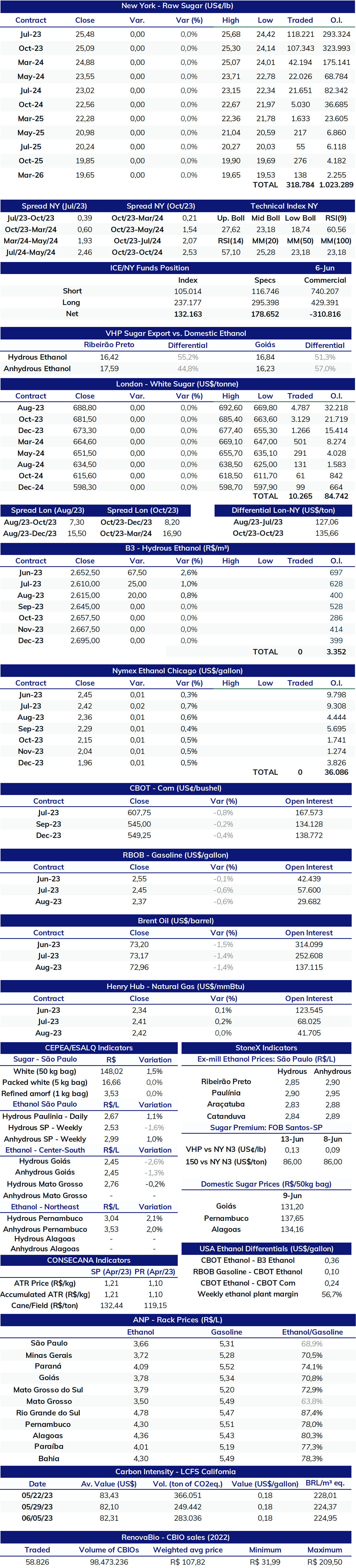
In this context, the average price of gasoline in São Paulo last week, between June 4 and 10 was BRL 5.31/liter, an increase of BRL 0.24/liter compared to the previous week. As for hydrous ethanol, the average for the period was BRL 3.66/liter, an increase of BRL 0.03/liter compared to the previous week, with prices at the plant trading at a level close to BRL 2.85/liter in the period (based in Ribeirão Preto, SP). As such, with the stronger increase in gasoline prices in relation to ethanol, average parity went from 71.6% to 68.9% last week (between June 4 and 10).
In this scenario, it is worth noting that the stronger increase in gasoline prices is due to the changed ICMS tax over fossil fuels, which took effect from the beginning of June, and is already reflected on price dynamics for the final customer. Under the new rule, taxation on gasoline now occurs on a fixed basis, or ad rem, establishing a single rate of BRL 1.22/liter over sales in all states of the federation, which established tax increases in 24 of the 27 states of the country.
In São Paulo, which accounted for 23.3% of gasoline consumption in 2022, the change in ICMS taxes led to an increase of BRL 0.26 per liter of gasoline compared to the previous tax regime, which explains the drop in parity in early June. Considering improved ethanol competitiveness, the expectation is growth in hydrous consumption, which has registered low sales volumes since 2022 due to more advantageous gasoline prices, even with a growth in demand for Otto Cycle fuels.
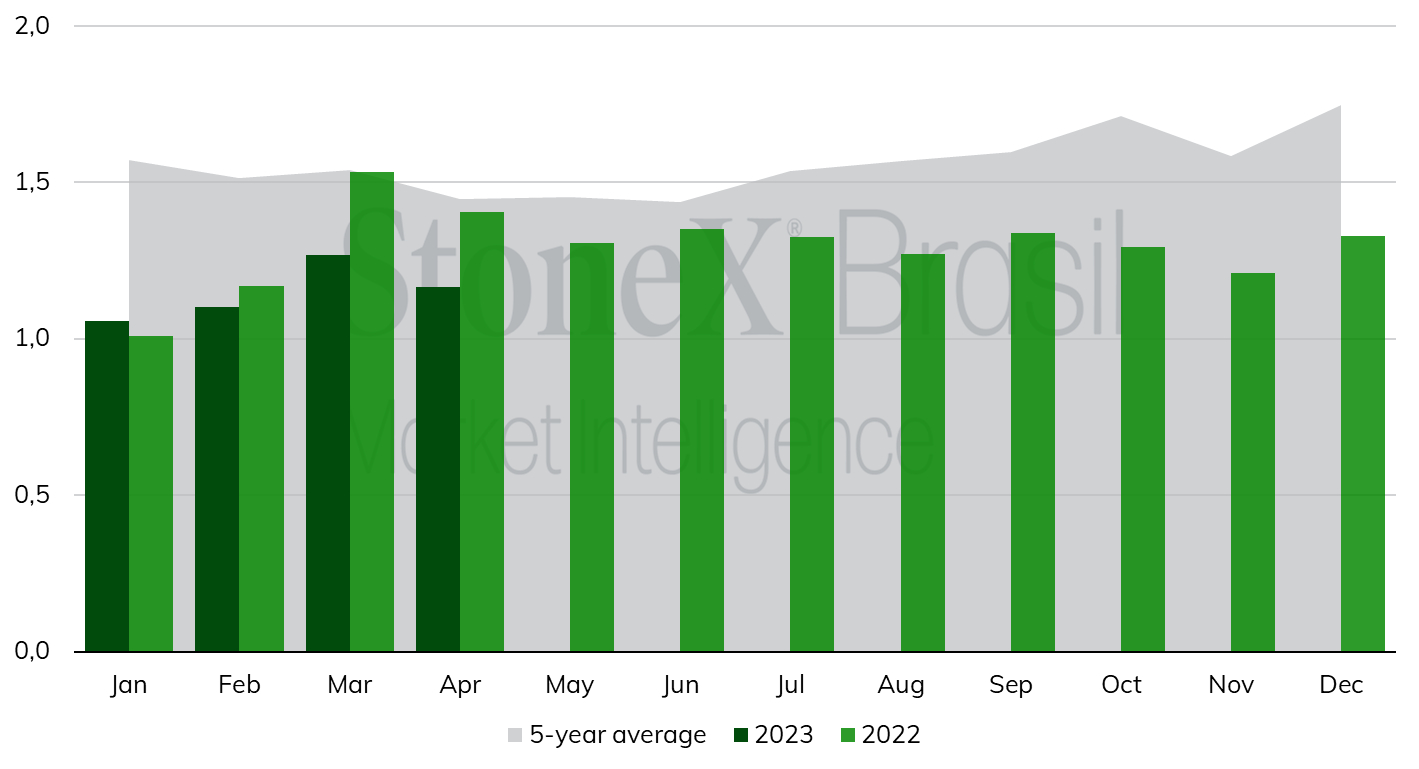
In this sense, another point that should favor greater consumption of hydrous ethanol at gas stations is the expectation of higher production for the 2023/24 crop (Apr-Mar) in the Center-South region of Brazil, which tends to increase ethanol stocks over the course of the year. However, according to the most recent report by the Union of Sugarcane and Bioenergy Industries (UNICA), referring to the second half of May, although total production of ethanol for the 2023/24 crop is already 11.12% above the accumulated in the same period of last season, hydrous distillation is still 5.17% below last year, with the higher total ethanol production attributed entirely to the volume of anhydrous ethanol, which currently makes up 27.5% of gasoline C intended for the final consumer.
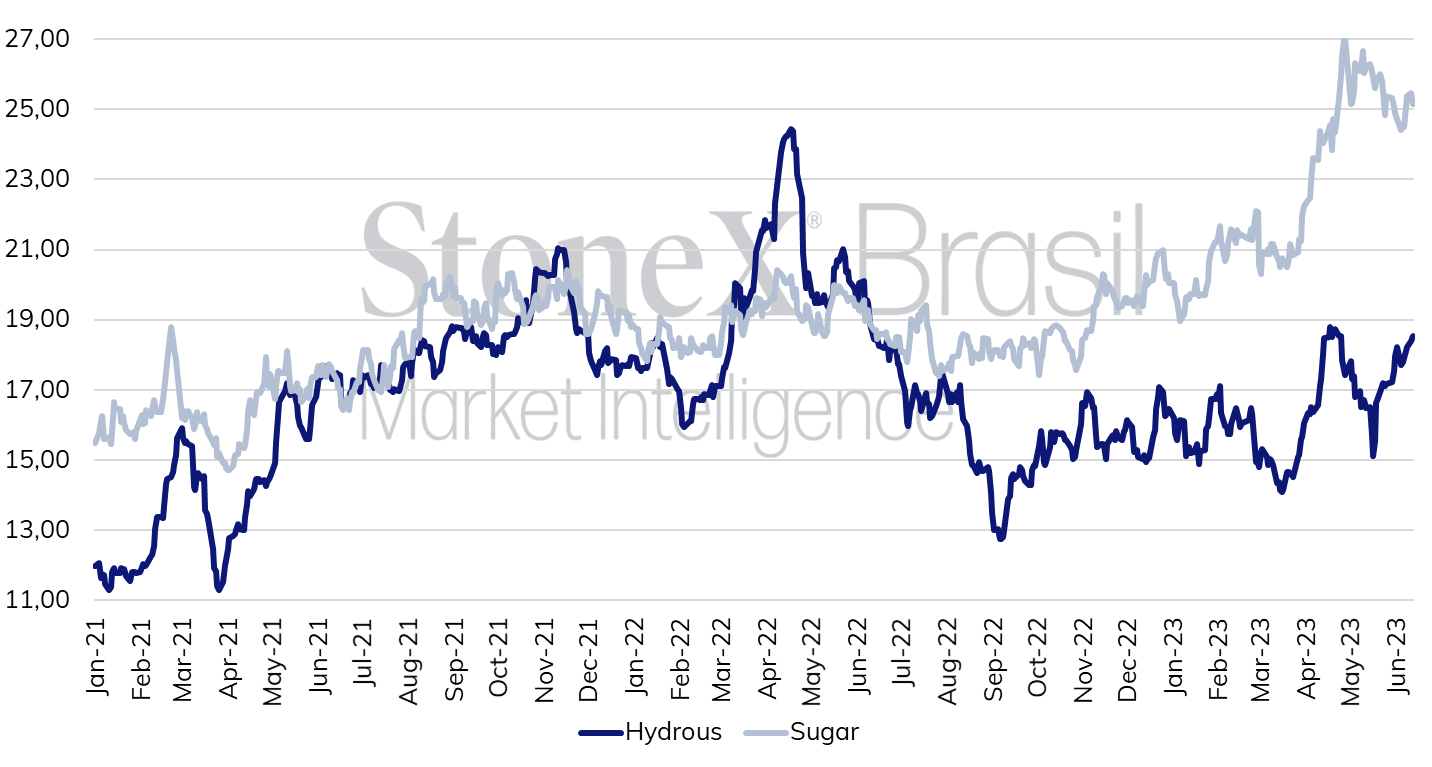
Despite this, with the improved parity at the stations and, therefore, in the prices of hydrous based on the plants, there is greater incentive, albeit timid, for production of this variety, which should increase the output in the first half of June. However, the sugar market, with price levels still close to 11-year highs, tends to limit a greater gain for ethanol production, leading to a production mix more directed towards sugar. In this scenario, also according to UNICA data, during the second half of May, 48.76% of the crop in the Center-South was allocated to sugar production, a growth of 5.6 percentage points compared to the same half of the last season, which continues to reflect higher sugar returns compared to ethanol.
On Wednesday (14), sugar prices had a significant rise in their futures exchanges. In New York, the most active contract for raw sugar #11 had an appreciation of 2.42% in the day, ending the session at 25.37 c/lb. In London, white sugar #5 rose by 1.04%, ending the day at USD 687/t.
As a factor of influence in the market, it is worth highlighting two factors. First, the forecast of rains and a cold front this week in the Center-South of Brazil brings greater upward pressure to prices, since an interruption in the harvesting process or a possibility of frost could limit Brazilian exports while most of the global crops are in their inter-crop period. Second, news released on Monday (12) that the Indian government is considering banning sugar exports until half of the 2023/24 crop (Oct-Sept) could significantly limit the volumes of sugar in the global trade flow until the start of the 2024/25 Brazilian crop (Apr-Mar), providing yet another bullish argument for the market.