

AU Consumer and Business Confidence Feels the Heat of RBA Hike Bets
Australian business and consumer confidence deteriorate as RBA hike expectations fuel concerns over rates, jobs and household spending.

Matt Simpson
- Currencies
By: John Kicklighter, Head of Market Research
With energy markets surging and testing the commitment of pressure on Iran against an expectation for healthy growth, the familiar grumble of expectations for the ‘TACO trade’ are growing. Yet, is a reversal of policy in the face of market pressure unusual?
Talking Points:
To sign up for the Trading Global Macro podcast, find it on your preferred podcast platform: Apple Podcasts, Spotify, or YouTube.
A familiar political term is seeping back into the global financial headlines. The ‘TACO trade’ is a disparaging acronym against US president Donald Trump that insinuates he frequently reverses his more controversial policies when economic reality proves untenable. For those unaware, it stands for ‘Trump Always Chickens Out”.
This ‘accusation’ has been recharged recently following the United States unexpected strike on Iran before the stated deadline around negotiations for the latter country’s nuclear enrichment plans. After a few weeks of heavy attacks targeted on military installation and governmental leadership, the recognition of global economic hardship has come in the form of higher energy prices – particularly crude oil.
Chart of US Crude Oil and Implied Volatility (Weekly)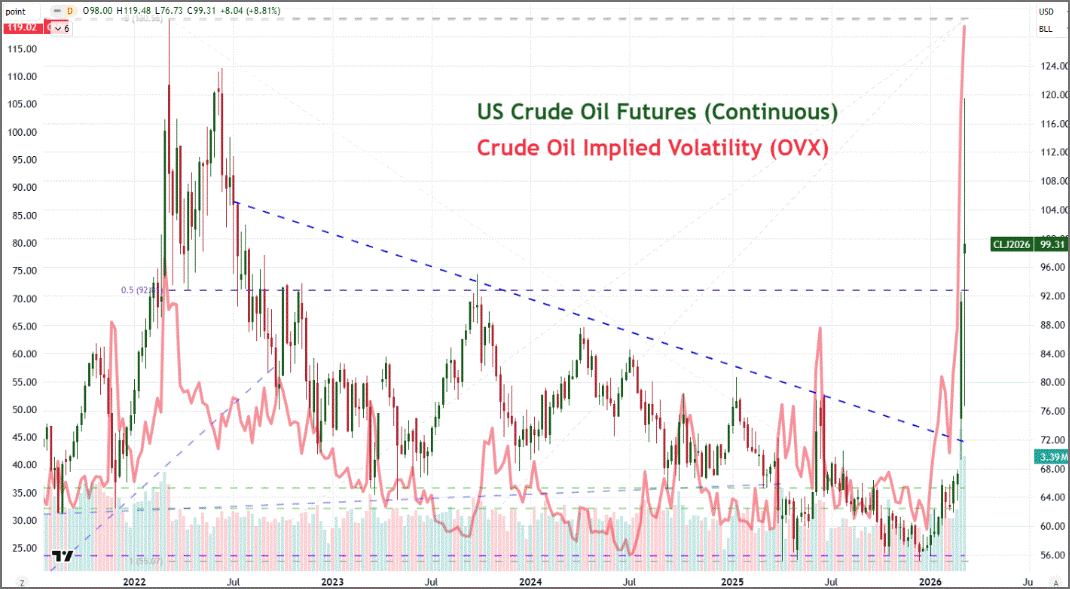
Source: TradingView.com; NYMEX; John Kicklighter
The impact of higher energy prices is a familiar one for global macro observers over the past years and decades. As a foundational component of economic output, a charge in price can materially throttle output with plenty of cascading influence into general financial markets and economic health. Amid this pressure, the expectation that the decision to attack Iran will be second guessed and force the administration to reverse its course. This is not an unreasonable speculation. However, is this kind of policy-market feedback necessarily that unusual?
Expecting the Trump administration to reverse course on a complicated and difficult policy decision is not exactly unfamiliar for those that are keeping tabs. In April of last year (2025), the President announced a range of tariffs against trade partners that he said was aimed at addressing inequity but seemed to draw on dubious justification and rates. The announcement led to a broad risk aversion that push the S&P 500 – as a benchmark of ‘risk appetite’ – to the verge of a technical bear market. Recognizing the threat of a deeper slump, the White House responded by reversing course before systemic damage was done. It is also worth noting that following the about face, the market entered an impressive rebound that drove the US indices to eventual fresh record highs.
Chart of S&P 500 and VIX Volatility Index (Daily)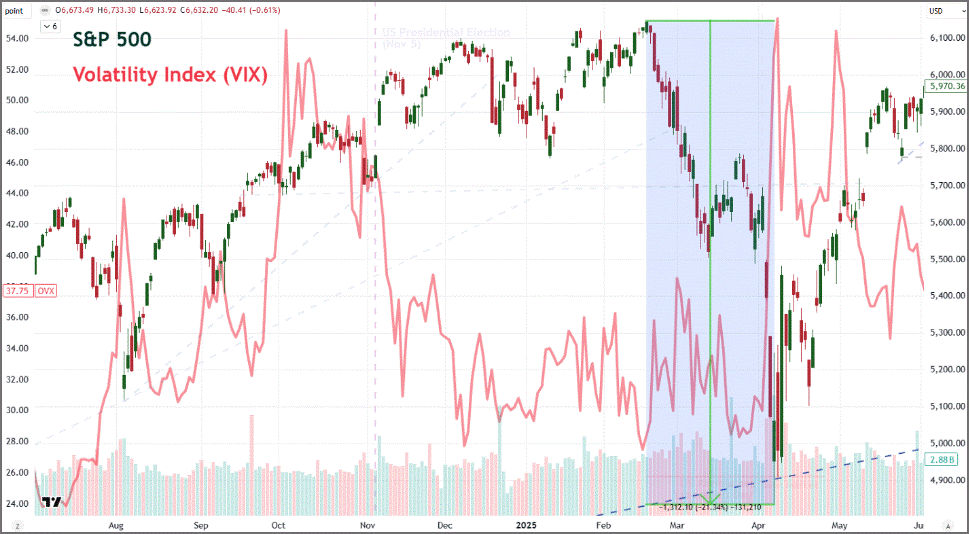
Source: TradingView.com; Standard & Poor’s; John Kicklighter
Agree or disagree with the policies themselves, the episode reinforced a recurring dynamic: markets can act as a constraint. Stability in equities, orderly interest rates, and a manageable dollar are not peripheral considerations - they can be central to policy determination. What’s more, these considerations are not new, and the concept of policy responding to market bearings is similarly a standing influence. Further, it is not only a US influence – much less a particular administration.
One of the most recognizable terms used in investor/trading circles over the past decade is the concept of the ‘Fed put’. This is the suggestion that the US central bank stands ready and willing to adjust monetary policy to halt the capital markets from retreating too far – hence the reference to the popular derivative contract meant to protect long-only exposure from significant reversals. There is no verifying this intention one way or another, but there are points in history whereby the commitment fails.
Take for instance the point at which the US Federal Government realized that it could no longer backstop financial giant Lehman Brothers. The once, top-five financial firm came upon severe lending stress and the commitment to keep all the major players whole eventually fell apart when the projected tab proved to be far too great. That reversal temporarily exacerbated one of the deepest financial crises in modern history.
Chart of S&P 500 and VIX Volatility Index (Daily)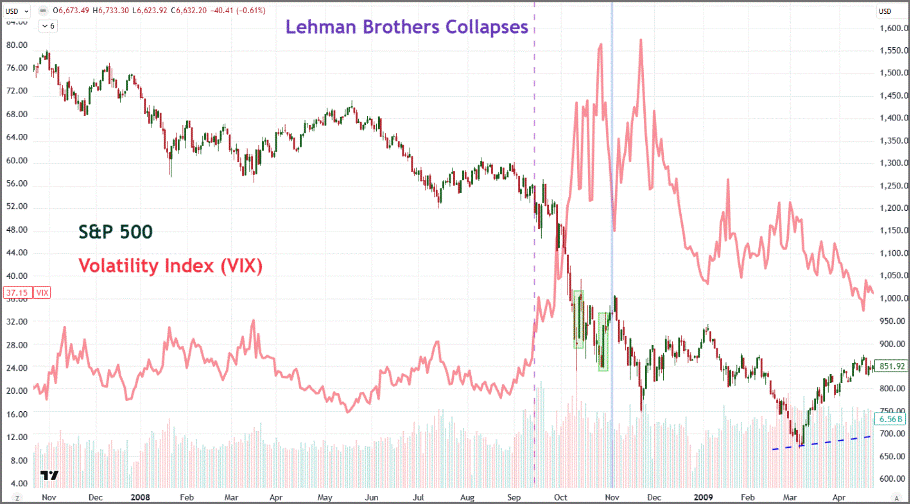 Source: TradingView.com; Standard & Poor’s; John Kicklighter
What if President Trump did not reverse course on his policy and subsequently decided to let the market bear the weight of the controversial decision? There may be a foreign corollary to that scenario in the United Kingdom. Back in September 2022, the newly appointed government behind then-Prime Minister Liz Truss released its mini budget with an announced £45 billion in unfunded tax cuts triggering a sharp market reaction through both the British pound and bonds. The event would, merely a month later, lead to the resignation of the Prime Minister making her the shortest-lived leader for the nation on record.
Chart of GBPUSD and UK 10-Year Yield (Daily)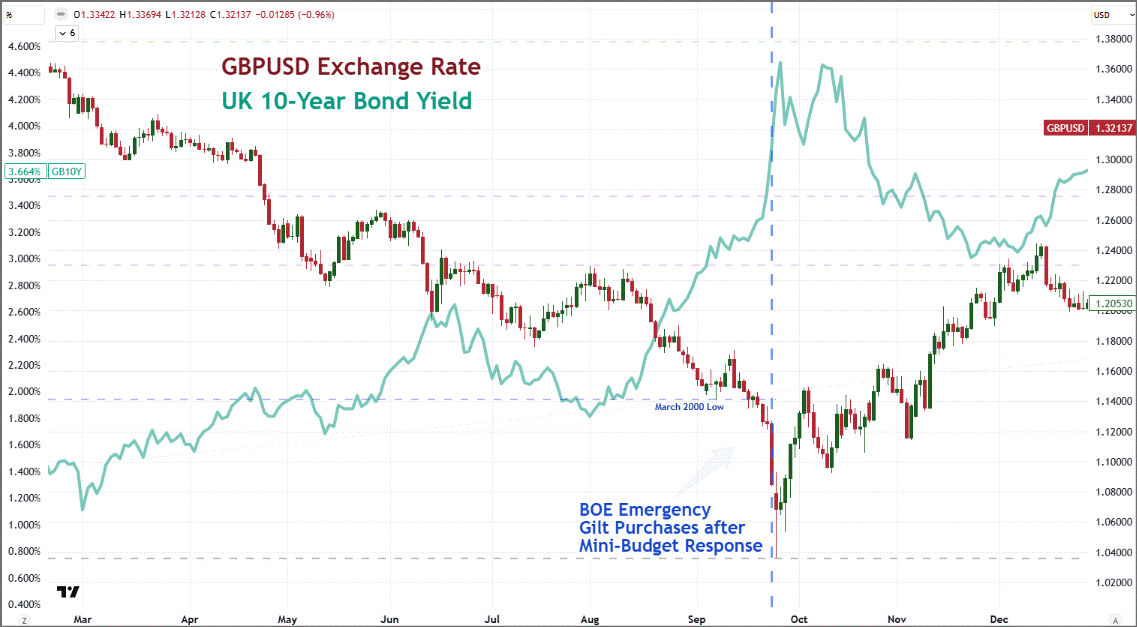 Source: TradingView.com
Financial and fiscal policy have readily yielded to market activity in the past, but so too has monetary policy. The Fed Put is arguably finding more success in the market’s general assumption of support – without any stated price or volatility levels – than an actual commitment from the central bank itself. Sometimes, the market-based pressure relents before the policy authority’s capabilities are fully taxed. Such a case was presented during the European debt crisis. In 2012, then-ECB President Mario Draghi vowed to do ‘whatever it takes’ to stabilize the region’s financial system. The effort proved influential to the point of seeing the Euro appreciate to levels that necessitated a commitment to defend against a specific EURUSD exchange rate (1.4000).
Alternatively, there are scenarios whereby the market’s dislocation is so great and/or persistent that even robust efforts to maintain stability falter. One of the most prominent failures of monetary policy among the major central banks in the recent past was the Swiss National Bank’s (SNB) attempt to maintain a 1.2000 floor on the EURCHF exchange rate. With a significantly smaller economy and heavy trade dependency on its Eurozone counterpart, Switzerland’s efforts to maintain stability were dwarfed by the combined influence of the Euro-area’s financial pressure, monetary policy and natural capital flows. In a shock reversal, the SNB announced on January 15, 2015 that it was abandoning the centerpiece of its policy in the exchange rate floor. EURCHF dropped nearly 19 percent almost immediately on the news and the central bank’s credibility is still questioned to this day.
Chart of EURCHF and ECB-SNB Benchmark Rate Differential (Weekly)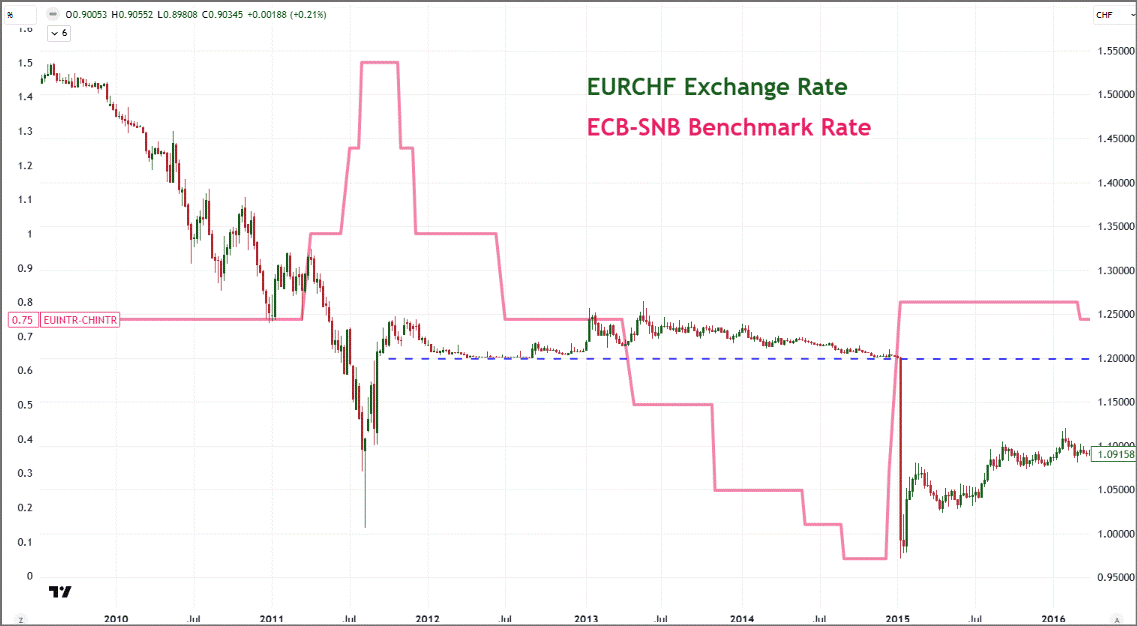
Source: TradingView.com
Stay connected to timely global macro analysis designed to help market participants navigate shifting economic conditions and evolving risk. Gain access to regular market commentary, updated quarterly forecasts, a comprehensive two-week forward economic event calendar, and specialized tools built to support informed trading and risk management decisions.
-- Experts: John Kicklighter, Global Head of Content; Matt Weller, Global Head of Market Research
StoneX TV content is created, produced, and distributed solely by StoneX Media Ltd (“StoneX TV”) and is provided for informational and educational purposes only.
StoneX TV does not provide investment, financial, legal, or tax advice and does not make any recommendation or endorsement of any investment strategy, transaction, or financial instrument. Nothing in this content constitutes, or should be construed as, investment advice or a recommendation to buy, sell, or hold any financial instrument, including securities, futures, derivatives, digital assets, foreign exchange products, or CFDs.
This content does not constitute an offer, invitation, or solicitation to engage in any investment activity.
The information presented is general in nature and is not tailored to the financial situation, investment objectives, or risk tolerance of any specific person. You should not rely on this content as a substitute for independent professional advice.
Investing and trading in financial instruments involves significant risk of loss and is not suitable for all investors. Past performance is not indicative of future results.
Any views or opinions expressed are those of the presenter at the time of publication and are subject to change without notice. Such views may not necessarily reflect those of StoneX Media Ltd or its affiliates. StoneX Media Ltd and its affiliates, including StoneX Group Inc., may from time to time have positions in, or engage in transactions involving, the financial instruments referenced.
This content may include general market commentary and opinion. It does not constitute independent investment research and has not been prepared in accordance with legal requirements designed to promote the independence of investment research.
StoneX Media Ltd is not authorised or regulated to provide investment services and does not act in a fiduciary capacity.
StoneX Media Ltd is incorporated in Ireland and operates in accordance with applicable Irish law. It is a wholly owned subsidiary of StoneX Group Inc. and is a separate legal entity from other subsidiaries within the StoneX Group, which may be regulated in various jurisdictions. StoneX Media Ltd does not act on behalf of, or provide services for, any regulated affiliate.
This content is not directed at, and may not be distributed to, any person in any jurisdiction where such distribution would be contrary to local laws or regulations.
Supporting documentation for any claims, comparisons, statistics, or technical data may be made available upon reasonable request, where applicable.
Our subscribers have access to comprehensive market analysis from StoneX spanning commodities, equities, currencies and more.
Australian business and consumer confidence deteriorate as RBA hike expectations fuel concerns over rates, jobs and household spending.

Dollar expected to reflect Brazil's electoral race, US CPI, and IPCA


The yen's two-day surge has dominated the headlines, but the euro, the Australian dollar and gold were all rebounding at the same time. That pattern points to a dollar problem rather than a purely Japanese one, and it changes how the next labor market print should be read.

Our market expertise, advanced platforms, global reach, culture of full transparency and commitment to our clients’ success all set us apart in the financial marketplace.
Reach
With access to 40+ derivatives exchanges, 180+ foreign exchange markets, nearly every global securities marketplace and numerous bi-lateral liquidity venues, StoneX’s digital network and deep relationships can take clients anywhere they want to go.
Transparency
As a publicly traded company meeting the highest standards of regulatory compliance in the markets we serve; our financials and record of accomplishment are matters of public record. StoneX’s commitment to “doing the right thing over the easy thing” sets us apart in the industry and helps us build respect, client trust and new partnerships.
Expertise
From our proprietary Market Intelligence platform, to “boots on the ground” expertise from award-winning traders and professionals, we connect our clients directly to actionable insights they can use to make more informed decisions and achieve their goals in the global markets.