Zinc and Aluminium Separate Away from the Rest of the Suite on Fundamental Support
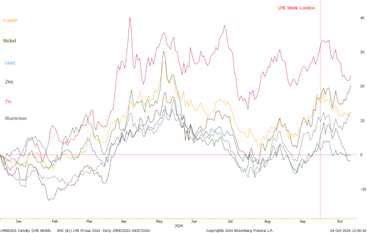
Since the close of LME Week London (4th October), the base metal suite has come under downward pressure from rising geopolitical tensions, nervousness over the outcome of the US election and the reality of weak global manufacturing activity, despite the start of western rate cuts and the unveiling of Chinese stimulus. In fact, each metal of the suite, bar zinc and aluminium, has recorded price declines since LME Week as a result. In this article, we discuss the key drivers behind this divergence in performance for zinc and aluminium, and ask if prices can maintain at current level to year-end.
LME 3M Base Metal Price Performance
Source: Bloomberg
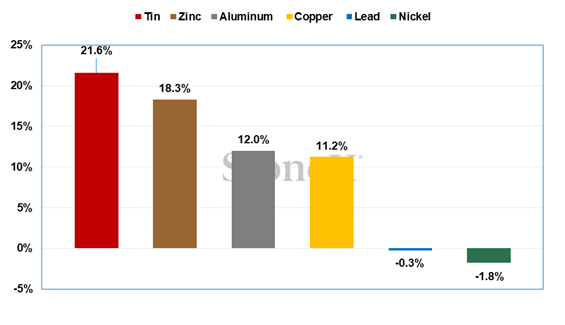
LME 3M Base Metal Price Performance
Source: Bloomberg
ZINC
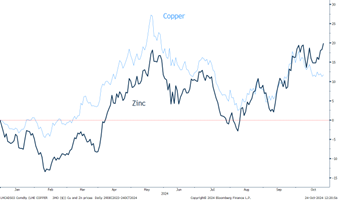
Zinc Outperforms Copper for the First Time in 2024
At the time of writing, is the second best performing base metal in 2024, with gains of 18.3% YTD, just behind tin (at 21.6%) and ahead of aluminium (12.0%). However, over the course of much of this year, zinc has been a key underperformer, with YTD declines recorded as recently as August, with zinc’s large exposure of more than 50% to the galvanising market (i.e. steel), leading to global growth in demand this year falling to its weakest level since 2022. In addition, zinc’s smaller exposure to the green or digital transition has resulted in lower investor interest than other metals like copper.
LME 3M Copper Versus Zinc Price Performance YTD
Source: Bloomberg
What Has Changed?
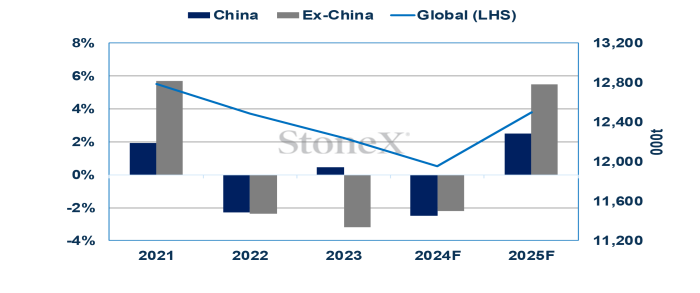
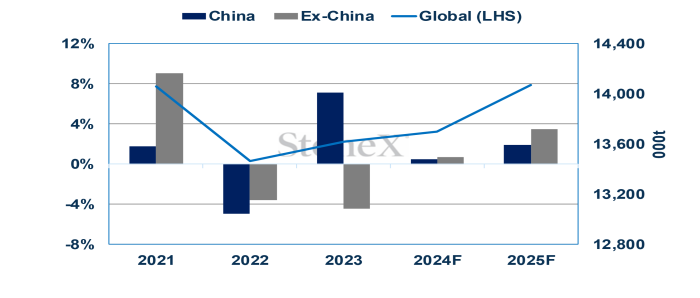
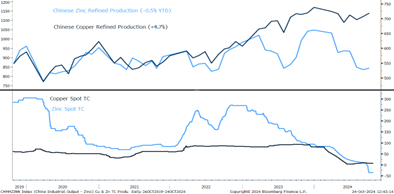
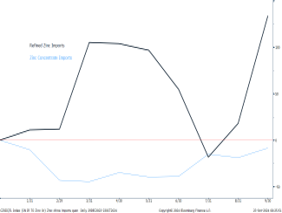
It is all in the specifics of the fundamentals. While we have highlighted that zinc’s demand profile is less favourable to the current economic landscape, than say copper (which is universally utilised, in addition to being used in the energy and digital transition). The supply situation for zinc is highly supportive, with mine production on track to record a third year of declines in 2024, while refined supply is forecast to reverse growth from last year, and fall by 1.3% Y/Y. The limited availability of zinc ore is most noticeable in China, with imports on a YTD basis in negative territory, causing spot Treatment Charges (TC) (the cost smelters charge miners to refine ore into metal), falling into negative territory. As a result, refined output in the largest producer of refined zinc, China, has fallen by 0.5% YTD.
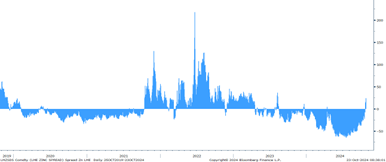
With this as our backdrop, a flurry of recent announcements of additional supply disruptions to the zinc market has increased concerns that the market balance will tighten further, underpinning higher prices. This is especially significant, given that China is current in a seasonality driven restocking period (September-October), with the LME Cash-3M spread having flipped into a backwardation (on 28th October) for the first time since April.
Latest Mine Disruptions
• 24th October: Teck Resources Ltd lowered its output target by 12% (or 40,000t) from its Canadian Trail smelter due to a localised fire.
• 18th November: Sibanye Stillwater announced that its Century zinc mine will be offline until mid-November, due to a bushfire. Century produced 76,000t of zinc last year (~0.6% global output), with the impact of the latest closure set to reduce output by 9,700t (>0.1% of global output).
• Ivanhoe Mines Ltd: downgraded its 2024 production guidance to 70-50,000t from 140-100,000t. Kipushi is the world’s highest-grade zinc mine.
• Korea Zinc (the largest producer of refined zinc in the world) takeover battle heats up, with 23rd October marking the deadline for the Chairman’s proposal to buy back shares at a premium.
End-Use Zinc

Source: Bloomberg
End-Use of Copper

Source: Bloomberg
Zinc Mine Production Forecast to Decline for a Third Year in 2024
Source: Bloomberg
Zinc Refined Production Forecast to Decline in 2024
Source: Bloomberg
Zinc and Copper Chinese Refined Production & Spot TC
Source: Bloomberg
Imports of Zinc Concentrate Decline on Tight Availability, Refined Imports Favoured
Source: Bloomberg
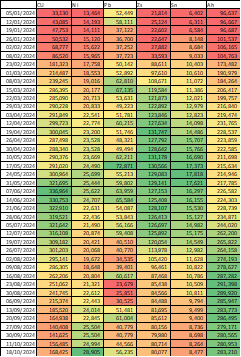
Zinc SHFE Cancelled Warrants Have Been Falling Since August
Source: Bloomberg
LME Cash-3M Spread
Source: Bloomberg
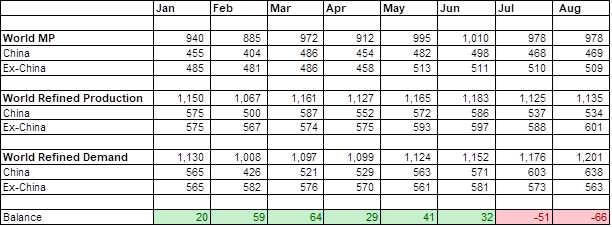
In addition to our own estimates, the International Lead and Zinc Study Group’s October report has highlighted the zinc market moving into a deficit since July. If we compare the forecast changes in the October report to the August report, the ILZSG has lowered its outlook on mine production by 80,000t, world production by 43,000t, while also lowering the demand outlook by 60,000t.
ILZSG October Zinc Outlook
Source: Bloomberg, ILZSG
Aluminium (a brief look)
Aluminium is the only other base metal to have recorded price gains since LME Week London, with supply concerns also at the heart of higher prices – with the largest impact to production occurring in October.
EGA’s Guinea Exports of Bauxite Are Halted
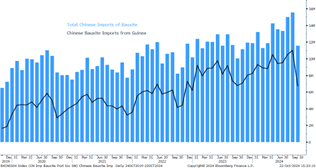
On 11th October, Reuters reported that Emirates Global Aluminium (EGA) subsidiary, Guinea Alumina Corporation (GAC) shipments of bauxite had been halted by customs authorities, with little information on why. Guinea is the world’s largest exporter of bauxite, accounting for ~70% of all global seaborne exports, with GAC accounting for ~10% of the total volume (14.1Mt), roughly 3.3% of global bauxite supply (or 6.6% of alumina supply).
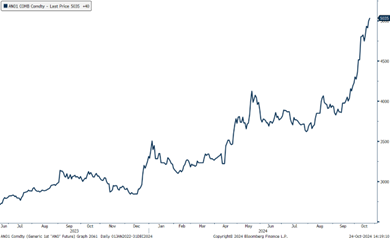
Alumina Prices Spike to Record High
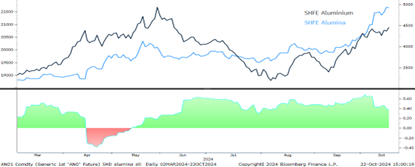
As a result, prices of alumina on the SHFE have jumped more than 17% in October, with China the largest delivery point for bauxite in the world.
SHFE Alumina Prices Hit Record High
Source: Bloomberg
Bauxite Imports From Guinea Fall
Source: Bloomberg
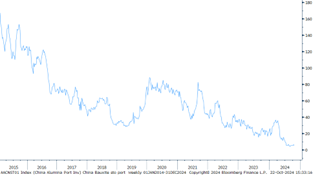
Stocks of Bauxite at Chinese Ports Hit Lowest Level on Record
Source: Bloomberg
Aluminium and Alumina Prices are Closely Correlated
Source: Bloomberg
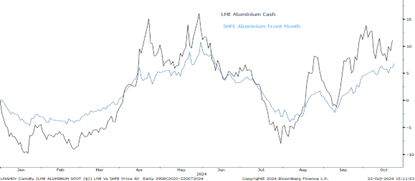
LME Aluminium Prices Still Outperform SHFE on Record Chinese Output
LME Aluminium Cash Versus SHFE Aluminium
Source: Bloomberg
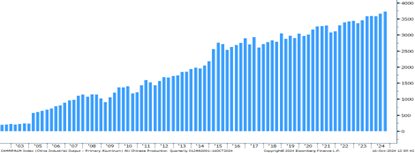
Chinese Aluminium Domestic Production
Source: Bloomberg
Our View
To year-end, we see zinc prices remaining supported by favourable fundamentals and no quick fix in sight for a tightening ore outlook, while the macro environment should also lend support with additional western rate cuts and forecast further policy announcements out of China.
In the case of aluminium, we are more cautious on price support, as while alumina and aluminium prices are closely correlated, the refined aluminium market is well supplied, with the impact of reduced alumina (in the near-term), less detrimental. Note, refined aluminium production in China hit a record in August, up 5.6% YTD, while zinc output has fallen by 0.5% YTD.