Market Seasonality Report – June 2025: “Sell in May” Delayed to Today?
Key Talking Points:
- As noted in last month’s report, the S&P 500 “Sell in May” trade failed to play out again, but additional gains may be more difficult as we move into June.
- The VIX typically declines in June heading into the proverbial summer doldrums before volatility picks up again in Q3.
- June has historically been the worst month for gold performance, with an average decline of -0.4% going back to 1990.
The beginning of a new month marks a good opportunity to review the seasonal patterns that have influenced the markets since 1990.
As always, these seasonal tendencies are just historical averages, and any individual month or year may vary from the historic average, so it’s important to complement these seasonal leans with alternative forms of analysis to create a long-term successful trading strategy. In other words, past performance is not necessarily indicative of future results.
S&P 500 Seasonality – S&P 500 (Price-Only)
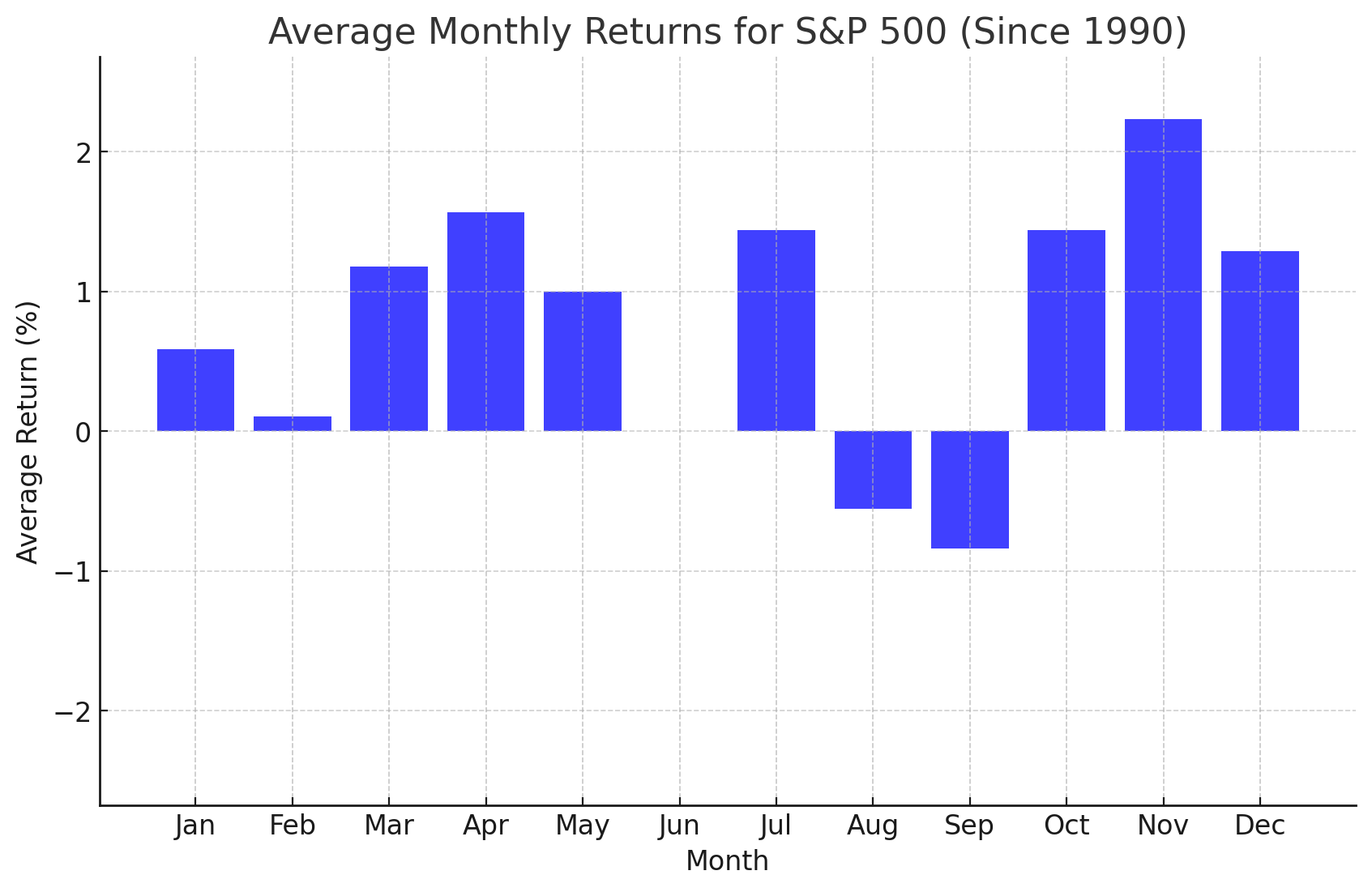
Chart Source: TradingView, StoneX.Please note that past performance is not necessarily indicative of future results.
Historically, June has been a mediocre month for US stocks, with the broad S&P 500 index sporting an average (price-only) return of 0.0% over the last 35 years. Last month we had highlighted reasons investors may NOT want to follow the traditional “Sell in May” paradigm, and the S&P 500 went on to have its best May in 35 years. Now that we stand on the brink of the proverbial summer doldrums and the index within spitting distance of record highs, it may be more difficult for stocks to extend their gains substantially, especially with earnings season behind us.
Nasdaq 100 Seasonality – NDX (Price-Only)
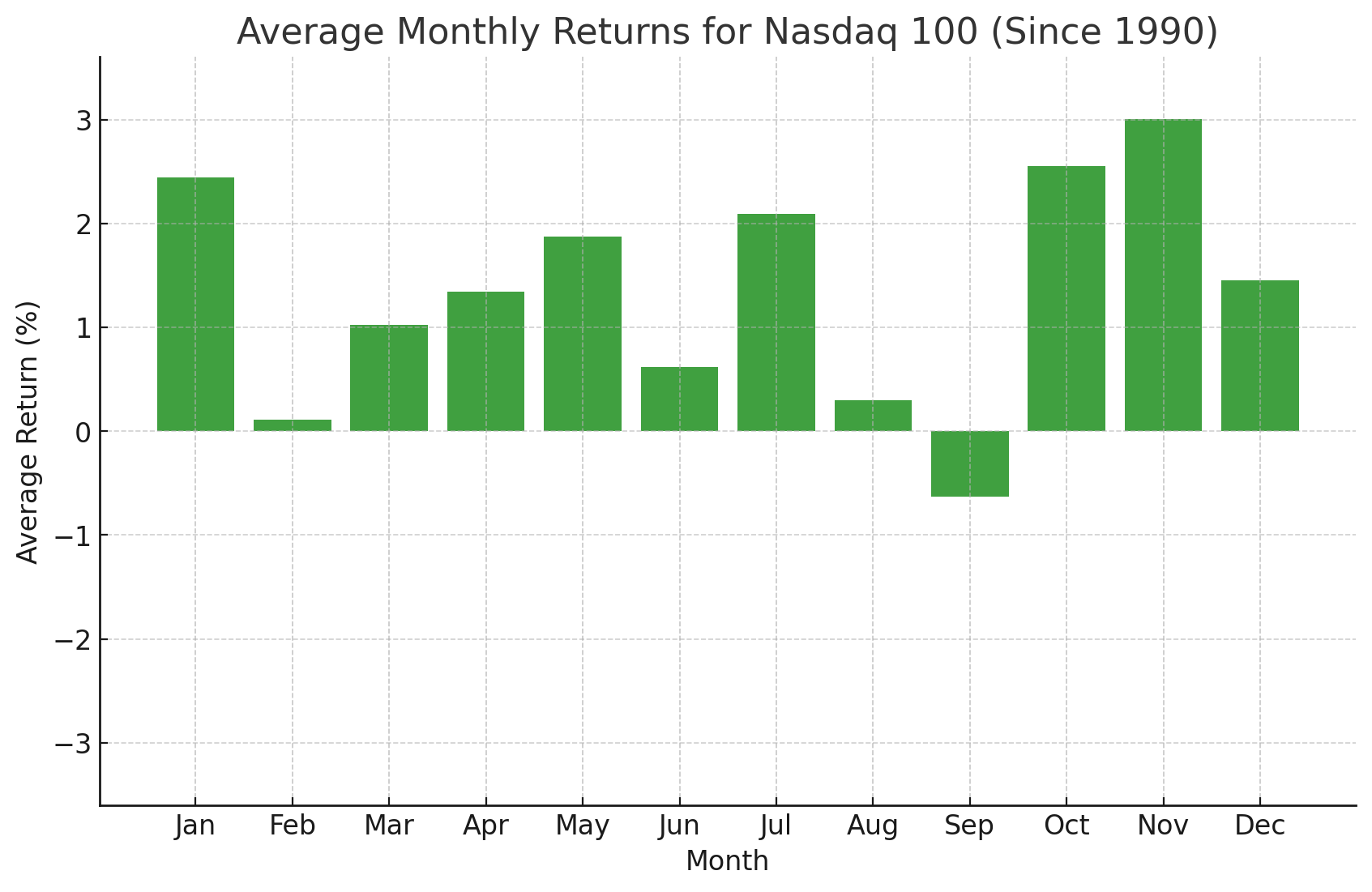
Chart Source: TradingView, StoneX. Please note that past performance is not necessarily indicative of future results.
Looking at the above chart, the Nasdaq 100 has historically ticked higher in June, to the tune of +0.6% since 1990. After lagging the other US indices throughout the first third of the year, the Nasdaq 100 is now the best-performing major US index, helped along by a reinvigorated AI-driven “Magnificent Seven” trade, headlined by a staggering 25% rally in Nvidia’s stock last month.
Volatility Index Seasonality – VIX
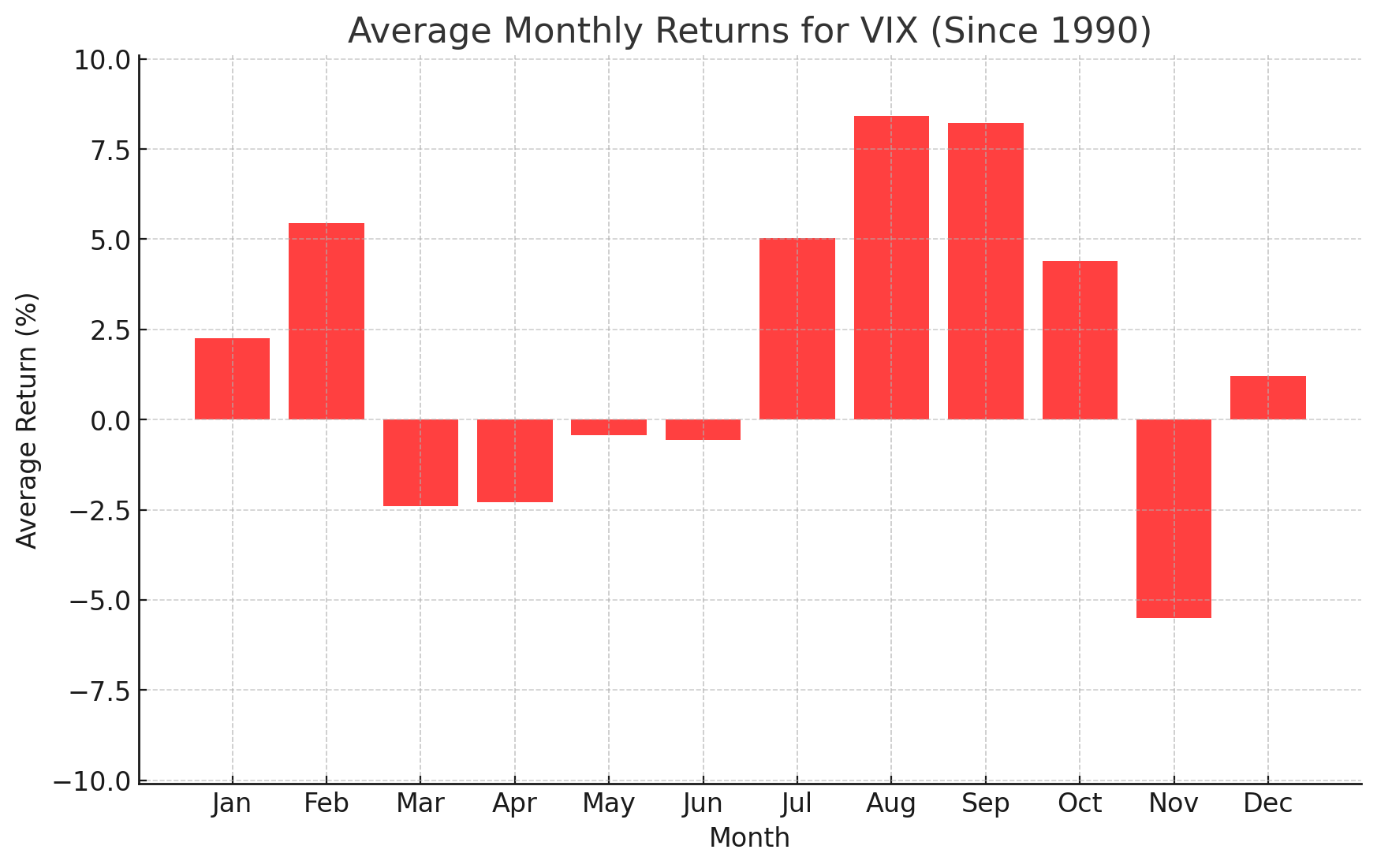
Chart Source: TradingView, StoneX. Please note that past performance is not necessarily indicative of future results.
Like May, June has historically been a month where stock market volatility falls, with the VIX index contracting by an average of -0.6% since 1990. Following the seasonal trend, the VIX declined sharply last month to drop back below 20 (though still well above the 2023-2024 average in the mid-teens). Uncertainty around US trade policies and geopolitical tensions continues to decline, but those themes will be critical for anyone interested in volatility to monitor throughout June and beyond.
Gold Seasonality – XAU/USD
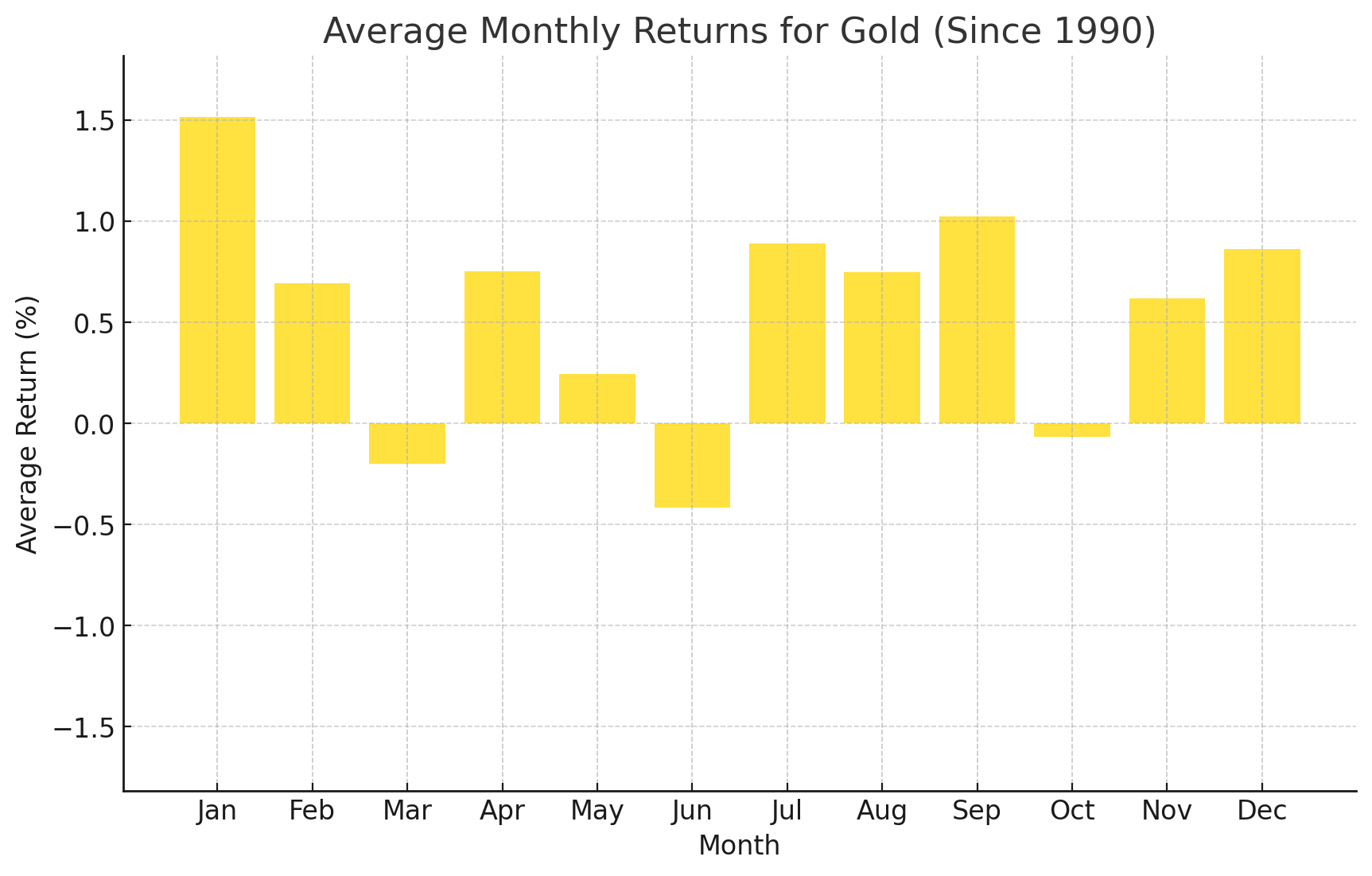
Chart Source: TradingView, StoneX. Please note that past performance is not necessarily indicative of future results.
Turning our attention to commodities, June has historically been the worst month for gold performance, with an average decline of -0.4% going back to 1990. The yellow metal took a breather in May, consolidating entirely within April’s range and finishing essentially unchanged near the $3300 level. After last month’s consolidation, gold is well positioned to extend its historic rally amidst still-falling interest rates globally, trade uncertainty, and a well established uptrend going back to late 2022, but it will have to buck the seasonal trend to do so.
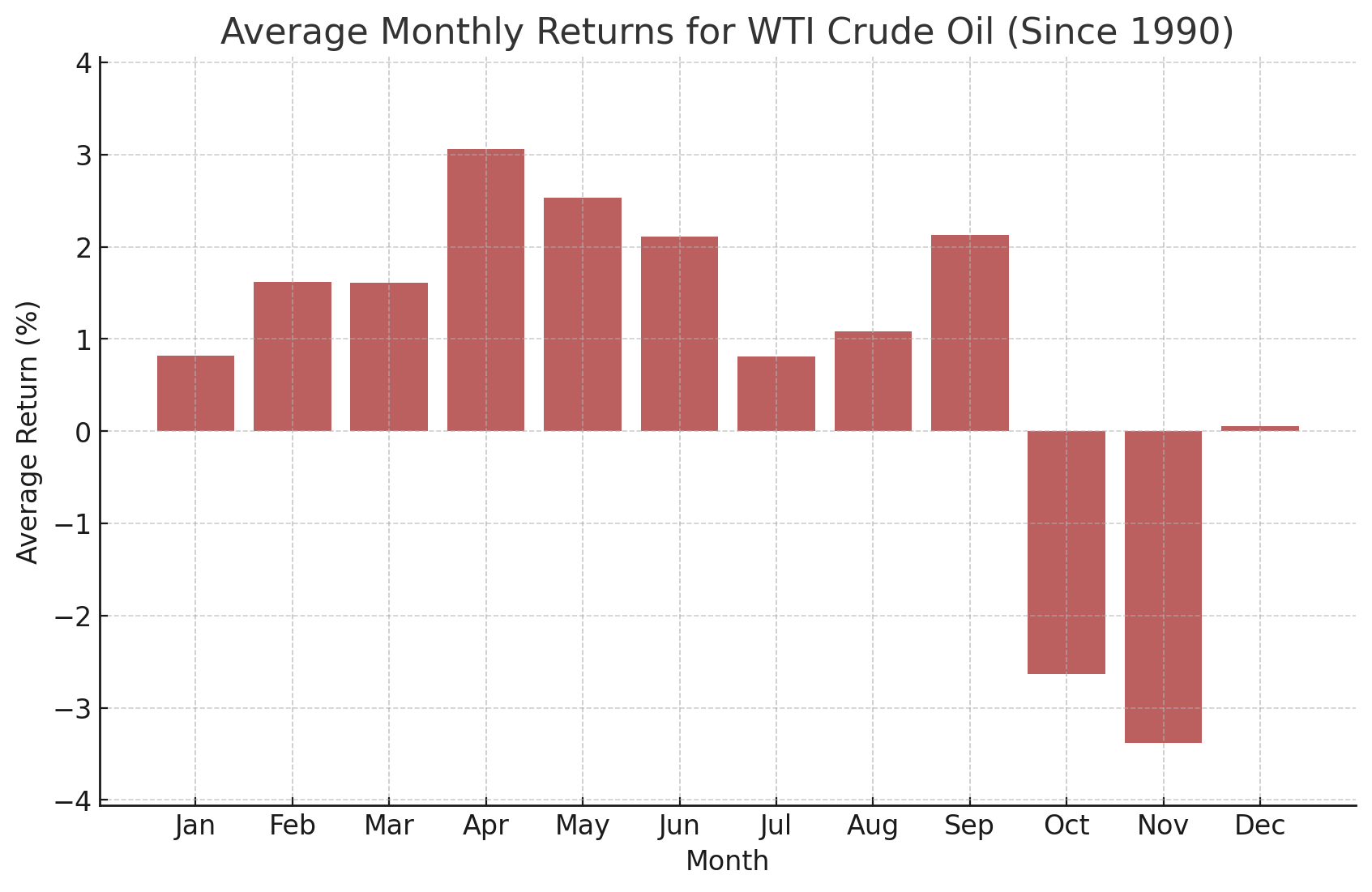
WTI Crude Oil Seasonality – WTI Chart
Source: TradingView, StoneX. Please note that past performance is not necessarily indicative of future results.
Last but not least, WTI Crude Oil has historically seen strong performance in June, with an average gain of +2.1% over the last 35 years. WTI bounced off its 4-year lows last month as global recession fears abated slightly, but sentiment remains fragile so developments on that front, in addition to any changes to OPEC+ production quotas will likely be far more significant than the long-term seasonal trend. As always, we want to close this article by reminding readers that seasonal tendencies are not gospel so it’s important to complement this analysis with an examination of the current fundamental and technical backdrops for the major markets and the global economy.
Follow the Global Macro Calendar
What are the major events and indicators on tap for the global economy that could charge volatility in markets and reshape deeper fundamental themes? Sign up for the updated Global Macro Calendar updated each week with a two week look ahead of the top events!
Sign Up
-- Written by: Matt Weller, Global Head of Research
StoneX TV content is created, produced, and distributed solely by StoneX Media Ltd (“StoneX TV”) and is provided for informational and educational purposes only. StoneX TV does not provide investment, financial, legal, or tax advice and does not make any recommendation or endorsement of any investment strategy, transaction, or financial instrument. Nothing in this content constitutes, or should be construed as, investment advice or a recommendation to buy, sell, or hold any financial instrument, including securities, futures, derivatives, digital assets, foreign exchange products, or CFDs. This content does not constitute an offer, invitation, or solicitation to engage in any investment activity. The information presented is general in nature and is not tailored to the financial situation, investment objectives, or risk tolerance of any specific person. You should not rely on this content as a substitute for independent professional advice. Investing and trading in financial instruments involves significant risk of loss and is not suitable for all investors. Past performance is not indicative of future results. Any views or opinions expressed are those of the presenter at the time of publication and are subject to change without notice. Such views may not necessarily reflect those of StoneX Media Ltd or its affiliates. StoneX Media Ltd and its affiliates, including StoneX Group Inc., may from time to time have positions in, or engage in transactions involving, the financial instruments referenced. This content may include general market commentary and opinion. It does not constitute independent investment research and has not been prepared in accordance with legal requirements designed to promote the independence of investment research. StoneX Media Ltd is not authorised or regulated to provide investment services and does not act in a fiduciary capacity. StoneX Media Ltd is incorporated in Ireland and operates in accordance with applicable Irish law. It is a wholly owned subsidiary of StoneX Group Inc. and is a separate legal entity from other subsidiaries within the StoneX Group, which may be regulated in various jurisdictions. StoneX Media Ltd does not act on behalf of, or provide services for, any regulated affiliate. This content is not directed at, and may not be distributed to, any person in any jurisdiction where such distribution would be contrary to local laws or regulations. Supporting documentation for any claims, comparisons, statistics, or technical data may be made available upon reasonable request, where applicable.