

The MarketWatch Update
Today's commodity market news and analysis/advisory guidance.

US RJO - Scott Magnuson, CTA
- Precious Metals
- Grains & Oilseeds
- Energy
- Coffee
- Cotton
- Sugar
- Meats & Livestock
- Currencies
- Interest Rates
By: John Kicklighter, Head of Market Research
Once again, the headlines were volatile this past week but the markets maintained their balance. What does the Supreme Court’s ruling on tariffs mean for markets? Should we be mindful of the US’s warning to Iran? What else is on the docket in the week ahead?
Talking Points:
One of the most prominent ‘grey swans’ lurking just at the perimeter of the market’s peripheral vision was detonated to close this past week. The US Supreme Court finally issued its opinion on President Trump’s ability to wield tariffs against America’s trading partners as negotiation fodder for better trade deals – or a source of revenue generation for those not willing to compromise. As was the expectation from betting markets leading into the delayed ruling, the country’s top court determined that the executive branch could not use the IEEPA (International Emergency Economic Powers Act) to justify the impetuous levies employed so aggressively in Trump’s second term and particularly since last April’s Liberation Day fireworks.
On the one hand, this is an abrupt reversal of course to 2025’s most prominent volatility driver. Alternatively, the direct implications for politics, trade, the economy and markets are not as straight forward as the 6-3 vote may suggest. And, it is that nuance that has likely throttled the market’s initial response on Friday – and could very well see it unfold through systemic trends over the coming days and weeks.
Chart of S&P 500 with 100-Day SMA, 5-Day ATR and 55-Day Historical Range (Daily) 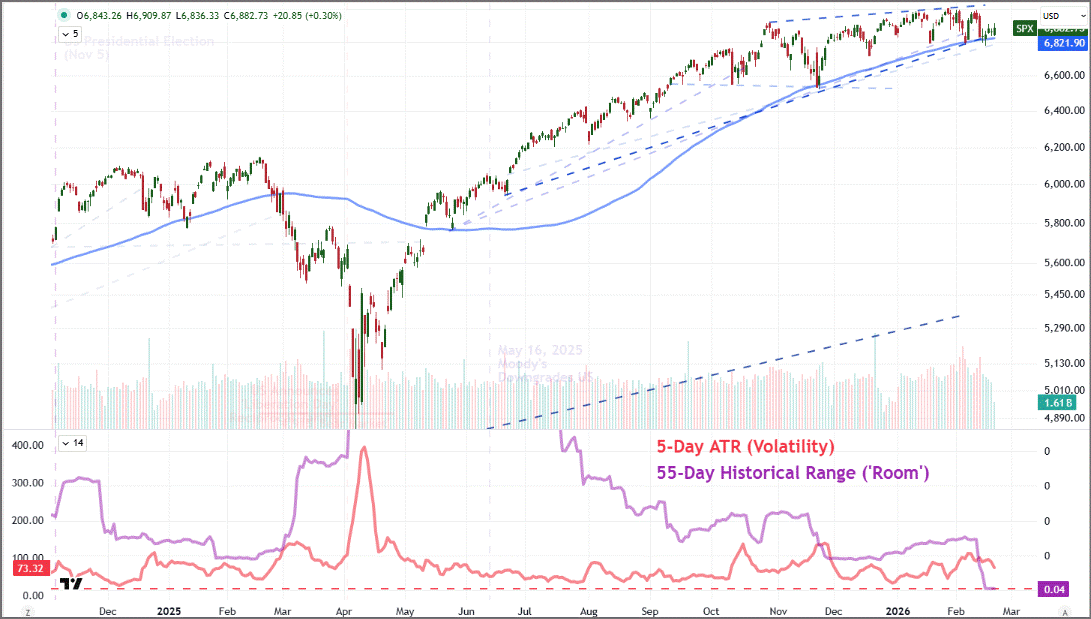
Source: TradingView.com; Standard & Poor’s; John Kicklighter
If we were to refer to the S&P 500 or US Dollar for our assessment of the Supreme Court’s ruling on market sentiment, we would be left to confusion. The former edged higher through Friday’s close while the latter put in for a tepid retreat from four-week highs. As far as the ruling itself, President Trump will temporarily not be able to pursue an unpredictable pattern of tariff escalation to force trade negotiations based on an ambiguous ‘threat’ from large trade deficits. Theoretically, that removes a frequent source of anxiety for markets. However, there remain options for the administration to take alternative paths back to a protectionist standing – with the same backdrop for debate around trade partner pressure versus domestic taxation.
Trump has vowed to pursue alternative legal routes – including a broad 10 percent tariff, which he said would increase to 15 percent Saturday, for a capped 6-month period – to maintain pressure and his source of offsetting government revenue, at least to his administration’s claim. The other options the President spoke to in his invective Friday could include a route for high level tariffs (up to 50 percent) without time limit and not requiring Congressional approval – though they would require a basis on ‘discrimination against US commerce’ (Section 338).
Worldwide Google Search for ‘Tariffs’, ‘Iran’, ‘Economy’ and ‘Interest Rates’ 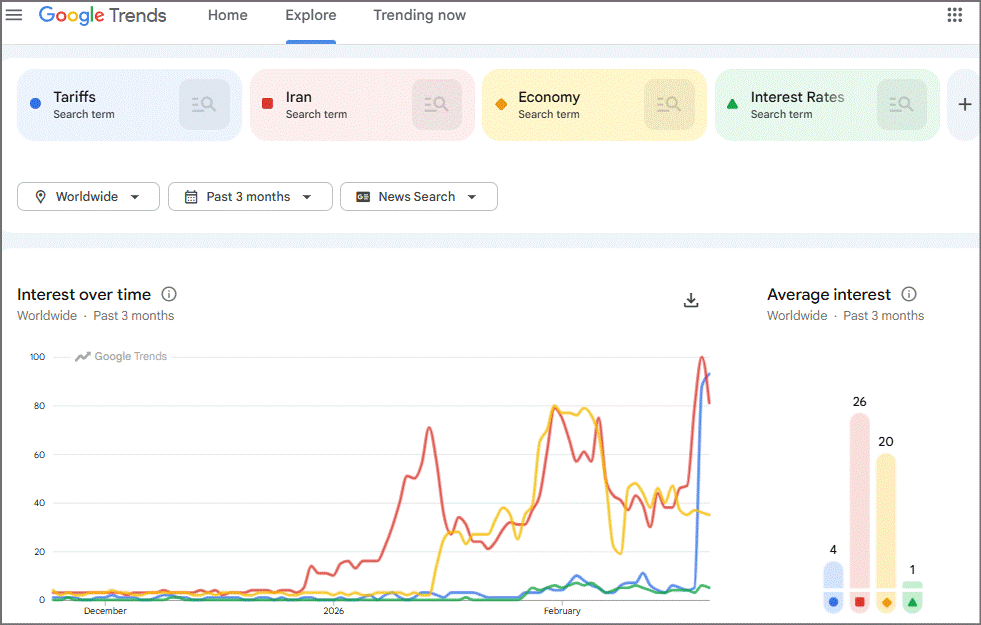
 Source: Google Trends
Ultimately, it is unlikely that the alternative approaches will be as effective in forcing submission in trade negotiations or encourage further onshoring of exported production lines. There is also the mid-terms to be consider with administration’s low approval rating when considering the most aggressive options to consider. That leaves us with ambiguity on trade course – much less downstream economic impact - that takes weeks or months to realize. That may not fast track any ‘worst case scenarios’, but it will add to the concern around policy for building economic and investment connections to the world’s largest economy.
So, while benchmark risks sentiment may stumble through this uncertainty, this is the kind of uncertainty that likely intensifies the diversification of international capital away from the US market. In practical terms, that means further fuel to the ‘sell America’ pressure that has seen US indices lose altitude relative to global counterparts and the Dollar slide since the Liberation Day disruption.
Chart of S&P 500-VEU ETF Ratio and US Economic Policy Uncertainty (Weekly) 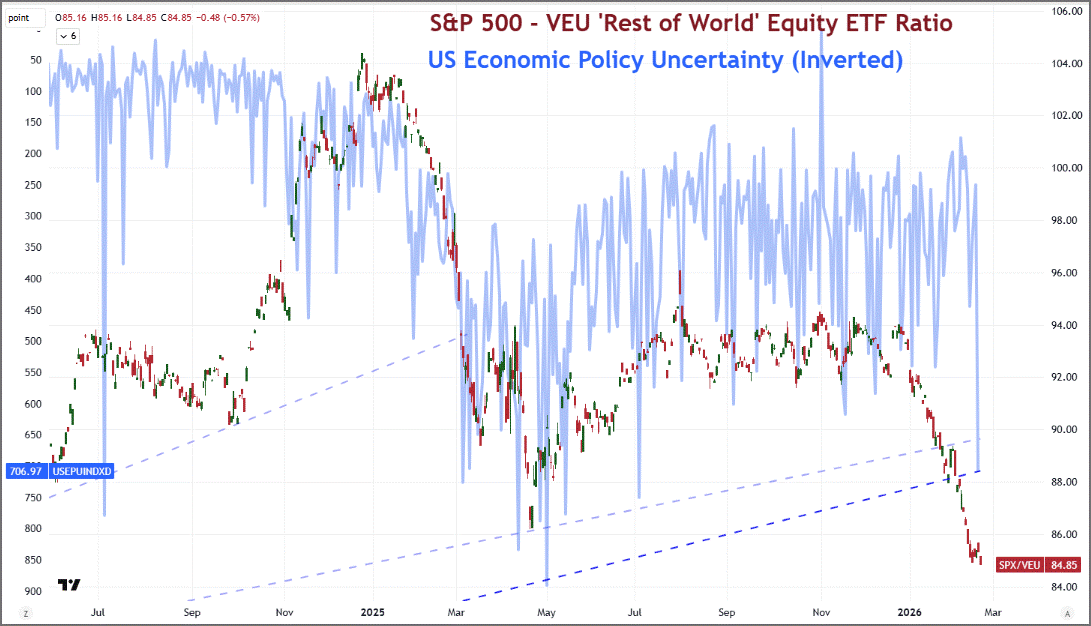
 Source: TradingView.com; Standard & Poor’s; Baker, Bloom, Davis; John Kicklighter
With one grey swan detonated, we should remain alert to an amplified risk of further lower-probability-high-impact threats through the near future. One area of particular risk to be mindful is the threat by President Trump that the United States is considering a strike on Iran given the lack of progress in negotiating a satisfactory nuclear deal. Historically, this political hot potato has been tossed back and forth in the headlines across administrations, but the calculus has likely changed significantly since the United States’ covert extradition of Venezuelan President Nicolas Maduro last month.
Trump, this past week, warned that he was giving the Middle Eastern country 10 days to offer a reasonable solution to their impasse with a heavy implication that military action would be the result of a stalemate – backed by the deployment of a second carrier group to the region. In the wake of the Supreme Court ruling on tariffs, the president is likely looking for areas where he can reassert his influence. Given the general domestic and international perception of villainy around Iran’s leadership, this option could check multiple boxes ahead of a difficult mid-term.
Graph of Probability of US Strike on Iran 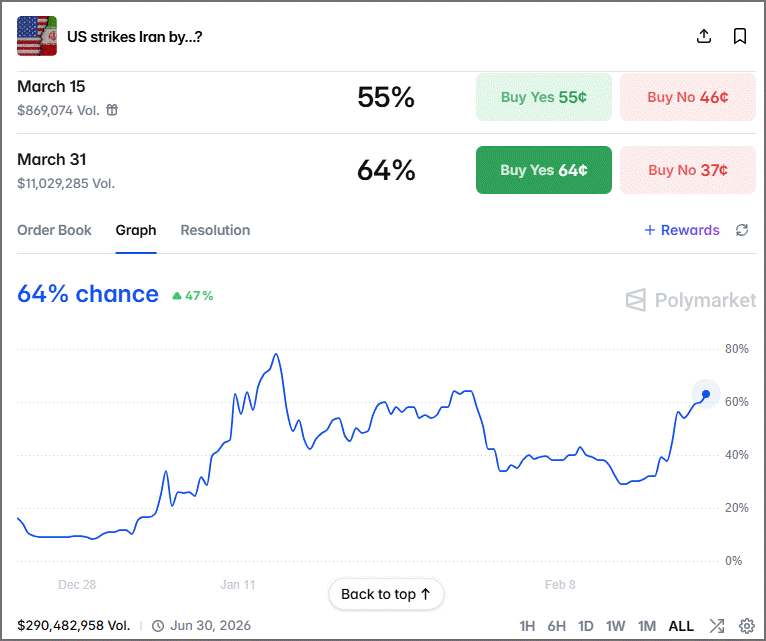
Source: Polymarket
If we simply count out the days of the President’s warning, Iran would theoretically have until Sunday, March 1st. As far as the probability that the US will go through with a military strike, the heavy doubt of previous years will have been significantly reduced following the strikes on three Iranian nuclear sites on June 22nd. Looking to prediction markets for a tangible sense of perceived probability, a scaled calendar of ‘strike prices’ shows a 70 percent chance (on $5 million open interest) of an attack by June 30th and a 64 percent chance by March 31st (on over $290 million open interest). Recall the accusations of ‘insider trading’ around the Venezuelan operation in these markets and the volumes are noteworthy.
Another consideration that makes this lingering risk arguably more threatening (or interesting) than the Supreme Court ruling is the more binary nature with direct consequences from a traditional markets perspective. Crude oil is clearly the most directly exposed market. Oil prices surged in June around the nuclear facility site strikes and energy prices have been climbing recently amid the headlines, with the US-based WTI active futures contract price hitting a six-month high and the Brent-WTI spread reaching a two year high around $5.75. And, given the backdrop of capital rotation and questionable confidence in speculative appetite; it would be wise to be mindful of the spillover impact such an event could have on the global financial markets.
Chart of US Crude Oil Prices Overlaid with Brent-WTI Spread (Weekly) 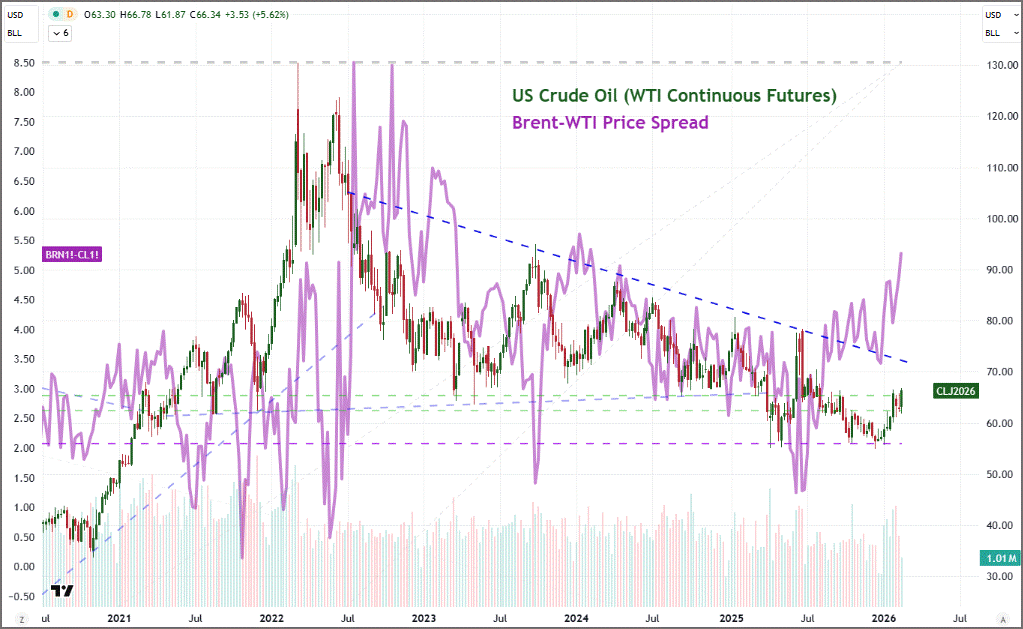 Source: TradingView.com; NYMEX; ICE; John Kicklighter
In determining the potential fundamental focus of the global markets moving forward, there seems a far greater potential in headlines and their predictable timelines also make it the more probable lede. That doesn’t ensure volatility – much less trend – but it helps prioritize our own attention when analyzing the landscape. Yet, prioritizing the volatile headlines doesn’t mean we can reasonably ignore the traditional economic docket. There isn’t a definitive and discrete scheduled event that would readily be considered capable of single-handedly dictating market direction. However, we do have a few events that rise to the status of a possible potent initial catalyst for a deeper theme.
Calendar of Top Global Macro Event Risk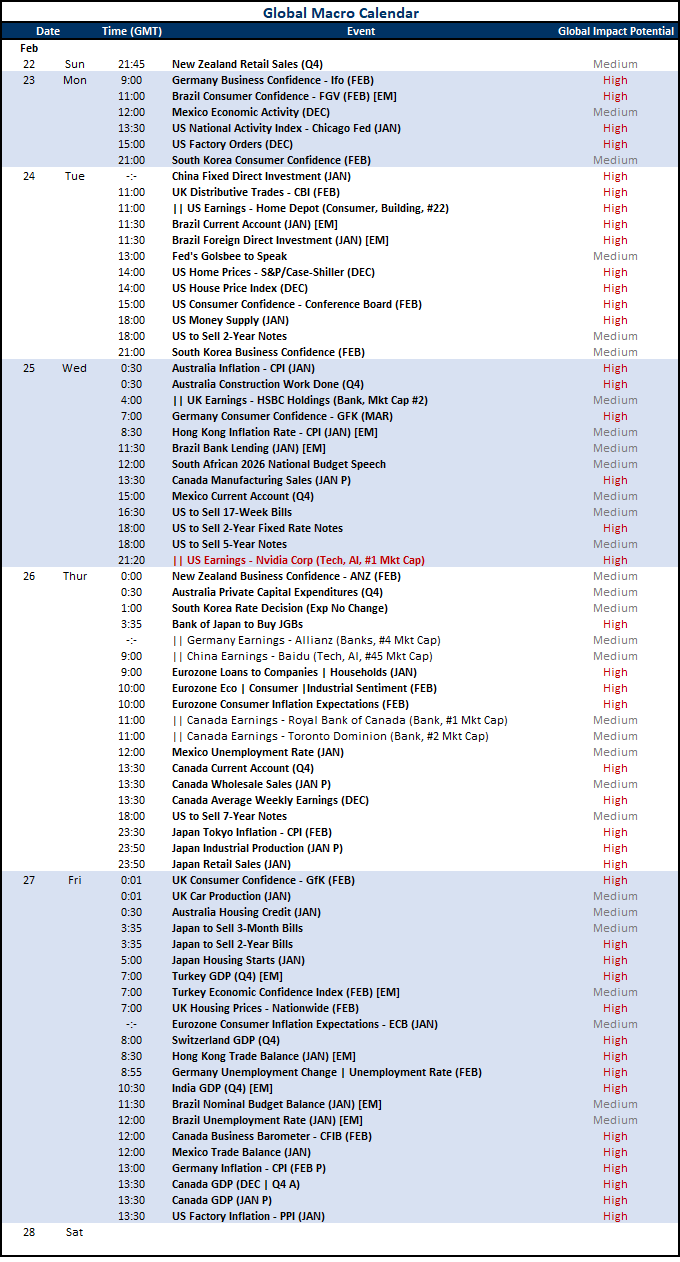
Source: John Kicklighter
There is a considerable amount of ambiguity when it comes to individual lines of fundamental interest – much less the broader state of risk appetite – which has dulled the focus on traditional themes and event risk, shifting attitudes more towards a sense of ‘faith’. Reticence to commit to a ‘risk on’ or ‘risk off’ transition on the back of an otherwise clear fundamental cue can be disheartening for the analyst or investor; but it shouldn’t mean that we stop charting the course. Like volatility, speculative focus is mean reverting to the practical. One area of important interest for the US backdrop should be consumer confidence. In a world where data is questioned, forecasts are wildly divergent and economic measures are given multiple interpretations; consumer confidence cannot be readily questioned.
Accusations of poor data collection or misinterpretation haven’t been attributed to the Conference Board’s or University of Michigan’s sentiment surveys. Even if they were doubted, the results of a diminished inclination to spend and support the economy will still result. The UofM’s February update offered a further rebound from its near series record low, but the Conference Board’s report has diverged with its own January print dropping to a 13-year low. If this continues through this update, it will draw some deserved concern.
Chart of US Consumer Confidence from Conference Board and UofM (Monthly)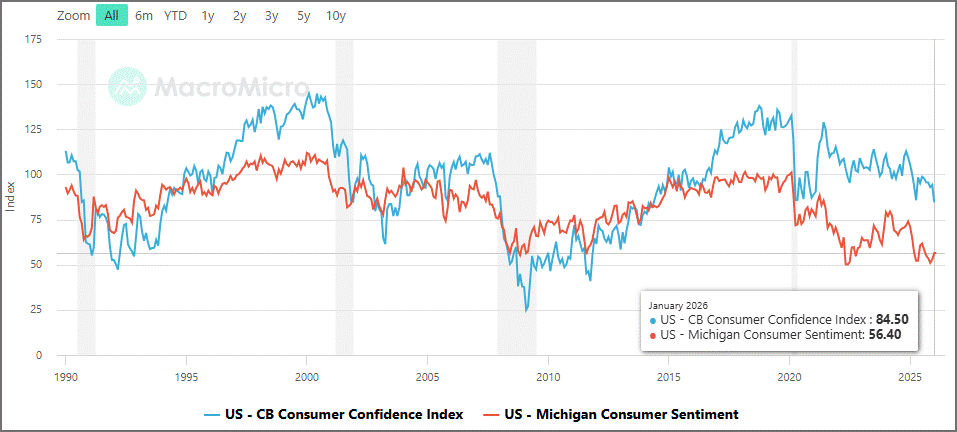
Source: MacroMicro.com; Conference Board; University of Michigan
If we are really looking for a single scheduled event over the coming week with the greatest possible advanced expectation for awareness, it would have to be Nvidia’s earnings due after the US exchange close Wednesday (at 21:20 GMT). This is the last of the Magnificent 7 to report, and the response to its peers over previous weeks was not exactly inspiring. The general AI buoyancy that we had seen take the speculative reigns this past year has significantly fallen off.
That has led to the shift in enthusiasm around a massive investment into AI infrastructure as an economic engine to questions over the ROI and downstream throughput. In more practical terms, Nvidia has beat analyst expectations pretty consistently over the recent past; yet at least the last five quarters’ reaction, the NVDA has dropped over short stretches since the results were published. The drop in tech-oriented appetite (Nasdaq to Dow ratio) or broader sentiment hasn’t been as clear cut, but it shouldn’t be discounted given the market backdrop.
Chart of Nvidia and Nasdaq 100 – Dow Ratio With NVDA Earnings Highlighted (Daily)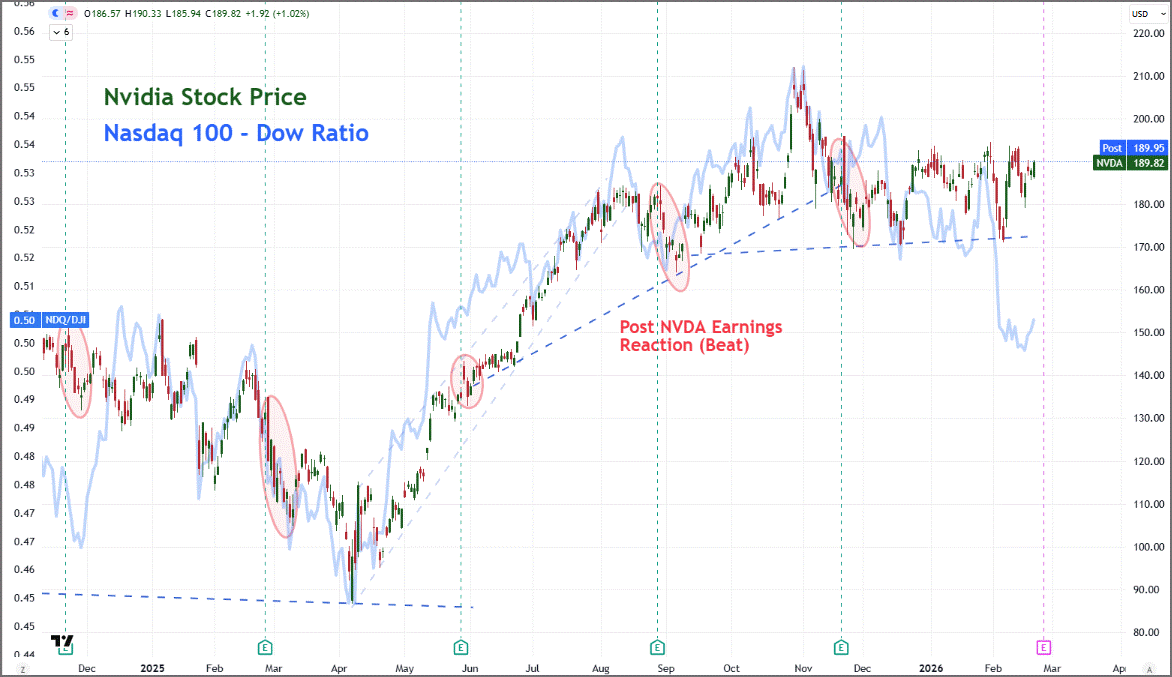
Source: TradingView.com; John Kicklighter
Last week, the world’s largest economy reported a significant slow down in its economic tempo through the final quarter of 2025. The United States was running at a 1.4 percent annualized pace of growth through Q4 which was less than half the forecast by economists and a steep downshift from the previous period’s 4.4 percent tempo. The market wasn’t too perturbed by the news at the time – likely as it was distracted – but that is not an encouraging sign, even for a delayed reading. Is this just an American trend, perhaps due to the ‘sell America’ pressure; or is it a broader shift that should worry global investors?
We are due collectively a look on economic activity for approximately 7 percent of worldwide GDP in the Q4 updates on economic activity from India (4th largest economy); Canada (10th); Turkey (16th) and Switzerland (21st). For particular domestic interest, the Indian update will come with the rupee struggling to recover from a record low – even against a weakened US dollar. Canada’s figures will also offer perspective for trade-related impacts, evolving relationships and it will present an early January insight.
Chart of Year-Over-Year GDP for India, Turkey, Canada and Switzerland (Quarterly) 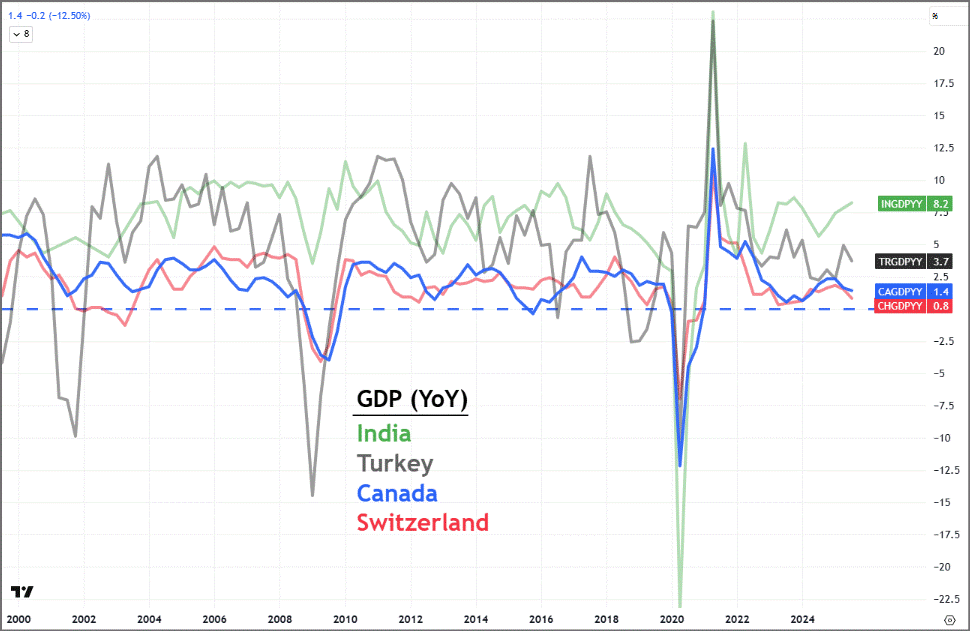
Source: TradingView.com; John Kicklighter
Stay connected to timely global macro analysis designed to help market participants navigate shifting economic conditions and evolving risk. Gain access to regular market commentary, updated quarterly forecasts, a comprehensive two-week forward economic event calendar, and specialized tools built to support informed trading and risk management decisions.
-- Written by John Kicklighter, Global Head of Content
© 2026 StoneX Group Inc. all rights reserved.
The subsidiaries of StoneX Group Inc. provide financial products and services, including, but not limited to, physical commodities, securities, clearing, global payments, risk management, asset management, foreign exchange, and exchange-traded and over-the-counter derivatives. These financial products and services are offered in accordance with the applicable laws in the jurisdictions in which they are provided and are subject to specific terms, conditions, and restrictions contained in the terms of business applicable to each such offering. Not all products and services are available in all countries. The products and services offered by the StoneX
Group of companies involve risk of loss and may not be suitable for all investors. Full Disclaimer.
This content is not intended for residents of any particular country, and the information herein is not advice nor a recommendation to trade nor does it constitute an offer or solicitation to buy or sell any financial product or service, by any person or entity in any jurisdiction or country where such distribution or use would be contrary to local law or regulation. Please refer to the Regulatory Disclosure section for entity-specific disclosures.
No part of this material may be copied, photocopied or duplicated in any form by any means or redistributed without the prior written consent of StoneX Group Inc. The information herein is provided for informational purposes only. This information is provided on an ‘as-is’ basis and may contain statements and opinions of the StoneX Group of companies as well as excerpts and/or information from public sources and third parties and no warranty, whether express or implied, is given as to its completeness or accuracy. Each company within the StoneX Group of companies (on its own behalf and on behalf of its directors, employees and agents) disclaims any and all liability as well as any third-party claim that may arise from the accuracy and/or completeness of the information detailed herein, as well as the use of or reliance on this information by the recipient, any member of its group or any third party.
The subsidiaries of StoneX Group Inc. provide financial products and services, including, but not limited to, physical commodities, securities, clearing, global payments, risk management, asset management, foreign exchange, and exchange-traded and over-the-counter derivatives. These financial products and services are offered in accordance with the applicable laws in the jurisdictions in which they are provided and are subject to specific terms, conditions, and restrictions contained in the terms of business applicable to each such offering. Not all products and services are available in all countries. The products and services offered by the StoneX Group of companies involve risk of loss and may not be suitable for all investors. Full Disclaimer. This content is not intended for residents of any particular country, and the information herein is not advice nor a recommendation to trade nor does it constitute an offer or solicitation to buy or sell any financial product or service, by any person or entity in any jurisdiction or country where such distribution or use would be contrary to local law or regulation. Please refer to the Regulatory Disclosure section for entity-specific disclosures. No part of this material may be copied, photocopied or duplicated in any form by any means or redistributed without the prior written consent of StoneX Group Inc. The information herein is provided for informational purposes only. This information is provided on an ‘as-is’ basis and may contain statements and opinions of the StoneX Group of companies as well as excerpts and/or information from public sources and third parties and no warranty, whether express or implied, is given as to its completeness or accuracy. Each company within the StoneX Group of companies (on its own behalf and on behalf of its directors, employees and agents) disclaims any and all liability as well as any third-party claim that may arise from the accuracy and/or completeness of the information detailed herein, as well as the use of or reliance on this information by the recipient, any member of its group or any third party.
© 2026 StoneX Group Inc. all rights reserved.
Our subscribers have access to comprehensive market analysis from StoneX spanning commodities, equities, currencies and more.
Today's commodity market news and analysis/advisory guidance.

Dollar expected to reflect inflation data in the US and Brazil, geopolitical tensions in the Middle East, and ECB interest rate decision


This daily commentary delivers a concise, expert-driven overview of global futures markets, designed for traders and investors seeking actionable insights. Each edition covers the technical setups, and trade recommendations across major commodity contracts, including grains, livestock, metals, energy, currencies, and equity indices.

Our market expertise, advanced platforms, global reach, culture of full transparency and commitment to our clients’ success all set us apart in the financial marketplace.
Reach
With access to 40+ derivatives exchanges, 180+ foreign exchange markets, nearly every global securities marketplace and numerous bi-lateral liquidity venues, StoneX’s digital network and deep relationships can take clients anywhere they want to go.
Transparency
As a publicly traded company meeting the highest standards of regulatory compliance in the markets we serve; our financials and record of accomplishment are matters of public record. StoneX’s commitment to “doing the right thing over the easy thing” sets us apart in the industry and helps us build respect, client trust and new partnerships.
Expertise
From our proprietary Market Intelligence platform, to “boots on the ground” expertise from award-winning traders and professionals, we connect our clients directly to actionable insights they can use to make more informed decisions and achieve their goals in the global markets.