Dollar to reflect Brazilian electoral race, US economic data, and PTAX
- Bullish
- The prospect of stabilization in the rise of Flávio Bolsonaro's voting intentions may reduce investors' expectations of a government change and fiscal policy direction, potentially raising national risk perception and harming the performance of the Brazilian real.
- Strong figures for inflation, GDP, and employment in the US should reinforce the perception of a more robust economy, increasing bets on further interest rate hikes by the Fed in the short term and strengthening the USD globally.
- Bearish
- No predominantly bearish factors have been identified for the exchange rate this week. However, it is necessary to consider that exchange rates are historically volatile and that a decline remains possible, either due to frustration with bullish assumptions or the occurrence of unexpected events.
The week in review
- In the electoral sphere, the stabilization of Flávio Bolsonaro's voting intentions reduced investors' expectations of a potential government change and a more conservative fiscal policy direction, harming the performance of the Brazilian real.
- Simultaneously, on the external front, the preliminary US Purchasing Managers' Index (PMI) from S&P Global exceeded expectations, while high oil prices and firmer tones from monetary authorities regarding inflation strengthened bets on further interest rate hikes this year, boosting the USD globally.
USDBRL and Dollar Index (points)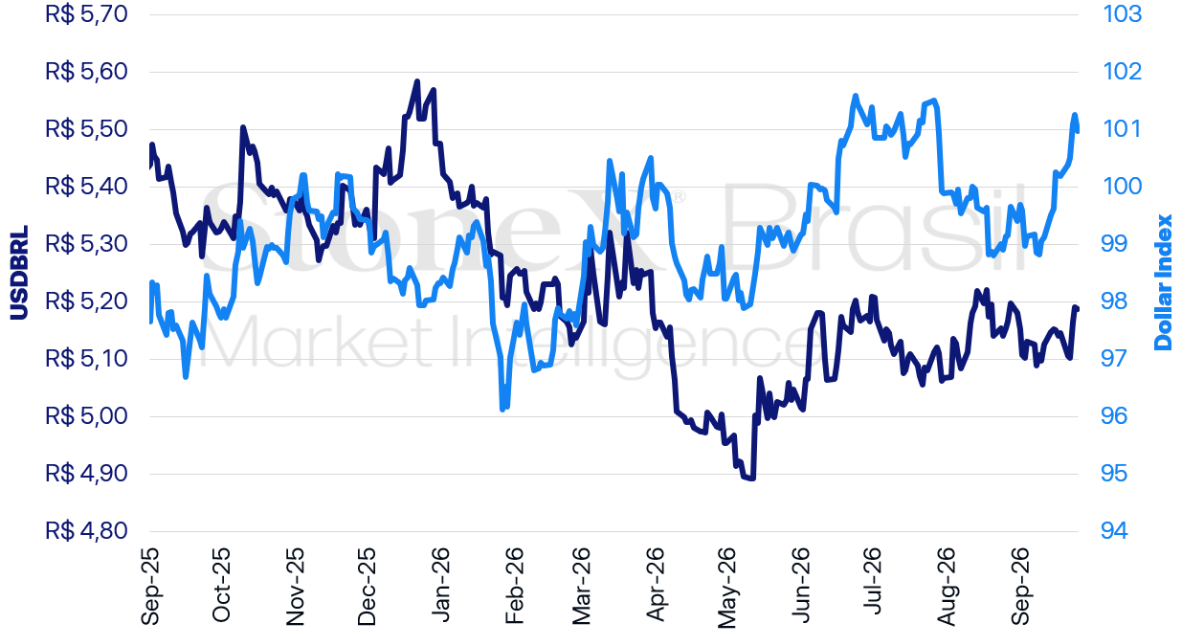
Source: StoneX cmdtyView. Design: StoneX.
USDBRL variations | Daily: -0.07% | Weekly: +0.80% | Monthly: +0.11% | Annual: -5.29% | Over 12 months: -3.32%
Dollar Index variations | Daily: -0.27% | Weekly: +0.78% | Monthly: +1.58% | Annual: +2.71% | Over 12 months: +2.57%
KEY EVENT: Electoral race in Brazil
Expected impact on the USDBRL: bullish
Less than 9 days to go until the first round of Brazil's presidential elections on October 4, the foreign exchange market is expected to react to the political and electoral landscape, with next week's events being crucial for investors to calibrate their expectations for the final outcome.
- Three voting intention polls will be released: Quaest and BTG Pactual/Nexus surveys on Monday (28) and the AtlasIntel poll on Tuesday (29).
- Additionally, President Lula plans to participate in the presidential candidate debate on Thursday (01) as a way to anticipate the confrontation with Senator Flávio Bolsonaro.
- If Lula does not attend the debate, there is an assessment that Flávio may also be absent.
Why this matters? A tight electoral race could decrease predictability regarding Brazil's economic policies for the next four years, increasing national asset risk perception, amplifying volatility, and harming the performance of the Brazilian real.
- In particular, recent reactions from financial market agents reveal a preference for the election of a new president who might adopt more conservative fiscal policies.
- As such, lower prospects for a government change tend to elevate national asset risk perception and harm the performance of the BRL.
Recent stabilization: The latest poll conducted by Datafolha on Thursday (24) indicated that Lula and Flávio Bolsonaro had 47% and 45% of voting intentions in a potential second round, respectively.
- Compared to the previous survey, both candidates increased their voting intentions by 1 percentage point, maintaining the distance and the scenario of a technical tie.
- The latest data suggests stabilization in Flávio's voting intention advance, which reduced the gap with Lula and even gained a numerical advantage in some polls (though still within a technical tie).
- Therefore, investors are keen to observe whether Flávio's stabilization trend will persist next week or if the candidate can regain momentum in voting intentions.
- Amid parity in candidate voting intentions, the race is expected to advance to the second round on October 25.
Government measures: On Friday night (25), the federal government is expected to sign two provisional measures: one to ban online betting and another for renegotiating individual debts.
- As of this report's publication, there was no official confirmation of these measures, but investors should closely monitor possible impacts on voting intentions.
- It is worth noting that weeks ago, the government decreed a 15% adjustment to the Bolsa Família benefit, raising concerns about public account balance and potential favoritism in Lula's re-election campaign.
US economic data
Expected impact on the USDBRL: bullish
US: Interest rate history and expectations – updated September 25, 2026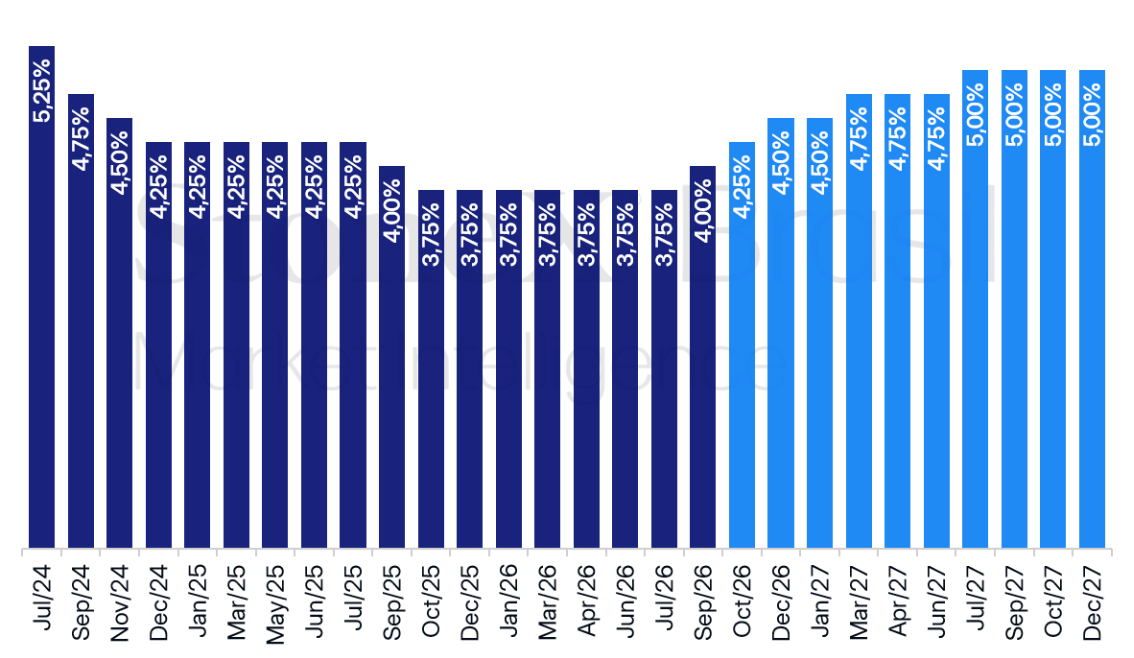
Source: CME FedWatch Tool. Design: StoneX. Refers to the highest probability bet in the futures interest rate market on the indicated date.
On the external front, investors are expected to react to the release of key US economic indicators, particularly for inflation and the labor market.
Why this matters: Strong numbers for inflation, GDP, and employment in the US should reinforce the perception of a more robust economy, increasing bets on further interest rate hikes by the Fed in the short term.
- This, in turn, would increase yields on US Treasuries and favor attracting foreign capital to the country, strengthening the USD globally.
Estimates: Median estimates for the Employment Situation Report indicate that the net change in US jobs decreased from 162,000 in August to 100,000 in September.
- Meanwhile, median projections for the Personal Consumption Expenditures (PCE) Price Index, a metric used by the Fed to monitor consumer inflation, suggest its monthly variation will increase from 0.2% in July to 0.4% in August.
- The core indicator, excluding volatile food and energy components, is expected to rise from 0.2% to 0.3% during the period.
- Additionally, a methodological revision in the index's calculation will reduce the weight of certain components, such as financial services, legal services, and software-related services, which should lower the 12-month accumulated increase in the PCE core by approximately 0.2 percentage points.
- If confirmed, these numbers reinforce the perception of a more robust US economy than anticipated, increasing bets on further Fed interest rate hikes.
Variation in total non-farm jobs (000) and the unemployment rate (%) in the US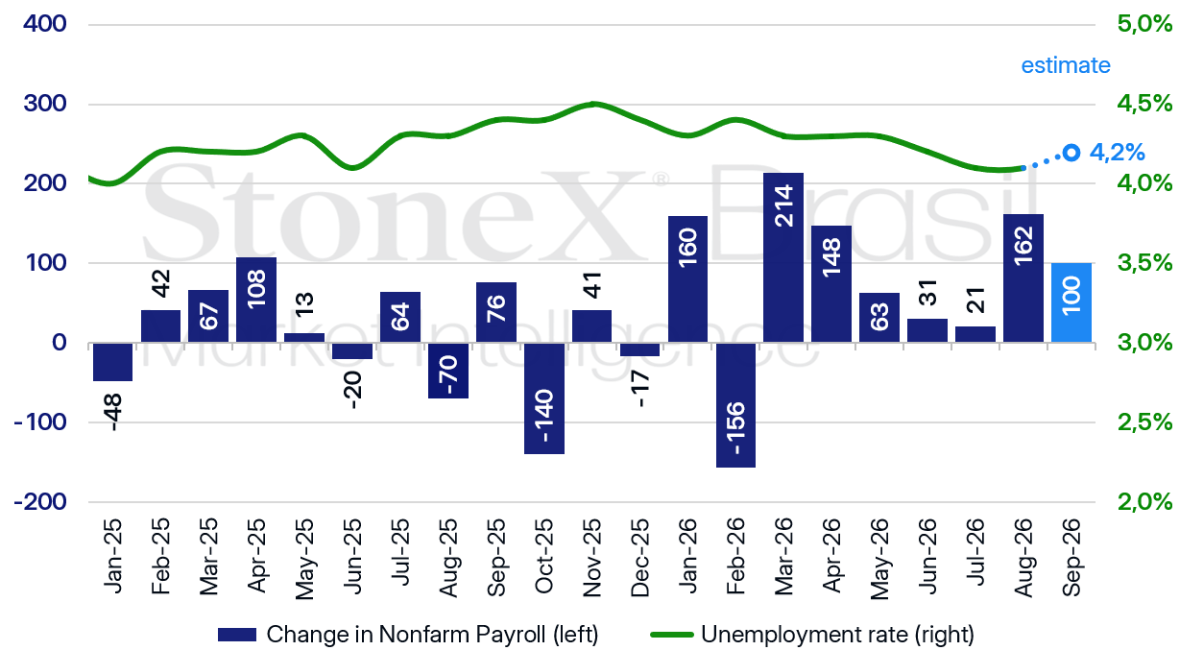
Source: U.S. Bureau of Labor Statistics (BLS), Federal Reserve Bank of St. Louis. Design: StoneX.
Higher interest rates for longer: In recent weeks, investors have consolidated expectations of higher interest rates for a longer period in the US, anticipating a firm cycle of Fed rate hikes.
- Among the factors driving this expectation are firmer statements from Fed members, revealing greater concern about the US inflationary outlook.
- Simultaneously, the prospect of prolonged maritime trade restrictions in the Middle East keeps oil prices high, close to USD 100 per barrel, and raises concerns about global inflationary pressures.
- Finally, recent economic data points to stronger economic growth, a healthy labor market, and higher price pressures, suggesting the need for tighter financial conditions.
End-of-month PTAX rate
Expected impact on the USDBRL: undefined
End-of-month PTAX rate – sales (BRL/USD)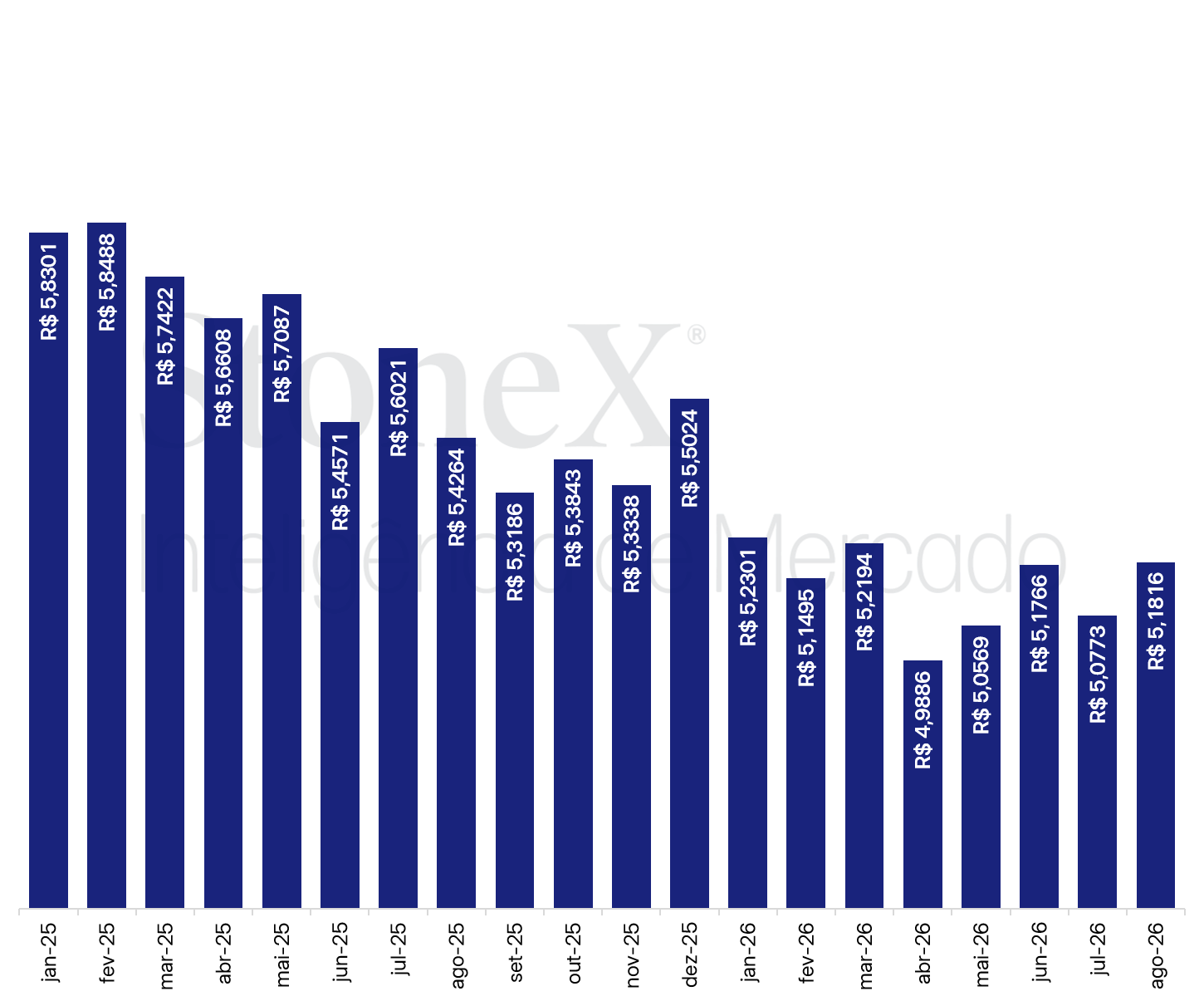
Source: Central Bank of Brazil. Design: StoneX.
Trading volume and exchange rate volatility are expected to increase during today's session due to the formation of the end-of-month PTAX rate.
- The PTAX rate is a reference published daily by the Central Bank, and its end-of-month value is widely used in foreign exchange contracts and derivatives.
- The Central Bank calculates its value based on the average quotes obtained during four consultation windows between 10:00 a.m. and 1:10 p.m.
Why this matters: Financial market operators intensify their operations during the intervals of the final monthly PTAX rate formation to try to influence its value in a direction that is more advantageous for their positions, which increases volatility and makes it harder to interpret the real's movements on the day.

ECONOMIC INDICATORS
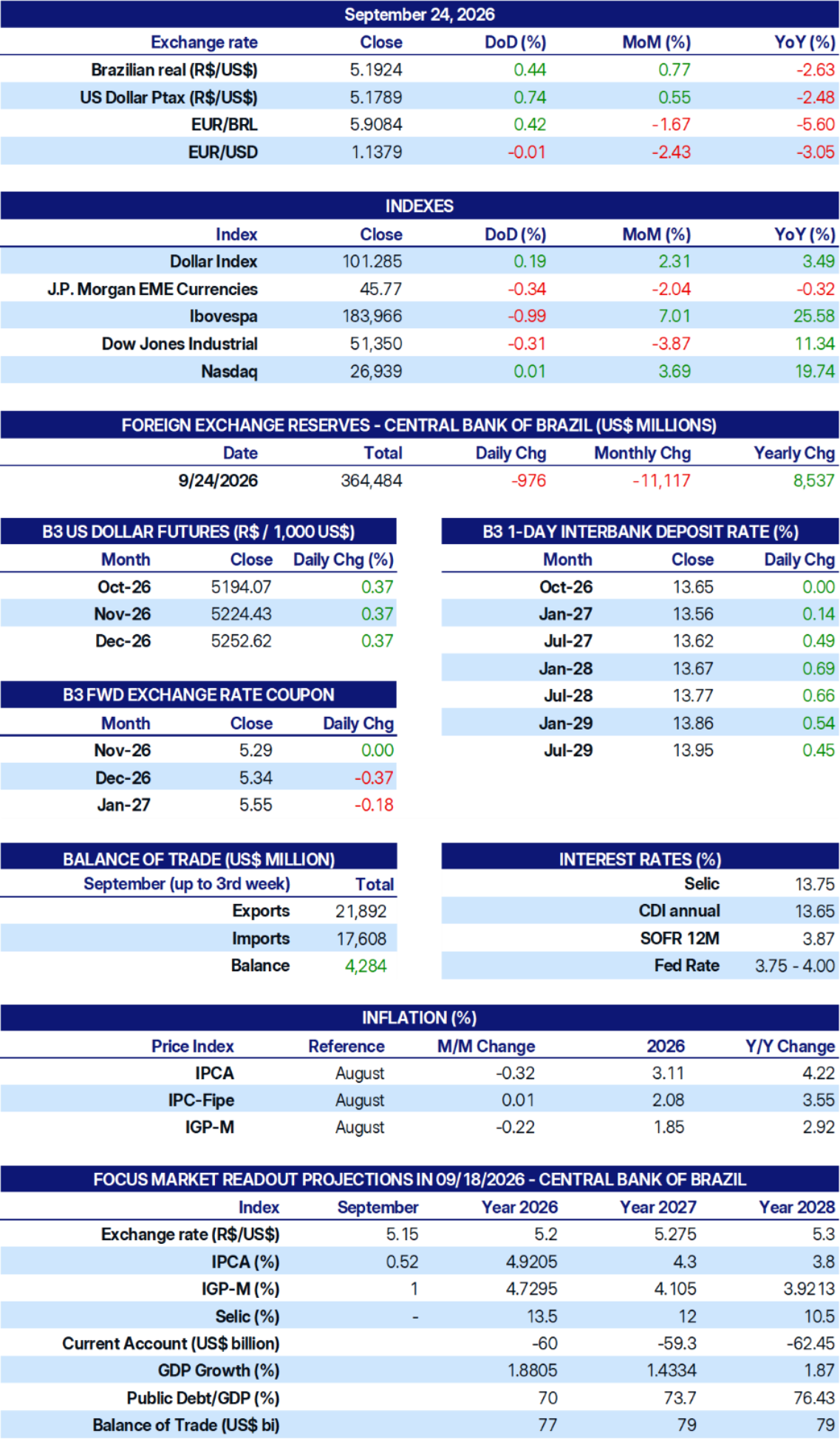
Sources: Central Bank of Brazil; B3; IBGE; Fipe; FGV; MDIC; IPEA, and StoneX cmdtyView.