Speculative appetite continues to run with little regard to the fundamental threats that keep crowding out the headlines. A growing desensitization to threats may make the market’s own exuberance the ultimate arbiter of how far the bulls can run.
Talking Points:
Headlines around US-Iran negotiations, inflation threats, labor market data quality, monetary policy and other systemic matters were abundant through last week
Risk appetite received a broad advance this past week, but appetite for momentum has pushed the Nasdaq 100 increasingly into the spotlight
Traditional, global macro event risk over the coming week notably thins out; but observers should watch the US CPI release; data adjacent to BOJ Intervention and Trump’s China visit
Watch the Full Video
Headline Whiplash Lowers the Market’s Guard
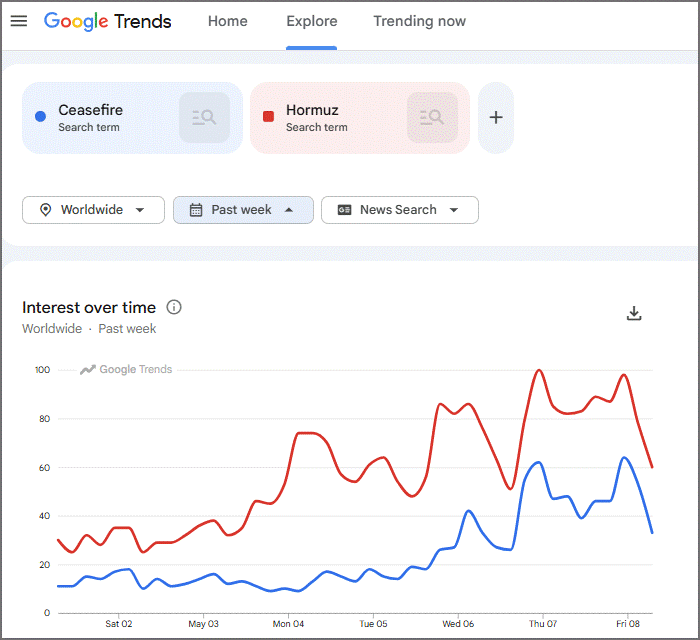
For the traditionalist, EMH adherent or perma-bull; the market’s uncanny ability to shrug off lingering and emergent fundamental risks seems to defy logic. Sentiment however has an evolving prioritization, is forward looking and a practical necessity to optimize returns on capital. That doesn’t mean that the bears won’t eventually wrest control back from the opportunistic and passive participants, but it suggests the tipping point is less likely to arrive through a definitive event with uniform global authority – like a pivotal FOMC decision or dramatic NFP deviation from economist expectations. Ironically, at this point, the exhaustion over a relentless parade of dramatic headline around the US-Iran conflict may also render a definitive resolution incapable of charging the global markets to a next, productive leg higher. Over the past few weeks, reports of an imminent peace deal traded with threats and flare ups repeatedly, and sometimes within hours of each other.
Google Trends News Search for “Ceasefire” and “Hormuz” Source: Google Trends
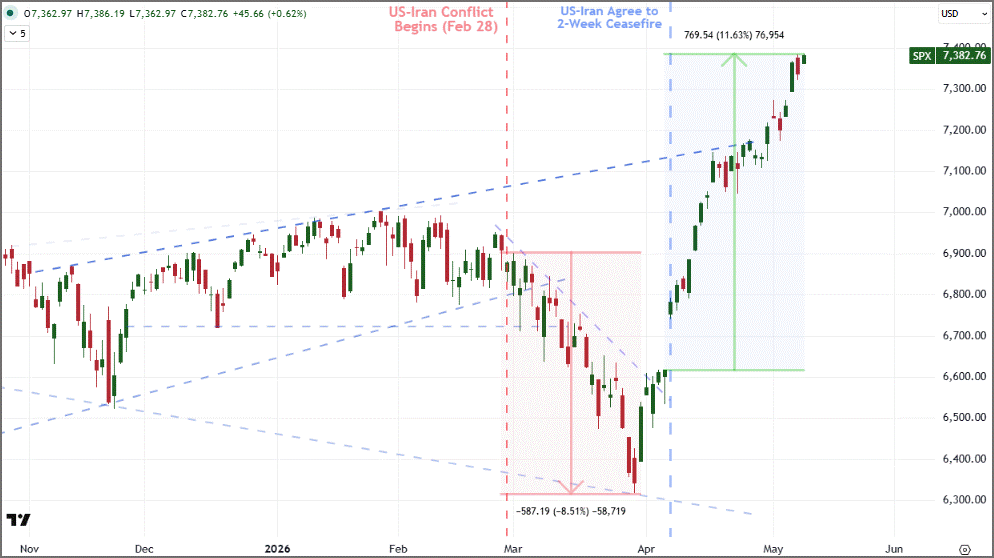
An equitable and lasting peace deal between the United States and Iran would no doubt benefit the global geopolitical landscape and outlook for the world’s economy, but the potential for a ‘discount’ to be reversed seems missing or reserved for select corners of the financial system. There are assets like high-yield fixed income that are still well off their highs or regional markets like the German Dow 40 or UK FTSE 100 that are well off pace to counterparts; but there are separate and tangible fundamental uncertainties that represent their own ballast against an unproductive risk appetite resurgence. Meanwhile, benchmarks like the S&P 500 have very clearly leaned into the well-worn pattern of a manic redeploying of capital after steep corrections.
Over the past two decades, we have seen steep and extended declines around fundamental crises seed a subsequent bull-trend launch that would broaden out to long-term trends. The Great Financial Crisis of 2008 ended with a -30 percent, six-week drop that turned into an initial 16 percent six-week immediately thereafter. The Pandemic triggered its own 6-week -31 percent plunge through March 2020 that triggered a 23 percent rally over a similar period from the ultimate bottom. Even last year’s Liberation Day tariff tumble shed -16 percent in a 6-week period to be quickly met with a 17 percent rally after the White House’s reversal. Notably, in this cycle of US-Iran conflict kick off to (still unsteady) ceasefire; there was a less-than -7 percent six-week period retreat followed by a 16 percent charge.
Chart of S&P 500 with Measured Moves from US-Iran Conflict and After Ceasefire (Daily) Source: TradingView.com; John Kicklighter
Speculative Concentration Intensifies and Backstops Progressively Unwound
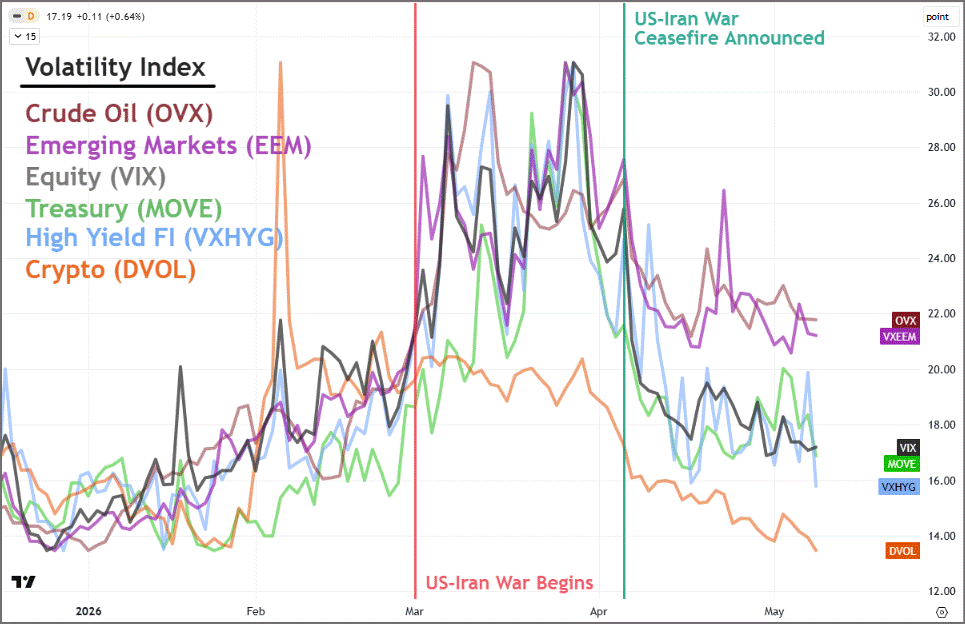
With terms like ‘TACO’ (‘Trump Always Chickens Out’) used so prevalently and confidence in the global financial system’s plumbing built upon years of meaningful trials – enhanced perhaps by backstops like the Fed Put – it is not unusual that bulls are readily guiding the balance of sentiment. However, setting aside the ‘why’ of market bearing and rationality, it is the case that speculative interests can find inherent limitations at the extremes of ‘fear and greed’ of their own accord. And, there are arguably no more systemic and overriding influences on markets than a structural shift in sentiment itself. But, how can we reasonably gauge when exuberance has run too far off the axis that correction is inevitable?
Volatility Measures Across Multiple Markets (Daily) Source: TradingView.com; John Kicklighter
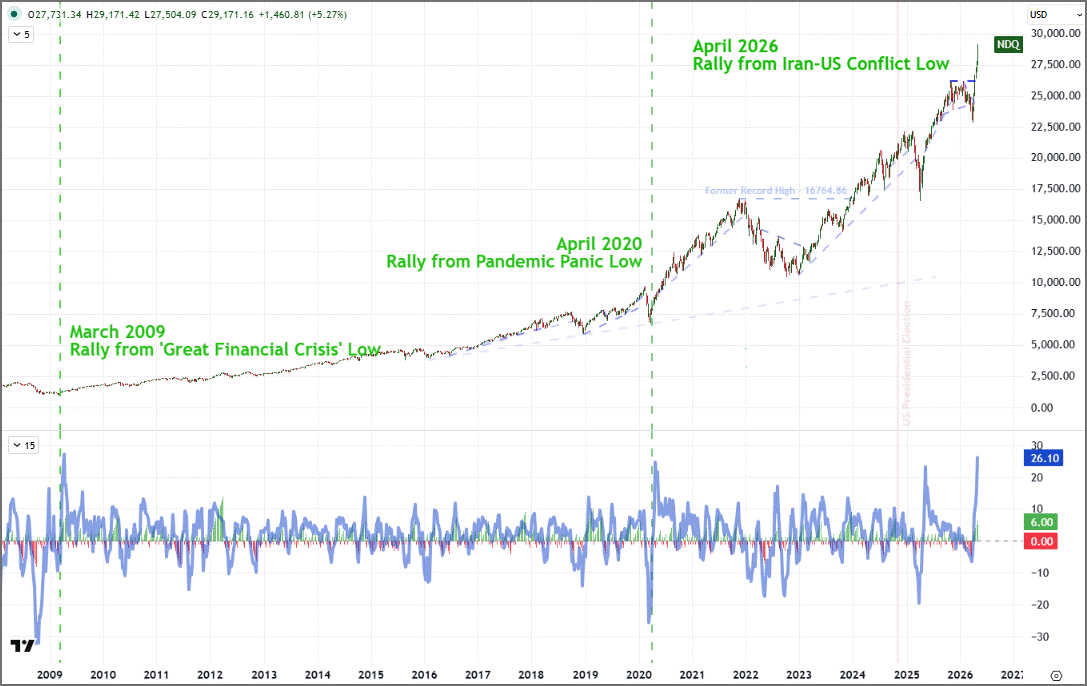
There many measures we can refer to, yet none of them is definitive. A submission for ‘extremeness’ worthy of monitoring though is the extent to the ‘chase’ in capital gains specifically in the largest US market cap stocks. Represented well by the Nasdaq 100, we see that this index has registered an incredible 26 percent charge over the past six weeks on its own. However, even when we index this move relative to the Dow Jones Industrial Average, its 15 percent relative gain is the biggest since October 2001 (the bounce after the Dot-com bust); and its more recent 4-week charge versus the VEU ‘Rest of World Equity’ ETF of 11 percent is the fastest in 15 years. There will be a natural peak to this outperformance, either with a turn in the tide of sentiment itself or a broader rise in the market with greater diversification of interest. Which will we realize?
Chart of Nasdaq 100 with Consecutive Weeks Move and 6-Week Rate of Change (Weekly) Source: TradingView.com; John Kicklighter
Global Macro Docket Lightens Up On a Historically Active Week
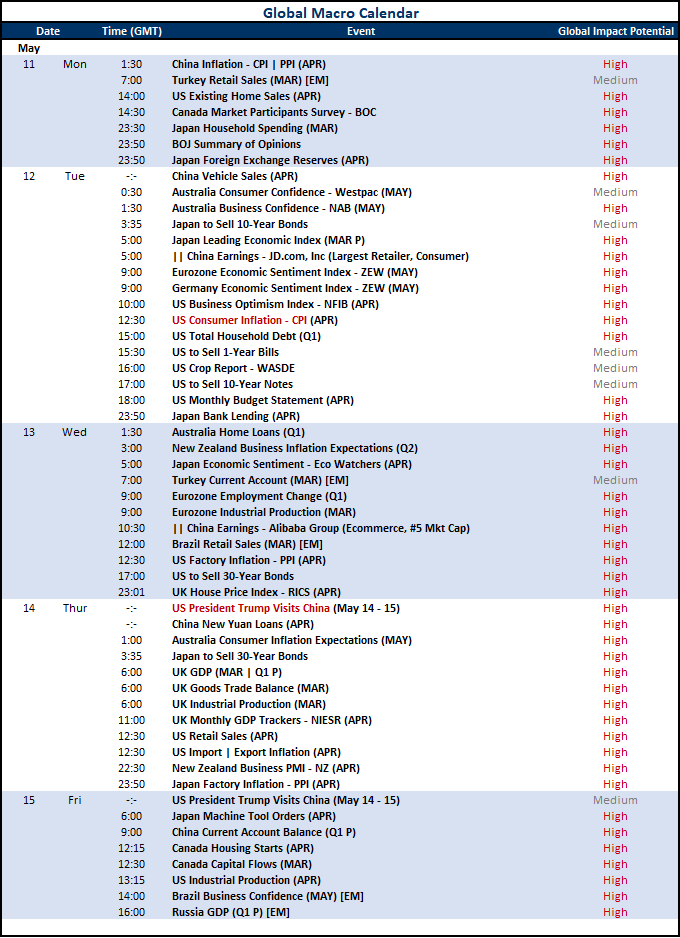
Taking into account the aforementioned anesthetized and skewed view on ‘risk’ in these markets, the global macro docket ahead doesn’t represent the most capable source of catalyst to shake the market from dormancy. There are a few highlights on the calendar that can nip at the fringes of larger themes, but many of these grander subjects seem to have lost their sway over price action. Global monetary policy seems increasingly concerned with the outlook for inflation given the fallout from the closure Strait of Hormuz (impacting supplies of energy, vital agricultural products, etc), which bolsters the fundamental significance of various price statistics like the US CPI. And, yet, tentative rate hikes from the likes of the Fed have not changed market calculus. Trade wars could be quashed or restored by President Trump’s visit to China, but USDCNH’s steadfast retreat despite replacement tariffs and new taxes announced on the EU have rendered little impact on markets. The state of the broader environment is ironic considering the 20th week of the calendar year for the S&P 500 (as a benchmark for sentiment) has averaged the second largest decline over the past century.
Calendar of Top Global Macro Event Risk Source: John Kicklighter
Japan’s Yen Intervention Has Problems
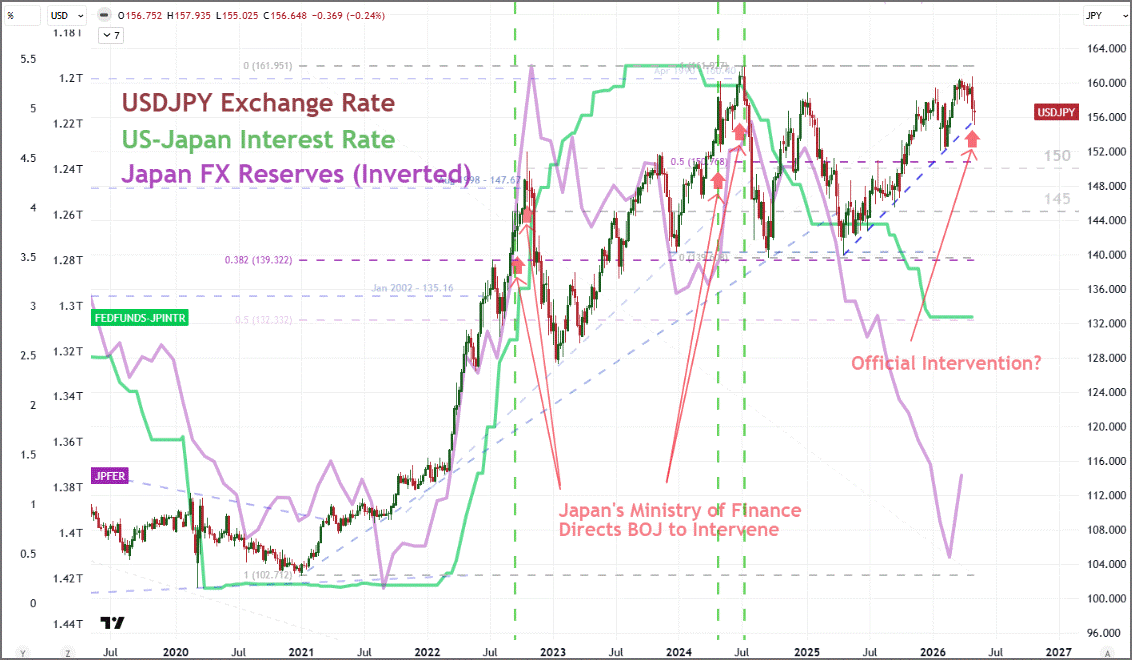
There are a lot of competing global macro themes for our attention, but one of the most consequential in terms of headlines leading to a direct impact on relevant market activity is arguably the Japanese authorities’ intervention on behalf of the Japanese Yen. The Ministry of Finance, which typically directs the Bank of Japan to buy (in this case) the currency in such operations, would not confirm actual intervention until their monthly or quarterly reports – which come out at the end of May and July respectively. Unless, they are strategically attempting to actively lift the currency, or lower USDJPY as the typically target. We have yet to hear anything of that sort yet, but we have a few events on the docket that are worth noting on this front: Japan’s foreign exchange reserves figures and the Bank of Japan’s Summary of Opinions due Tuesday morning. The former can gauge changes dollar holdings, which would have been expended to manipulate the USDJPY exchange rate. In the case of the latter event, many believe that these direct actions will render persistently underwhelming results if the BOJ’s policy stance can’t close the gap to its largest counterparts to keep local funds from seeking meaningful returns abroad.
Chart of USDJPY Overlaid with US-Japan Rate Differential and Japan FX Reserves (Weekly) Source: TradingView; Federal Reserve Economic Database; Japan Stats Bureau; John Kicklighter
Back to the US CPI to Make the Case for Monetary Policy After Strong NFPs
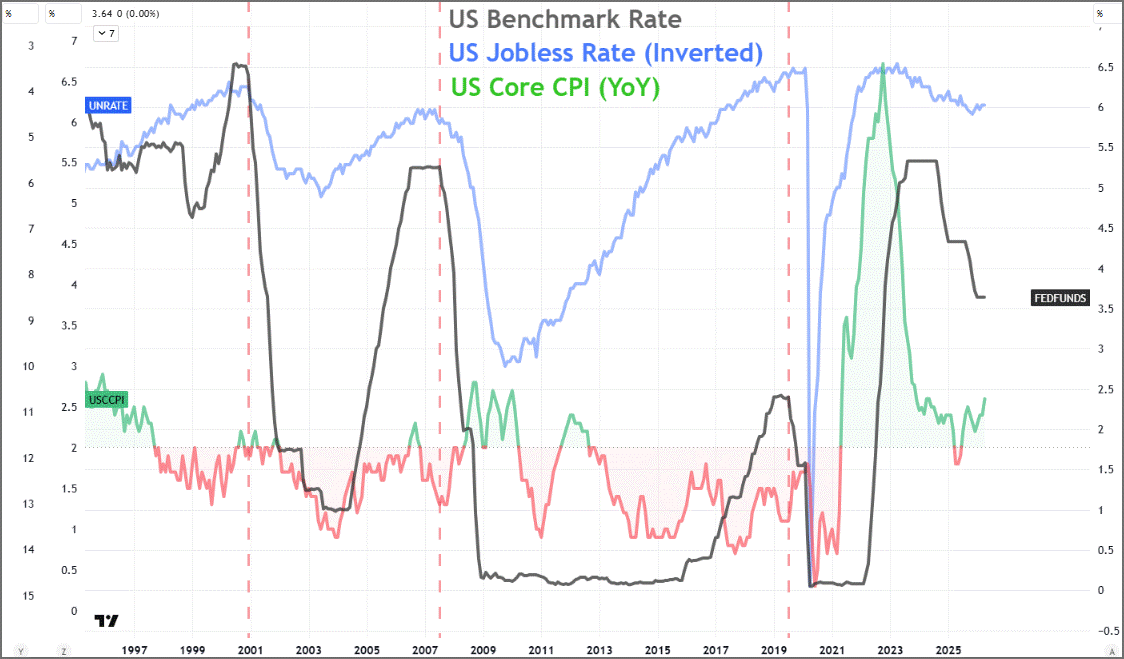
This past week, we were given an update on the health of the US labor market – one of the Fed’s target objectives in its monetary policy decision making. On its face, the 115,000 net jobs added to the economy was a respectable beat of expectations while the jobless rate held at a historically lower level of 4.3 percent. Yet, digging into the data, the trend is not favorable, the participation rate has dropped and wage growth is struggling. How far will the Fed dig into the data when interpreting monetary policy ahead – especially as Keven Warsh takes over as Chairman as President Trump’s designated pick? Inflation, the other measure of the dual mandate, will likely play a critical role the focus on inflation. Notably, expectations for price growth have been rising through measures like the NY Fed’s consumer report and UofM sentiment survey. The forecast for the headline, annual CPI reading for April stands at 3.6 percent (a 0.3 percentage point increase) while the core tempo is seen holding at 2.6 percent. At present, futures-based Fed Fund forecasts are pricing in no further changes to the benchmark rate through the end of the year.
Chart of US Benchmark Rate Overlaid with US CPI and Jobless Rate (Monthly) Source: TradingView; US BLS; Federal Reserve; John Kicklighter
President Trump Heads to China as Trade War Actions Heat Back Up
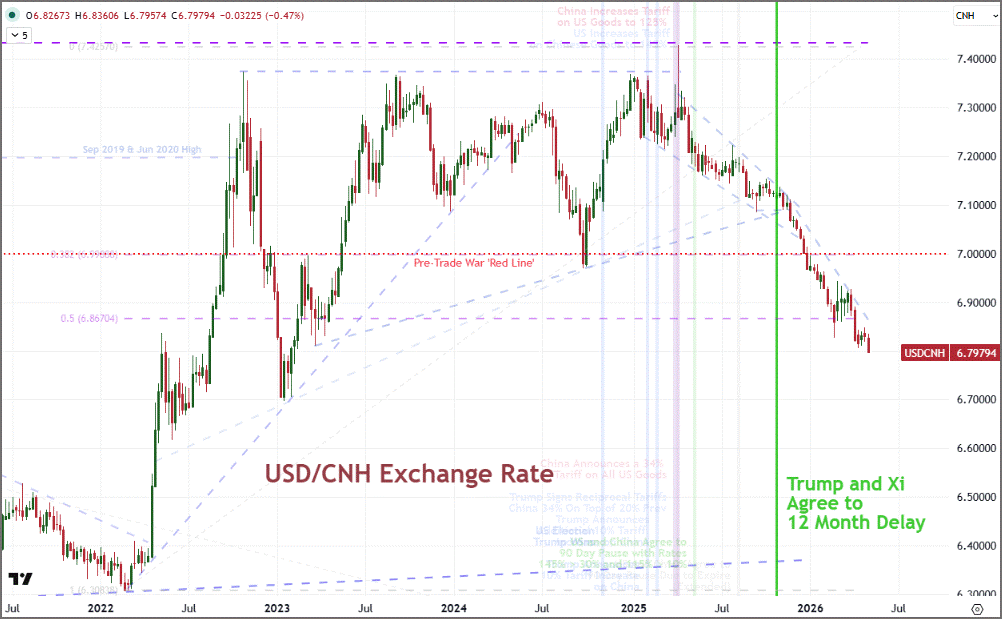
A final, top event worthy of keeping explicit focus on over the coming week is not a scheduled data release or discrete occurrence. Instead, US President Donald Trump’s (along with administration members and major US business leaders) visit to Thursday and Friday represents one of the most fundamentally loaded listings on the calendar. Since the US Supreme Court’s ruling that the president’s use of the IEEPA as justification for the taxes was unconstitutional, the administration has announced new tariffs under different provisions and is supposedly expanding its investigation into other options – like Section 301 of the 1974 Trade Act. Theoretically, Presidents Trump and Xi agreed to a 12 month delay on their respective trade flows six months ago and the former has been more targeted and critical of the European Union rather than its largest economic counterpart. Let’s see what kind of provisions the two sides are willing to give each other – and how a deal versus ‘victory’ fits into Trump’s calculus for regaining traction in the polls with mid-terms ahead.
Chart of USDCNH Exchange Rate (Weekly) Source: TradingView.com; John Kicklighter
Access More Global Macro Insights, Forecasts and Tools
Stay connected to timely global macro analysis designed to help market participants navigate shifting economic conditions and evolving risk. Gain access to regular market commentary, updated quarterly forecasts, a comprehensive two-week forward economic event calendar, and specialized tools built to support informed trading and risk management decisions.
The subsidiaries of StoneX Group Inc. provide financial products and services, including, but not limited to, physical commodities, securities, clearing, global payments, risk management, asset management, foreign exchange, and exchange-traded and over-the-counter derivatives. These financial products and services are offered in accordance with the applicable laws in the jurisdictions in which they are provided and are subject to specific terms, conditions, and restrictions contained in the terms of business applicable to each such offering. Not all products and services are available in all countries. The products and services offered by the StoneX Group of companies involve risk of loss and may not be suitable for all investors. Full Disclaimer. This content is not intended for residents of any particular country, and the information herein is not advice nor a recommendation to trade nor does it constitute an offer or solicitation to buy or sell any financial product or service, by any person or entity in any jurisdiction or country where such distribution or use would be contrary to local law or regulation. Please refer to the Regulatory Disclosure section for entity-specific disclosures. No part of this material may be copied, photocopied or duplicated in any form by any means or redistributed without the prior written consent of StoneX Group Inc. The information herein is provided for informational purposes only. This information is provided on an ‘as-is’ basis and may contain statements and opinions of the StoneX Group of companies as well as excerpts and/or information from public sources and third parties and no warranty, whether express or implied, is given as to its completeness or accuracy. Each company within the StoneX Group of companies (on its own behalf and on behalf of its directors, employees and agents) disclaims any and all liability as well as any third-party claim that may arise from the accuracy and/or completeness of the information detailed herein, as well as the use of or reliance on this information by the recipient, any member of its group or any third party.
Our market expertise, advanced platforms, global reach, culture of full transparency and commitment to our clients’ success all set us apart in the financial marketplace.
Reach
With access to 40+ derivatives exchanges, 180+ foreign exchange markets, nearly every global securities marketplace and numerous bi-lateral liquidity venues, StoneX’s digital network and deep relationships can take clients anywhere they want to go.
Transparency
As a publicly traded company meeting the highest standards of regulatory compliance in the markets we serve, our financials and record of accomplishment are matters of public record. StoneX’s commitment to “doing the right thing over the easy thing” sets us apart in the industry and helps us build respect, client trust and new partnerships.
Expertise
From our proprietary Market Intelligence platform, to “boots on the ground” expertise from award-winning traders and professionals, we connect our clients directly to actionable insights they can use to make more informed decisions and achieve their goals in the global markets.