StoneX logo

Australia's Cattle Belt Fractured Into Four Very Different Seasons

By: Editorial Team, StoneX Media

Australia's cattle regions have split four ways, and the gap between them is now the single most useful thing a buyer can know about supply. Northern Australia has come through one of its strongest wet seasons in at least half a century, central eastern Australia has clawed its way back from harsh drought, southern Australia has emerged from two dry years as an active buyer, and southern Western Australia has been left behind by a weaker winter rainfall run. That divergence is not cosmetic, because it decides which regions are holding cattle, which are chasing them, and where the bid is coming from. For producers, feedlotters and exporters, the season now has to be read region by region rather than as a national number.

Ripley Atkinson is Australian Meats and Livestock Manager at StoneX in Sydney, where he tracks live cattle, beef and sheep markets and provides market analysis and risk management advisory to Australian and global livestock producers. He follows supply, demand and price fundamentals across the country's production zones, along with the export demand and trade flows that move Australian protein overseas, which is the ground this regional split sits on.

Key Themes

  • Northern Australia recorded one of its strongest wet seasons in at least 50 years, lifting grass and cattle condition.
  • Flooding in the Gulf Country of Queensland in January cost cattle numbers despite the outstanding season.
  • Southern Australia is buying trade stock again after two consecutive drought years in 2024 and 2025.

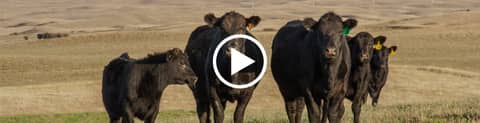
Watch the Full Video

Northern Australia Banked Record Grass and Still Lost Cattle to Flooding

Northern Australia, the monsoonal tropics that take the bulk of their rain between October and March, has run one of its best wet seasons on record, with vast amounts of grass grown and cattle carrying strong condition out of it. Atkinson describes the year in plain terms, noting that "northern Australia in 2026 has experienced one of its best wet seasons in recent memory, if not on record, or at least in 50 years". Against that, flooding through the Gulf Country of Queensland in January was the worst in six to seven years and took cattle numbers with it, a loss that sits inside an otherwise exceptional run. Consequently, northern supply carries a quieter hole in it than the season headline suggests, and attention now shifts to the next wet season. For buyers sourcing out of the north, the condition of the cattle on offer is strong, but the count behind them is thinner than the grass implies.

Central Eastern Australia Reversed From Drought and Tightened Cattle Supply

Central eastern Australia, the belt running down the eastern seaboard, opened the year in harsh drought before rain returned in May and mild winter temperatures kept grass growing through the middle of the year. According to Atkinson, "it began sort of January to May in really harsh drought to dry conditions. It was a very challenging part of the year for a lot of producers with a lack of rain". As a result, producers who had been forced sellers became holders, supply into the market shortened, and demand improved on the back of grass rather than any change in the export picture. Those regions are still working through challenging seasonal conditions, so the recovery is partial rather than complete. The next test is the current spring, and Atkinson is direct about what it turns on, that "it's important that rain arrives at this time of year in spring to make sure that those producers can capture the favorable grass growing conditions".

Southern Australian Restockers Returned and Put a Floor Under Cattle Demand

"Emotion plays a critical role in market and price performance", Atkinson says of the Australian cattle market, and southern Australia is where that shows up as a bid. Southern New South Wales, Victoria and South Australia came out of two consecutive drought years in 2024 and 2025 into a multi-year high season, with mild winter temperatures supporting grass growth and cattle weight gain. That has encouraged an uptick in demand from those regions to source and secure trade stock for spring and summer, which provides a buffer and underlying support for prices rather than a one-off spike. Southern Western Australia, by contrast, runs on a winter dominant rainfall system and has been challenged this year, lagging the eastern states even as the country's central desert region has seen favorable conditions. The practical effect is a national market where cattle are being pulled south and east, and where the west is not competing for them on the same terms.


--- Written by Frédéric Guétin, StoneX Media Producer

--- Expert: Ripley Atkinson, StoneX Australia Meats & Livestock Manager

  • Meats & Livestock

StoneX TV content is created, produced, and distributed solely by StoneX Media Ltd (“StoneX TV”) and is provided for informational and educational purposes only.


StoneX TV does not provide investment, financial, legal, or tax advice and does not make any recommendation or endorsement of any investment strategy, transaction, or financial instrument. Nothing in this content constitutes, or should be construed as, investment advice or a recommendation to buy, sell, or hold any financial instrument, including securities, futures, derivatives, digital assets, foreign exchange products, or CFDs.


This content does not constitute an offer, invitation, or solicitation to engage in any investment activity.


The information presented is general in nature and is not tailored to the financial situation, investment objectives, or risk tolerance of any specific person. You should not rely on this content as a substitute for independent professional advice.


Investing and trading in financial instruments involves significant risk of loss and is not suitable for all investors. Past performance is not indicative of future results.


Any views or opinions expressed are those of the presenter at the time of publication and are subject to change without notice. Such views may not necessarily reflect those of StoneX Media Ltd or its affiliates. StoneX Media Ltd and its affiliates, including StoneX Group Inc., may from time to time have positions in, or engage in transactions involving, the financial instruments referenced.


This content may include general market commentary and opinion. It does not constitute independent investment research and has not been prepared in accordance with legal requirements designed to promote the independence of investment research.


StoneX Media Ltd is not authorised or regulated to provide investment services and does not act in a fiduciary capacity.


StoneX Media Ltd is incorporated in Ireland and operates in accordance with applicable Irish law. It is a wholly owned subsidiary of StoneX Group Inc. and is a separate legal entity from other subsidiaries within the StoneX Group, which may be regulated in various jurisdictions. StoneX Media Ltd does not act on behalf of, or provide services for, any regulated affiliate.


This content is not directed at, and may not be distributed to, any person in any jurisdiction where such distribution would be contrary to local laws or regulations.


Supporting documentation for any claims, comparisons, statistics, or technical data may be made available upon reasonable request, where applicable.

Satellite view of Earth at night showing illuminated cities across Asia and the Middle East

Discover more insights

Our subscribers have access to comprehensive market analysis from StoneX spanning commodities, equities, currencies and more.

Related articles for Meats & Livestock

Australia's Cattle Belt Fractured Into Four Very Different Seasons

Australia's cattle country did not have one season this year, it had four, and each one is pushing supply and demand in a different direction. Ripley Atkinson maps the north, the central east, the south and the west, and shows where the cattle are actually moving.

Editorial Team
Editorial Team
  • Meats & Livestock

Perspective: Morning Commentary for September 11

September 11 – Before turning to today’s market developments, we want to acknowledge that today marks the 25th anniversary of the September 11th terrorist attacks. We remember the nearly 3,000 lives lost, honor the first responders and countless others affected, and reflect on the lasting impact that day had on the United States and the world. Headline CPI held steady at 3.4% in August, matching analyst estimates and tying July for the lowest print since March. The month-on-month gain of 0.4% was the hottest since May but also matched expectations. Excluding the more volatile energy and food prices, core CPI did see a slightly hotter than expected monthly gain, rising 0.3% in August, above the average estimate of 0.2% and marking the fastest uptick since April. However, the year-on-year rise of 2.4% matched expectations and represents the lowest print for the metric since March 2021, an encouraging sign.

Mike Castle
Mike Castle
  • Grains & Oilseeds
  • Energy
  • Dairy
  • Renewable Fuels
  • Cocoa
  • Coffee
  • Cotton
  • Sugar
  • Meats & Livestock
  • Forest Products

Perspective: Morning Commentary for September 10

September 10 – Headline PPI rebounded to a 5.4% year-on-year gain in August, up sharply from the upwardly revised 4.8% seen in July but only slightly above analysts' expectations of a more moderate rise to 5.3%, still bringing inflation back to center stage. In month-on-month terms, this was a 0.4% increase, up sharply from the 0.1% seen in July and the sharpest rate of gain since May. Stripping this down to core PPI, this was a 4.6% year-on-year increase, matching analyst estimates but still representing a notable uptick from the upwardly revised 4.3% seen in July. In my opinion, this is where the bigger concern lies. Obviously, much of the fears of resurgent inflation in 2026 has centered around the ongoing energy shock, which proved true in this morning’s data, but the pervasiveness of inflationary pressures at the core level, stripping out the more volatile energy sector, paints a picture of sticky inflation that does not appear ready to go away on its own. For context, this is the third highest core PPI print of 2026, only 0.3% off the three-plus year high seen back in April. We’ll get another update tomorrow with August CPI set to be released, with the average analyst estimate calling for a 3.4% headline and 2.4% core increase. The longer-term thing to keep in mind here is how much the current inflationary pressures have been concentrated at the producer level—if realized, that CPI print would be 2.0% below headline PPI. That means producers are effectively eating these costs up front, translating to near-term margin pressure, with producers historically tending to pass these costs along down the road for margin recovery which can lead to longer tails of inflation at the consumer level.

Mike Castle
Mike Castle
  • Grains & Oilseeds
  • Energy
  • Dairy
  • Renewable Fuels
  • Cocoa
  • Coffee
  • Cotton
  • Sugar
  • Meats & Livestock
  • Forest Products
StoneX: We open markets

Our market expertise, advanced platforms, global reach, culture of full transparency and commitment to our clients’ success all set us apart in the financial marketplace.

Reach

With access to 40+ derivatives exchanges, 180+ foreign exchange markets, nearly every global securities marketplace and numerous bi-lateral liquidity venues, StoneX’s digital network and deep relationships can take clients anywhere they want to go.

Transparency

As a publicly traded company meeting the highest standards of regulatory compliance in the markets we serve; our financials and record of accomplishment are matters of public record. StoneX’s commitment to “doing the right thing over the easy thing” sets us apart in the industry and helps us build respect, client trust and new partnerships.

Expertise

From our proprietary Market Intelligence platform, to “boots on the ground” expertise from award-winning traders and professionals, we connect our clients directly to actionable insights they can use to make more informed decisions and achieve their goals in the global markets.