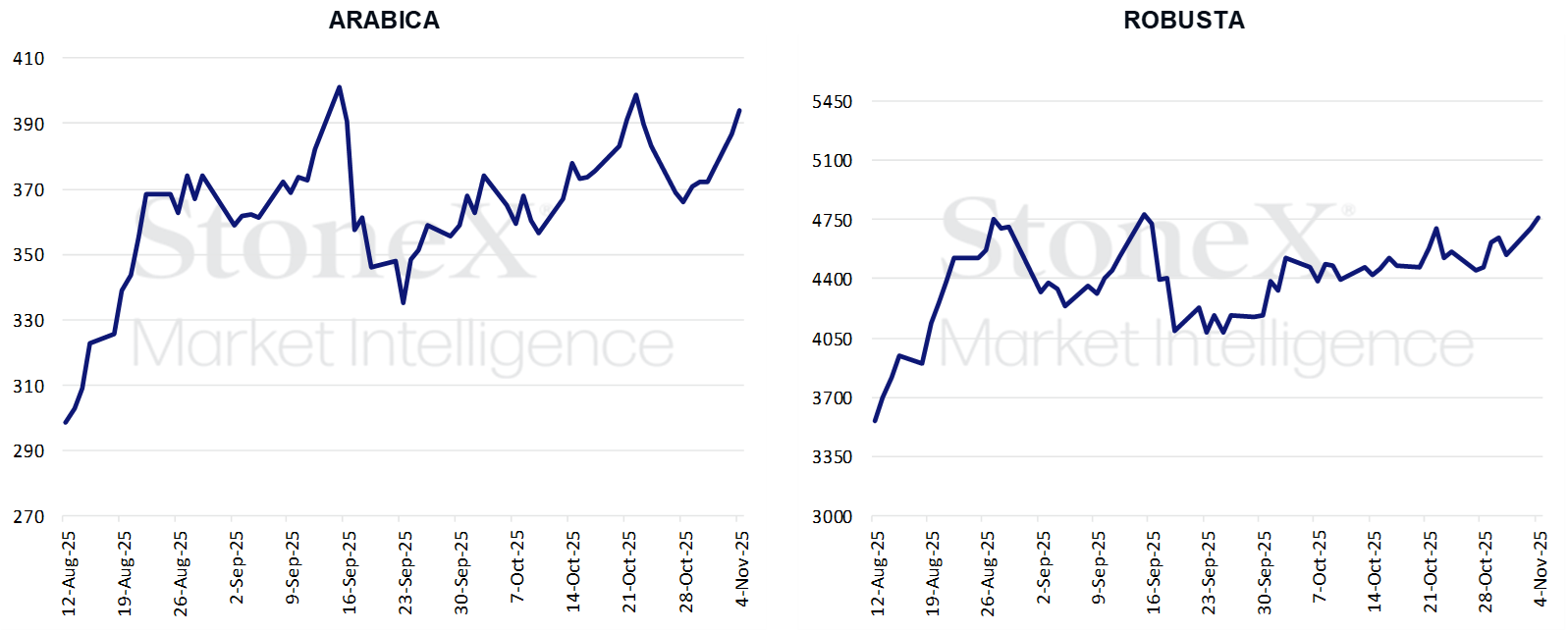
After declining last week, coffee futures rose again, driven by concerns over weather conditions in Vietnam. Excessive rainfall threatens to delay harvesting and cause losses at a crucial moment in the production calendar. In the previous week, contracts had fallen 2.8% in New York for March, closing at US¢ 372.25 per pound, and 0.4% in London for January, closing at USD 4,540 per metric ton.
The exchange rate also moved little, with the dollar down 0.3% against the real and the dollar index up 0.8%. This week, however, prices rebounded sharply. On Monday, November 3, New York rose 3.88% to US¢ 386.7 per pound, while London advanced 3.37% to USD 4,693 per metric ton. On Tuesday, November 4, at the time this report was written, the market remained higher, with New York up 1.46% to US¢ 392.55 per pound and London up 1.04% to USD 4,742 per metric ton.
In October, the monthly balance was positive. New York rose 3.7% and London 8.5%. In the Brazilian domestic market, the Cepea indicator for arabica increased 3.72%, while robusta rose 4.73%.
Among fundamentals, three key factors are shaping the market. The first involves tariffs imposed by the United States on Brazil. Despite tensions, the recent rapprochement between the two governments brought some relief and raised expectations of a resolution. Also weighing on the market is the deterioration of relations between the United States and Colombia, the second-largest coffee supplier to the U.S. In 2024, Brazil accounted for 35% of U.S. coffee imports and Colombia for 20%. Additionally, there is the possibility of a trade agreement between the U.S. and Vietnam that could eliminate tariffs on Vietnamese coffee, increasing the competitiveness of robusta from the Asian country.
The second factor is Brazil’s 2026 crop. Flowering for both arabica and robusta has already occurred, and current weather conditions are crucial in determining production potential. The StoneX team is in the field collecting data and is expected to release its first estimate for the 2026/27 crop next week.
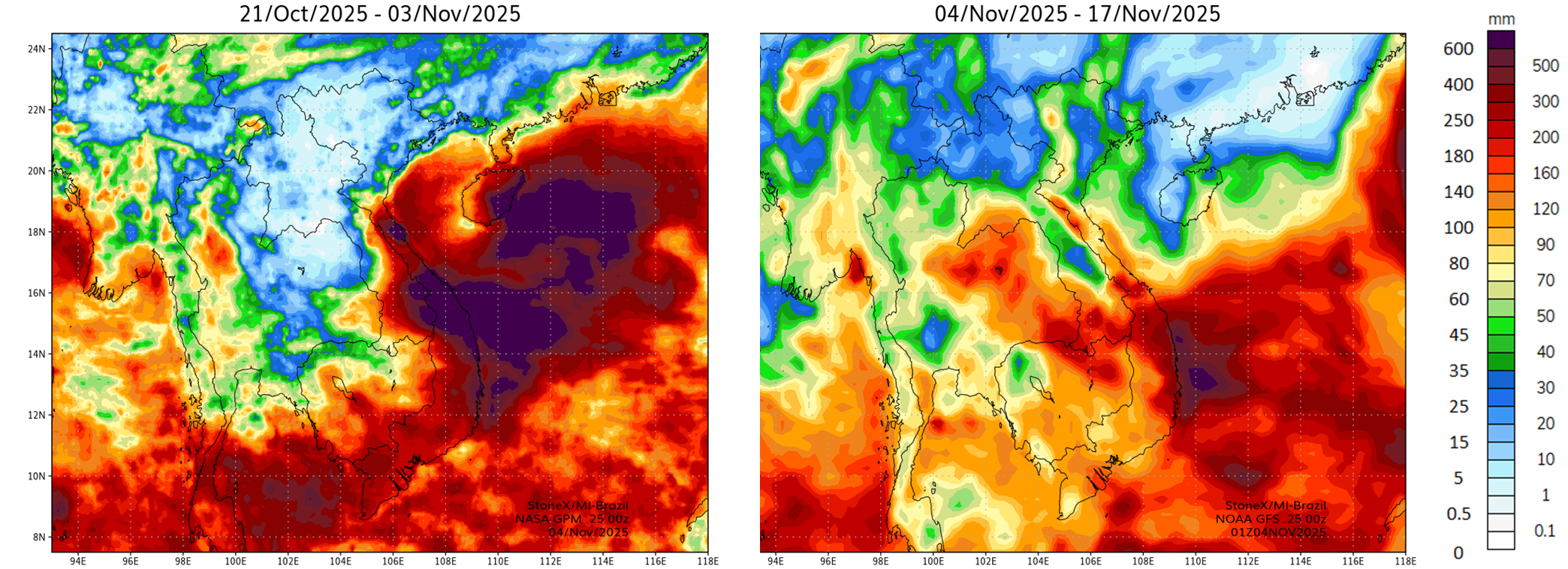
The third factor is Vietnam itself. The country is the world’s second-largest coffee producer, and the USDA projects nearly a 7% recovery in production this season. Harvesting is expected to begin this month, but heavy rains in some regions exceeding 600 millimeters over the past two weeks pose risks of losses and delays. Forecasts also call for up to 200 millimeters of additional rainfall in the next two weeks, keeping concerns high regarding potential impacts on the harvest.
Accumulated rainfall over the last 14 days and forecast for the next 14 days in Vietnam
Source: StoneX with data from NOAA
Last week, Keurig Dr Pepper and Kraft Heinz released contrasting results for the third quarter of 2025. Keurig Dr Pepper delivered strong performance, with net sales rising 10.7% to USD 4.3 billion, driven by growth in refreshment beverages and the acquisition of the GHOST brand. Adjusted net income rose 6.5% to USD 738 million, and the company raised its full-year revenue growth outlook while maintaining expectations for high single-digit EPS growth.
Kraft Heinz, meanwhile, reported a 2.3% decline in net sales to USD 6.2 billion, primarily due to lower coffee volumes, along with declines in cold cuts, frozen snacks, and condiments. Organic sales decreased 2.5% from the same period last year, while prices increased 1% on average, reflecting price adjustments implemented to offset higher input costs, especially in the coffee segment. The weaker coffee performance was one of the main factors contributing to the overall sales volume decline, particularly in North America and developed international markets. The company lowered its 2025 sales and margin outlook but expects improved free cash flow and remains committed to its plan to split into two companies in the second half of 2026.
In the coming days, the market will closely monitor weather reports, the progress of the Vietnamese harvest, Brazil’s crop estimates, and Cecafé’s export data for October. As of the fourth week of the month, Brazil had exported 3.3 million bags, 28% less than in the same period in 2023, according to preliminary data from the Foreign Trade Secretariat. The full release of these figures is expected to be one of the main short-term events for the coffee market. In addition, the advancement of the harvest in Central America and Colombia is expected to gradually increase the supply of arabica coffee.
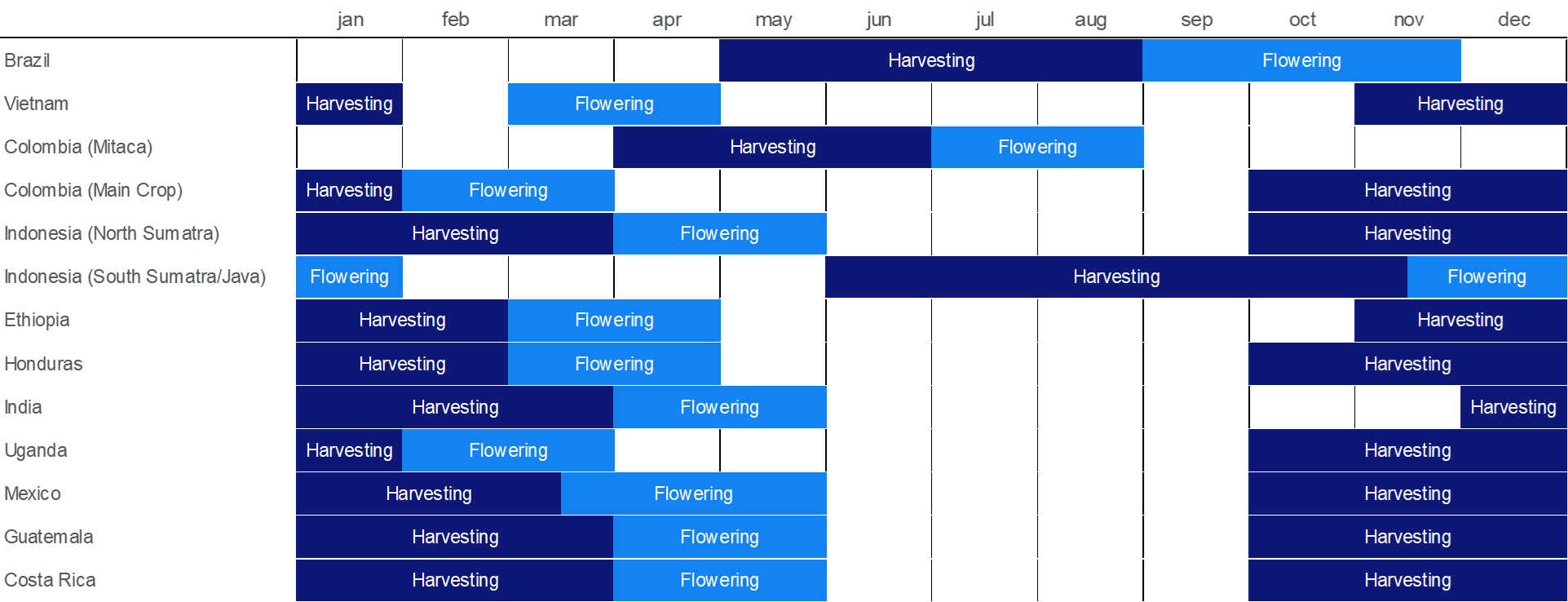
Coffee crop calendar
Source: StoneX
INDICATOR TABLE
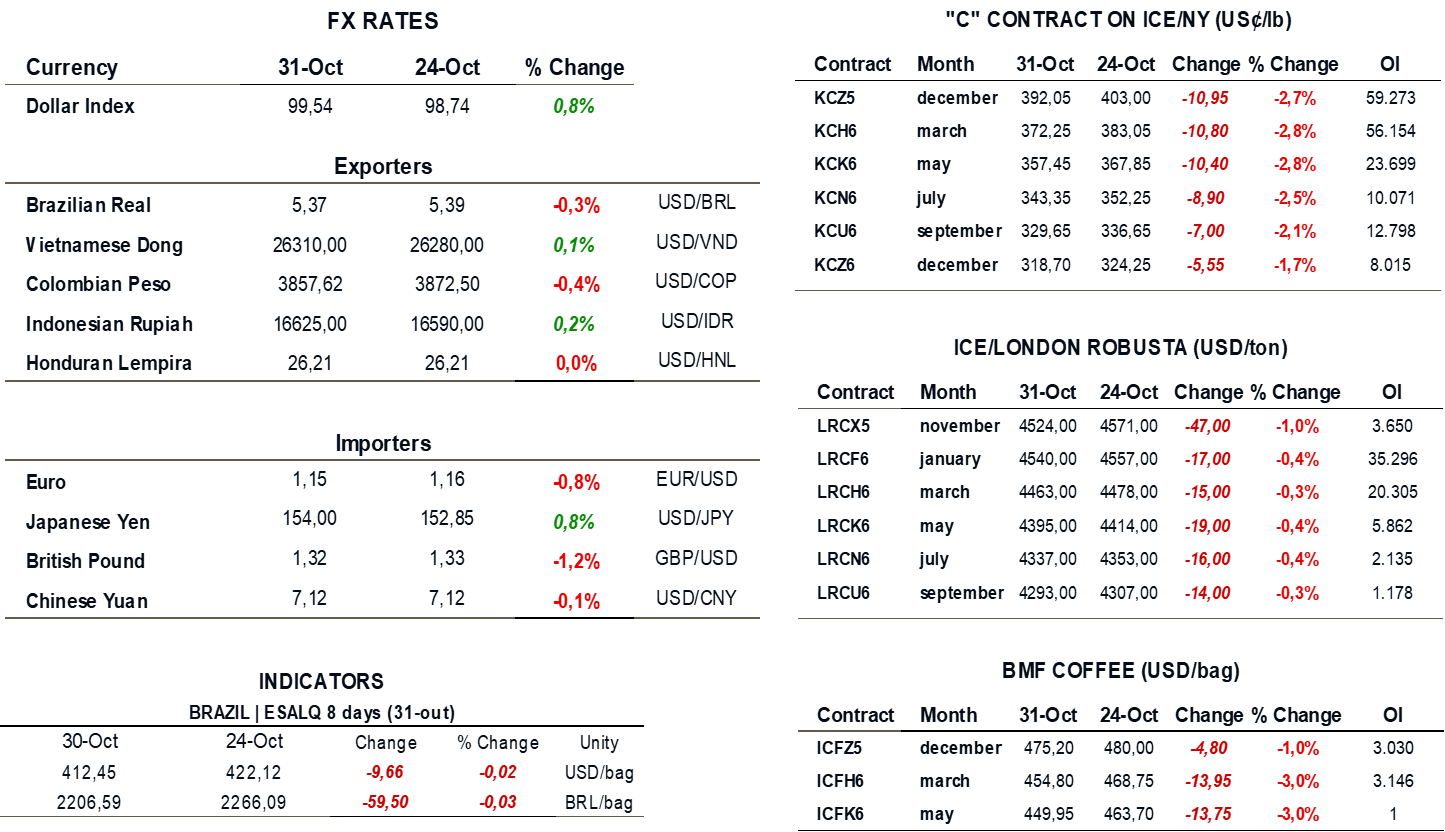
Sources: ICE/NY; ICE/EU; B3; Commodity Network Trader’s Pro.