BEARISH FACTORS
- Expectation of less tight US and global stocks in 2021/22;
- Concern about new Covid-19 cases and lockdown measures in China;
- Progress of negotiations between Russia and Ukraine.
BULLISH FACTORS
- Advancing vaccination roll out against Covid-19;
- Expectations of a record grains crop in South America;
- Conflict between Russia and Ukraine and expectation of lower planting in Ukraine.
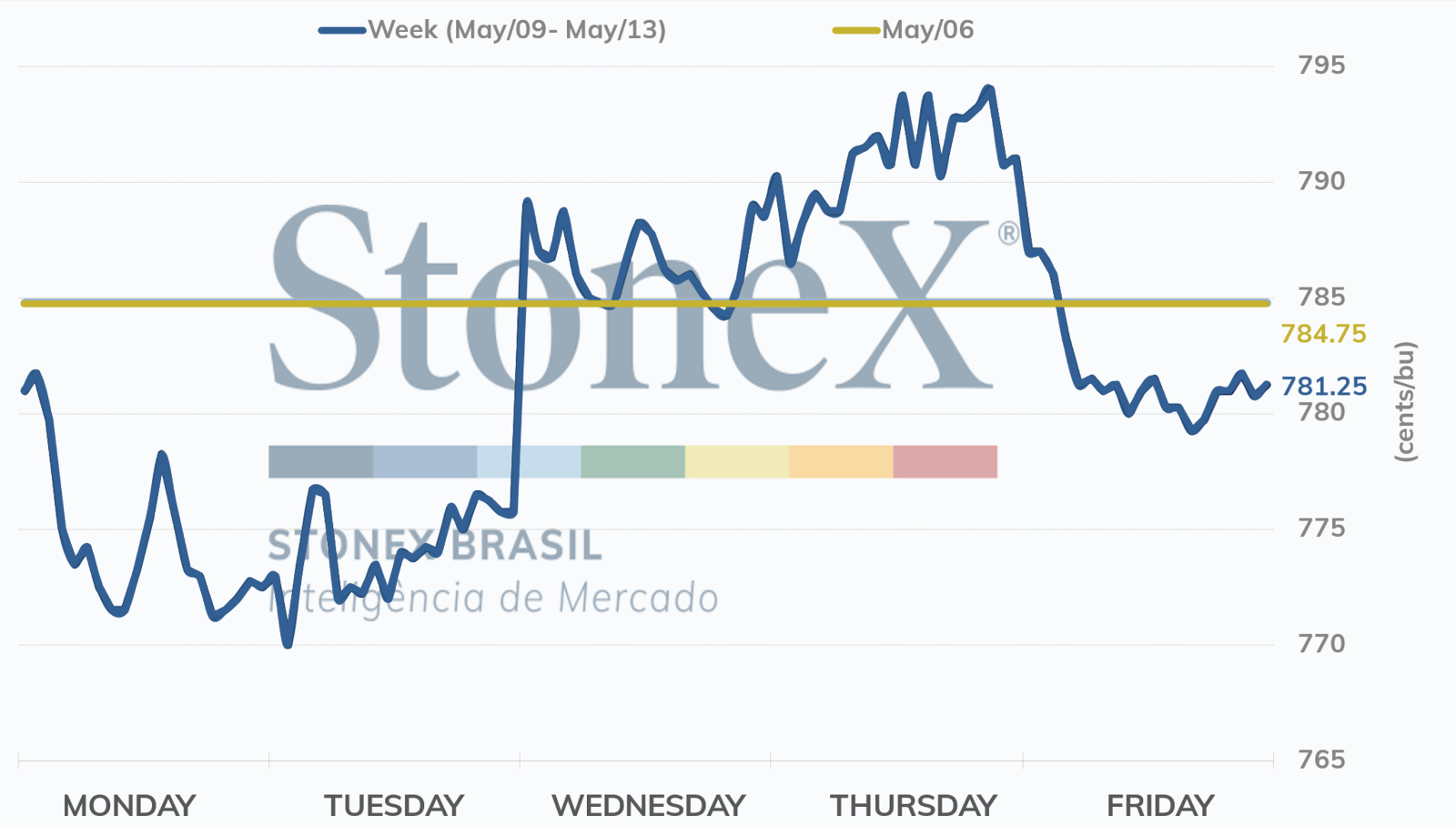
Corn futures ended the first session of last week in a negative field, as they followed the losses seen in the soybean and crude oil markets, and the more favorable weather forecasts for corn planting in the US. The July/2022 contract ended Monday’s session down 12.75 cents per pound (c/lb) from the previous session.
On the day, the USDA released its crop progress report, showing that 22% of the planned corn area had been sown by May 8, a weekly advance of 8 points. In the same period last year, planting had reached 64%, while the five-year average is 50% for this time.
Intraday (15 min) - July/22 (CBOT)
On Tuesday, futures ended the day slightly higher, during a session marked by technical purchases and as agents positioned for the upcoming USDA S&D report. July/22 gained 3.25 c/lb.
Corn futures had another day higher on the CBOT on Wednesday, as agents again squared their positions before the WASDE. The contract for July/22 ended the trading session significantly higher compared to the previous day, gaining 13.25 c/lb.
The EIA reported that US ethanol production had reached 991,000 barrels per day on the week ended June 6, up 22,000 barrels from the previous week. Ethanol stocks, in turn, increased to 23.14 million barrels, up 253,000 week over week.
On Thursday, amid the expected release of the USDA supply and demand report, which brought the first numbers of the 2022/23 grains crop, corn prices finished slightly higher on the CBOT, with July/22 ending the session with 3 c/lb worth of gains.
There were no changes for the US 2021/22 crop. In the 2022/23 cycle, the USDA sees US production at 367.3 million tonnes, down 4.3% from the previous year’s estimate, stemming from the expected lower planted area compared to 2021. With lower supply, the USDA also expects there to be cuts in demand for US corn. Domestic use was estimated at 309 million tonnes, down 2.2% from the previous crop, while exports were seen lower, at 61 million tonnes, 4% less than last year. Even with consumption rationing, the USDA estimates a decline of US ending stocks to 34.5 million tonnes, which is 5.6% lower than 2021/22 estimates.
Regarding other countries, there were no major changes in 2021/22 crop figures. For 2022/23, the highlights were Brazil’s production estimate, which stood at 126 million tonnes, 10 million more than for the previous crop, and Ukraine output, pegged at 19.5 million tonnes, against 42.1 million in 2021/22, reflecting concerns about the impact of the war on the country’s crop.
Also on Thursday, CONAB published its monthly crop estimates report. For the first corn crop, production was cut down by about 210,000 tonnes, to 24.7 million. Second-crop corn was reduced by 850,000 tonnes, to 87.7 million. On the other hand, estimates for the third crop were raised from 2.18 million tonnes to 2.22 million. With this, total 2021/22 production was estimated at 114.6 million tonnes about 1 million below the last report.
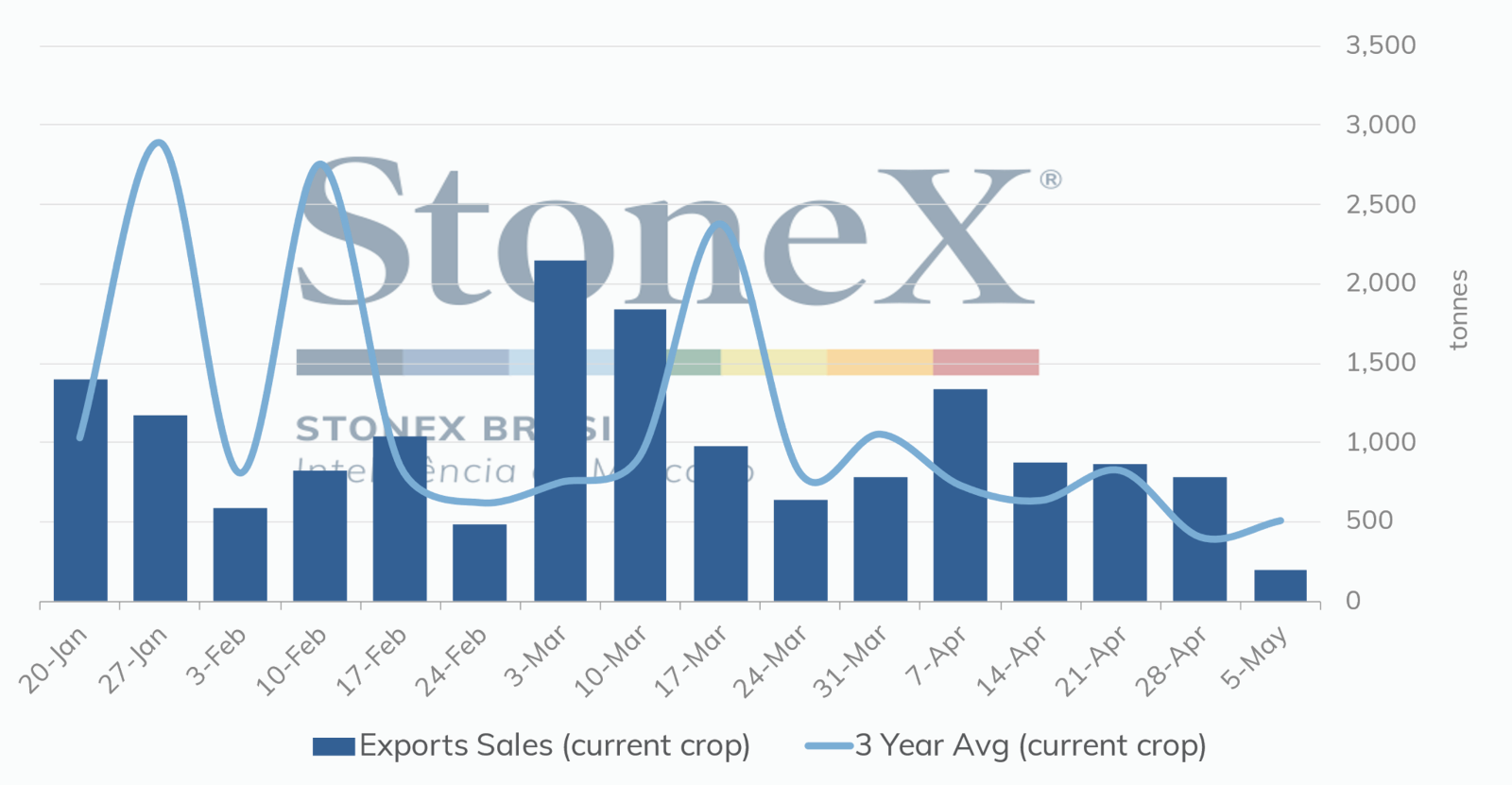
The USDA reported that 2021/22 net sales of US corn reached 192,700 tonnes in the week ended May 5, which was 589,800 tonnes less than in the previous week, but 306,100 above the same week in 2021. The volume was below market expectations, which ranged from 350,000 to 700,000 tonnes. Commitments to all destinations rose to 58.5 million tonnes, against 67.7 million in the same period last year.
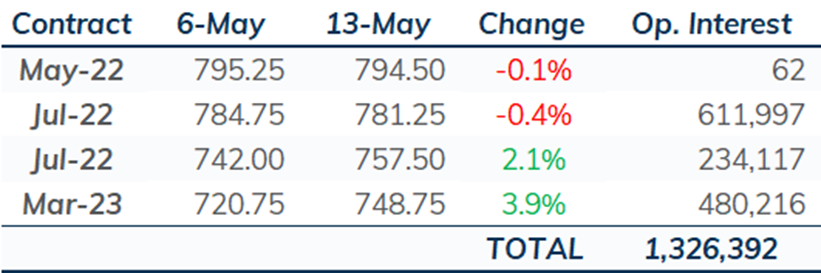
On Friday, corn futures dropped lower again in Chicago. July/22 lost 10.25 c/lb from the previous day, ending the week at 781.25 c/lb, down 3.5 c/lb (-0.4%) in the week.
Throughout this week, it will be important to keep watching the conflict between Russia and Ukraine and Covid-19 cases in China, since these still are the factors that will potentially drive the global S&D balance of grains.
In the US, the weather and the planting pace over the next few weeks will be key, since if the country does not manage to speed up, it is fairly likely that the US crop will lose some of its productive potential.
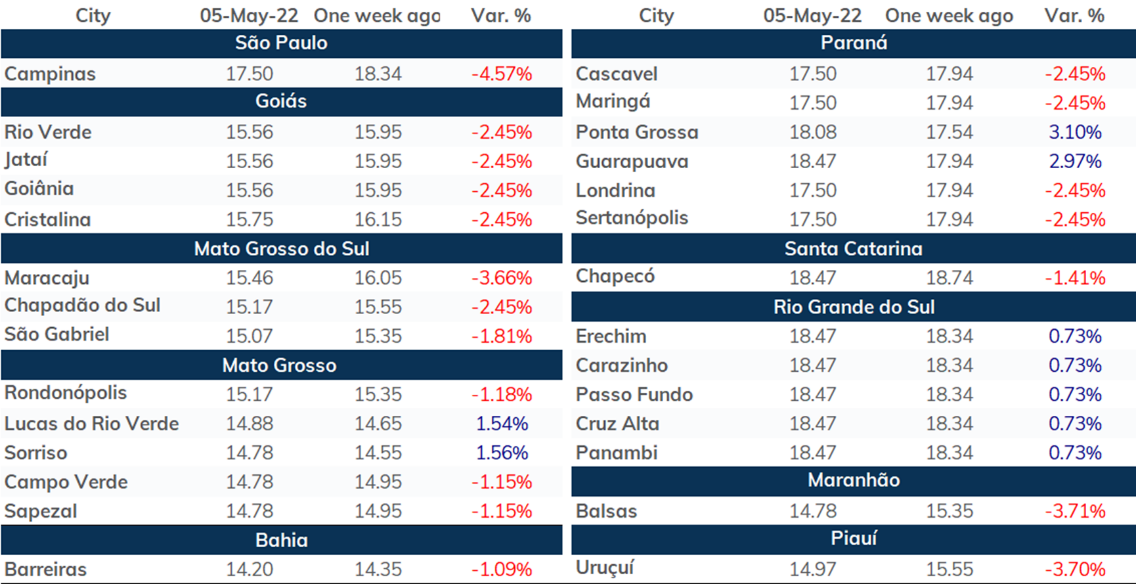
SPOT PRICES (USD/60kg-bag)