Most of the attention on the coming super El Nino has gone to its strength, with talk of a record or even a monster event, but for global food supply the more important question is when it arrives. El Nino timing decides which crops suffer and which benefit, because the same dry or wet spell can help one harvest and damage another depending on where it falls in the crop calendar. Weather analysts have steadily raised the probability of El Nino from 40% to 90% and expect its intensity to build from October to December, with effects that could stretch into March. That puts Australia's wheat harvest, Brazil's soybean and corn season and Northern Europe's wheat crop on three very different clocks.
Bertrand Oesterle is Vice President, Clearing and Execution Sales at StoneX Financial Ltd in London, where he works with institutional and commercial clients on futures clearing and execution across global derivatives markets. His coverage spans commodity markets from grains and oilseeds to other listed products, the markets where El Nino's regional weather effects feed into production estimates and trade flows.
Key Themes from the Discussion
A super El Nino's effect on crops depends on when it lands in each region's growing or harvest season.
Dry weather during Australia's October to December wheat harvest can help harvest progress rather than hinder it.
Brazil's soybean and corn crops face El Nino risk from January to March, Northern European wheat from April to June.
Watch the Full Conversation
Australian Wheat Harvest Timing Softens the El Nino Threat
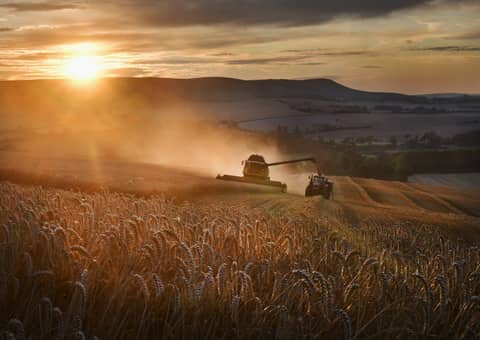
"Harvest is starting in October all the way to December, and if it is dry from October to December, it should actually help harvest progress rather than hinder harvest," Oesterle explains of Australia's wheat crop. Earlier alarmist scenarios for Australia projected a wheat crop as much as 50% smaller than the previous season, yet the production estimates published since have landed well above those fears. StoneX colleagues in Australia point to beneficial rain at the start of the season and fertilizer applications as the reasons the crop got off to a better start than expected. Consequently, the window in which El Nino could hurt Australian wheat yields may already have passed, because dry weather during harvest supports fieldwork rather than threatening the crop. Australian wheat therefore shows how El Nino timing can turn a feared crop shock into a manageable season, at least so far.
Brazil's Soybean and Corn Season Sits Squarely in the El Nino Window
Brazil's soybean and corn crops sit squarely inside the El Nino window, because a large dry, hot patch over the country could affect the first corn crop, the second safrinha corn crop and the soybean crop. Alarmist scenarios have projected sharp losses for both soybeans and corn, yet most private estimates still point to record Brazilian crops, which is why Oesterle says "this Brazilian map is the big question mark" for the season ahead. Soybean planting in Brazil has only just started and is running a touch quicker than a year earlier, so early fieldwork offers little signal yet. The more decisive period comes later in the season, from January to March, when El Nino could weigh on crop development if the dry pattern holds. Unlike Australia, Brazil's El Nino exposure lies ahead rather than behind it, keeping soybean and corn supply estimates open to revision.
Northern European Wheat Quality Hinges on Spring Rain Timing
El Nino's wet side carries its own timing risk, and for Northern Europe that risk sits in the April to June period rather than in the months when El Nino builds. In the southern United States, wetter conditions linked to El Nino are expected to benefit the Kansas winter wheat crop, although some U.S. farmers already report untimely rain during the corn and soybean harvest. Northern Europe's exposure arrives much later than the October to December buildup that dominates the headlines, and the risk there centers on wheat quality rather than volume. For European wheat buyers and millers, that turns El Nino spring rainfall into the variable to watch. According to Oesterle, "if we have a lot of untimely rain from April to June, it could become an issue, especially for wheat in terms of quality".
--- Written by Gus Farrow, Senior Manager, StoneX Media
StoneX TV content is created, produced, and distributed solely by StoneX Media Ltd (“StoneX TV”) and is provided for informational and educational purposes only. StoneX TV does not provide investment, financial, legal, or tax advice and does not make any recommendation or endorsement of any investment strategy, transaction, or financial instrument. Nothing in this content constitutes, or should be construed as, investment advice or a recommendation to buy, sell, or hold any financial instrument, including securities, futures, derivatives, digital assets, foreign exchange products, or CFDs. This content does not constitute an offer, invitation, or solicitation to engage in any investment activity. The information presented is general in nature and is not tailored to the financial situation, investment objectives, or risk tolerance of any specific person. You should not rely on this content as a substitute for independent professional advice. Investing and trading in financial instruments involves significant risk of loss and is not suitable for all investors. Past performance is not indicative of future results. Any views or opinions expressed are those of the presenter at the time of publication and are subject to change without notice. Such views may not necessarily reflect those of StoneX Media Ltd or its affiliates. StoneX Media Ltd and its affiliates, including StoneX Group Inc., may from time to time have positions in, or engage in transactions involving, the financial instruments referenced. This content may include general market commentary and opinion. It does not constitute independent investment research and has not been prepared in accordance with legal requirements designed to promote the independence of investment research. StoneX Media Ltd is not authorised or regulated to provide investment services and does not act in a fiduciary capacity. StoneX Media Ltd is incorporated in Ireland and operates in accordance with applicable Irish law. It is a wholly owned subsidiary of StoneX Group Inc. and is a separate legal entity from other subsidiaries within the StoneX Group, which may be regulated in various jurisdictions. StoneX Media Ltd does not act on behalf of, or provide services for, any regulated affiliate. This content is not directed at, and may not be distributed to, any person in any jurisdiction where such distribution would be contrary to local laws or regulations. Supporting documentation for any claims, comparisons, statistics, or technical data may be made available upon reasonable request, where applicable.
Discover more insights
Our subscribers have access to comprehensive market analysis from StoneX spanning commodities, equities, currencies and more.
Our market expertise, advanced platforms, global reach, culture of full transparency and commitment to our clients’ success all set us apart in the financial marketplace.
Reach
With access to 40+ derivatives exchanges, 180+ foreign exchange markets, nearly every global securities marketplace and numerous bi-lateral liquidity venues, StoneX’s digital network and deep relationships can take clients anywhere they want to go.
Transparency
As a publicly traded company meeting the highest standards of regulatory compliance in the markets we serve; our financials and record of accomplishment are matters of public record. StoneX’s commitment to “doing the right thing over the easy thing” sets us apart in the industry and helps us build respect, client trust and new partnerships.
Expertise
From our proprietary Market Intelligence platform, to “boots on the ground” expertise from award-winning traders and professionals, we connect our clients directly to actionable insights they can use to make more informed decisions and achieve their goals in the global markets.