FX Weekly Overview: The week's main events
- Bearish factors
- Moderate increase in the CPI and retail sales in the US should help reduce concerns of recession in the country's economy and help maintain global appetite for risky assets, weakening the USD.
- Chinese economic data is expected to point to a slight improvement in July, which could help boost expectations for the country's growth this year and favor the performance of risky assets, such as stocks, commodities, and currencies of emerging countries, like the BRL.
- Brazilian economic data should reinforce the perception that the country is growing slightly above what was anticipated, which can foster the attraction of foreign investments and strengthen the BRL.
- Bullish factors
The week in review
The week was marked by strong volatility in global asset markets, with strong pessimism and global risk aversion on Monday followed by a rebound in the performance of risky assets for the rest of the week.
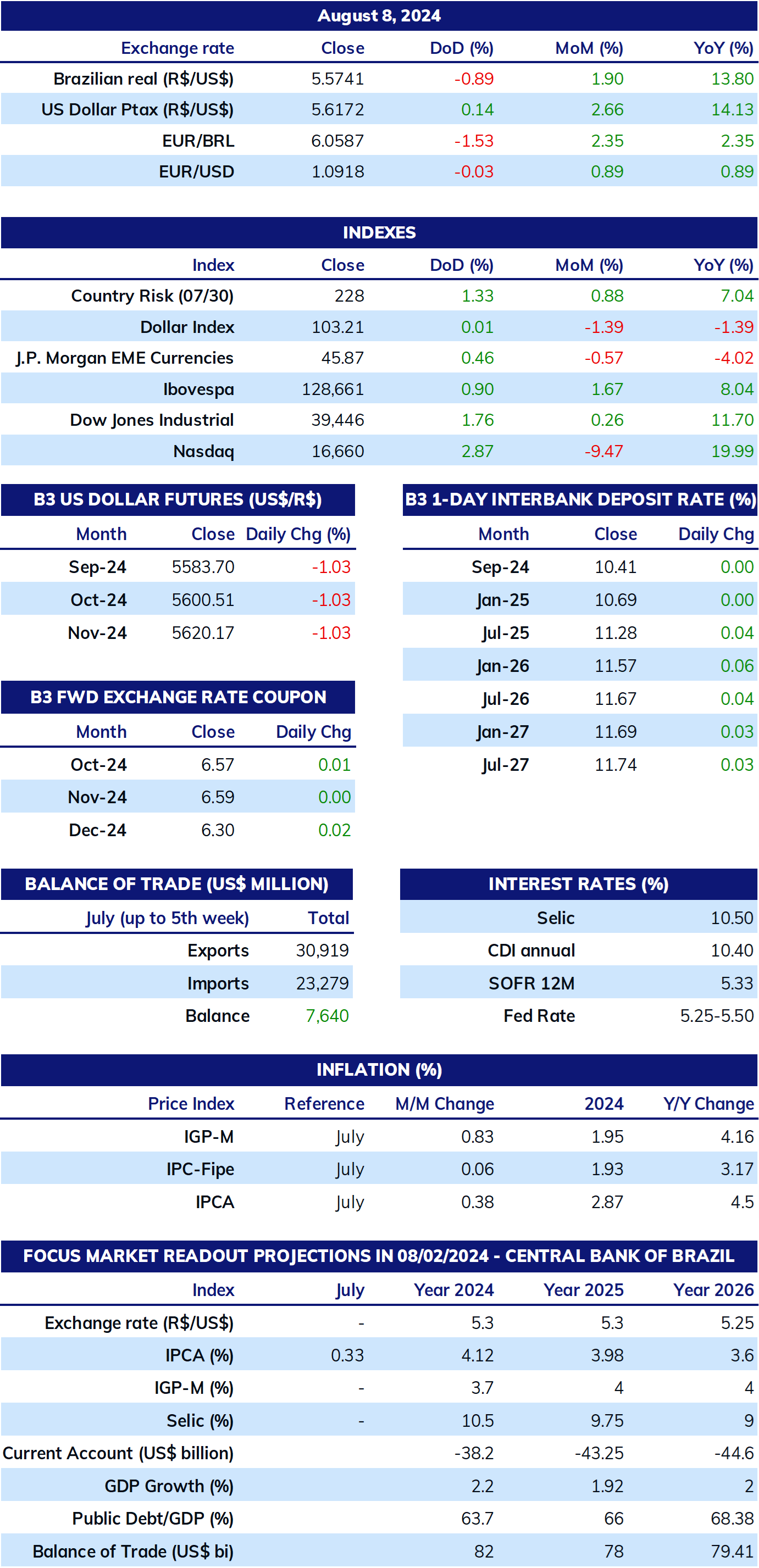
The USDBRL ended the week higher, closing Friday's session (09) at BRL 5.515, a weekly decrease of 3.4% and a monthly increase of 2.5%, but an annual increase of 13.7%. The dollar index closed Friday's session at 103.1 points, a change of -0.1% for the week, -0.9% for the month, and +1.8% for the year.
USDBRL and Dollar Index (points
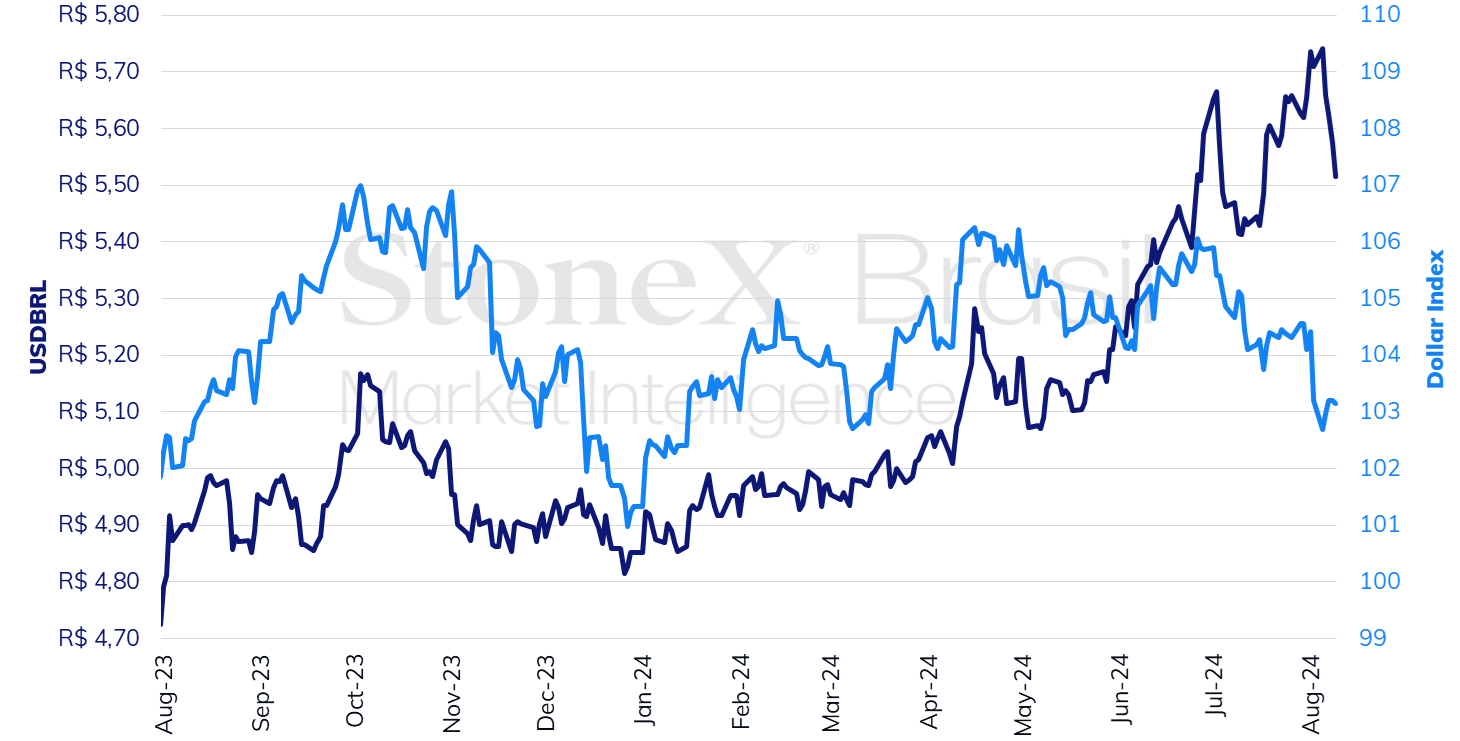
Source: StoneX cmdtyView. Design: StoneX.
KEY EVENT: American economic data
Expected impact on USDBRL: bearish
Last week started with high fears of a sharp slowdown in American economic activity; however, these were gradually softened throughout the week, causing strong volatility in global asset markets. Therefore, there will be great apprehension about the inflation and retail sales data released this week. A slight increase is estimated for the Consumer Price Index (CPI), which would go from -0.1% in June to +0.2% in July in the headline indicator and from +0.1% to +0.2% in the same period in its core, which excludes the volatile components of food and energy. American retail sales are expected to expand again, going from 0.0% in June to 0.3% in July. If confirmed, these readings of both indicators are compatible with an interpretation of "soft landing" in the United States, that is, a gradual inflation stabilization without a sudden drop in productive activity.
Last week, the interest rate futures market priced in that the Federal Reserve would start its rate-cutting cycle with two consecutive 0.50 p.p. reductions, while the majority bets this Friday (09) still show six consecutive cuts (1.5 p.p.) in five decisions, something incompatible with the recent communications from the authority, which continues to advocate a cautious stance in conducting monetary policy. At this moment, the determination of the Fed's future rate cuts seems more related to negative surprises in economic activity indicators and, especially, in the labor market than to possible hotter readings in inflation figures.
US: History and expectation for the interest rate - August 9, 2024
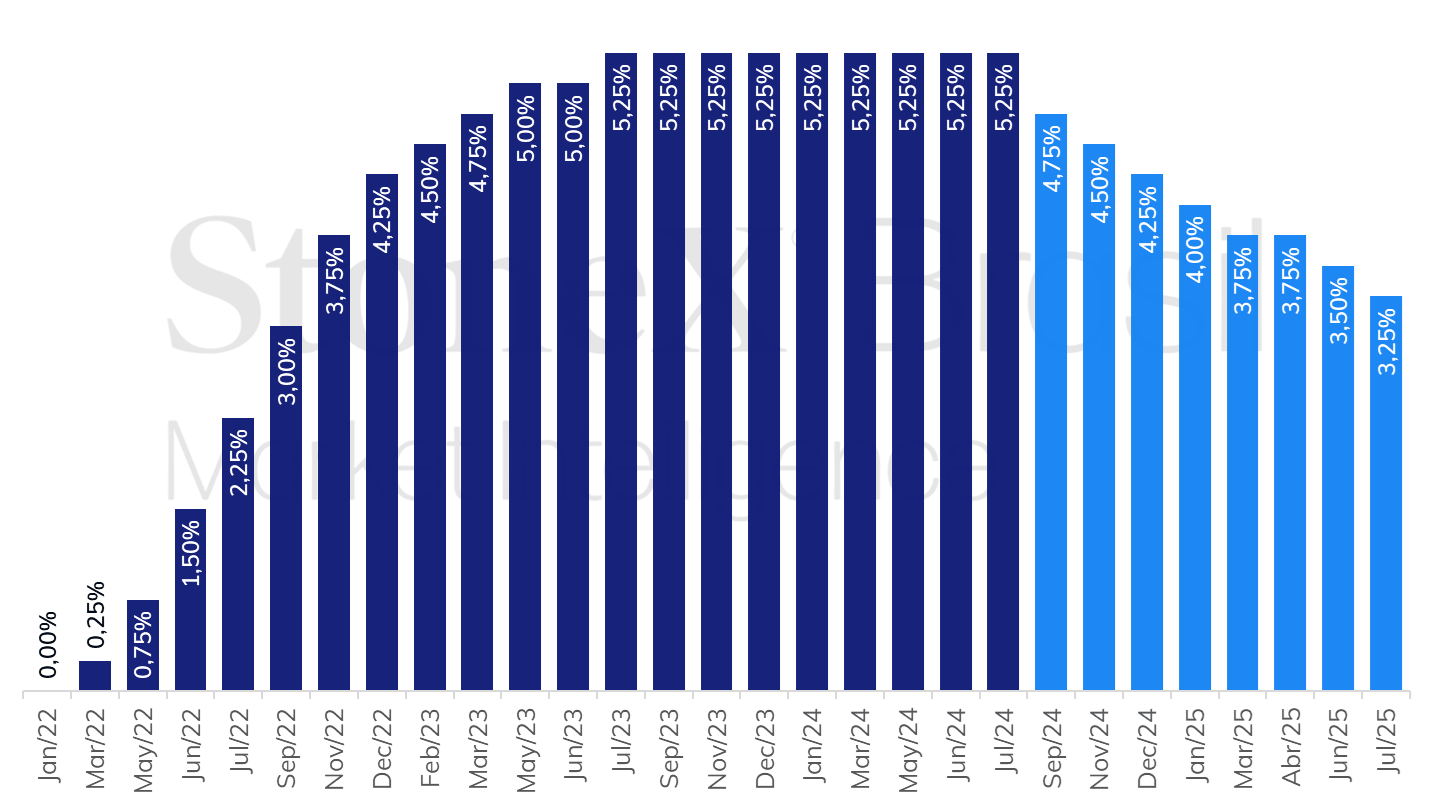
Source: CME FedWatch Tool. Design: StoneX. Refers to the bet with the highest probability in the future interest rate market on the indicated date.
Brazilian economic data
Expected impact on USDBRL: bearish
After the National Consumer Price Index (IPCA) for July accelerated more than expected, investors' attention should turn to economic activity data, with the release of figures for retail and services in June, in addition to the Central Bank's Economic Activity Index (IBC-Br) for the same month. Additionally, combined with the higher IPCA, stronger comments from the Monetary Policy director of the Central Bank, Gabriel Galípolo, reinforced bets on an interest rate hike (Selic) for the September decision, which, in turn, contributes to a favorable outlook for the Brazilian interest rate differential compared to other economies and may help strengthen the real.
Chinese economic data
Expected impact on USDBRL: bearish
In China, the data-filled week is expected to show a slight improvement in July compared to June, but still below the official annual growth target of 5%. The median projections point to an annual growth in retail sales from 2.0% in June to 2.3% in July, the annual increase in fixed investments is expected to remain flat at 3.9% in the period, while the annual growth in manufacturing is expected to slightly decrease from 5.3% to 5.2%. Overall, the indicators should reinforce the perception that the country's domestic demand remains weak, while the industry shows slightly better performance due to the heated exports of high-tech items such as semiconductors, batteries, and electric cars.

INDICATORS