- China's economic data could reinforce the perception that demand in the country is slowing down, which could hurt the performance of risky assets such as commodities and currencies of countries that export primary products, such as the BRL.
- Global weakening of the US currency should maintain the momentum to appreciate risky assets such as stocks, commodities and currencies of emerging countries, such as the BRL.
- Economic data in Brazil may reinforce the perception that economic growth in the country is resilient, and there is room for the Central Bank to initiate cuts to the basic interest rate (Selic) in August, strengthening the BRL.
Last week in review
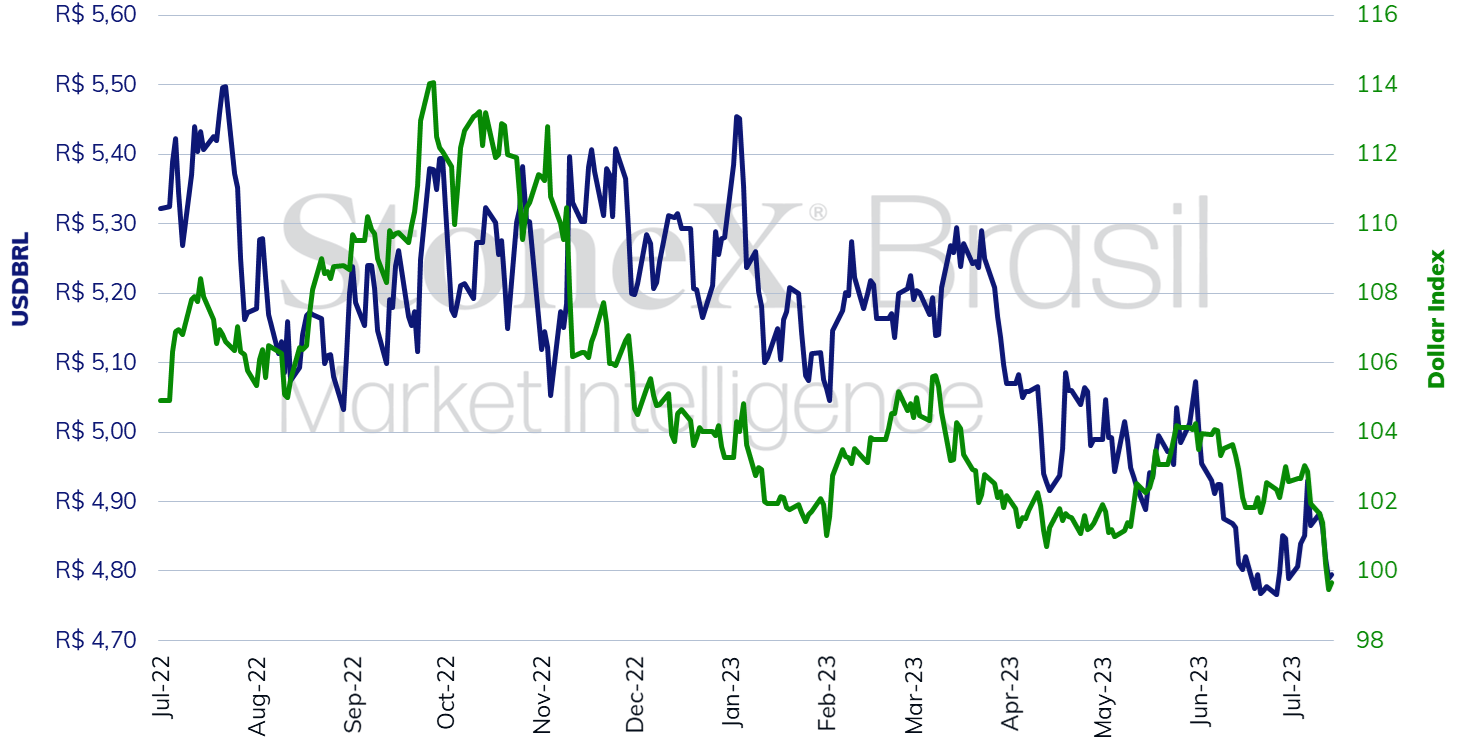
The USDBRL ended the week higher, ending Friday's (14) session quoted at BRL 4.795, a variation of -1.4% in the week, +0.1% in the month and -9.2% in the year. The dollar index closed the session at 99,7 points, a weekly decline of 2,2%, monthly of 2,8% and annual of 3,5%. The foreign exchange market reflected the general depreciation of the US currency after the publication of soft employment and inflation data for the United States, which, in turn, strengthened several currencies around the globe, such as the real. The disclosure of the June IPCA below analysts' estimates, consolidating expectations that the Central Bank will begin its cycle of cuts to the basic interest rate (Selic), also strengthened the BRL.
Expected impact on USDBRL: bearish
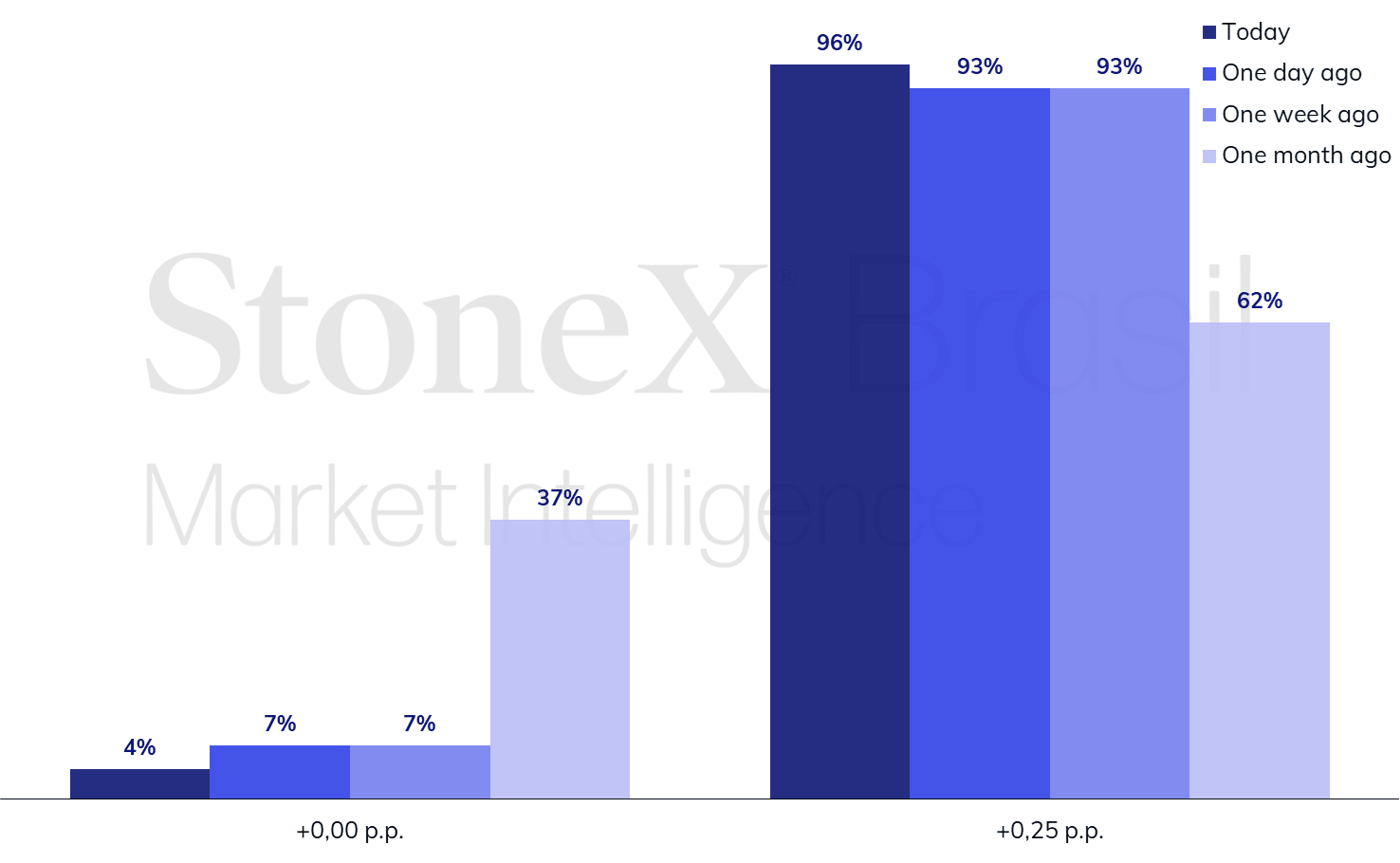
Economic data for the United States this week are expected to reinforce the trend of recent months, with modest growth in retail sales and a decline in industrial production. Last week, the US currency weakened sharply in the wake of economic data that suggested a decrease in inflationary pressures in the US. The dollar index, which measures the dollar’s value against a basket of advanced economy currencies, fell below 100 points for the first time in 15 months, devaluing more than 3 percent in seven days. The core Consumer Price Index (CPI), excluding the volatile food and energy components, rose just 0.16 percent in June, representing an annualized figure below 2 percent. The slowdown was quite broad among the groups that make up the index, affecting categories that were more resistant until then, such as prices for services provided to families. While it is early to say that the US inflation challenge is resolved, the data cheered economists and reinforced the interpretation that price pressures are easing more consistently. The sharp devaluation of the US currency comes on the back of expectations that the Federal Reserve should end its monetary tightening process after a last readjustment of 0.25 p.p. on July 26, which, in turn, discourages investors from holding positions in assets denominated in the US currency and encourages demand for riskier assets, such as stocks, commodities and other currencies.
Expected impact on USDBRL: bearish
Investors turn their attention to the Central Bank's Economic Activity Index (IBC-Br) for May amid conflicting activity data for the month. Services showed higher-than-expected growth, but retail retreated beyond estimates. In any case, most recent indicators have reinforced the reading of a more favorable macroeconomic environment, contributing to the maintenance of bets that the Central Bank will begin its cycle of cuts in the basic interest rate (Selic) in the next decision in August. Currently, the interest futures market prices a reduction of 0,50 p.p., while the Focus Bulletin anticipates a cut of 0,25 p.p.
Expected impact on USDBRL: bullish
China's economic agenda this week could hurt the performance of risky assets such as commodities and currencies of emerging countries such as Brazil. On Monday, a sequence of important economic data for the country will be released, such as GDP for the second quarter, June industrial production, June retail sales and June unemployment rate. Although GDP growth is expected to rise from 4.5% in the first quarter to approximately 7.0% in the second quarter, the other data should reinforce the perception of a slowdown in economic activity in the country.