- US Services PMI in January may highlight the perception of a heated economy and reinforce interpretations that the Federal Reserve will be cautious in carrying out its interest rate cuts cycle this year, favoring the American interest rate differential and strengthening the USD.
- Copom's decision minutes should reinforce the perception that the Committee is comfortable with the current risk balance and intends to maintain the pace of interest rate cuts of 0.50 p.p. to the basic interest rate (Selic), harming the Brazilian interest rate differential and weakening the BRL.
- Service inflation and primary deficit in Brazil can worsen investors' inflation expectations and influence bets on the trajectory of interest rates in Brazil, influencing the national interest rate differential and strengthening the BRL.
- Consumer Price Index (CPI) in China is expected to show a spotty pick up in January, which may foster the performance of risky assets, even though its effects are largely seasonal.
The week in review
The week was marked by the monetary policy decision of the Federal Open Market Committee (FOMC), which ruled out the possibility of interest rate cuts until the Committee had greater confidence that inflation was sustainably moving towards the 2% mandate per year. The prospects for interest rate cuts have moved further away after the release of strong data for American employment in January, which should reinforce the Fed's cautious stance.
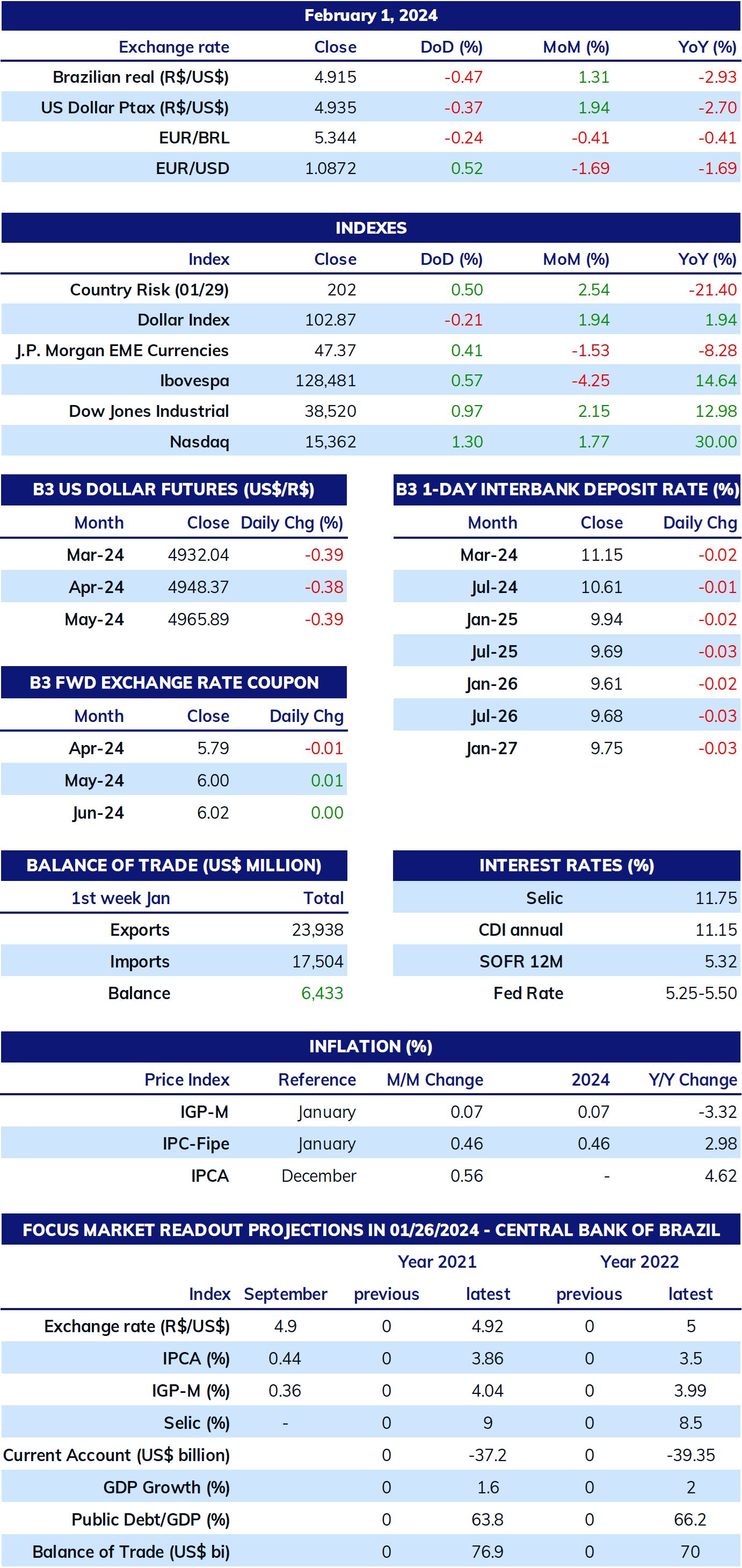
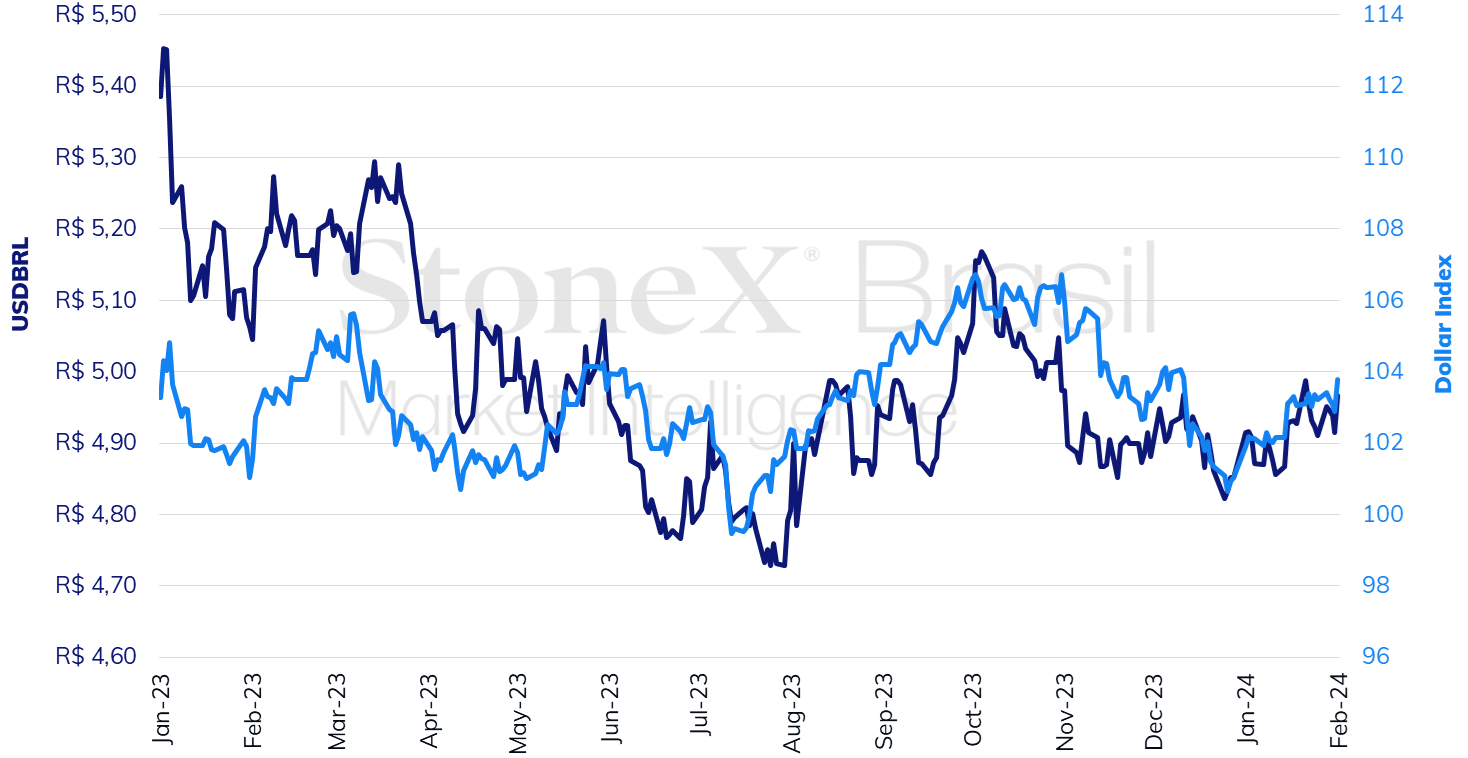
The USDBRL ended the week lower, closing Friday's session (02) at BRL 4.911, a variation of -0.3% for the week, +1.2% for the month, and +1.2% for the year. The dollar index closed Friday's session at 103.2 points, a weekly gain of 0.2%, a monthly gain of 2.2%, and an annual gain of 2.2%.
THE MOST IMPORTANT EVENT: Data on the American economy
Expected impact on USDBRL: bullish
Last week, the Fed's Federal Open Market Committee (FOMC) sought to curb investors' more optimistic bets on changes in monetary policy, stating that the Committee would not begin to reduce the US benchmark interest rate until there was "greater confidence" that price stabilization in the country was occurring sustainably. Additionally, the Fed chairman, Jerome Powell, stated that he "does not think it is likely" that the next FOMC decision on March 20 will reach this confidence level. The perception of a cautious stance by the Federal Reserve was reinforced after the release of stronger-than-anticipated data for the American labor market in January last Friday (02), which, in turn, can hinder inflation moderation by contributing to higher domestic demand and leading to higher wage costs for companies.
Copom minutes
Expected impact on USDBRL: bullish
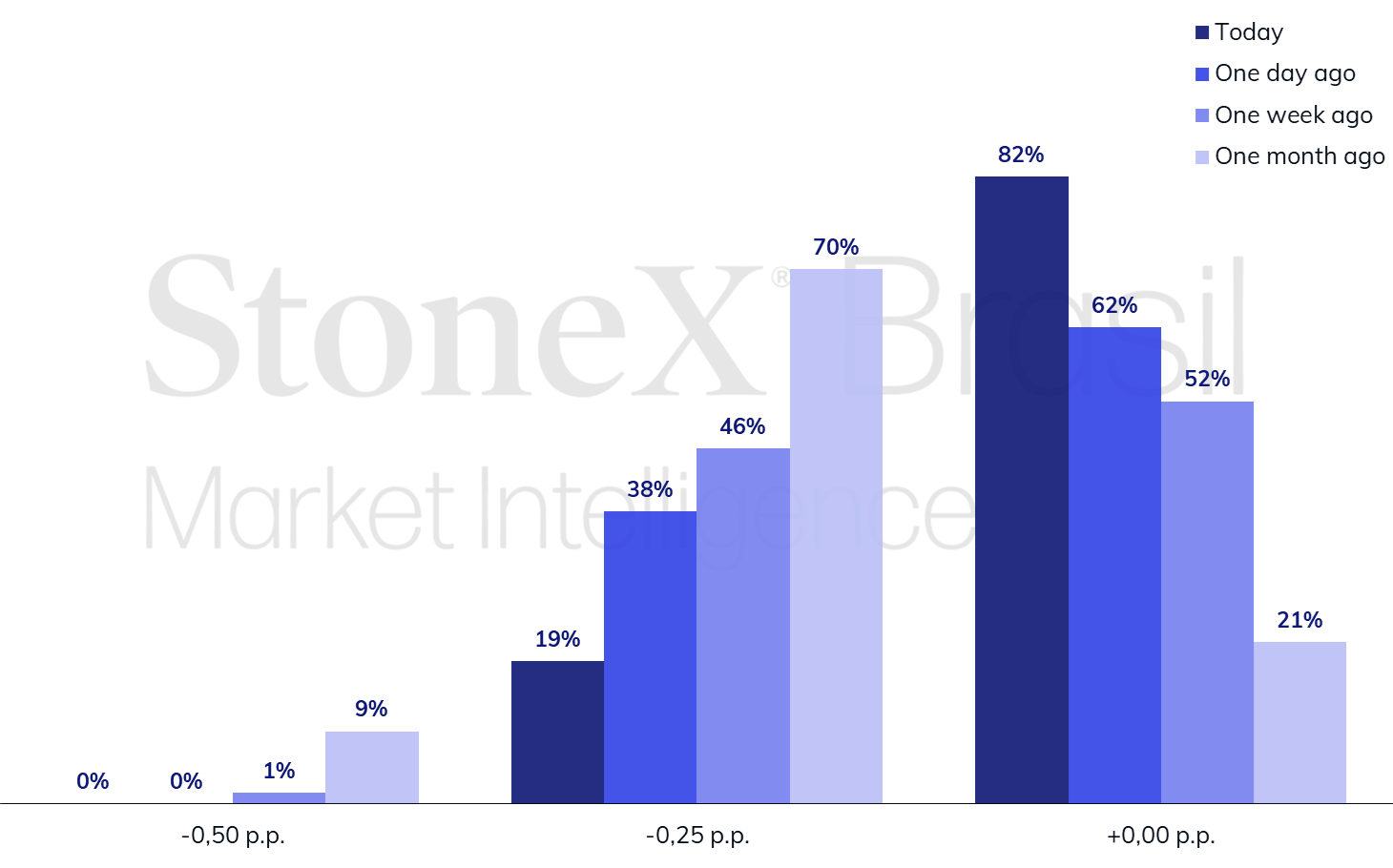
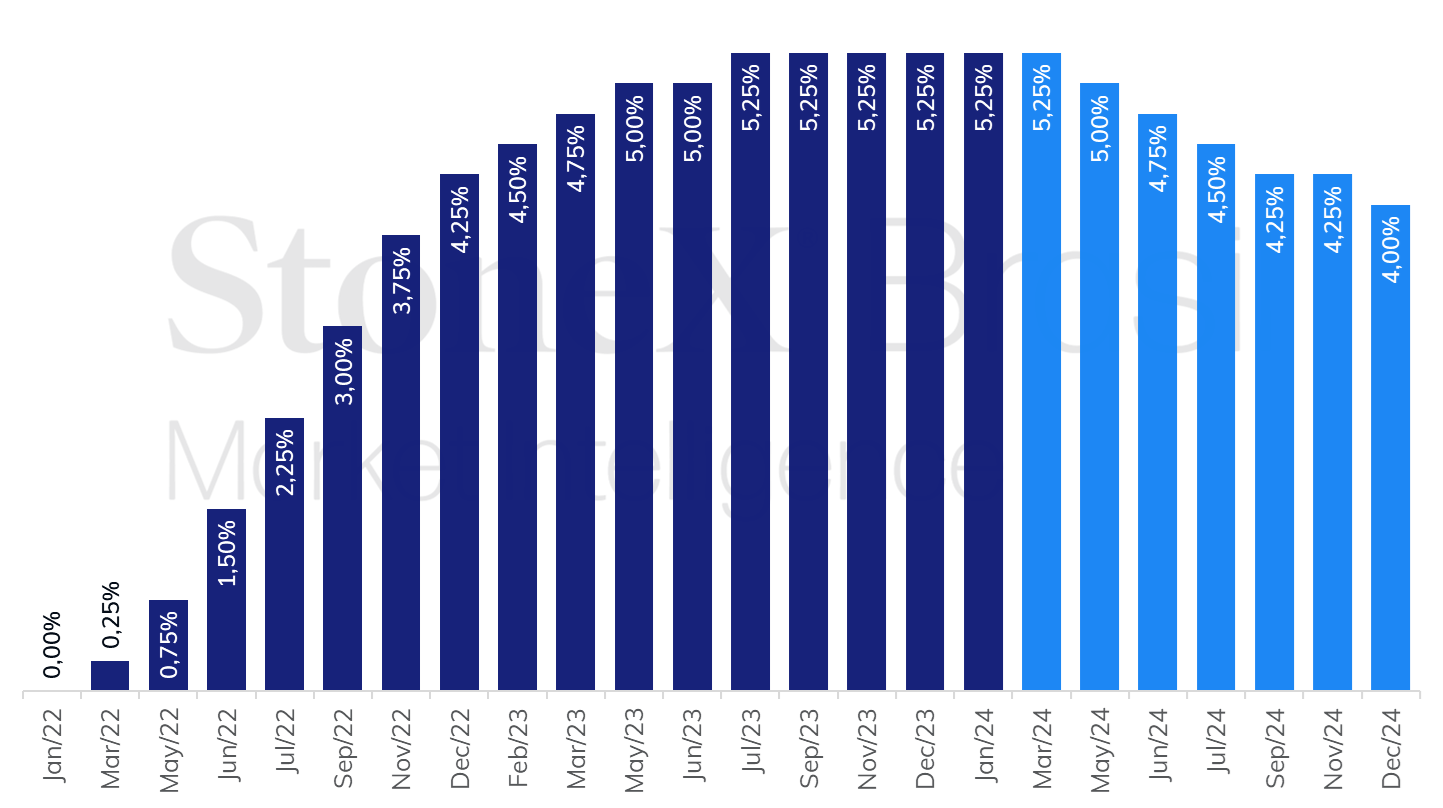
After the release of a very similar statement regarding the last two monetary policy decisions, the release of the minutes of the last meeting of the Central Bank of Brazil's Monetary Policy Committee (COPOM) should contribute to clarifying how the Committee's analysis of the national and international economic situation has evolved in recent months. In particular, there are doubts about how COPOM observes the picture of monetary easing by central banks of the main economies and the recent increase in service inflation on the scenarios considered in its strategy. Anyway, the statement already seems to make it clear that the Central Bank is comfortable with continuing its pace of cuts to the basic interest rate (SELIC) and that the criteria necessary for a change of course are rigorous.
Data for the Brazilian economy
Expected impact on USDBRL: bearish
In addition to the COPOM minutes, the bets on the basic interest rate (SELIC) trajectory will be influenced by the publication of data on inflation and public accounts next week. After the Broad National Consumer Price Index 15 (IPCA-15) ramped up less than expected in mid-January, the expectation is that the IPCA will decrease its pace of growth from 0.56% in December to 0.40% in January, driven by the increase in food and services items. Furthermore, the primary balance of the public sector is expected to end in 2023 with an approximate deficit of BRL 250 billion, which represents about 2.3% of Brazil's Gross Domestic Product (GDP). However, the figure includes the regularization of the balance of court-ordered payments through an extraordinary expense at BRL 92 billion in December, after the Supreme Federal Court decided that the ceiling created by the government of former President Jair Bolsonaro for these payouts was unconstitutional, authorizing the settlement of the accumulated stock without affecting the limit of public expenses. Therefore, the "official" value should be approximately BRL 160 billion, or 1.4% of GDP.
Data for the Chinese economy
Expected impact on USDBRL: bearish
February is very data-poor for China due to its long New Year's holiday, which will be celebrated this year between February 4 and 10. Therefore, the Consumer Price Index (CPI) and the Producer Price Index (PPI) should be a few indicators of the country's economic situation at any given time. Although the median of expectations points to an increase in CPI in January, it should largely be attributed to seasonal factors, such as food prices due to increased demand caused by New Year festivities. Therefore, the accumulated deflation in 12 months should increase, and the price growth should forfeit strength starting in February.