Dollar should reflect inflation data in Brazil and the US, ECB interest rate decision, and Bolsonaro’s trial
- Bullish
- U.S. consumer and producer inflation are expected to show another moderate increase, which tends to decrease expectations for interest rate cuts by the Federal Reserve in the coming months and, thus, strengthen the dollar globally.
- Possible conviction of former president Jair Bolsonaro by the Supreme Federal Court may worsen commercial and diplomatic relations between Brazil and the United States and increase the perception of risks for national assets, which tends to harm the performance of the real.
- Bearish
- Brazilian inflation is expected to show a new increase in its core, which should consolidate expectations of maintaining the benchmark interest rate (Selic) in the second half of the year and favor the strengthening of the real.
- ECB should keep its interest rates steady while investors anticipate rate cuts by the Federal Reserve, which tends to strengthen the euro against the dollar and, indirectly, to benefit the real.
The week in review
- U.S. labor market data continued to slow, reinforcing bets on rate cuts by the Federal Reserve.
- Brazilian GDP slows down in the second half and increased bets that the Central Bank may resume cutting the basic interest rate (Selic) later this year.
- The start of former president Jair Bolsonaro's trial for attempted coup d'état resulted in increased caution among investors with Brazilian assets.
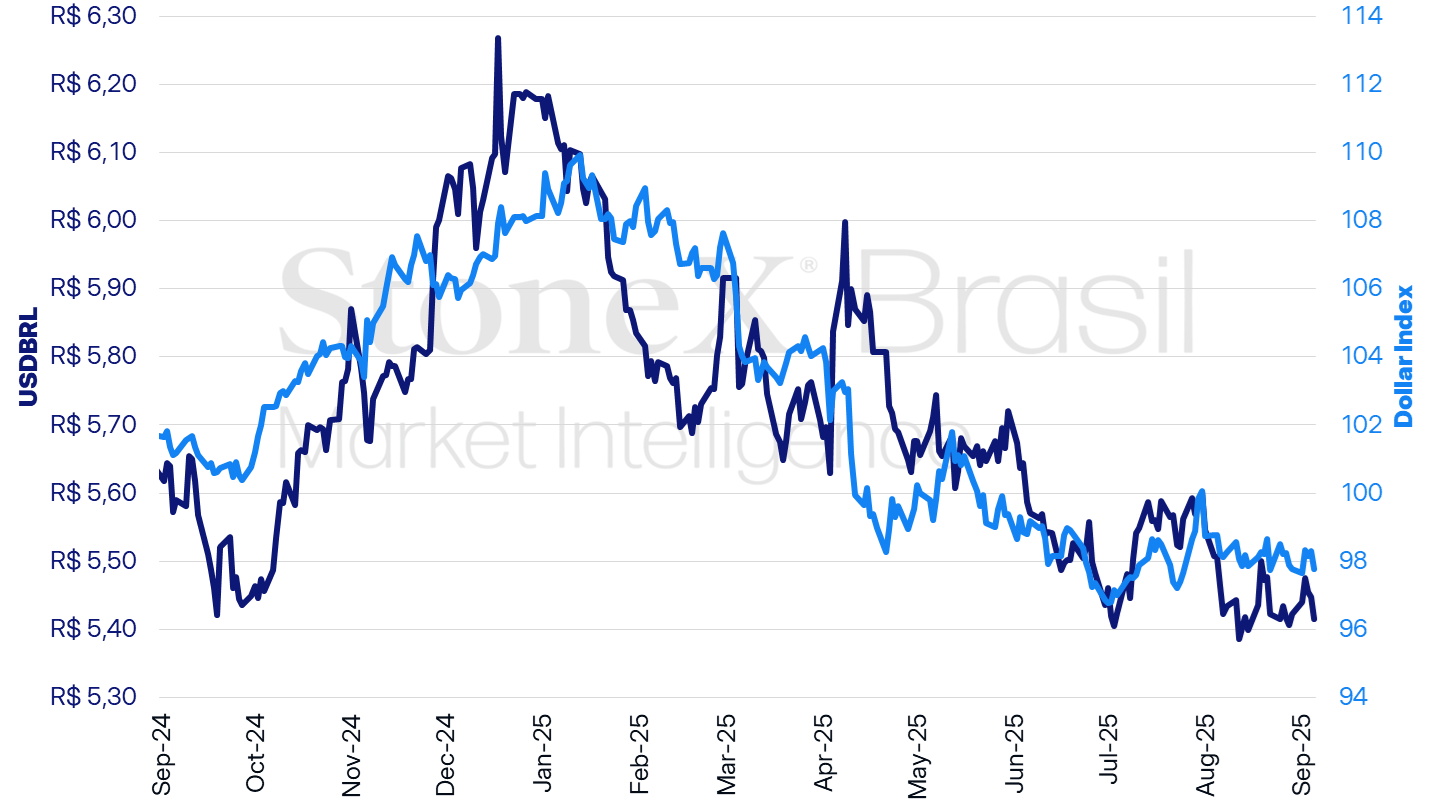
USDBRL and Dollar Index (points)
Source: StoneX cmdtyView. Design: StoneX.
Variations of the USDBRL | Daily: -0.60% | Weekly: -0.14% | Monthly: -0.14% | YTD: -12.36% | In 12 months: -2.84% |
Dollar index variations | Daily: -0.53% | Weekly: +0.01% | Monthly: +0.01% | YTD: -9.58% | In 12 months: -3.30% |
KEY EVENT: Inflation in the United States
Expected impact on USDBRL: bullish
USA: History and expectation for the interest rate – updated on September 5, 2025
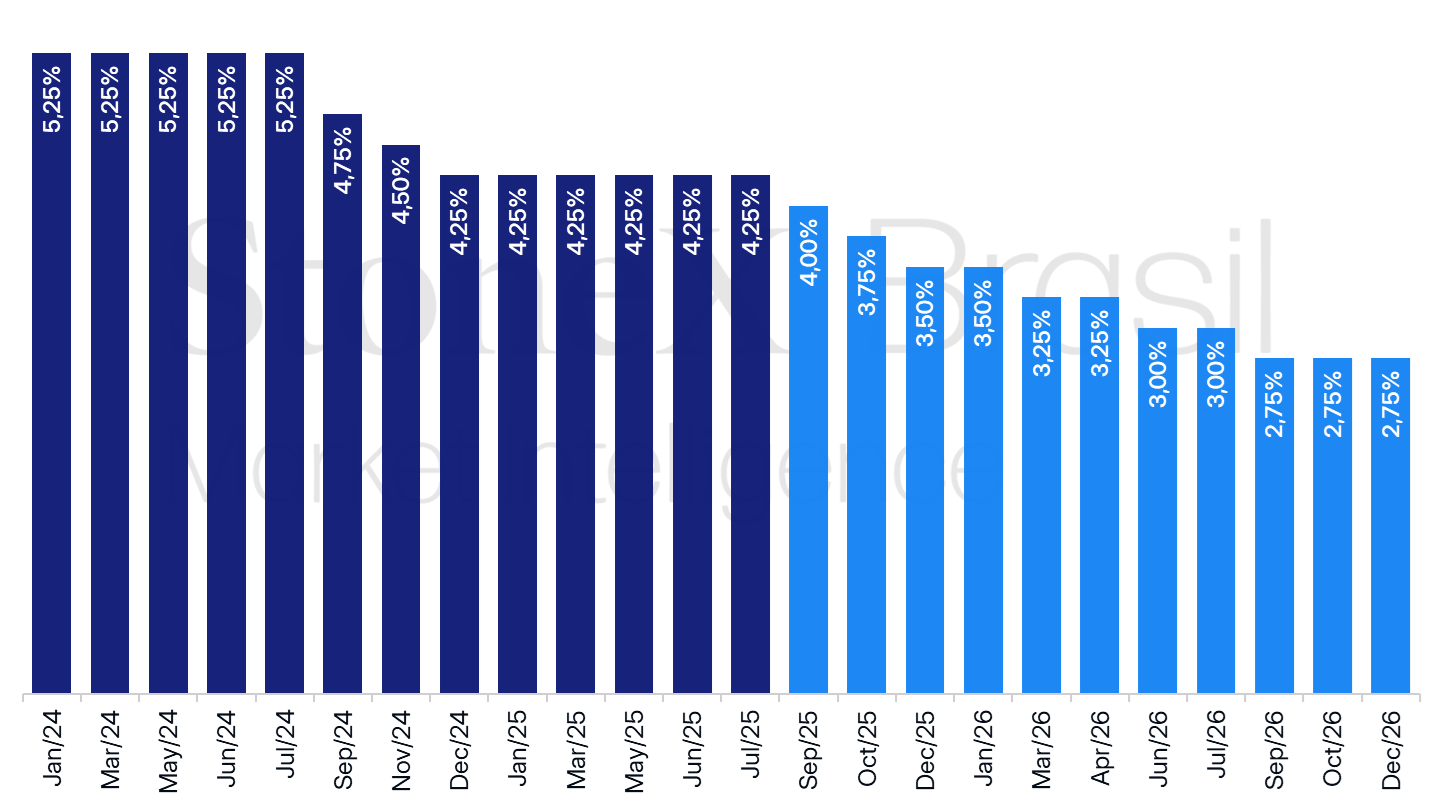
Source: CME FedWatch Tool. Design: StoneX. Refers to the bet with the highest probability in the future interest rate market on the indicated date.
The release of inflation data in the United States is expected to influence investors' expectations for the interest rate trajectory in the country during this second quarter.
Why this is important: The stabilization of U.S. inflation at a level far from the Federal Reserve's target of 2% per year may reduce expectations for interest rate cuts by the institution and favor the outlook for U.S. bond yields, which tends to strengthen the dollar globally.
What to expect The median of estimates for the Consumer Price Index (CPI) for August is for a monthly increase of 0.3% in both the headline index and its core, which excludes volatile food and energy components.
- If this projection is confirmed, the annual increase of the CPI would rise from 2.7% in July to 2.9% in August, while the annual increase of its core would go from 3.0% to 3.1% in the same period.
- Additionally, the median of the estimates for the Producer Price Index (PPI) in August also points to a monthly increase of 0.3% in both the headline indicator and its core, which would keep the annual increase at 3.3% and 3.7%, respectively.
Overview: The Federal Reserve pursues two main goals, price stability and maintaining full employment.
- After the release of weaker data for the US labor market, investors increased their bets on a faster cycle of interest rate cuts by the Fed, believing that the risks of a slowdown in the economy are higher.
- However, the stabilization of American inflation at a level far from the 2% yearly target pursued by the Federal Reserve, and the risks of inflationary pressure caused by import tariffs, reduce the institution's ability to cut interest rates.
- Therefore, investors may reduce their bets on lower interest rates in the short term if this week's inflation numbers confirm the forecasts of resilience and persistence of price increases.
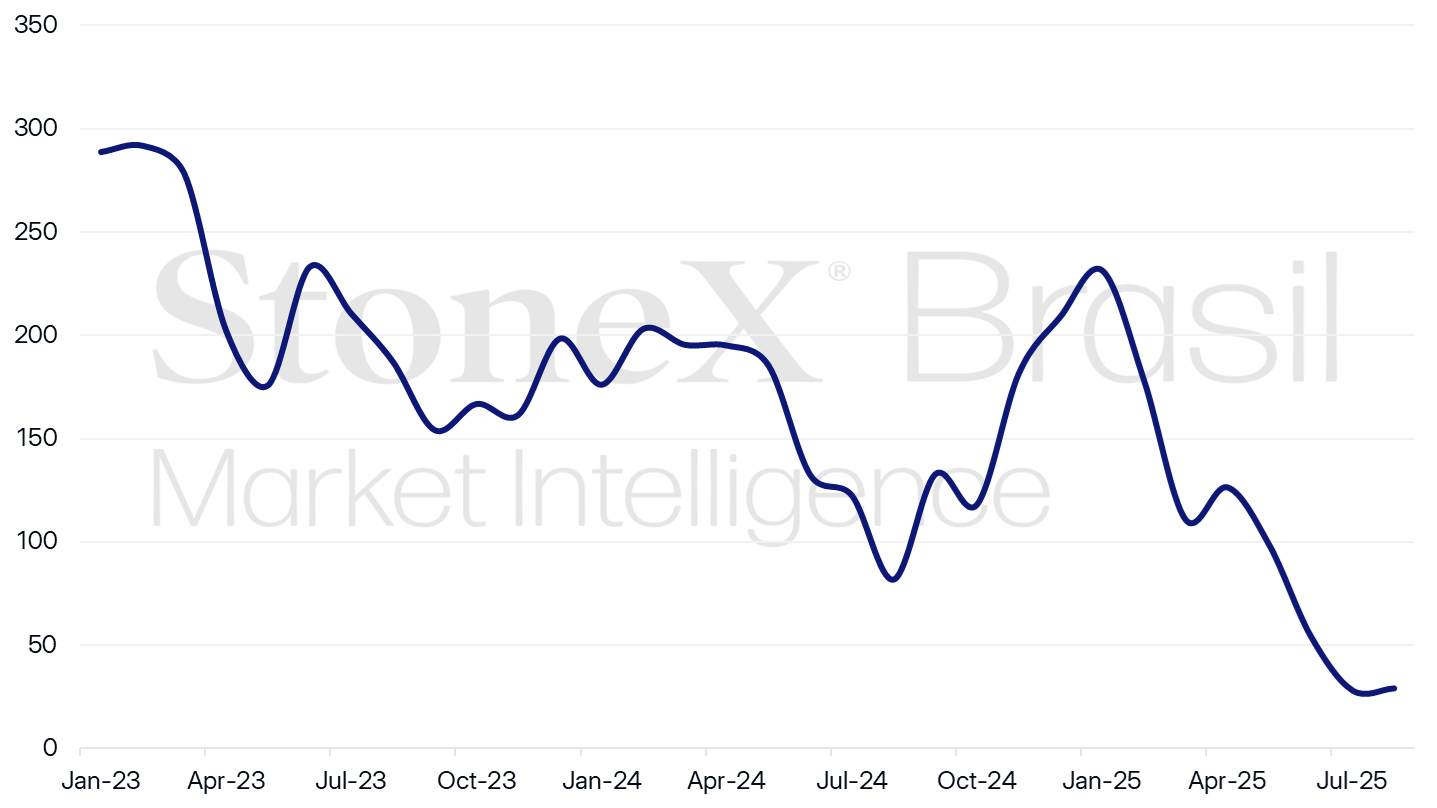
Weakness in employment indicators: Last Friday (05), the US Employment Situation Report showed a net gain of 22,000 jobs in August, below the median projection of 75,000 jobs and the July figure of 79,000.
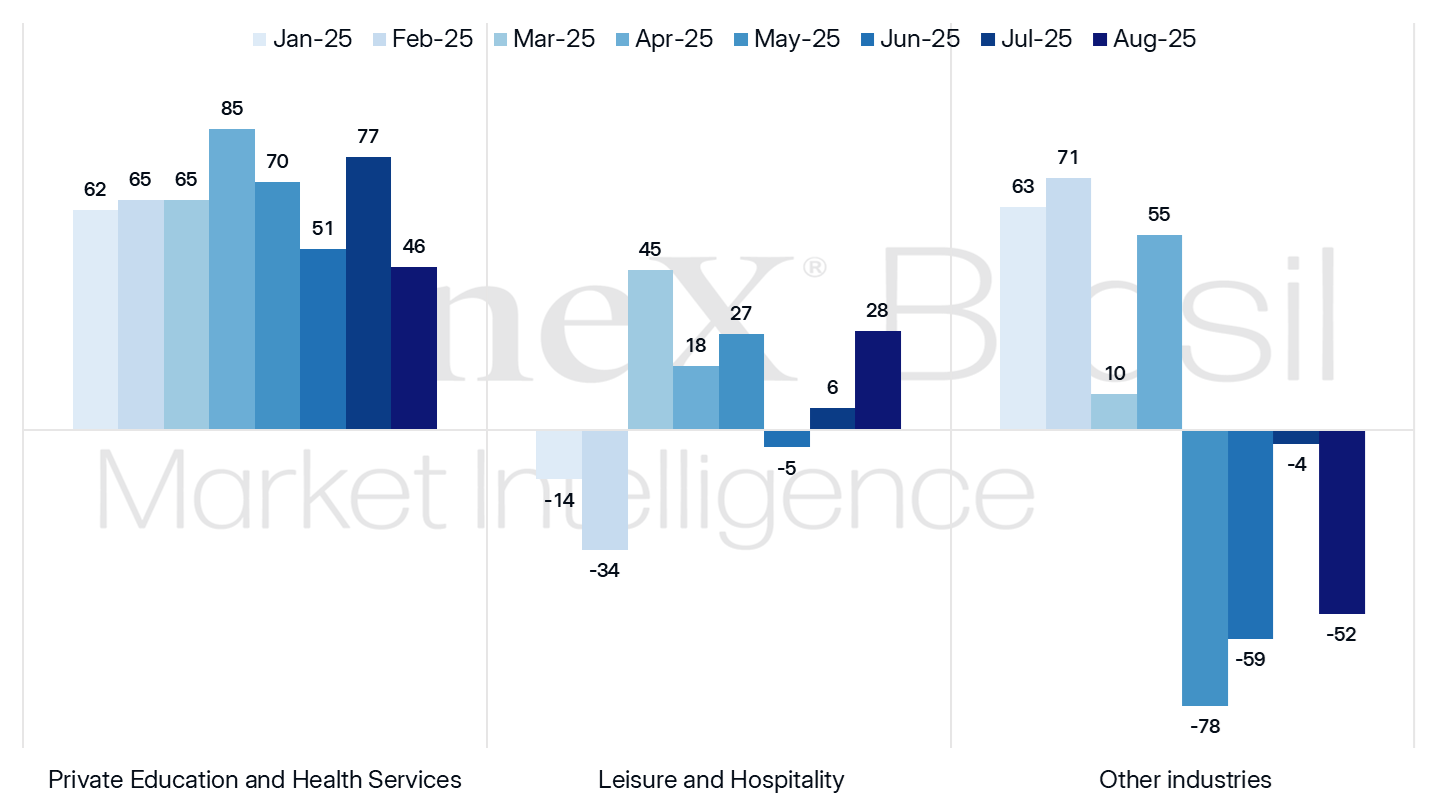
- In addition, job creation in the US in 2025 is highly concentrated in the education, health services, leisure, and hospitality sectors, while the other segments show a significantly weaker performance.
- However, if it is undeniable that the pace of hiring is slowing down, there is still no indication that the pace of layoffs is intensifying. This implies that the weakening of the labor market remains gradual and reduces the likelihood of a sudden and sharp downturn in the economy.
Variation in urban employment in the US in selected sectors (thousand people)
Source: U.S. Bureau of Labor Statistics (BLS), Federal Reserve Bank of St. Louis. Design: StoneX.
Variation in total urban employment in the United States – 3-month average (thousand people)
Source: U.S. Bureau of Labor Statistics (BLS), Federal Reserve Bank of St. Louis. Design: StoneX.
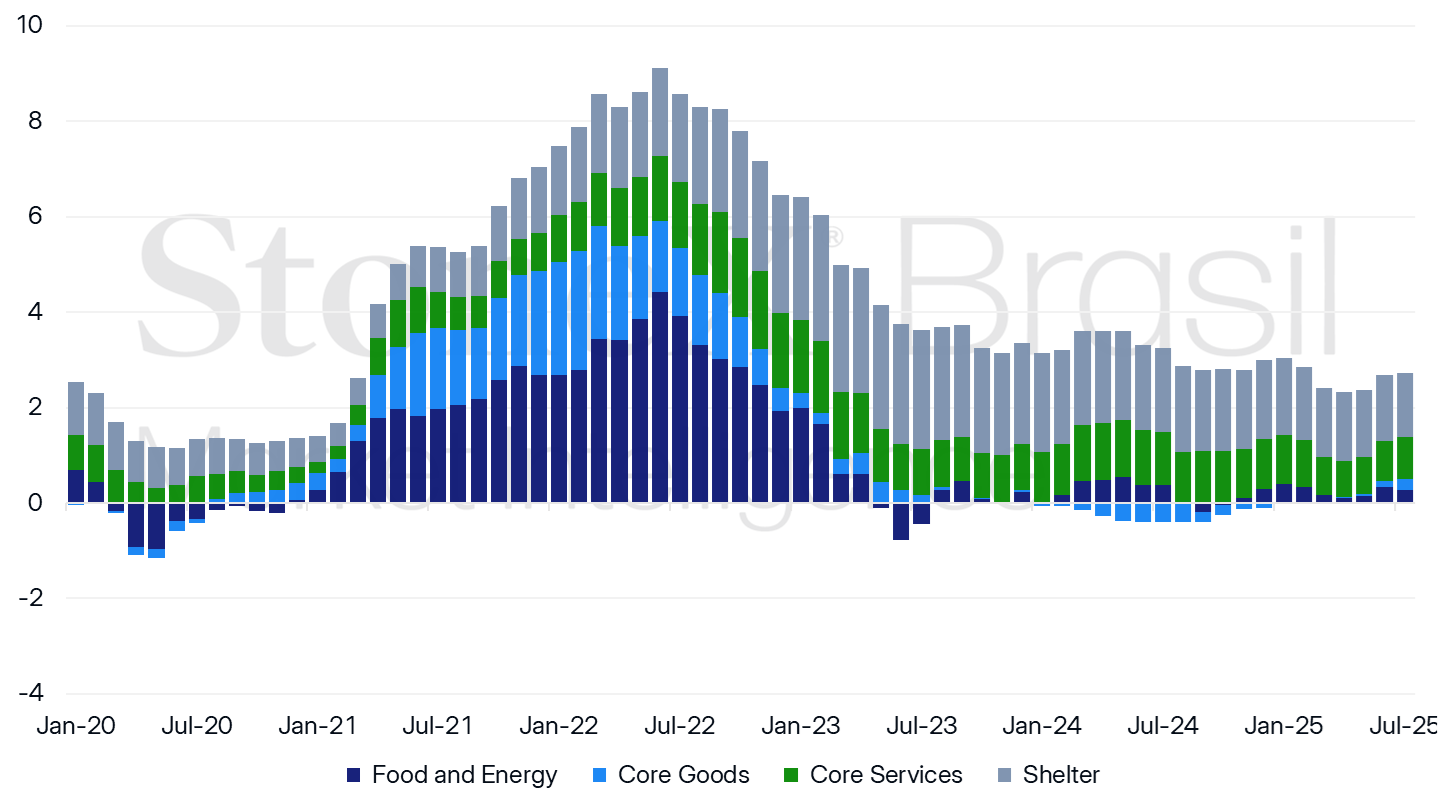
Inflation still high: At the same time, annual growth in US inflation has been above 2% for more than four years, with no signs of stabilizing in the last 12 months.
- Since 2023, this price increase is mostly the result of inflation in the housing and core services segments, which excludes food and energy services.
- So far, contrary to analysts' predictions, the import tariffs imposed by the White House have not resulted in price increases in the sectors most exposed to international trade, particularly industrial goods.
- However, there is almost consensus that the effects of tariffs on inflation should increase in the coming months, although there is debate about the magnitude and duration of these impacts.
Breakdown of the annual change in the American consumer price index (%)
Source: Federal Reserve Bank of San Francisco. Design: StoneX.
Inflation in Brazil
Expected impact on USDBRL: bearish
The National Broad Consumer Price Index 15 (IPCA-15) is expected to show deflation of 0.15% in August, after a 0.33% increase in July, according to the median of the estimates from the latest Central Bank Focus Bulletin.
- If confirmed, it will be the first negative change in the indicator since July 2023.
- Despite the slowdown in the headline index, the core inflation, which excludes volatile items such as food and energy, is expected to remain resilient, as already indicated in the preview released two weeks ago.
Why this is important: The moderation of the full index, on the one hand, contributes to reducing the cumulative figure over 12 months and may reinforce the perception of inflation convergence to the Central Bank's target.
- On the other hand, the probable pick up in core prices should suggest that the improvement is spotty and maintain the expectation that the basic interest rate (Selic) will remain stable in the second half of the year, favoring the yield of Brazilian bonds and contributing to a strengthening of the real.
What to expect? The expected deflation in the headline index should be mainly influenced by the decline in residential electricity, the item with the greatest negative impact in the most recent IPCA-15.
- The Food and Beverages group, which showed a significant slowdown, should also contribute.
- As the core precisely excludes these two components, its variation tends to remain more resilient during the month.
Overview: Although the deflation in August should reduce the accumulated value over 12 months and ease inflationary fears, in isolation, the data should not significantly change the bets around monetary policy.
- For a broader repricing of Selic cut expectations still in the second half of the year, more consistent signs of inflation stabilization will be needed, especially in the core rates.
- In the minutes of the last meeting, the Monetary Policy Committee (Copom) reiterated that it continues to assess the "accumulated impacts of the monetary adjustment already implemented, which are yet to be observed, (...) [and whether they are] sufficient to ensure inflation converges to the target."
- In this sense, the predominant reading among investors is that the Central Bank should remain cautious, monitoring the next inflation and activity data before any easing.
- In this context, new economic activity data should also be monitored throughout the week, especially the monthly surveys on trade and services for June, released by the IBGE.
Bolsonaro's trial
Expected impact on USDBRL: bullish
Investors should also monitor the trial of former President Jair Bolsonaro in the First Panel of the Federal Supreme Court (STF) for attempted coup d'état, scheduled to end this week.
Why this is important: Investors fear that a possible conviction of Bolsonaro could worsen commercial and diplomatic relations between Brazil and the United States, which would increase the perceived risks of domestic assets and weaken the real.
Overview: The White House explicitly linked the imposition of tariff and sanctions on Brazil to dissatisfaction with court proceedings in the country, particularly those against former President Jair Bolsonaro and social media platforms.
- Therefore, Bolsonaro's trial risks further displeasing Americans and resulting in the application of new sanctions to the country.
- The prosecution and defense presented their arguments last week, and the ministers of the First Panel are expected to present their votes this week. If the defendants are convicted, the justices will define the sentence to be served after final and unappealable judgment (when there is no longer any possibility of appeals).
European Central Bank (ECB) interest rate decision
Expected impact on USDBRL: bearish
There is consensus among analysts that the European Central Bank (ECB) should keep its benchmark interest rate unchanged next Thursday (11), at 2% per year.
- The decision to maintain should be justified by the need for time to assess the effects of the current level of monetary tightening, in a context in which inflation close to the target allows for a more cautious stance.
Why this is important: More than the decision itself, the market will look for signs about the monetary authority's next steps, especially regarding the period in which it intends to keep rates stable.
- If the ECB reinforces the outlook of caution and maintaining the current level, especially at a time when the United States is expected to begin its cycle of interest rate cuts, the move tends to strengthen the euro against the dollar and, indirectly, support the real.
Overview: In the statement, the ECB is expected to reiterate the message from the July meeting, when it also kept rates unchanged and said it was “well positioned to navigate uncertainties regarding American trade tariffs.”
- From an inflationary standpoint, the institution managed to bring inflation close to the 2% p.a. target a few months ago and considers that it has reached a neutral level of monetary policy.
- Even so, significant risks of economic slowdown remain in the bloc, with recent activity indicators below average and potential negative impacts resulting from dependence on exports to the US, which may intensify in the coming months.

INDICATORS
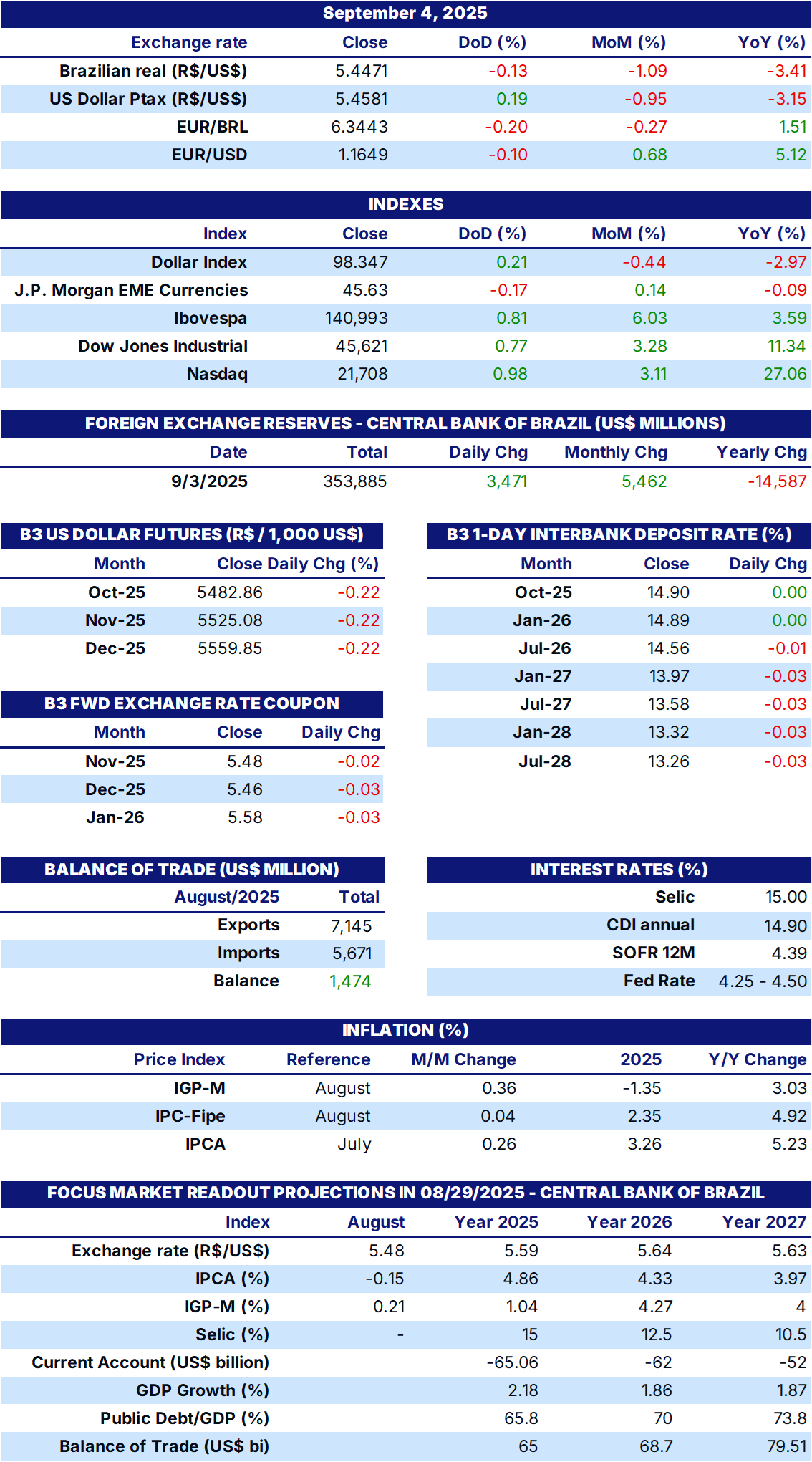
Sources: Central Bank of Brazil; B3; IBGE; Fipe; FGV; MDIC; IPEA and StoneX cmdtyView.