Foreign Scenario
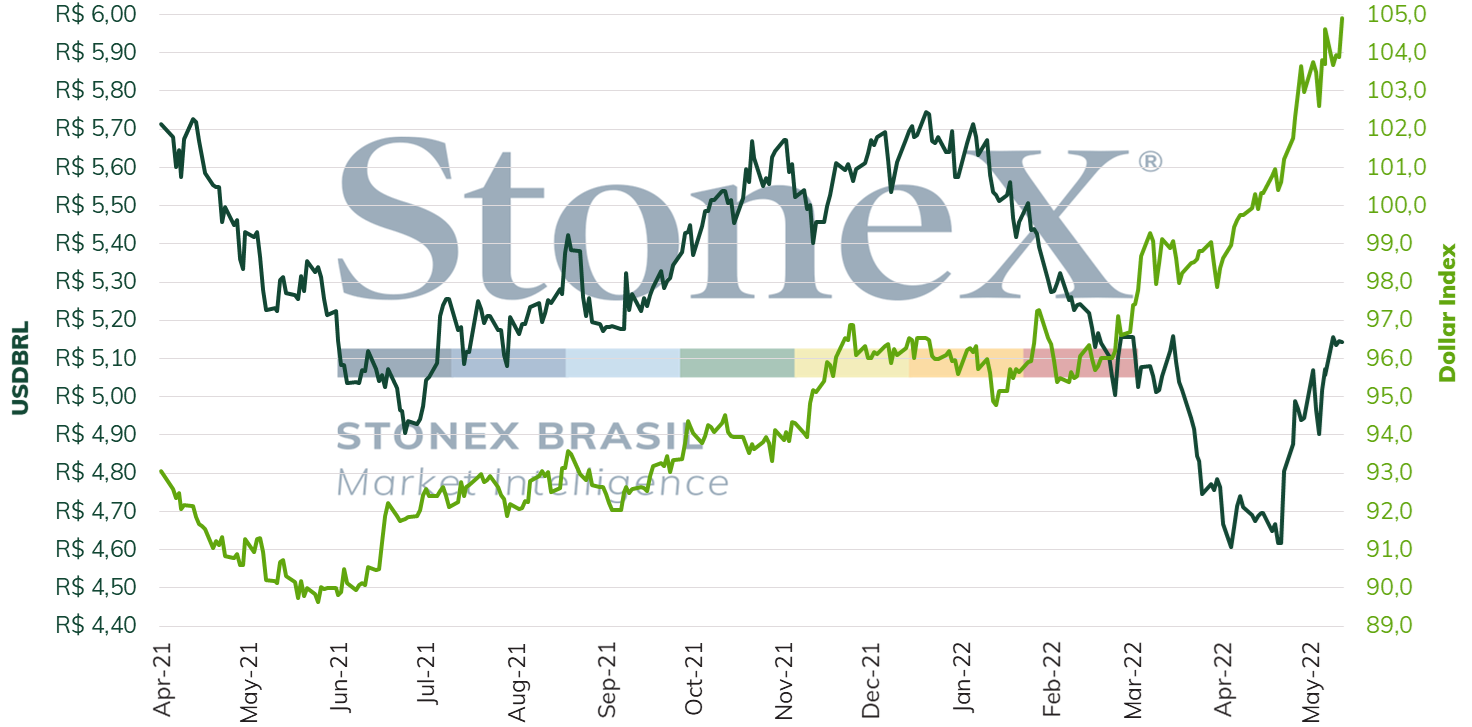
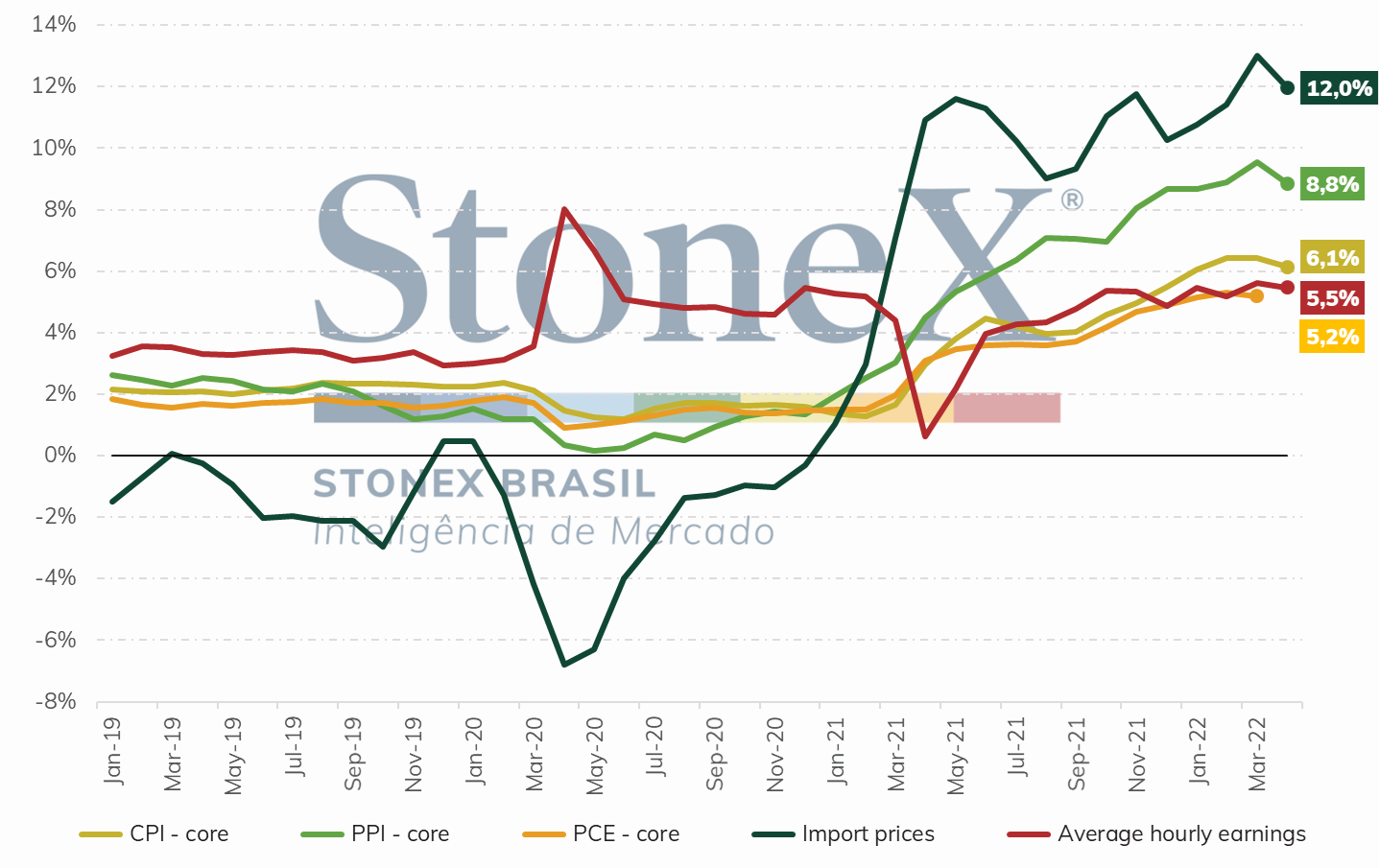
This week, the focus should remain on the public speeches of the Federal Reserve’s (Fed) authorities, after a week of much pessimism and risk aversion by investors, who fear that the acceleration of prices in the United States is so high, widespread and persistent that it will not be possible to contain it without very intense interest rate hikes by the monetary authority. Last week's consumer price data revealed that cost pressures still have a lot of force, and the debate among the authorities is increasingly about the pace of interest rate adjustments and what the rate should be at the end of this process (terminal level). This aggressive tightening of monetary conditions increases the chances of an economic recession, and increasingly, this is a risk that the American central bank seems willing to take. New York Fed President John Williams, St. Louis Fed President James Bullard, Cleveland Fed President Loretta Mester, Philadelphia Fed President Patrick Harker, and Chicago Fed President Charles Evans are scheduled to speak this week.
US INFLATION READINGS (OVER THE PAST 12 MONTHS)
Source: Federal Reserve Bank of St. Louis. Design: StoneX.
On Tuesday (17), the US Census Bureau will release the retail sales volume for April, allowing for a more up-to-date reading on the health of consumer demand and possible indications of some slowdown in economic expansion. Although it is too early to imagine a slowdown in consumption, the first signs will appear at some point.
In the war between Russia and Ukraine, the focus next week should be outside the conflict zone after Sweden and Finland abandoned decades of military neutrality and requested their entry into the North Atlantic Treaty Organization (NATO) "as soon as possible." Although they are sovereign nations, the move will surely anger Moscow and provoke a redeployment of bases, armaments and troops in the far north of Europe, both on the Russian side and in the Scandinavian countries. The fear is that the Kremlin will use the move as a pretext for economic retaliation, such as reducing natural gas supply to European countries, highly dependent on Russian imports. On the battlefront, the conflict will move into its eleventh week with the same fundamental characteristics - lots of artillery and little territorial gain for both sides.
Finally, it is noteworthy that an analysis by Nomura bank on May 10 estimated that 41 Chinese cities are in partial or total confinement, affecting 289 million people. This corresponds to approximately 25% of the Chinese population and 30% of China's Gross Domestic Product. The authorities in Shanghai, the country's main financial center and home to some 25 million people, have extended until the end of May the containment measures imposed on the city to zero the number of new cases of the disease, although some districts already have partial releases. Restrictions on mobility and the mandatory referral of people who may have had contact with confirmed cases of the disease to quarantine centers have weighed heavily on the country's economic activity and household consumption in this first half of the year. Beijing has also partially kept its citizens in lockdown, suspending food services, gyms, entertainment, bus routes, and part of the subway network.
Domestic Scenario
This week should be empty of indicators due to the continuity of the Central Bank servers' strike in Brazil. Last week, the Central Bank of Brazil first sent a proposal for a salary readjustment to the category, only to rescind it hours later. The proposal for the Provisional Measure sent to the Ministry of Economy proposed a 22% salary readjustment for the monetary authority's employees starting in June 2022, as well as career restructuring, creation of institutional productivity bonuses and a supervision fee. However, the unions of servers, technicians and analysts said it was not previously consulted about the proposal and criticized the breaking of the 60% ratio between technicians and analysts. The authority said it had detected "inconsistencies" in the text, without specifying which ones, and asked for its withdrawal from the system. The employees remain on strike, and several statistics are still not updated, such as fiscal, monetary and credit statistics, foreign sector statistics, weekly data on foreign exchange flows, commodity indices and even the Focus bulletin. The information vacuum hampers the ability to interpret economic movements in real-time.
The political news should remain in focus. Last week, the Bolsonaro Administration removed Bento Albuquerque from the post of Minister of Mines and Energy and appointed Adolfo Sachsida to the post. According to press reports, Albuquerque would have been surprised by the resignation. As one of his first acts, Sachsida formally requested privatization studies for Petrobras and Pré-Sal Petróleo S.A. (PPSA) to the Special Secretariat for Investment Partnerships (PPI) at the Ministry of Economy. The change of posts comes after another string of criticisms from Brazil’s President to the international price parity policy of Petrobras, a state-owned company that has also suffered two changes of presidents under the current government. On Monday, Petrobras announced an 8.87% increase in the average price of diesel at its refineries, even though last week Bolsonaro had appealed directly to Albuquerque and the president of the state-owned company, José Mauro Coelho, for no further increases under the risk of "convulsion" in the country. However, the company remains faithful to its position of aligning its prices to international oil values and exchange rate fluctuations that may affect fuel costs domestically.
Finally, it is noteworthy that, in the last few weeks, the friction between the Powers of the Republic has intensified, more specifically, the attacks by the Executive, part of the Legislative and the Armed Forces on the electoral process and the Superior Electoral Court. There was an exchange of official letters, public notes and harsh statements, quite atypical for any election since re-democratization. In the last eight months, the Armed Forces sent 88 questions to the TSE about supposed risks, vulnerabilities and weaknesses of the Brazilian electoral process, which some analysts believe is intended to legitimize distrust of the national elections and the court itself. In all cases, the Electoral Justice states that the questionings are based on wrong premises, assertively denies the questionings or states that the suggestions are already in practice.
The sudden change of ministers and, especially, the friction between the branches of the Republic can raise the perception of political risk in Brazil, which, in theory, can raise the risk premium demanded by investors and drive foreign investments out of the country devaluing the Brazilian currency.