MOST IMPORTANT: Effects of the fiscal framework on agent confidence
Expected impact on USDBRL: bearish
After weeks of anticipation and speculation surrounding the proposed fiscal framework of the Luis Inácio Lula da Silva government, the economic team has finally revealed the main aspects of the fiscal rules that will be submitted to the National Congress. While the full text of the measures will only be published after the Easter holiday and therefore is not yet fully known, the proposed tax rules can be summarized as follows:
-
Target of increasing primary surplus by 2026, with tolerance bands.
-
Countercyclical mechanism for real growth of primary expenditure, between 0.6% and 2.5% per year.
-
Annual expense growth limited to 70% of the change in primary revenue over the past 12 months.
-
Primary results that exceed the tolerance range of the target can be converted into spending on public investments.
-
If the primary outcome falls below the tolerance range of the target, expense growth is reduced to 50% of the change in primary revenue in the following year, and 30% in the following year on a recurring basis.
-
Investments will have floors.
Over the last two trading sessions, the disclosure of the fiscal framework has had a positive impact on the business environment, providing increased predictability for public accounts and demonstrating the Administration’s commitment to maintaining its credibility with investors. However, the question remains: is this enough? While the proposed measures are undoubtedly less restrictive than the previous spending cap, which limited real spending to 2016 levels adjusted only for inflation, the old fiscal rule was disregarded five times during Jair Bolsonaro's presidency, ultimately nullifying his fiscal credibility. Due to its format, the National Congress utilized constitutional amendments to exceed the established limits, as demonstrated in the PEC of Precatórios, which caused two changes to the ceiling, the PEC of Fuels, which created tax and social benefits four months before the election, and the PEC of the Transition, which accommodated the 2023 Budget to the campaign promises of then-candidate Lula.
Despite the proposed fiscal rules being more flexible, they have not been received unanimously. One of the main criticisms, in addition to the lack of the basic text, is the supposed difficulty for stabilizing public debt. According to the model, spending will only be reduced proportionally (70%) when there is revenue growth, as the countercyclical nature of the mechanism allows government spending to expand during periods of falling revenues. However, for revenue growth to occur, there needs to be economic growth or an increase in the tax burden. This week, the central bank estimated 2023 growth at 1.2 percent, which would not allow for much spending increase. Nonetheless, due to the investment floor, there would be a certain level of spending rigidity. In this case, either a tax increase or spending cut (which has not been discussed so far) would be necessary to reach the primary surplus target.
Economic data in the United States
Expected impact on USDBRL: bullish
As concerns about a banking crisis in the United States and Europe ease, investors are turning their attention to economic data that is relevant to monetary policy decisions. This week, there will be significant data releases on the labor market and economic activity in the United States, providing an updated picture of the situation after a month of financial turbulence. Of particular importance will be the Employment Situation Report, which is set to be published on Friday (07), a holiday in Brazil. While the monetary tightening measures implemented thus far have created difficulties for the banking sector, the impact on employment has been limited, as unemployment rates remain extremely low and monthly job creation continues to be positive. Investors are closely monitoring the labor market because the largest contributor to recent inflationary pressures has been services provided to families, a sector closely tied to wage growth. While the Federal Reserve's rate hikes and slowing economic growth will eventually lead to a deterioration in labor market indicators, there is no sign that this will happen in the near future.
This week, the ISM institute will release the Purchasing Managers' Indexes (PMI) for both the industry and services sectors. Some regional indicators of productive activity have not presented a defined direction for the month of March, and the PMI will be important to allow an interpretation of the global movement of the economy. Furthermore, economists closely watch the subcomponents of prices paid and hiring as indicators for the trend of official data, which is only released at the end of the month.
Eased concerns about the banking sector
Expected impact on USDBRL: bearish
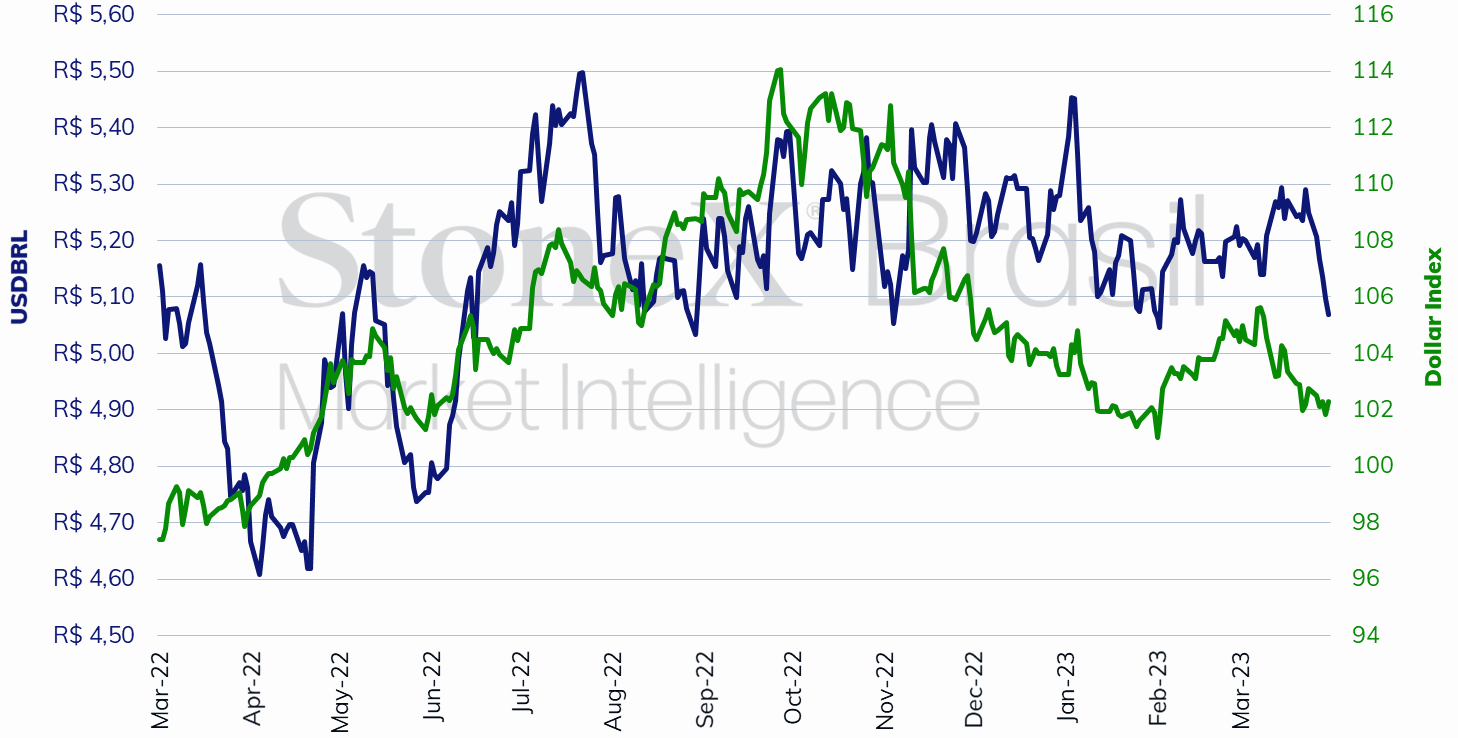
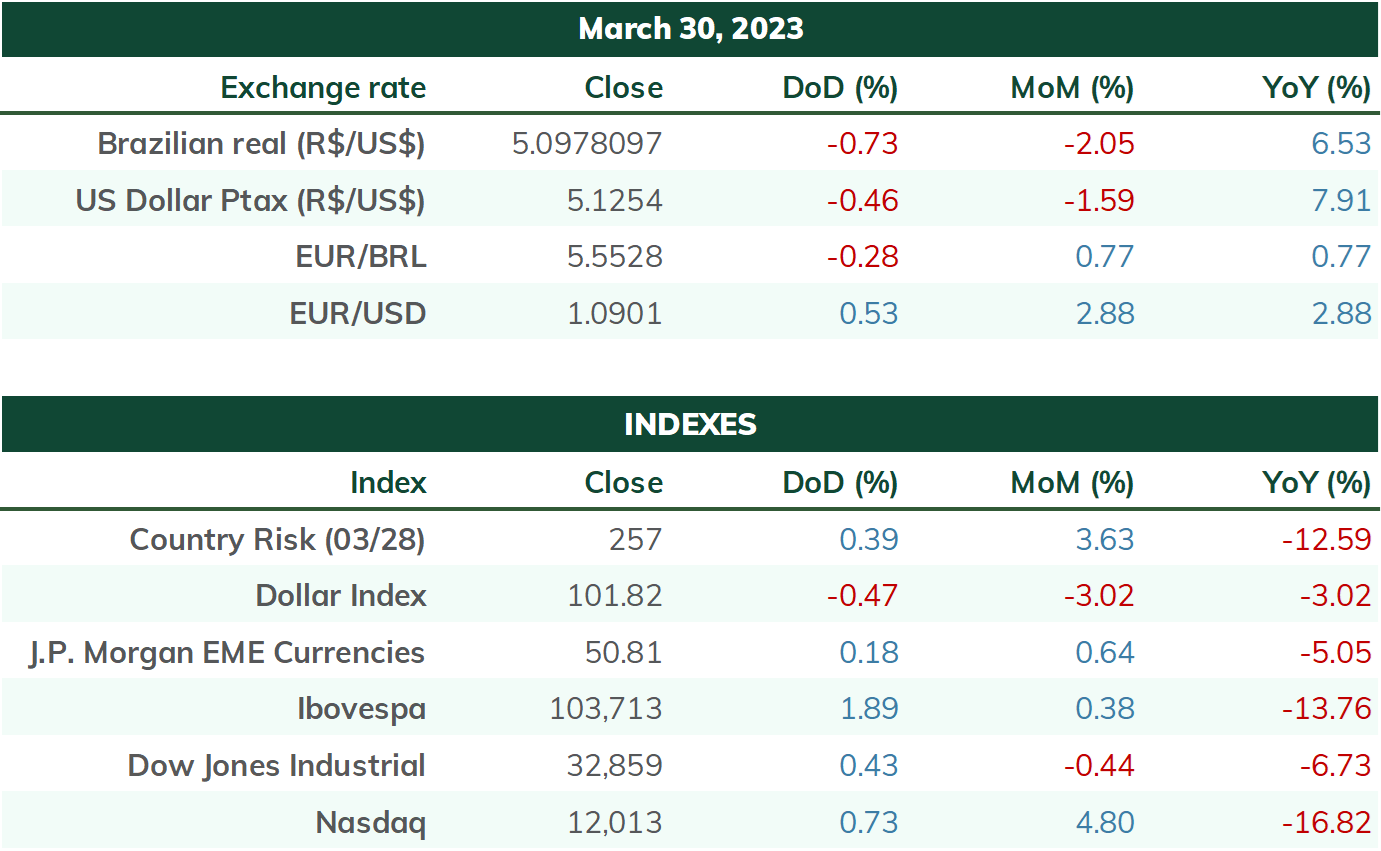
Last week, investor confidence in banking institutions increased as they became more confident that banks were better capitalized and had adequate emergency lines in place with supervisory authorities. As a result, there was an increased appetite for risky assets, resulting in a general weakening of the US dollar against other currencies. There is some sporadic evidence that banks resorted less to emergency liquidity-adjusting operations in the week, which also contributed to the normalization of investor confidence. In the coming weeks, the release of quarterly earnings statements from banks, especially small regional banks in the United States, which are mostly publicly traded and need to report their 2022 results by the end of April, will allow for an assessment of the size of deposits redemptions and investments that occurred in March. This will enable an assessment of the soundness of the current financial system.
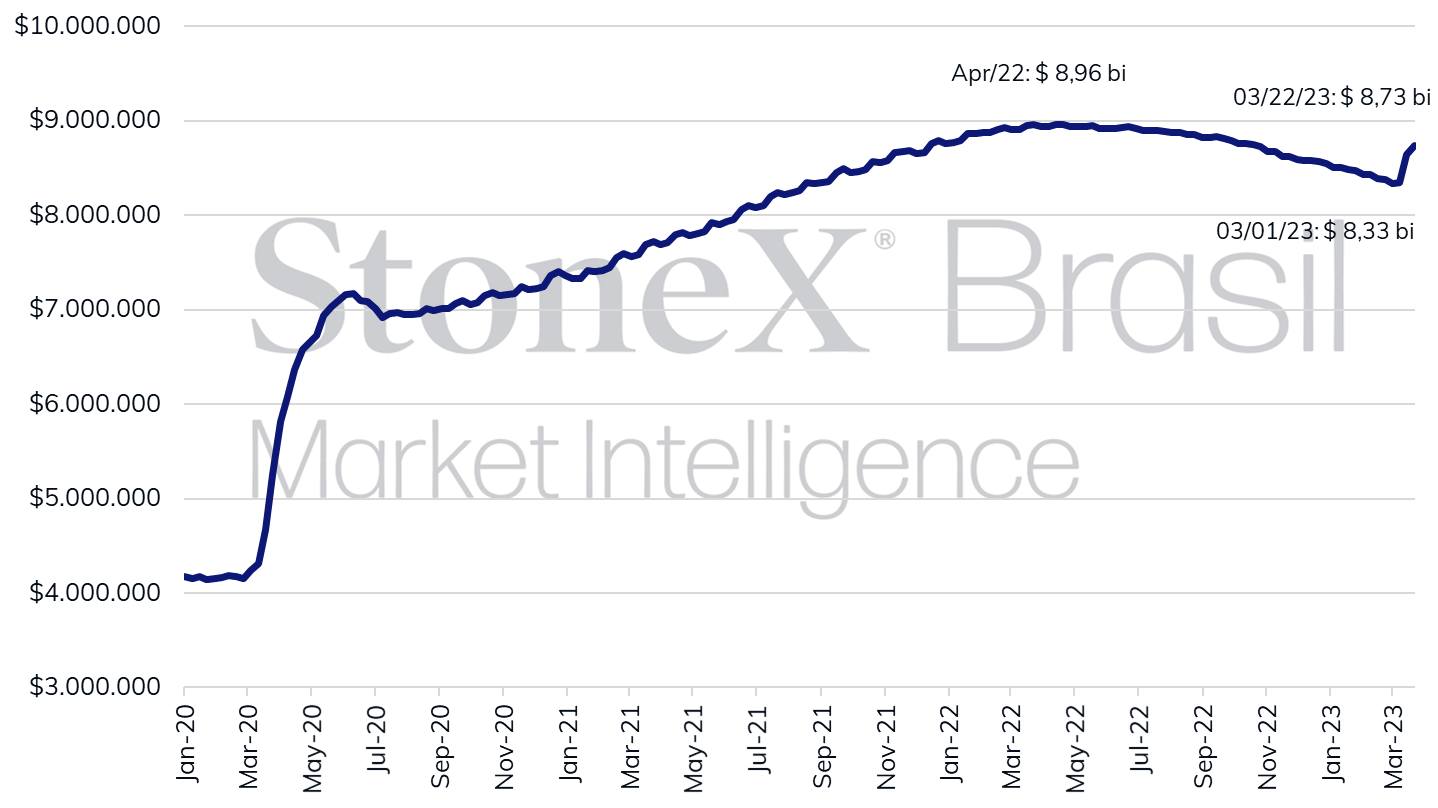
Total assets on the Federal Reserve's balance sheet
Source: Federal Reserve Bank of St. Louis. Design: StoneX.
Frictions between the Government and the Central Bank
Expected impact on USDBRL: bullish
The Central Bank's Monetary Policy Committee (Copom) released the minutes of their latest meeting, which reiterated the firm stance taken in the previous week's statement. The minutes indicated that core inflation continues to rise and inflation expectations among agents have worsened, warranting the continuation of the current rigid monetary tightening policy for a longer period of time and ruling out any possibility of a short-term rate cut. The message likely to be met with disapproval from the government's economic team, which views high interest rates as a hindrance to economic growth in Brazil. The maintenance of high interest rates also increases the costs of public debt, adding pressure to the country's already high levels of indebtedness. As a result, it is expected that the President of the Republic and his government will renew their criticism of the Central Bank's monetary policy, as they have done over the past two months.
It is important to mention, however, that the federal government's public criticism of the Central Bank, made frequently and quite vehemently, tends to raise the perception of risks to Brazilian assets and generate fears of political interference in the management of economic instruments, which in turn ends up increasing the volatility of these assets and worsening inflation expectations and even longer-term interest rates. That is, the way in which the government chooses to address the issue has been counterproductive, as it produces results contrary to what it claims to seek.