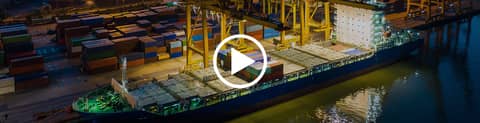
As of mid-July 2026, renewed military activity around the Strait of Hormuz has reinforced the importance of maritime security for global energy supply chains. Although oil and natural gas exports continue to move, shipping companies are operating in a far more uncertain environment as insurance costs, security requirements and commercial risks continue to rise. LNG shipping is attracting particular attention because the characteristics of liquefied natural gas create operational risks that differ significantly from crude oil transportation. These developments are prompting market participants to look beyond commodity prices and focus more closely on the resilience of global shipping networks.
Tom Beney, Senior Vice President of Ocean Freight at StoneX, has spent decades advising commodity producers, traders and industrial clients on international freight markets and shipping logistics. His experience across global energy transportation provides a practical perspective on how geopolitical events influence commercial shipping decisions long before disruptions appear in official trade data.
Key Themes from the Discussion
LNG carriers face materially higher operational risks than crude tankers if attacked because of the nature of their cargo.
War-risk insurance premiums and security requirements are becoming major drivers of shipping costs through the Strait of Hormuz.
Commercial shipping activity increasingly provides early signals about future conditions in global energy markets.
LNG shipping presents a fundamentally different risk profile from crude oil transportation during periods of geopolitical tension. Beney explains that "there's a big difference between carrying LNG on a ship versus carrying crude oil", noting that damage to an LNG carrier could result in "a very, very serious situation" and "a very, very dangerous thing for a crew on board a ship". Consequently, shipping companies must weigh not only the probability of an attack but also the potentially severe consequences of carrying liquefied natural gas through contested waters. This distinction influences vessel deployment, insurance underwriting and commercial willingness to accept cargoes in high-risk regions.
Insurance Costs Are Reshaping LNG Shipping Economics
LNG shipping economics are increasingly determined by security costs rather than traditional freight fundamentals. Beney notes that insurers may require substantial additional premiums before vessels enter the Strait of Hormuz, estimating that owners could face "between 6 and 10 million dollars for every single shipment" simply to secure additional cover. As a result, charterers, traders and energy companies must absorb significantly higher transportation costs even when physical exports continue uninterrupted. Over time, these commercial pressures may encourage greater diversification of energy supply routes and reinforce the strategic value of alternative sources of natural gas.
Frequently Asked Questions
Why are LNG carriers considered riskier than crude oil tankers?
LNG is transported at extremely low temperatures, and damage to an LNG cargo tank could create severe fire hazards. According to Tom Beney, this makes attacks on LNG carriers potentially more dangerous than attacks on crude oil tankers.
Are LNG exports still moving through the Strait of Hormuz?
Yes. According to the discussion, exports continue to move, although shipowners are making more cautious commercial decisions because of higher security risks and insurance costs.
How are insurance costs affecting LNG shipping?
War-risk insurance premiums have risen sharply, increasing the overall cost of transporting energy cargoes through the region and making commercial decisions more complex for shipowners and charterers.
Make Market Insights Your Competitive Advantage
Access live prices, supply and demand data and actionable market commentary across commodities, securities, currencies and more. Sign up for StoneX Market Intelligence today and receive a 14-day trial.
--- Written by Frédéric Guétin, StoneX TV Producer
--- Expert: Tom Beney, Senior Vice President of Ocean Freight, StoneX
Energy
The subsidiaries of StoneX Group Inc. provide financial products and services, including, but not limited to, physical commodities, securities, clearing, global payments, risk management, asset management, foreign exchange, and exchange-traded and over-the-counter derivatives. These financial products and services are offered in accordance with the applicable laws in the jurisdictions in which they are provided and are subject to specific terms, conditions, and restrictions contained in the terms of business applicable to each such offering. Not all products and services are available in all countries. The products and services offered by the StoneX Group of companies involve risk of loss and may not be suitable for all investors. Full Disclaimer. This content is not intended for residents of any particular country, and the information herein is not advice nor a recommendation to trade nor does it constitute an offer or solicitation to buy or sell any financial product or service, by any person or entity in any jurisdiction or country where such distribution or use would be contrary to local law or regulation. Please refer to the Regulatory Disclosure section for entity-specific disclosures. No part of this material may be copied, photocopied or duplicated in any form by any means or redistributed without the prior written consent of StoneX Group Inc. The information herein is provided for informational purposes only. This information is provided on an ‘as-is’ basis and may contain statements and opinions of the StoneX Group of companies as well as excerpts and/or information from public sources and third parties and no warranty, whether express or implied, is given as to its completeness or accuracy. Each company within the StoneX Group of companies (on its own behalf and on behalf of its directors, employees and agents) disclaims any and all liability as well as any third-party claim that may arise from the accuracy and/or completeness of the information detailed herein, as well as the use of or reliance on this information by the recipient, any member of its group or any third party.
Our market expertise, advanced platforms, global reach, culture of full transparency and commitment to our clients’ success all set us apart in the financial marketplace.
Reach
With access to 40+ derivatives exchanges, 180+ foreign exchange markets, nearly every global securities marketplace and numerous bi-lateral liquidity venues, StoneX’s digital network and deep relationships can take clients anywhere they want to go.
Transparency
As a publicly traded company meeting the highest standards of regulatory compliance in the markets we serve; our financials and record of accomplishment are matters of public record. StoneX’s commitment to “doing the right thing over the easy thing” sets us apart in the industry and helps us build respect, client trust and new partnerships.
Expertise
From our proprietary Market Intelligence platform, to “boots on the ground” expertise from award-winning traders and professionals, we connect our clients directly to actionable insights they can use to make more informed decisions and achieve their goals in the global markets.