

FX Weekly Overview (Brazil Issue)
Dollar expected to be influenced by FOMC interest rate decision, US/Brazil economic data, Middle East developments, and end-of-month PTAX figures

Leonel Mattos
- Currencies
Quarterly Commodities Outlook is available for free now. Download your report →
By: John Kicklighter, Head of Market Research
While continuing to navigate a range of open-ended and unresolved thematic fundamental uncertainty, the docket ahead looks as if it will pile on with a run of top tier scheduled event risk. Record highs for the likes of the Nasdaq and S&P 500 test the market’s attention.
Talking Points:
The charged recovery in risk appetite following the initial announcement of the US-Iran ceasefire on Tuesday April 7th lost a significant amount of its momentum this past week. Looking to the benchmarks of speculative opportunism through April, there were either moderate gains or modest losses registered. The S&P 500 advanced a mere 0.6 percent on a constrained range while the EEM emerging market ETF clocked a tepid 0.2 percent climb. Meanwhile, the VEU ‘rest of world’ equity ETF dropped -1.5 percent, the HYG high yield fixed income ETF edged -0.2 percent lower and even gold – in its recent risk-on capacity – dropped -2.5 percent for its first loss in four weeks. There was certainly a loss of traction, but that doesn’t mean that risk appetite had fully run its course with sentiment rolling over to profit-taking.
Instead, it looks like we remain in an uneasy holding pattern where the reach for marginal gains is pushing the long-only mentality towards areas building on a speculative concentration. In particular, the gravity behind the largest market cap US stocks has recharged the Nasdaq 100’s performance relative to its highly correlated S&P 500 or Dow Jones Industrial Average counterparts. The Nasdaq-to-Dow ratio surged to a record high through the end of this past week, overtaking the previous October peak and extending April’s rally to 8.3 percent for the second largest monthly gain (to May 2023) in this gauge of concentration for a quarter century. While this may affirm risk appetite, it should also call into question its quality.
Chart of Nasdaq 100 to Dow Jones Industrial Average Ratio (Daily) 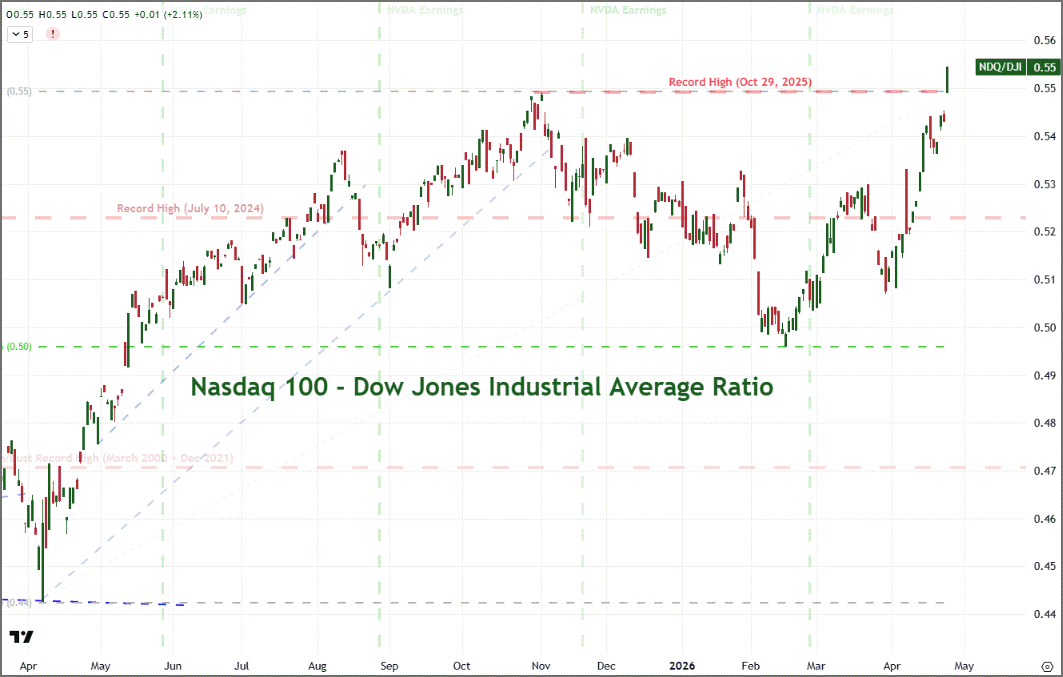
Source: TradingView.com; John Kicklighter
Conviction is a difficult thing to assess when it comes to complex global financial markets where mere stability can stand as the floor for building exposure when the assumption of diversification and expectations of inflation drive a sense of urgency. The threshold against a wave of highly correlated deleveraging still seems very high – but it is not unassailable, nor is it consigned to collapse under a particularly bombastic catalyst (like a worsening of the US-Iran conflict). It is important to remain mindful of the concerns that are developing in the backdrop and the collective’s preparation for an unfavorable turn.
There are a range of fundamental concerns developing around throttled growth, persistent inflation, ineffective stimulus options and shifting capital flow winds. Something a little more rudimentary and demonstrable though worth highlighting is the recognition of “market volatility”. According to Google Trends, global search for that term has hit unprecedented highs recently despite more dramatic actualized periods of financial panic as with the tariff shock (April 2025), Pandemic (March 2020) and Great Financial Crisis (October 2008). Confidence may not be so resolute as a record high on a benchmark index insinuates.
Google Trends Web Search for “Market Volatility” 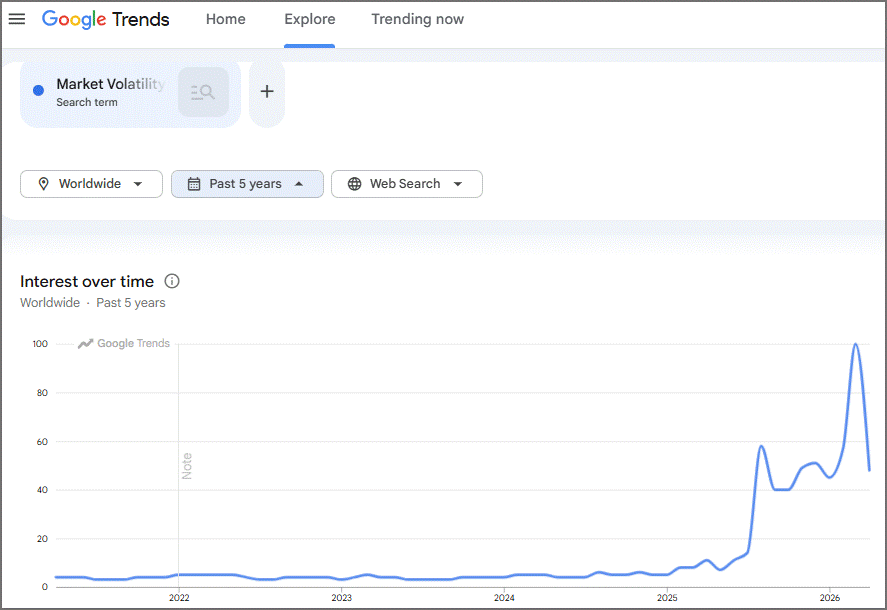
Source: Google Trends
While markets can develop with little regard to what we consider to be the most important – and delinquent – factors making up the backdrop, keeping tabs on the potential catalysts is the best we can do to prepare for possible shifts in the collective sentiment of the crowd. The week ahead seems to face a unique potential for overlapping and competing macro themes that each individually held the reins of risk appetite at different points in the recent past. In addition to the ongoing and ill-define US-Iran armistice, we have downstream concerns of persistently high energy prices and disrupted trade like the possibility of a protracted global economic stall. Further, the higher costs of oil, agricultural products and other essentials can push central banks to a position of fighting entrenched inflation despite the employment or growth challenges that may also arise. Interestingly, when we compare worldwide Google Trends search density (as a measure of interest and concern), terms “economy” and “earnings” are now higher than “Iran” while “Federal Reserve” (and related interest rate searches) doesn’t seem to be registering comparatively.
Google Trends News Search for “Iran”, “Federal Reserve”, “Earnings” and “Economy”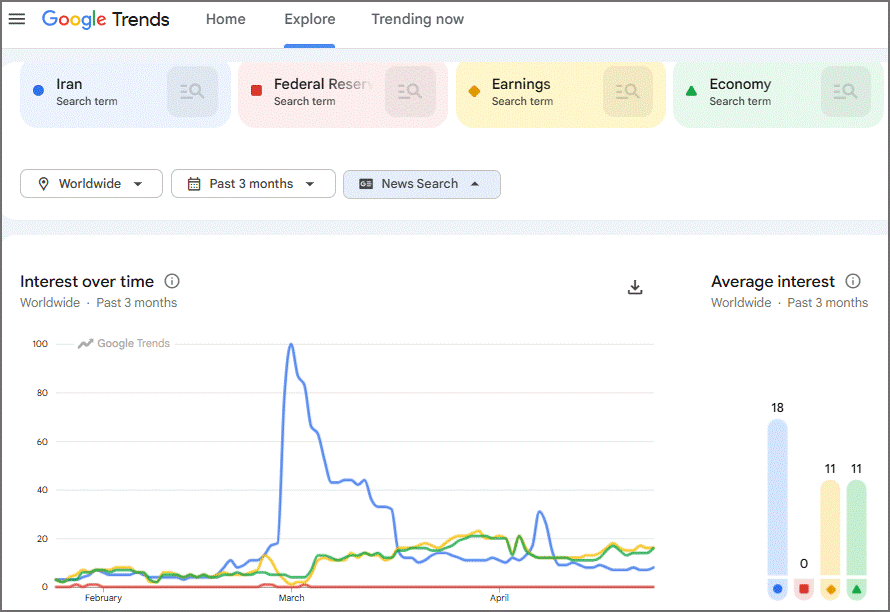
Source: Google Trends
While we have every reason to indulge the more structural and downstream developments of the Middle East conflict, it is important not to lose resolution on the situation itself. Should it reignite, it could present both immediate financial troubles and even larger delayed economic shocks. Over the weekend, the headlines suggesting American and Iranian delegations could return to Pakistan to revive talks were reversed. There remain critical obstacles to a lasting peace accord between the two such as reciprocal blockades, the imposition of fees to traverse the Strait of Hormuz and what happens with Iranian nuclear material. Rather than keeping a close watch on headlines and leaders’ social media posts, I believe the prediction markets’ assessment of when traffic returns to normal in Hormuz is one of the best representations of the market’s views on the situation.
Chart of Historical Probabilities for Predication Markets Hormuz Timeline (Hourly) 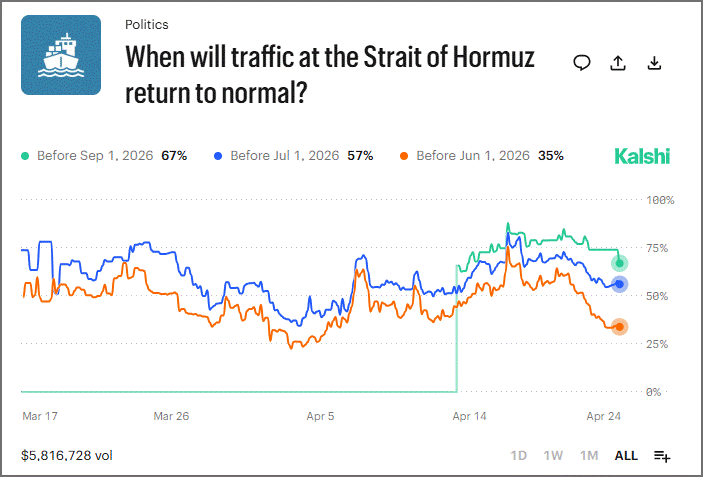
Source: Kalshi.com
There is a remarkable density of high-potential global macro event risk on the docket over the coming week. For ‘potential’, we are combining the probability that it can deliver some degree of unexpected outcome, register on a larger market segment’s radar and reasonably move core financial market benchmarks. There is a lot to wade through, but there seem to be a few crucial categories of event risk that present acute risk to the questionable harmony the markets have cultivated recently. Monetary policy is one of the most prevalent considerations ahead with a range of major central banks – for the US, UK, Eurozone, Japan and Canada – all on tap and with no small argument to be made for changing the dials to either fight the threat of inflation or slower growth ahead. Earnings is also a top consideration with the peak of season represented through the planned release of a bulk of the Magnificent Seven’s figures. Growth will also be a headline matter with the United States and Eurozone leading a run of first-look Q1 GDP release – though these can be considered ‘lagging’ indicators. For other matters like the US Conference Board’s consumer confidence survey, Eurozone inflation outlook or Japan industrial production update; it is likely that they will be relegated to a secondary consideration out of the sheer need to prioritize attention.
Calendar of Top Global Macro Event Risk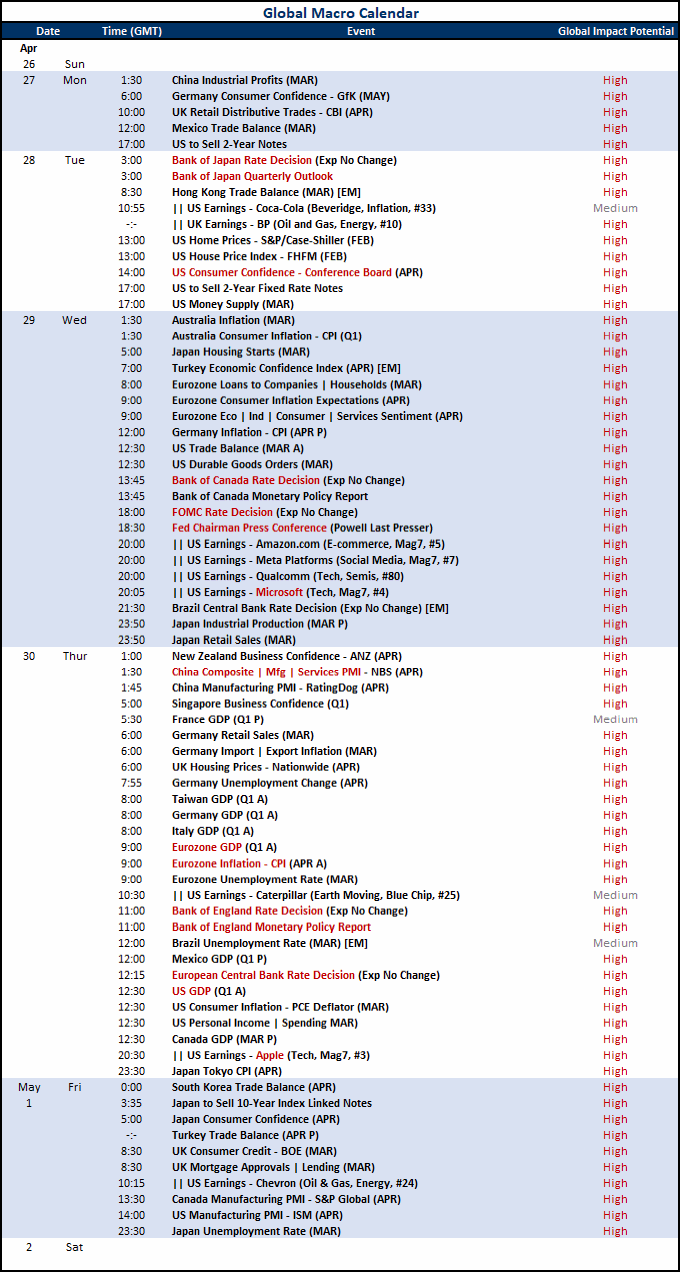
Source: John Kicklighter
Though it is not the first, top event risk chronologically; the Federal Open Market Committee’s (FOMC) April 29th rate decision is arguably week’s most important event. While the markets – through Fed Funds futures – expect no change at this meeting, this neutral stance represents an enormous shift in assumption by the financial system over the past few months. Through the opening months of the year, the market was pricing in between two and three 25bp rate cuts. The argument for a cut to help steer a rising unemployment rate trajectory following a few US government shutdowns has shifted back to a necessary inflation fight owing to the rebound in energy prices related to the US-Iran conflict. Even if the market outlook – and the Fed’s own SEP – see a finely balanced hold through the foreseeable future, levelling out around 3.50 percent in this cycle would keep interest rates in a rarefied air for the past quarter century.
Another factor that makes this particular monetary policy decision uniquely relevant is the ongoing fight over the perception of Fed independence. This decision – and subsequent press conference – will be the last Jerome Powell chairs. The central banker’s term at the head of the bank ends next month, and the headlines charged by President Trump have dragged the central bank and its remit over monetary policy into the spotlight. Trump has famously and repeatedly called on the Fed to cut interest rates by hundreds of basis points (to around 1 percent) immediately and despite his assessment that economic conditions are robust. The central bank has prioritized its concerns over a lingering threat of re-emergent inflation pressures, which has driven the White House to call Powell’s resignation and pursue legal means to oust him. The DOJ investigation was dropped this past week to allow the President’s pick (Kevin Warsh) to ascend to the role, but this is probably not the last we hear of investigations into Powell. Let’s see if the Chairman decides to be more open in his last visit to the podium.
Table of FOMC Policy Decision Scenarios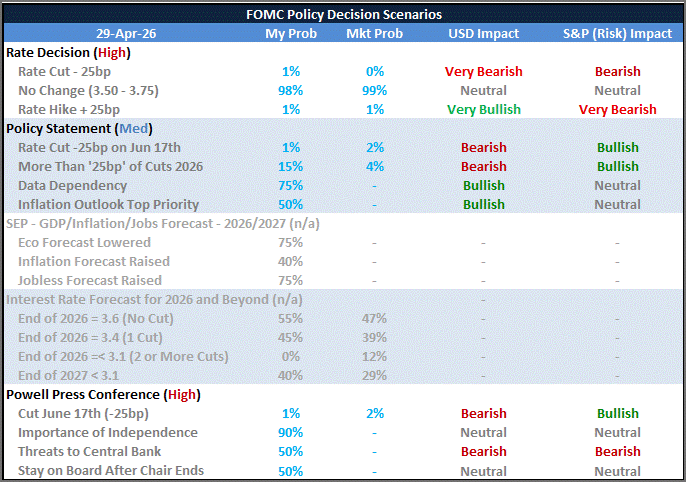
Source: John Kicklighter
Last week, the first of the vaunted Magnificent Seven, Tesla, reported earnings with a disappointing response from the respective business’s stock ticker. Purely on a topline basis, the EV maker beat analyst expectations. Digging into the performance, the lack of earnings around its vehicles paired with an announced spending surge ahead led TSLA to gap down -3 percent on the open the following session (Thursday). Spending sprees are proving more and more common, particularly in the tech/AI space while the magic of the GAAP beat seems to have broadly lost its sparkle. Does this set up this week’s run of top market cap companies’ earnings for similar disappointing reactions? If so, the risk to broader market sentiment is far more concerning as the Mag 7 components ahead have a much higher correlation to the Nasdaq 100 than Tesla does. Relative to TSLA’s 59 percent correlation to NDQ on a 20-day rolling basis; Microsoft and Google have a 93 percent relation, Meta and Apple are 92 percent and Amazon has the highest setting at 95 percent. With the Nasdaq 100 leading the speculative recovery from the Middle East war tumble, this may prove the most tangible catalyst for risk appetite.
Chart of Tesla Overlaid with Nasdaq 100 and 20-Day Correlation (Daily)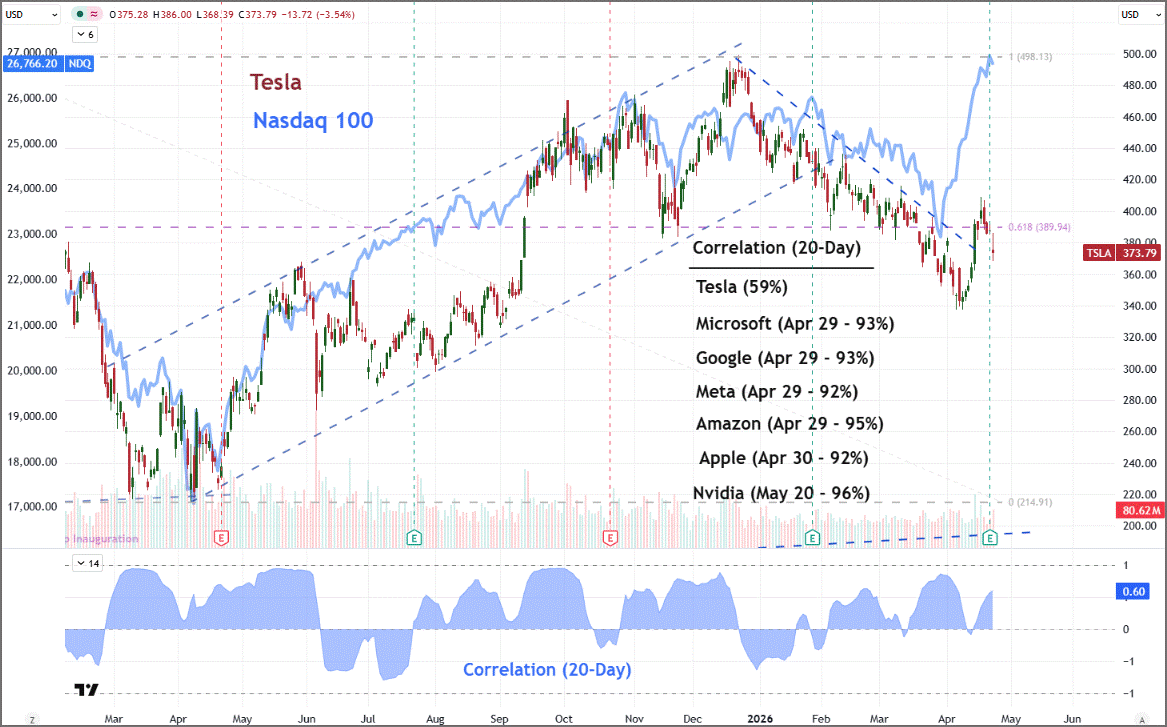
Source: TradingView.com; John Kicklighter
While there is reason to call out the Fed in particular, the US central bank isn’t the only one deliberating on monetary policy this week. In fact, where the FOMC is firmly seen holding its benchmark lending rate, there are stronger speculative pressure for near-term rate hikes from the European Central Bank (ECB), Bank of England (BOE), Bank of Canada (BOC) and even the Bank of Japan (BOJ). First up will be the BOJ Tuesday morning in Tokyo. Government pressure on the Japanese central bank has been elevated, but so too are inflation pressures. The Quarterly Outlook will be particularly important to digest. The BOC is seen holding its benchmark at 2.25 percent Wednesday before the Fed, but it has just as prominent an inflation risk as its peers. Both the BOE and ECB are seen holding their respective 3.75 and 2.15 percent overnight rates, but the arguments for rate hikes have been made by members of both groups.
Chart of Benchmark Rates and VIX Volatility Index (Monthly) 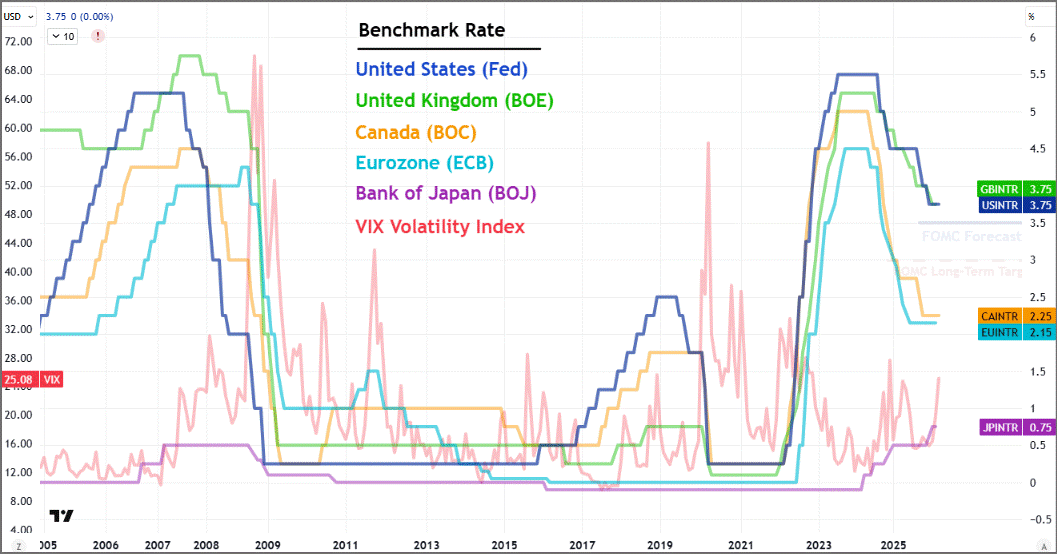
Source: TradingView.com; John Kicklighter
Stay connected to timely global macro analysis designed to help market participants navigate shifting economic conditions and evolving risk. Gain access to regular market commentary, updated quarterly forecasts, a comprehensive two-week forward economic event calendar, and specialized tools built to support informed trading and risk management decisions.
-- Written by John Kicklighter, Global Head of Content
The subsidiaries of StoneX Group Inc. provide financial products and services, including, but not limited to, physical commodities, securities, clearing, global payments, risk management, asset management, foreign exchange, and exchange-traded and over-the-counter derivatives. These financial products and services are offered in accordance with the applicable laws in the jurisdictions in which they are provided and are subject to specific terms, conditions, and restrictions contained in the terms of business applicable to each such offering. Not all products and services are available in all countries. The products and services offered by the StoneX Group of companies involve risk of loss and may not be suitable for all investors. Full Disclaimer. This content is not intended for residents of any particular country, and the information herein is not advice nor a recommendation to trade nor does it constitute an offer or solicitation to buy or sell any financial product or service, by any person or entity in any jurisdiction or country where such distribution or use would be contrary to local law or regulation. Please refer to the Regulatory Disclosure section for entity-specific disclosures. No part of this material may be copied, photocopied or duplicated in any form by any means or redistributed without the prior written consent of StoneX Group Inc. The information herein is provided for informational purposes only. This information is provided on an ‘as-is’ basis and may contain statements and opinions of the StoneX Group of companies as well as excerpts and/or information from public sources and third parties and no warranty, whether express or implied, is given as to its completeness or accuracy. Each company within the StoneX Group of companies (on its own behalf and on behalf of its directors, employees and agents) disclaims any and all liability as well as any third-party claim that may arise from the accuracy and/or completeness of the information detailed herein, as well as the use of or reliance on this information by the recipient, any member of its group or any third party.
© 2026 StoneX Group Inc. all rights reserved.
Our subscribers have access to comprehensive market analysis from StoneX spanning commodities, equities, currencies and more.
Dollar expected to be influenced by FOMC interest rate decision, US/Brazil economic data, Middle East developments, and end-of-month PTAX figures
We are not lacking for dramatic jolts of volatility these past weeks, but time and again these charges fall far short of the mark when it comes to redefining the market’s broader trend. Seasonal and structural complacency may be persistent but the fundamental risks are unrelenting.


The widening gap between U.S. and Japanese interest rates is breathing new life into one of the world's most closely watched currency strategies. As monetary policy paths continue to separate, investors are finding fresh incentives to borrow in low-yielding currencies and invest in higher-yielding assets.

Our market expertise, advanced platforms, global reach, culture of full transparency and commitment to our clients’ success all set us apart in the financial marketplace.
Reach
With access to 40+ derivatives exchanges, 180+ foreign exchange markets, nearly every global securities marketplace and numerous bi-lateral liquidity venues, StoneX’s digital network and deep relationships can take clients anywhere they want to go.
Transparency
As a publicly traded company meeting the highest standards of regulatory compliance in the markets we serve; our financials and record of accomplishment are matters of public record. StoneX’s commitment to “doing the right thing over the easy thing” sets us apart in the industry and helps us build respect, client trust and new partnerships.
Expertise
From our proprietary Market Intelligence platform, to “boots on the ground” expertise from award-winning traders and professionals, we connect our clients directly to actionable insights they can use to make more informed decisions and achieve their goals in the global markets.