We are not lacking for dramatic jolts of volatility these past weeks, but time and again these charges fall far short of the mark when it comes to redefining the market’s broader trend. Seasonal and structural complacency may be persistent but the fundamental risks are unrelenting.
Talking Points:
Risk-oriented market benchmarks have shown a degree of struggle the past month, but that hasn’t translated into significant lost ground
Topping the thematic focus in the market the US-Iran conflict is proving most volatile, AI confidence is pressured by earnings and US-based tariff headlines have been refreshed
For discreet event risk this week, top listing include: the FOMC, BOJ and BOE rate decisions; hyperscaler earnings releases; US, Eurozone, Mexico GDP and much more
Watch the Full Video
Risk Appetite Presenting More Distinct Technical Warning Signs
When it comes to analysis, relying on a singular discipline – fundamental, technical or market conditional – will lead us to larger periods of time over the continuum of a season, year or cycle where price action ‘doesn’t make sense’. How often do we see a market stand inert through the release of a supposedly critical event risk, a significant breakout stall immediately after crossing the technical threshold or wholly defy norms amid the most seasonally impacted times of the year? When we evaluate the markets with a more holistic perspective, we fill in the blind spots of the individual specialties. That is particularly important when attempting to assess something more abstract and broad-based like ‘risk appetite’.
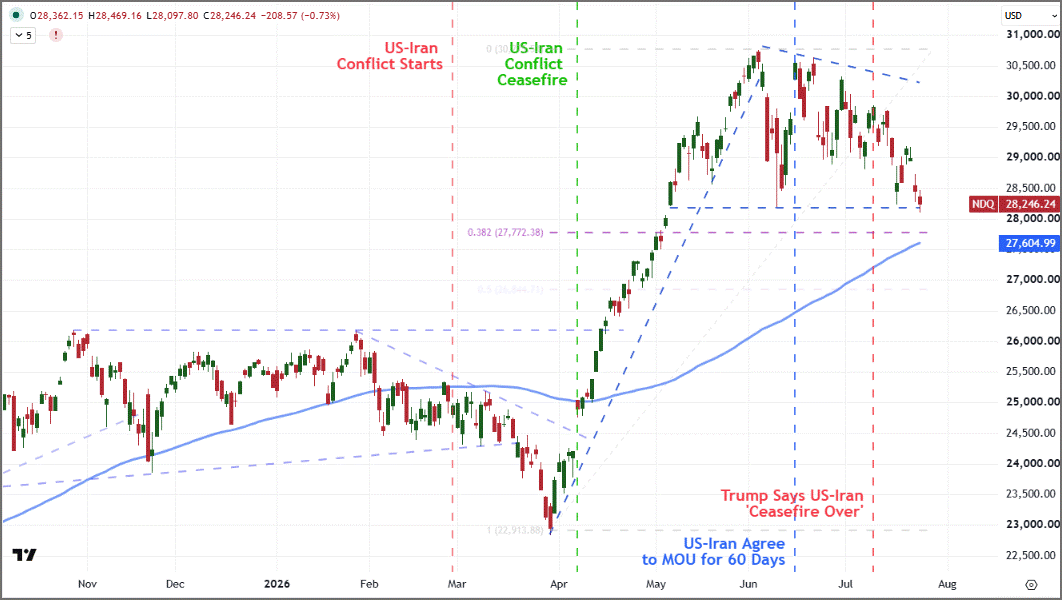
This past week, there was a broadly mixed performance across benchmarks that can readily stand in for ‘sentiment-at-large’: US and global indices, commodities, high-yield, emerging market, carry and other categories. However, most of these measures can be classified as manifesting congestion over the medium term (past four to six weeks) with the longer prevailing trend still holding a bullish inclination. With headlines detailing sharp stock declines by tech moguls after reporting their earnings or more military strikes in the Middle East or President Trump’s introduction of 301 tariffs to keep a trade war ongoing, holding steady can be viewed with relief by some and scepticism by others. Seasonality offers a passive support for warding off a panic response to unfavorable fundamentals as the S&P 500 (a risk proxy) averages a modest gain for the 31st week of the year with healthy volume and slow revival of volatility from the July 4th nadir – though we can always deviate from this norm. Technicals may be the most pressing dimension. Referencing another, high-flying benchmark, the Nasdaq 100 closed Friday at its lowest point (on a daily basis) in 11 weeks. With additional technical levels below – such as the 38.2 percent Fibonacci retracement of this year’s range at 27,775 and 100-day simple moving average at 27,600 – there are milestones that we can monitor to raise conviction of a shifting sentiment should they be overtaken.
Chart of Nasdaq 100 with 100-Day SMA (Daily) Source: TradingView.com; John Kicklighter
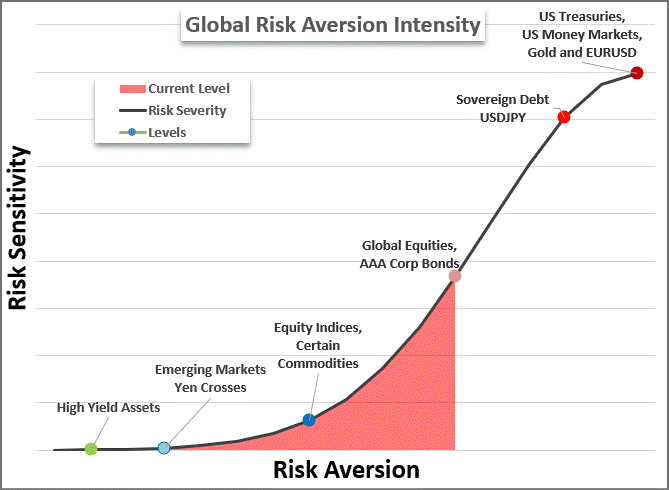
If ‘risk aversion’ were to sweep the market, there are few other influences that could exert more reach and pressure. Sentiment is an abstract that reflects the collective mood of the market whereby the motivations could be – and often are – materially different among its participants. Yet, their synchronicity can ultimately shift the entire backdrop and subsequently seem to draw more run out of the market than the individual’s fundamental explanation would otherwise seem practicable. Given how comprehensive and complex this market state is, confirmation should be set at a higher order. So, given the example of the Nasdaq 100 slipping to 11 week lows and below a collective range of lows over the interim period (a support level), it is worth noting that the S&P 500 has made much less progress (though it is still 7 weeks from its record high) and Dow Jones Industrial Average is a mere 2 percent and 14 days off its own record high. And that is just within the category of ‘major US indices’. Expanded out, rest of world equities are similarly congestion bound with some notable stand outs like the FTSE 100 edging a 5 month high. Alternatively, the HYG high-yield ETF and Bitcoin are multiple months into retreats. With some of this notable deviation among these risk pacers, I will be looking to USDJPY as my benchmark for a meaningful escalation in risk aversion. Having been pulled by carry trade and political imbalances for the past months, one of the few fundamental overrides to turn the pair lower would be a genuine reversal in sentiment.
Global Risk Aversions Intensity Scale Source: John Kicklighter
Will a Volatile ‘Theme’ or Key Economic Update Decide the Market’s Next Move?
While price action can reflect a definitive action by the aggregate forces effecting a market, it is still important to monitor what ‘explanation’ the masses are gravitating towards as they decide to change their capital allocations. When there is a prevailing theme, headlines or scheduled event risk related to the subject can generate meaningful volatility – if not spur the start of a larger cascade. Further, when the discount associated to that fundamental battery has run its course, the market may reassess its tumble and stabilize – or seek out a new justification to further deleverage. This past week, there was a notable pick up in Google News search around two of the more consistent motifs of the market narrative: the US-Iran war and AI. Moving deeper into the earnings season with the hyperscalers on tap will make for an even sharper focus while the ‘necessary’ rolling of the expiring Section 122 tariffs by the Trump administration to Section 301 replacements may potentially revive the weight concern in this familiar story.
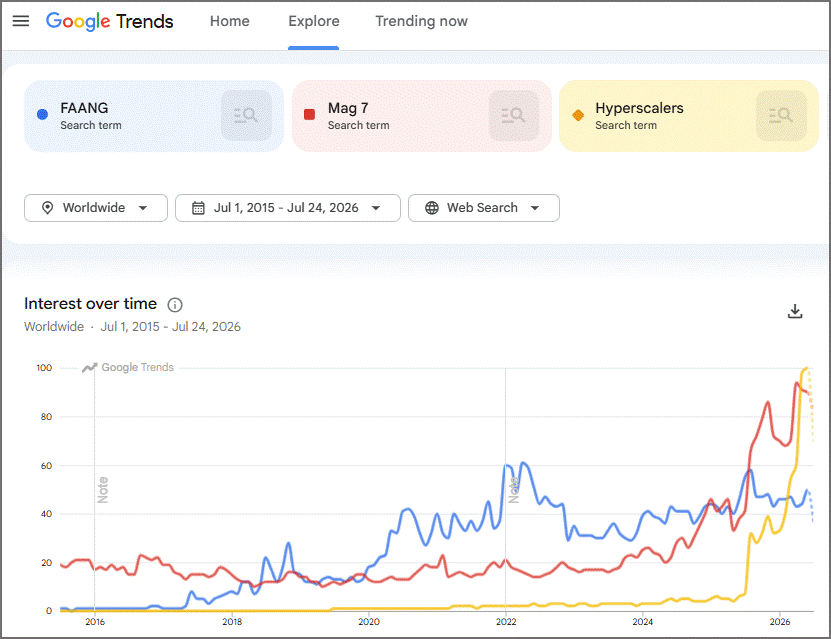
Worldwide News Search for Key Themes Via Google Trends Source: Google Trends; John Kicklighter
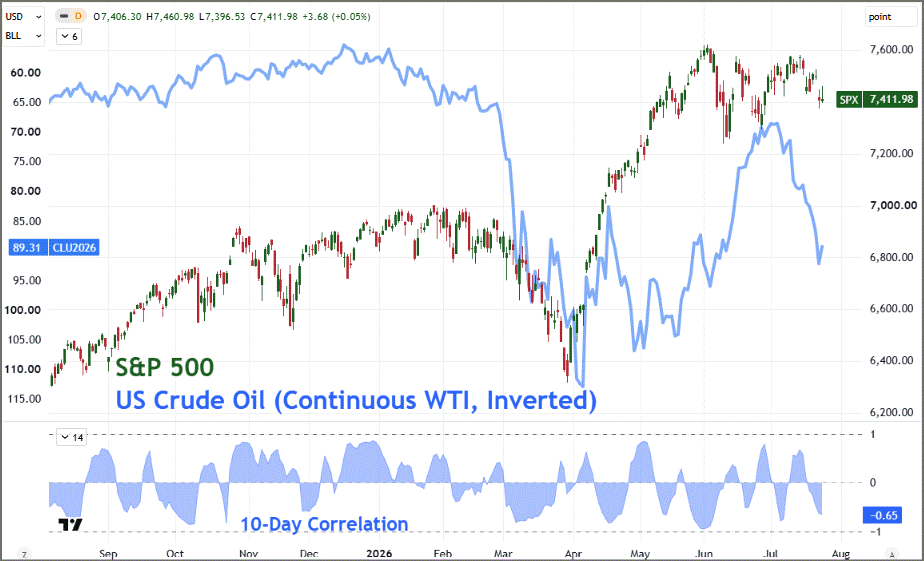
While much of my focus is trained on what could sour the market’s mood – because ‘fear’ is a stronger collective emotion than ‘greed’, particularly in a period of seasonal passivity – it is always worth evaluating where bulls could draw inspiration. There are plenty of small points of event risk or incremental improvements in particular areas that could generate some heat, but they are unlikely to scale. Meanwhile, the euphoria found in the transformational power of AI for corporate leaders has the potential magnitude but is too ambiguous to tangibly single that the upper bound on value has significantly expanded. One of very few outlets for a meaningful recovery in sentiment would be an improvement in the posture of the US and Iran in their ongoing war. There were headlines over the weekend that a pause in strikes was meant to allow talks to resume. The initial 2-week ceasefire on April 7 – that extended far longer – led the S&P 500 to climb over 15 percent. However, the market’s haven’t corrected very far through this two week resurgence in military actions and the participants have grown increasingly cynical of the constantly fluctuating political statements, which can be a further throttle to its bullish potential.
Chart of S&P 500 Overlaid with Inverted US Crude Oil (Daily) Source: Tradingview.com; NYMEX; John Kicklighter
The Big Scheduled Events In the Second Half of the Week
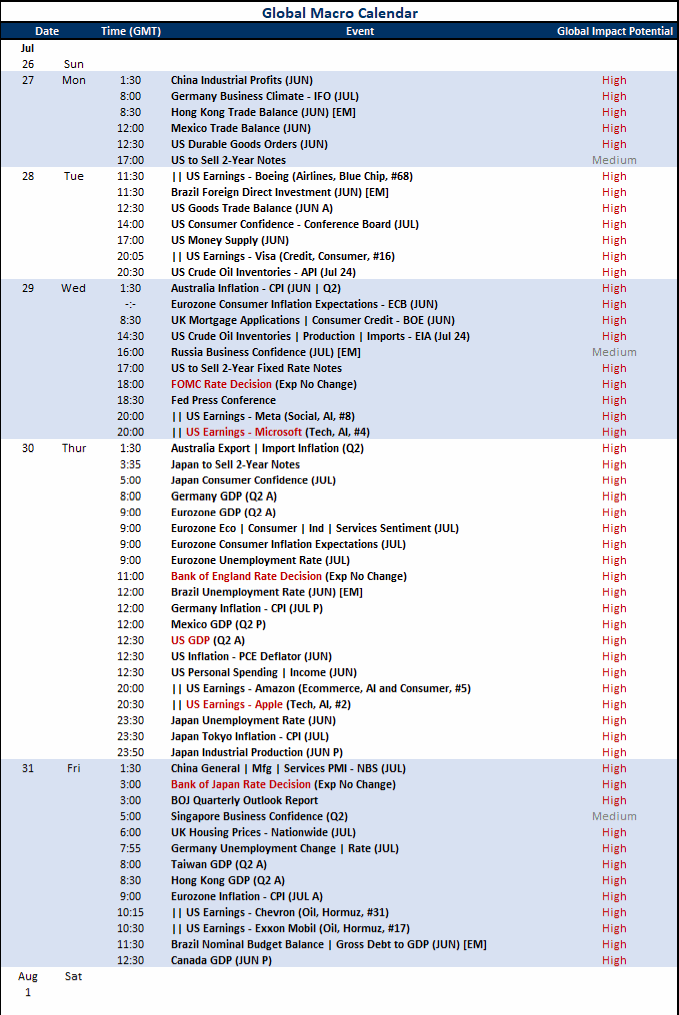
Among the larger thematic fundamental matters that market participants are coalescing behind, there is limited scheduled event risk that can meaningfully alter the bearings of the US-Iran conflict or tariffs. Perhaps in the case of the former, the weekly oil inventory figures from the EIA will given a tangible benchmark for where we presently stand, but the more likely trigger for a lasting White House reversal would be a tumble in equities with a meaningful surge in implied volatility. The AI theme is one area where we will throw sparks onto a known pool of market fuel. We have four Mag 7 updates due this week over a concentrated 24 hours from Wednesday after the New York lose to Thursday after the New York close. Other top listings from the calendar will offer more tangible results but will struggle to reach the heart of the market’s hopes and fears. Some critical central bank updates, official Q2 GDP releases and trade figures are all on tap with less anticipatory build up than we have seen paid in the past.
Calendar of Major Macro Economic Event Risk Source: John Kicklighter
Markets Price In Possible Rate Hike at Warsh’s Second Meeting
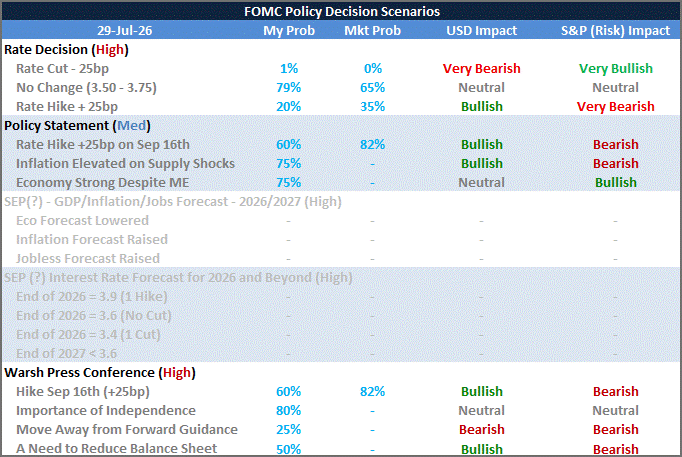
Perhaps the most headline worthy, singular event on the calendar this week is the FOMC rate decision. This will be Kevin Warsh’s second meeting as Chairman, and the markets are still attempting to determine exactly what kind of course changes his leadership will ultimately entail for the central bank. Last month, Warsh announced five ‘task forces’ focusing on communications, balance sheet policy, data, productive and jobs, and inflation frameworks; which suggests that some norms and potentially explicit objectives could ultimately be adjusted. However, their early findings are not expected until Fall time and final reports due by the end of the year. In the meantime, we still don’t have a clear bead on Warsh’s policy stance – especially given the explicit criticism President Trump has levied against the Fed for not being dovish enough. Despite Trump’s view that the central bank should cut significantly from the current level, the market is pricing in a significant probability (35 percent chance) of a 25 basis point rate hike Wednesday at 18:00 GMT. I see that probability lower, but regardless, it is significant enough that there could be a significant enough percentage of the market surprised by the outcome that we could find volatility.
FOMC Scenario and Market Impact Table for July 29th Meeting Source: John Kicklighter
Hyperscaler Earnings On Tap and Drawing Intense Scrutiny after Bad Response Last week
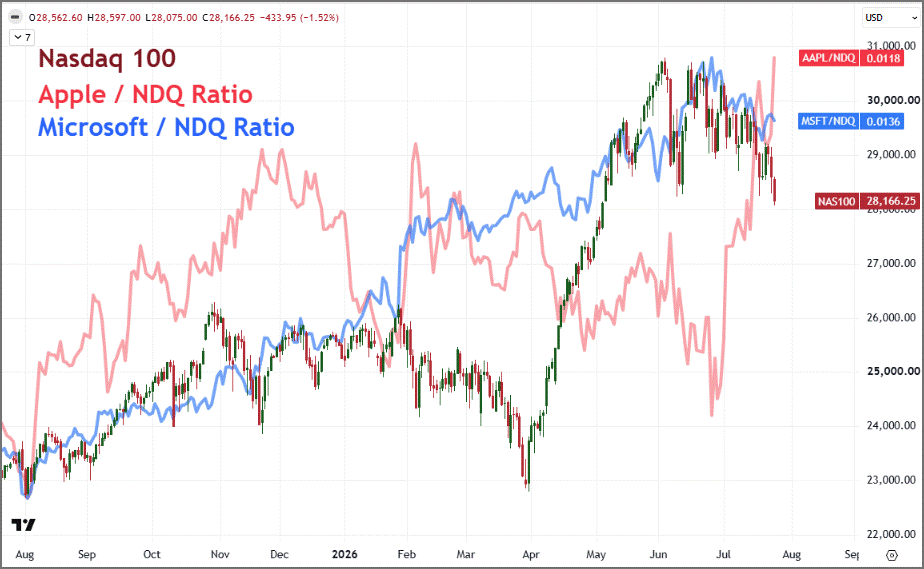
It seems that we are moving beyond the ‘Magnificent 7’ acronym for most relevant equity tickers, just as we transitioned from ‘FAANG’ to Mag 7 in the second half of this past year. We seem to have now moved on to the ‘Hyperscalers’. Worldwide Google search showed that term has overtaken the Mag 7 these past few months amid the incredible rise in AI focus – and the transition that brings in terms of value focus and the magnitude of the problem Capex scrutiny on a small subset of names can have over the wider market. This past week, Google and Tesla both saw their tickers drop sharply after releasing their respective earnings. Tesla’s numbers were more a traditional miss and there was scepticism around the company’s investment in SpaceX, but Google managed to beat on the traditional lines but miss in the increasingly important world of ‘outpacing the ballooning AI investment costs’. Microsoft and Meta are heavily vested into their unique AI solutions. Amazon and Apple are investing heavily in infrastructure and data centers and less on frontier models – both an ROI risk, but of different varieties. If these stocks were to collectively slide after their earnings, could the broader markets hold up?
Chart of Microsoft and Apple Overlaid with Nasdaq 100 Index (Daily) Source: TradingView.com; John Kicklighter
Bank of England and Bank of Japan Rate Decisions Carry Surprise Risk
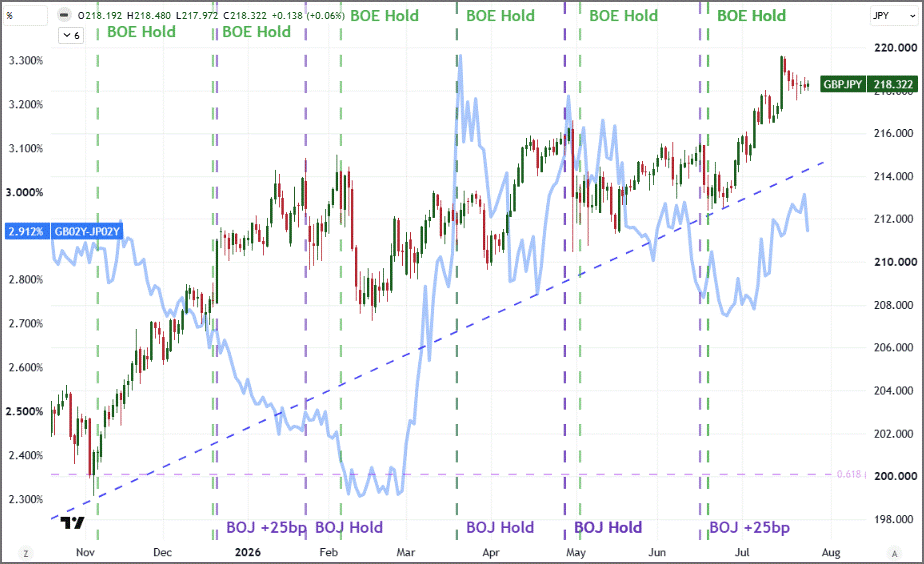
Sorting through the dense listing of scheduled event risk to see what else could sale up to significant movement, it seems an outlier probability that event risk like quarterly GDP (US, Eurozone, Mexico), inflation (US PCE or Eurozone CPI), trade (US and Canada) or confidence figures (German business, US consumer) can rise to the scale of being a significant regional mover – much less a global spark. For the Bank of England Bank of Japan rate decisions – on Thursday at 11:00 GMT and Friday at approximately 3:00 GMT respectively – there is significant backdrop for which these updates are due such that it can add relevance to even a hold – and economists expect both to hold. For the BOE, the change in Prime Minister swell of the 10 year gilt yield back above 5 percent draws greater scrutiny to the fact that the group hasn’t hiked its benchmark rate since August 2023. In contrast, the BOJ has hiked both at its last meeting and in December, yet the 1.00 percent resultant benchmark does little to close the gap to major benchmarks and thereby provide no incentive to arrest the Yen’s slide to four decade lows.
GBPJPY Exchange Rate Overlaid with UK-Japan 2-Year Yield Differential (Daily) Source: TradingView.com; John Kicklighter
Access More Global Macro Insights, Forecasts and Tools
Stay connected to timely global macro analysis designed to help market participants navigate shifting economic conditions and evolving risk. Gain access to regular market commentary, updated quarterly forecasts, a comprehensive two-week forward economic event calendar, and specialized tools built to support informed trading and risk management decisions.
The subsidiaries of StoneX Group Inc. provide financial products and services, including, but not limited to, physical commodities, securities, clearing, global payments, risk management, asset management, foreign exchange, and exchange-traded and over-the-counter derivatives. These financial products and services are offered in accordance with the applicable laws in the jurisdictions in which they are provided and are subject to specific terms, conditions, and restrictions contained in the terms of business applicable to each such offering. Not all products and services are available in all countries. The products and services offered by the StoneX Group of companies involve risk of loss and may not be suitable for all investors. Full Disclaimer. This content is not intended for residents of any particular country, and the information herein is not advice nor a recommendation to trade nor does it constitute an offer or solicitation to buy or sell any financial product or service, by any person or entity in any jurisdiction or country where such distribution or use would be contrary to local law or regulation. Please refer to the Regulatory Disclosure section for entity-specific disclosures. No part of this material may be copied, photocopied or duplicated in any form by any means or redistributed without the prior written consent of StoneX Group Inc. The information herein is provided for informational purposes only. This information is provided on an ‘as-is’ basis and may contain statements and opinions of the StoneX Group of companies as well as excerpts and/or information from public sources and third parties and no warranty, whether express or implied, is given as to its completeness or accuracy. Each company within the StoneX Group of companies (on its own behalf and on behalf of its directors, employees and agents) disclaims any and all liability as well as any third-party claim that may arise from the accuracy and/or completeness of the information detailed herein, as well as the use of or reliance on this information by the recipient, any member of its group or any third party.
Our market expertise, advanced platforms, global reach, culture of full transparency and commitment to our clients’ success all set us apart in the financial marketplace.
Reach
With access to 40+ derivatives exchanges, 180+ foreign exchange markets, nearly every global securities marketplace and numerous bi-lateral liquidity venues, StoneX’s digital network and deep relationships can take clients anywhere they want to go.
Transparency
As a publicly traded company meeting the highest standards of regulatory compliance in the markets we serve; our financials and record of accomplishment are matters of public record. StoneX’s commitment to “doing the right thing over the easy thing” sets us apart in the industry and helps us build respect, client trust and new partnerships.
Expertise
From our proprietary Market Intelligence platform, to “boots on the ground” expertise from award-winning traders and professionals, we connect our clients directly to actionable insights they can use to make more informed decisions and achieve their goals in the global markets.