The headlines have picked up into the weekend of renewed hostilities between the US and Iran in the Strait of Hormuz. However, headlines linked to the Middle East or AI and even top event risk like the forthcoming NFPs may not be able to offset the impact of a strong seasonality drain.
Talking Points:
Reports over the weekend of the US striking Iranian missile and drone storage while Iran launched an attack on Kuwait and Bahrain raised fresh concerns on fragile peace talks
AI headlines continue to churn, but just like US-Iran updates, the theme carries more risk of bad news than charge for untapped (or relief) rally
Top event risk over this shortened week includes an atypical Thursday NFPs, the Conference Board’s US consumer confidence survey and Chinese PMIs
Watch the Full Video
Plenty of Tension in Both the Charts and Headlines
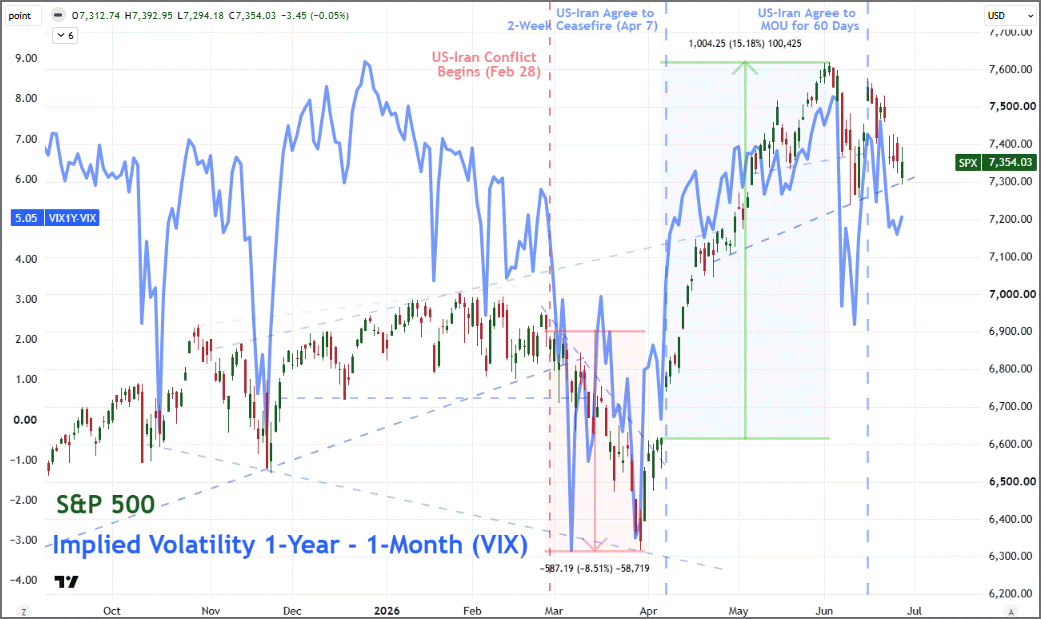
There remains a substantial and active fundamental backdrop for both bulls and bears in the capital markets seeking justification for their prognostications. Yet from the AI miracle to fears of a renewed hot war in the Middle East, there remains a resistance from the majority to further saturation of enthusiasm or fear. A long standing complacency bolstered by external circuit breakers (eg President Trump’s policy reversals or central bank ‘puts’) is finding further anchor on the basis of seasonal norms. While there was a modest jolt of volatility registered this past week, we are very notably transitioning between periods of well-establish liquidity drain. The fundamental and technical pressure can continue to build without resolve if the collective markets tacitly agree to avoid significant repositioning during this lull. That said, it is worth keeping track of the landscape as we navigate back into active conditions or speculative intention overrides is seasonal quiet. For example, the S&P 500’s failure to return to record highs after the supposed US-Iran MOU and the shift in near-term implied volatility (one month relative to a full year) could present traction to technical concerns.
Chart of S&P 500 with Implied Volatility Difference Between 1-Year and 1-Month (Daily) Source: TradingView.com; John Kicklighter
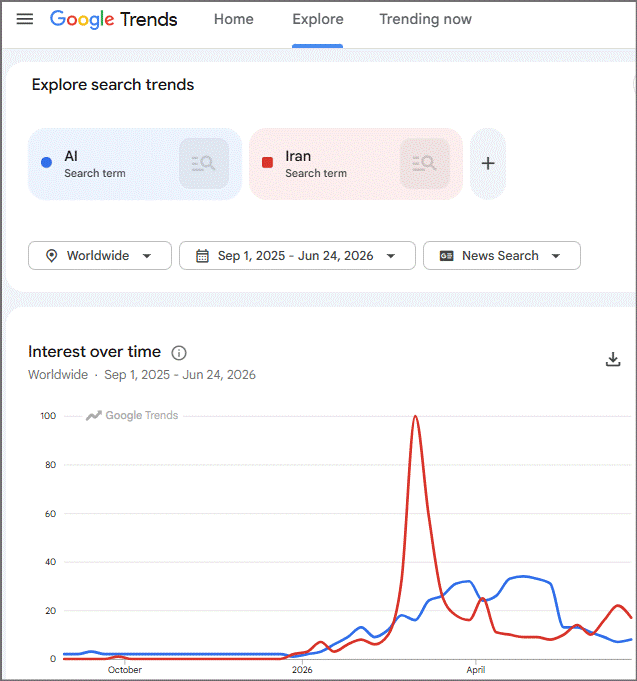
On the fundamental side of the speculative map, there are developments in downstream growth, inflation and monetary policy forecasts; but the leading headlines on the bullish and bearish poles remain AI and US-Iran respectively. Looking at news search density for both via Google Trends, both have tapered off significantly the past few months. As far as the transformative hopes afforded to AI as the next economic scale pivot – like the internet age or industrial age – there seems a skew in the market’s reaction to headlines towards the theme representing a liability rather than a fresh boost. The Nasdaq 100 and SOX indices have notably deflated relative to other risk benchmarks. Meanwhile, news that OpenAI is considering delaying its IPO until 2027 following SpaceX’s public debut likely signals there is worry about a temporary peak in demand. Alternatively, the US-Iran headlines are far more likely to catch fire within sentiment – as fear tends to be more contagious than greed in general. With the US and Iran launching limited attacks against each other’s interests, this is no passive scenario. Just consider the threshold for full market sentiment takeover to be set materially higher.
Google Trends Global News Search for ‘AI’ and ‘Iran’ (Daily) Source: Google Trends; John Kicklighter
A Familiar Speculative Indifference Meets a Powerful Assumption
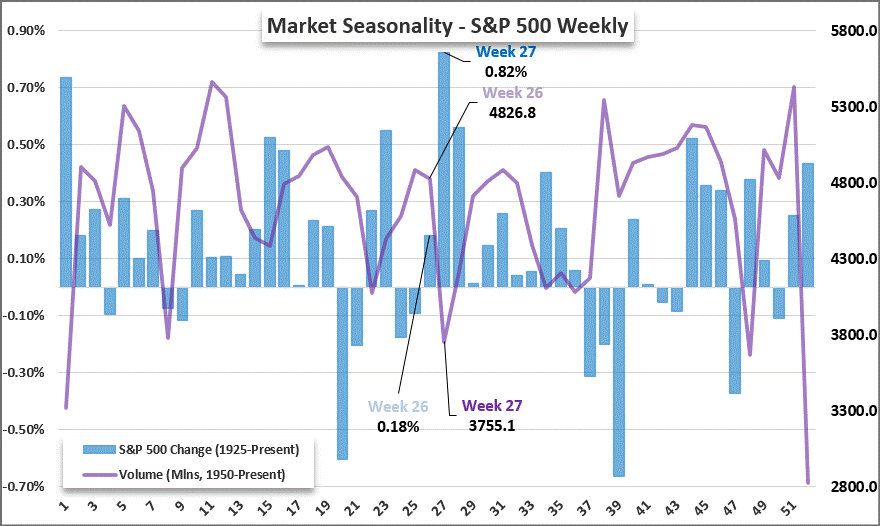
A default complacency amid dramatic headlines can be confounding and even jarring for many participants, but allowances for the neutral setting tend to be far greater when we steer into a seasonal chapter. What we are facing in normative conditioning over the coming week is perhaps the most globally recognized seasonal lull of the year outside of the global drain and return around the turn of the calendar year. While there are a few holidays for different global exchanges this week, only the United States’ Independence Day finds universal reference. The Friday closure will create an extended holiday weekend which will practically drain global liquidity after Thursday’s US morning session. If it weren’t for the employment report due that day, we could very well be looking at a ‘lost week’ for productive price development. Historically, the 27th week of the year experiences the lowest volume for the benchmark S&P 500 outside the first and 52nd weeks of the year. We are highly likely to realize the same this year, but it is always worth questioning the assumption of an inverse realization between activity and performance. Averaged out over the past century, this week also happens to be the most bullish week of the calendar year; but we have some serious threats readily at hand to prove 2026 the outlier.
S&P 500 Averaged Performance and Volume by Calendar Week Source: Standard & Poor’s; John Kicklighter
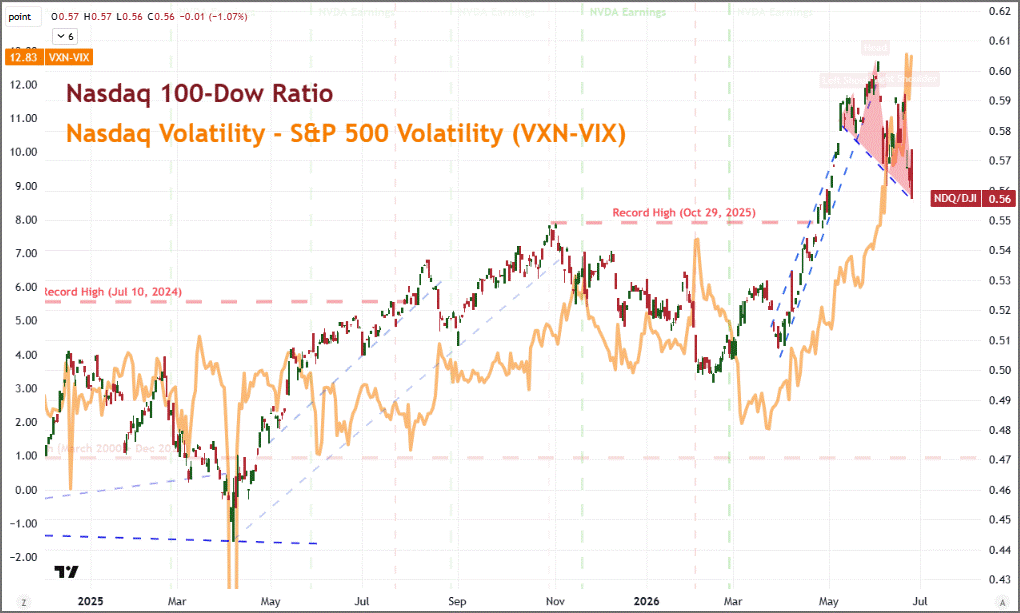
Even if we realize a measured or even directionless picture of risk appetite, it is worth keeping tabs on the relative positioning of the masses. There are periods where a placid risk benchmark belies a significant transition of interest (eg institutional ETF outflows offset by retail) or a building in underlying safety (eg a build up in long-dated protective hedges). There are interesting undercurrents such as record assets parked in money market funds, record open interest in Treasury futures and a five year low in the four-week average of the put-call ratio. A more immediate theme that is likely to be picked up after the liquidity swoon – or trigger activity during the lull – is the relative instability in the AI-backed tech build up. The retreat in the Nasdaq 100 relative to the Dow or the PHLX (SOX) relative to the S&P 500 recently reflect a serious stumble of a key bullish stepping block. Adding to that short-term adjustment, the relative, medium-term risk (1-month implied volatility) afforded to tech via the VXN over the VIX is the highest seen in over two decades. It never hurts to be aware and prepared.
Nasdaq 100 – Dow Ratio Overlaid with Nasdaq – S&P 500 Implied Volatility (Daily)
Source: TradingView.com; Standard and Poor’s; Nasdaq; John Kicklighter
A Light Docket for Traditional Macro When Measured Against Seasonality
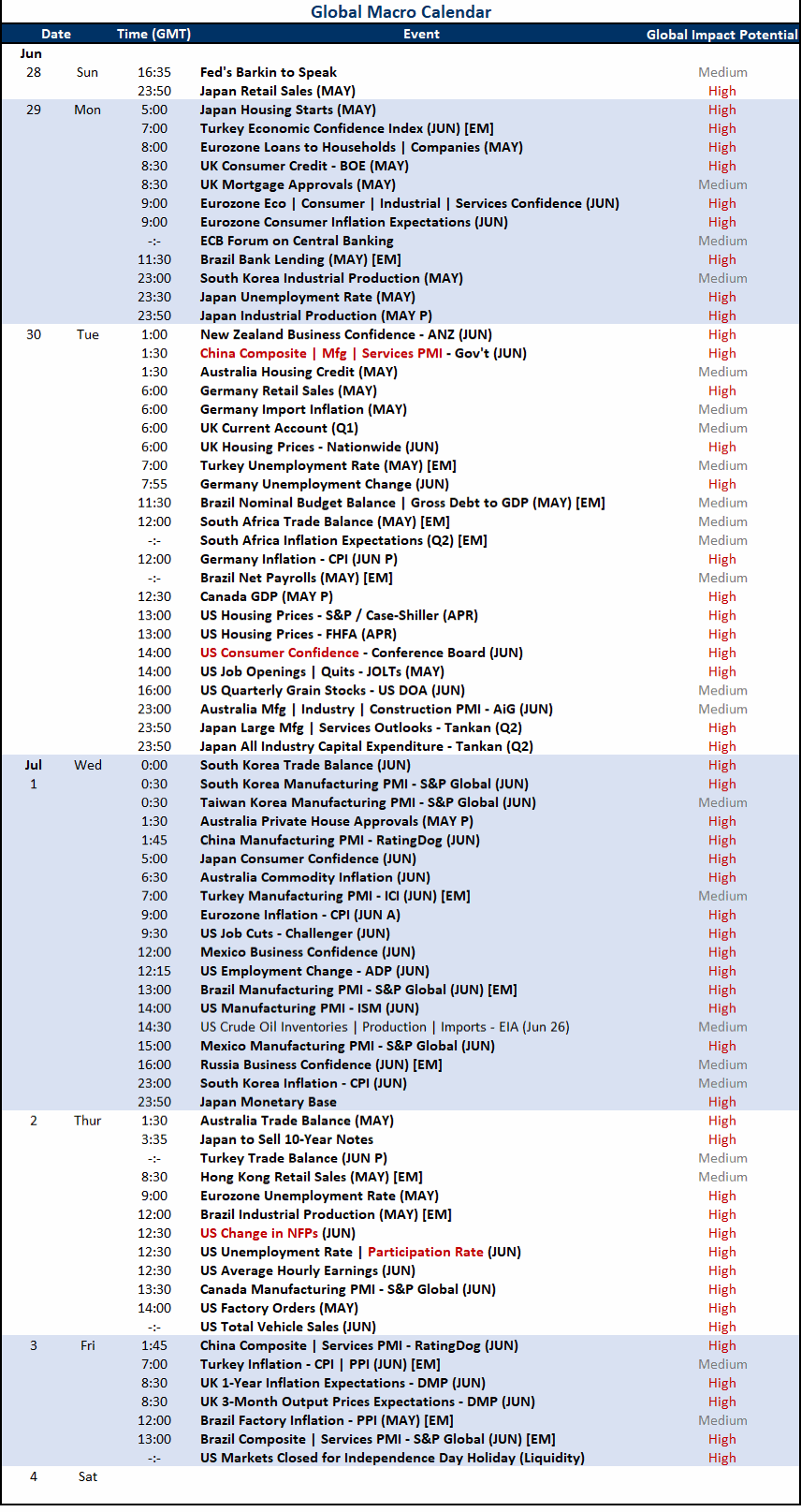
As always, there are at least a handful of significant global macro events scheduled for release over the coming week. However, the market-impact of these data updates or events depends heavily on the proclivities of the crowd. In more active and liquid markets, a catalyst like the Eurozone CPI or Japanese Takan capital expenditures report could generate significant volatility in local markets and currencies – perhaps even tap into a global market current. In our present conditions, the water level generating significant volatility (much less across borders) is substantially higher. Very few listings this week could have met these more stringent criteria.
Calendar of Major Macro Economic Event Risk Source: John Kicklighter
An Unusual Thursday Nonfarm Payrolls
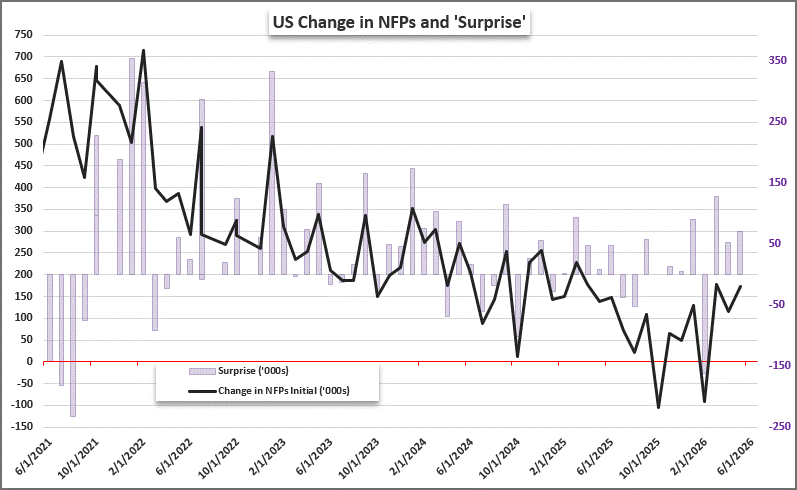
Looking over the full calendar, there is little doubt that the June nonfarm payrolls is the most capable event on tap. From a macro context, the jobs figure has been judged less as an economic activity proxy and more as a monetary policy contribution. In that regard, the jobless rate (4.3 percent) remains very low historically, which shifts the focus to the inflation leg of the Fed’s dual mandate at the very least and even supports the nascent hawkish inclinations that the markets have assumed of the central bank these past weeks as a more active factor. Following the June FOMC meeting and new Chairman Kevin Warsh’s first press conference, the focus seems to be on at least one rate hike this year. As such, a significant beat on payrolls is more likely to contribute to further lift the dollar at 13-month highs, though risk aversion from hawkishness would be more difficult to generate. Alternatively, a significant miss on payrolls – particularly with a 0.2 percentage point (or greater) increase in the jobless rate – could trigger a retreat in the greenback and encourage a swell in equities as is the seasonal average. Anything within the extremes will fall victim to the rapid collapse in volumes in advance of Friday’s US closure.
Chart of US NFPs and Degree of ‘Surprise’ Relative to Forecasts (Monthly) Source: US Bureau of Labor Statistics; John Kicklighter
Amid the Heavy Headline Turnover, Don’t Forget About China
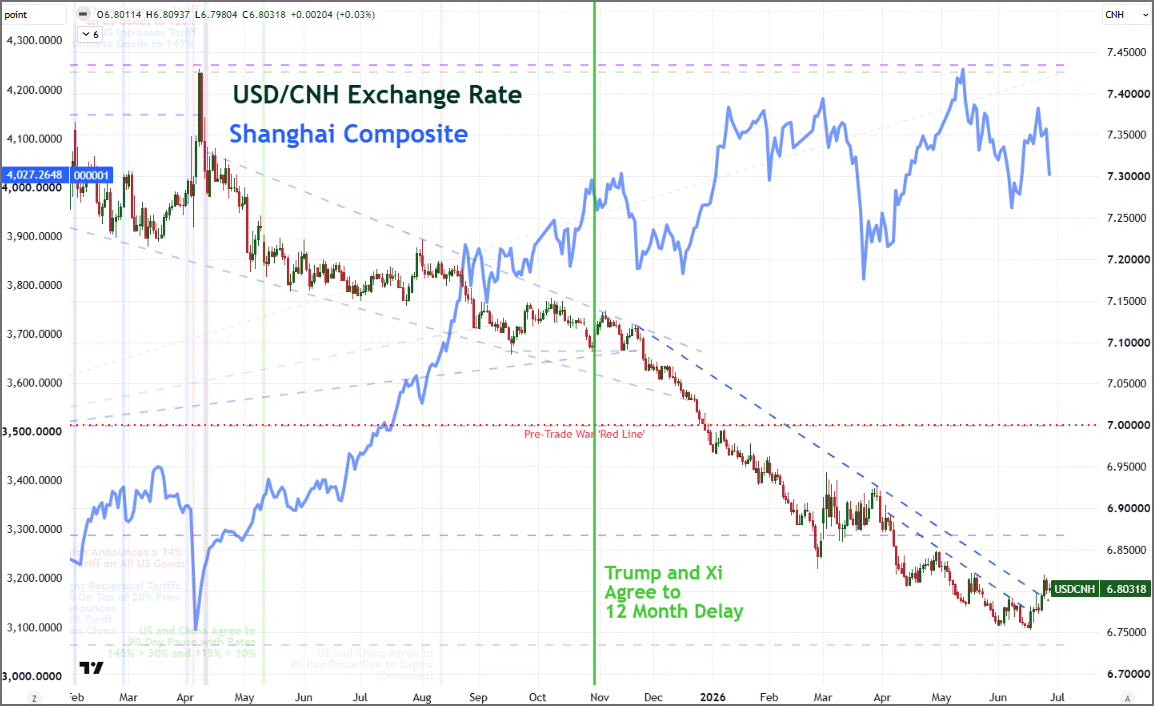
Given the changing winds of fundamentals and concentration of headlines, it seems that China has been occupying far less of the global macro headline space these past weeks and months. And yet, the world’s second largest economy has seen significant movement in its markets and material economic impact from the disruption of traffic through the Strait of Hormuz. The focus is very likely to remain in the West, but the behemoth with a penchant for a managed economy should not fly under our radar. Amid a recent retreat in the Yuan from the three-year highs and struggle for the Shanghai Composite to advance alongside its global counterparts, we are due the Chinese government’s (NBS) latest economic figures via the June PMIs. While the composite and service sector figures are important, it is the manufacturing figure that is of legitimate concern. Given official data from Chinese rarely surprises, this is more likely a bigger picture steer than a short-term volatility catalyst.
Chart of USD/CNH Exchange Rate Overlaid with the Shanghai Composite (Daily) Source: TradingView.com; John Kicklighter
Looking for Validation in the US Consumer Relief Reported by the UofM
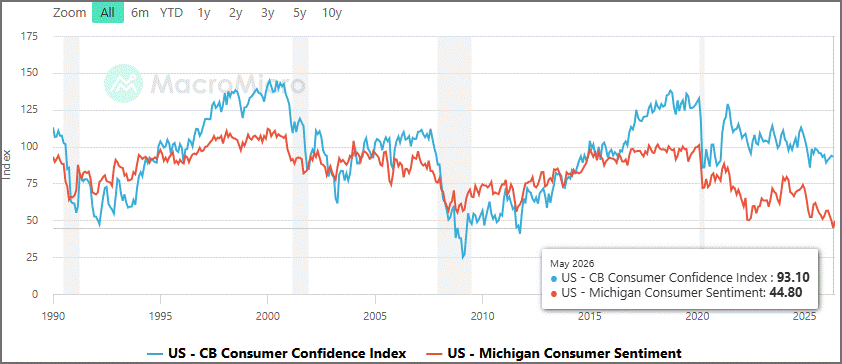
Another fundamental event of macro substance but likely falling far short of the threshold to be a short-term market mover is the US consumer confidence survey for June from the Conference Board. The context of reflecting sentiment behind the growth engine – consumers are the largest economic contribution to US GDP – to the developments in US-Iran relations as well as the capacity to keep growth stable and positive for Fed tightening ambitions is substantive. That said, this survey is a delayed reading and has followed a materially different path relative to the University of Michigan’s own reading. The forecast form economists is for a modest uptick in this survey, but that would carry far less weight relative to the UofM figure’s bounce from its series low. The most potent outcome from this event is if it were a material decline to undermine the uneven confidence garnered through its precursor’s improvement.
Chart of US Consumer Confidence Surveys (Monthly) Source: MacroMicro.com; Conference Board; University of Michiga
Access More Global Macro Insights, Forecasts and Tools
Stay connected to timely global macro analysis designed to help market participants navigate shifting economic conditions and evolving risk. Gain access to regular market commentary, updated quarterly forecasts, a comprehensive two-week forward economic event calendar, and specialized tools built to support informed trading and risk management decisions.
StoneX TV content is created, produced, and distributed solely by StoneX Media Ltd (“StoneX TV”) and is provided for informational and educational purposes only.
StoneX TV does not provide investment, financial, legal, or tax advice and does not make any recommendation or endorsement of any investment strategy, transaction, or financial instrument. Nothing in this content constitutes, or should be construed as, investment advice or a recommendation to buy, sell, or hold any financial instrument, including securities, futures, derivatives, digital assets, foreign exchange products, or CFDs.
This content does not constitute an offer, invitation, or solicitation to engage in any investment activity.
The information presented is general in nature and is not tailored to the financial situation, investment objectives, or risk tolerance of any specific person. You should not rely on this content as a substitute for independent professional advice.
Investing and trading in financial instruments involves significant risk of loss and is not suitable for all investors. Past performance is not indicative of future results.
Any views or opinions expressed are those of the presenter at the time of publication and are subject to change without notice. Such views may not necessarily reflect those of StoneX Media Ltd or its affiliates. StoneX Media Ltd and its affiliates, including StoneX Group Inc., may from time to time have positions in, or engage in transactions involving, the financial instruments referenced.
This content may include general market commentary and opinion. It does not constitute independent investment research and has not been prepared in accordance with legal requirements designed to promote the independence of investment research.
StoneX Media Ltd is not authorised or regulated to provide investment services and does not act in a fiduciary capacity.
StoneX Media Ltd is incorporated in Ireland and operates in accordance with applicable Irish law. It is a wholly owned subsidiary of StoneX Group Inc. and is a separate legal entity from other subsidiaries within the StoneX Group, which may be regulated in various jurisdictions. StoneX Media Ltd does not act on behalf of, or provide services for, any regulated affiliate.
This content is not directed at, and may not be distributed to, any person in any jurisdiction where such distribution would be contrary to local laws or regulations.
Supporting documentation for any claims, comparisons, statistics, or technical data may be made available upon reasonable request, where applicable.
Discover more insights
Our subscribers have access to comprehensive market analysis from StoneX spanning commodities, equities, currencies and more.
Our market expertise, advanced platforms, global reach, culture of full transparency and commitment to our clients’ success all set us apart in the financial marketplace.
Reach
With access to 40+ derivatives exchanges, 180+ foreign exchange markets, nearly every global securities marketplace and numerous bi-lateral liquidity venues, StoneX’s digital network and deep relationships can take clients anywhere they want to go.
Transparency
As a publicly traded company meeting the highest standards of regulatory compliance in the markets we serve; our financials and record of accomplishment are matters of public record. StoneX’s commitment to “doing the right thing over the easy thing” sets us apart in the industry and helps us build respect, client trust and new partnerships.
Expertise
From our proprietary Market Intelligence platform, to “boots on the ground” expertise from award-winning traders and professionals, we connect our clients directly to actionable insights they can use to make more informed decisions and achieve their goals in the global markets.