December 16 - The Nasdaq hit fresh record highs this morning ahead of trade expectations that the Federal Reserve will deliver another rate cut on Wednesday, while the Dow continued to post modest losses at midday. The VIX is elevated slightly above 14 at midday, while the dollar index eased back a bit to 106.9. Yields on 10-year Treasuries are trading near 4.40%, as they post fresh three-week highs, while yields on 2-year Treasuries are trading near 4.24% as the curve continues to steepen. Crude oil prices are modestly weaker on soft Chinese consumer demand data, while the grain and oilseed markets are mixed. Corn and wheat prices pushed modestly higher today, while sinking prices for edible oils pulled soybeans into modest losses ahead of Brazil's approaching harvest.
The National Oilseed Processors Association reports that its members crushed 193.185 million bushels of soybeans in November, falling about a million bushels below my estimate, but falling roughly 3.5 million bushels below the average trade guess. This should put total soybean crush just over 204 million bushels, and total crush for the first three months of the marketing year above 570 million bushels, up roughly 26 million bushels or 4.8% from the previous year's pace. The concern though is that we'll see crush start to drop off by the end of the year, as soyoil starts to back up amid shut downs by green diesel producers in the absence of 45Z guidelines.
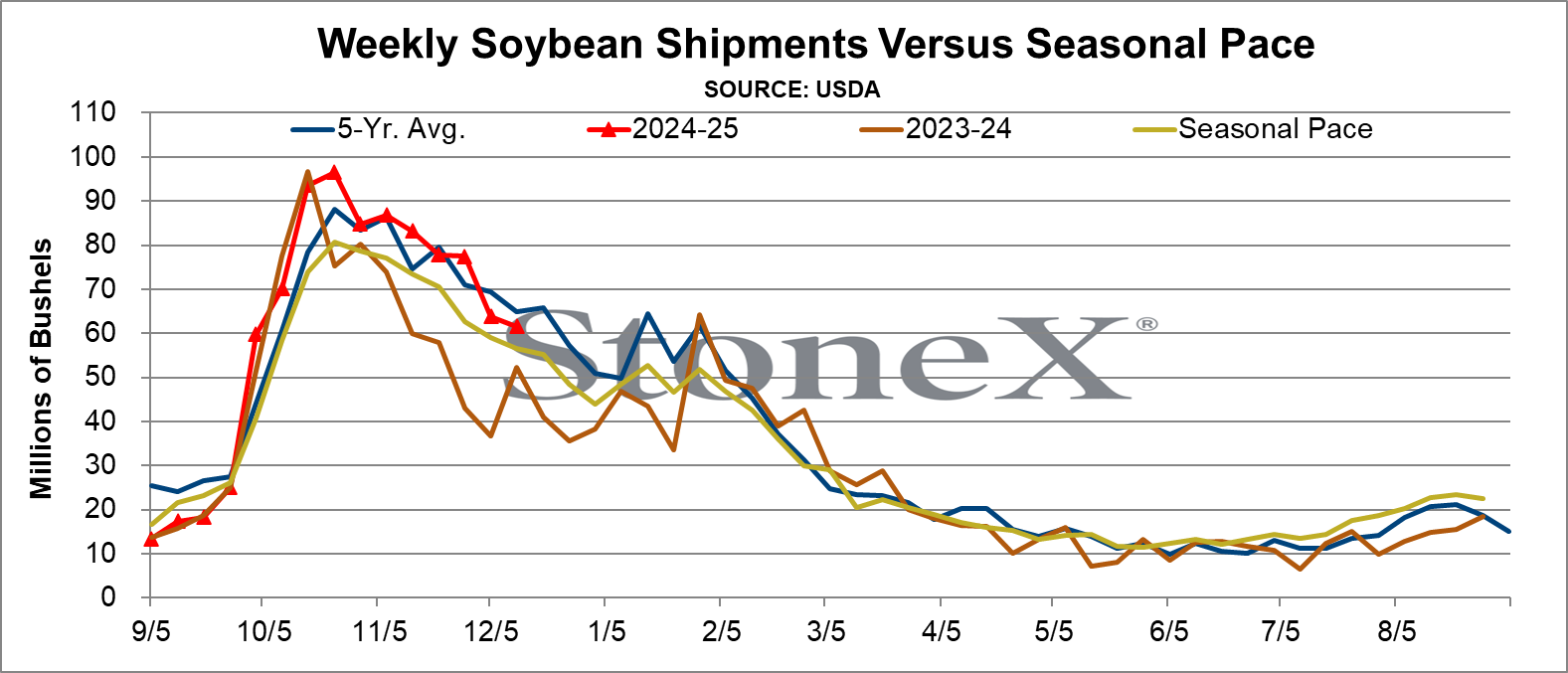
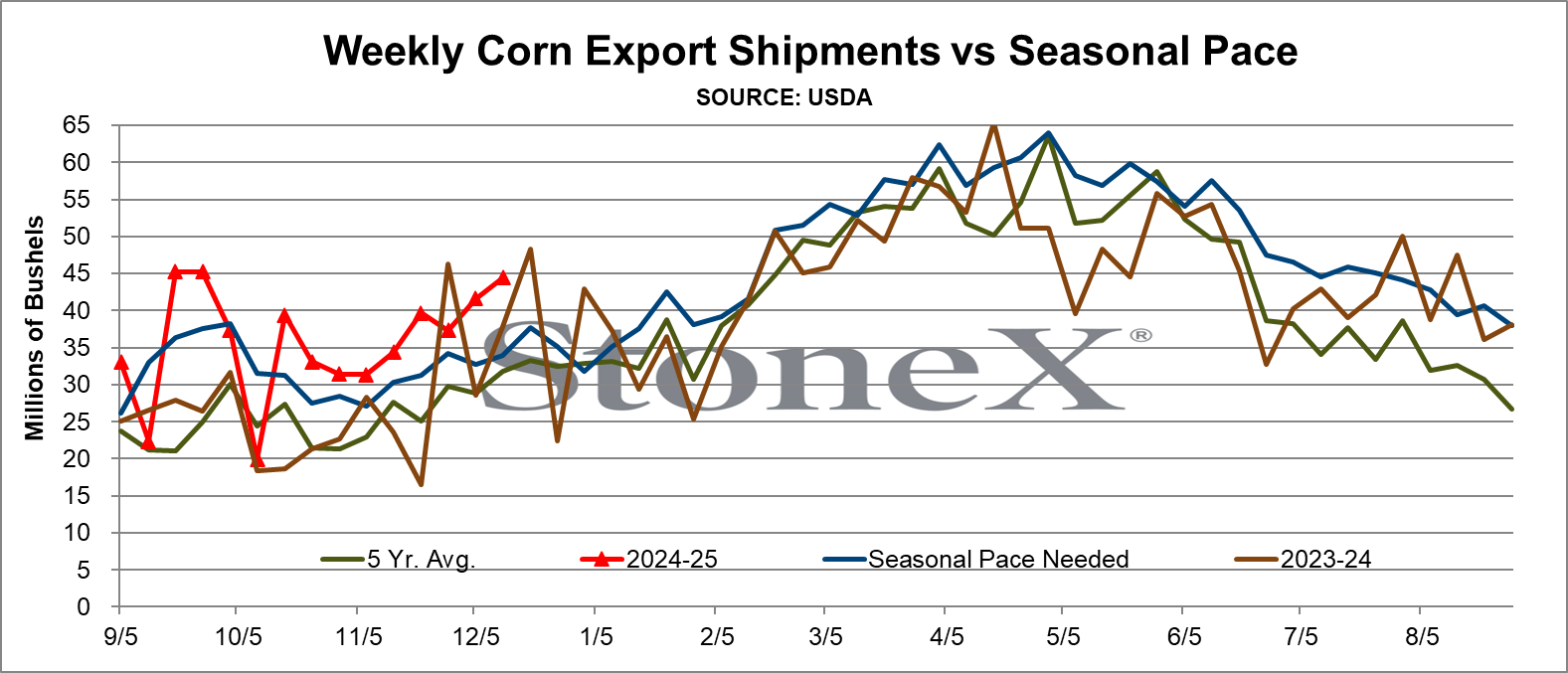
USDA inspected 61.6 million bushels of soybeans for export shipment in the week ending December 12, as shown below, along with 44.5 million bushels of corn, 11 million bushels of wheat, and 5.8 million bushels of grain sorghum. The portion of the above that was inspected specifically for shipment to China included 37.7 million bushels of soybeans and 5.7 million bushels of grain sorghum. The above means that grain sorghum shipments for the marketing year to date match the seasonal pace needed to hit USDA's target, even though sales commitments fall short of the pace by 56 million bushes, and wheat inspections fall short of the pace needed to hit USDA's newly upwardly revised target by 10 million bushels.
Marketing year to date soybean export inspections to all destinations total 927 million bushels, up 149 million bushels or 19% from the previous year's pace, but 108 million bushels above the seasonal pace needed to hit USDA's target. USDA chose not to increase its soybean export target in its monthly crop report last week because it is unsure whether we can sustain this shipment pace after cheaper new-crop Brazilian supplies become available starting next month. The graphic below shows that weekly shipments are trending lower at a significant pace, which is normal for this time of year. That weekly shipment pace is below the five-year average pace, but still above last year's pace, and above the seasonal pace needed to hit USDA's target. There's a good chance that will remain the case for much of December, but January will be the true test, once new-crop Brazilian supplies are available. That could get delayed further if rains delay the harvest and transportation of those supplies to the ports, as well as delay the loadings of boats. But for now we have to assume that harvest, transportation and loadings will proceed normally. Marketing year to date corn export inspections total 524 million bushels, up 124 million bushels or 31% from the previous year's pace, and 44 million bushels above the seasonal pace needed to hit USDA's target. Keep in mind that USDA just increased that export target by 150 million bushels last week. There's still some concern that corn sales and shipments may be frontloaded, but those concerns are not as great for corn as they are for soybeans.