February 18 - Stocks are mixed to weaker at midday as Wall Street continues to digest the flood of headlines flowing out of the White House on top of economic data. Housing data released today was negative for the economy, versus the more positive manufacturing data released earlier today. The National Association of Homebuilders reports that its current sales condition index fell 4 points to 46 this month. Its sales expectations index for the next six months dropped 13 points to 46, while its prospective buyers traffic index fell another 3 points to 29. The VIX continues to trade near 16, while the dollar index is trading near 107.1. Yields on 10-year Treasuries are trading near 4.54%, while yields on 2-year Treasuries are trading near 4.30%. Crude oil prices are more than 1.5% higher as the commodities feel some money flow tailwinds today. That has the grain and oilseed markets mostly higher as well, with the March corn contract hitting a fresh eight month high above $5 per bushel. Chicago March wheat managed to push above the 200-day moving average, which Kansas City accomplished on Friday.
The National Oilseed Processors Association reports that its members crushed 200.383 million bushels of soybeans in January, down from 206.604 million bushels in December, but still the second highest on record for the month of January. The average trade estimate was 204.536 million bushels. The range of private estimates stretched from 200.0 million up to 208.7 million bushels, so today's number came in at the very bottom of the trade estimates, although still a high number. We estimate that biomass diesel production is down roughly 40% since January 1st when the $1 per gallon tax credit expired under the so-called Inflation Reduction Act, as no other credit program was in place to replace it - and it still isn't. Export demand for soyoil remains strong enough to absorb the excess soyoil for now due to rising palm oil prices and an absence of South American oil supplies yet at this time. That is expected to change over the next six to eight weeks as cheaper supplies become available from South America, negatively impacting soybean crush if we still lack clarity on the 45Z guidelines at that time.
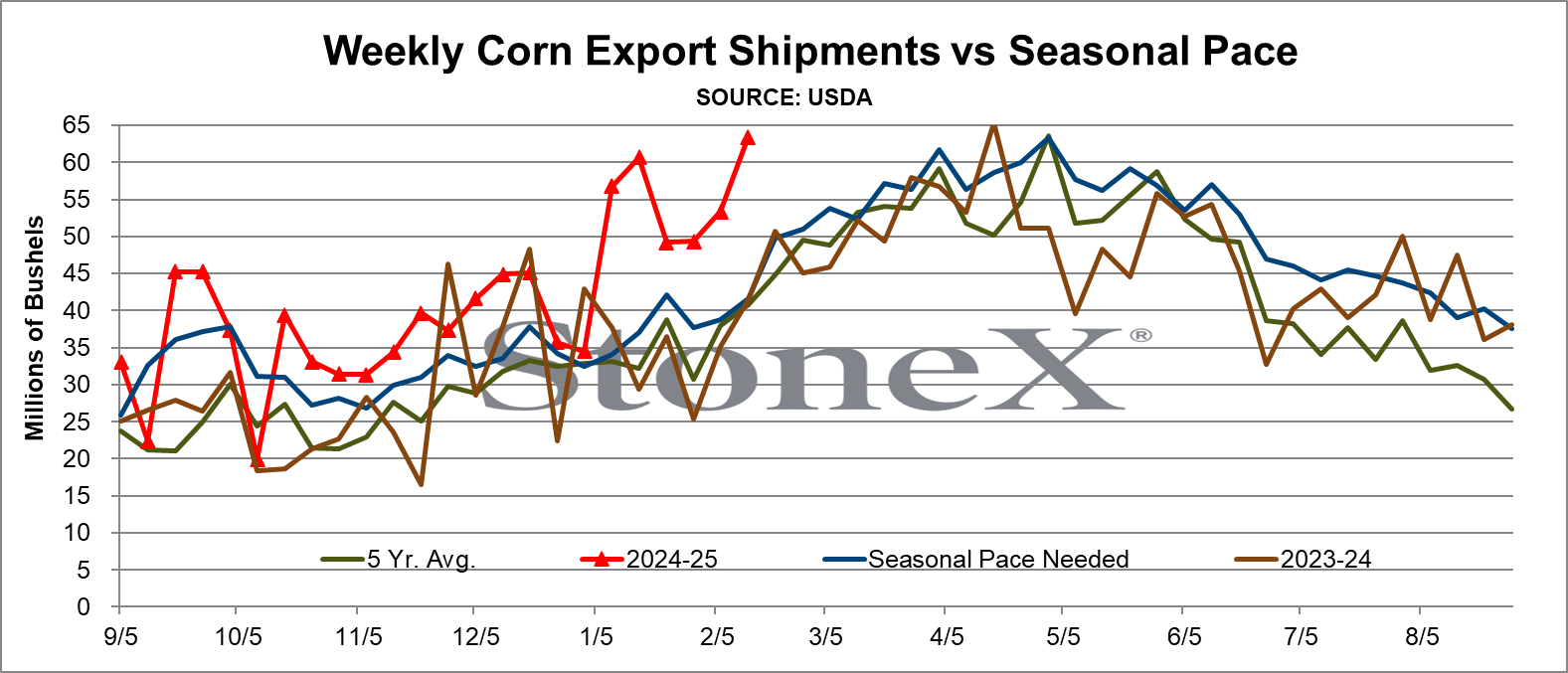
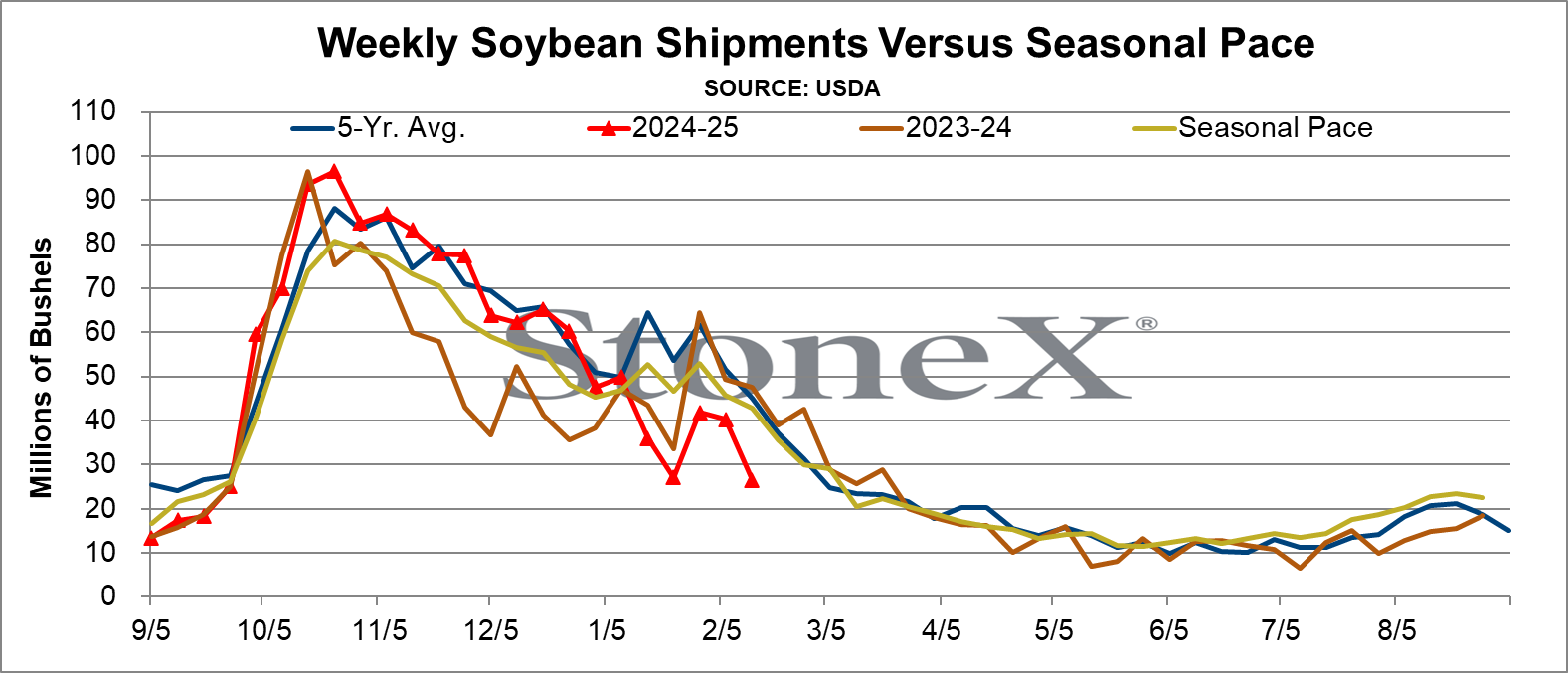
USDA inspected a 10-month high 63.4 million bushels of corn for export shipment in the week ending February 13, as shown below, along with 26.5 million bushels of soybeans, 9.2 million bushels of wheat, and 0.1 million bushels of grain sorghum. The portion of the above that was inspected specifically for shipment to China included 7.7 million bushels of soybeans. That's it. Most purchases currently being made by China are being originated in Brazil and Argentina, where currency exchange rates make them much cheaper than available supplies from the United States.
Marketing year to date corn export inspections total 973 million bushels, up 255 million bushels from the previous year's pace, and 163 million bushels above the seasonal pace needed to hit USDA's target for the year - and the gap continues to grow despite this winter's price rally. Marketing year to date soybean export inspections total 1.323 billion bushels, up 145 million bushels from the previous year's pace, and up 67 million bushels from the seasonal pace needed to hit USDA's target for the year. However, that latter number continues to rapidly shrink, down another 18 million bushels from the previous week. That's because weekly shipments started the marketing year strong, but they have since fallen sharply to levels below the seasonal pattern as Brazil harvests its bumper crop. USDA needs to increase its corn export target, which was expected in the February report but didn't happen, but it is correct in not bumping its soybeans export target due to the massive Brazil crop coming to the market.