September 13 - Mixed results in this morning's CPI data fed hopes of a rate hike pause on Wall Street, leading to cautiously firm stocks as we approach midday. The VIX slipped below 14 following the release of this morning's data, with the dollar index trading near 104.7. Yields on 10-year Treasuries are trading near 4.28%, while yields on 2-year Treasuries are trading near 5.00%. Treasury yields remain in a longer-term trend upward, but this morning's data failed to provide enough fodder to justify new highs for the move. Crude oil prices though did make new 10-month highs this morning, and they trading modestly higher on tightening global supplies as we approach midday. The grain and oilseed markets are mixed to higher, with follow-through short covering in wheat as it tries once again to set another bottom, while corn sees short covering after holding above the August lows. Soybean prices see follow-through selling as they seek an area of chart support, after USDA cut demand in its forecast yesterday.
Commercial crude oil stocks rose 4.0 million to 420.6 million barrels in the week ending September 8, leaving them 2% below the five-year average for early September. Gasoline stocks rose by 5.6 million barrels, putting them also 2% below seasonal levels. Distillate stocks jumped by 3.9 million barrels, but they are still 13% below levels typically seen in early September. Ethanol stocks fell to a 21-month low 21.2 million barrels in the week ending September 8, down from 21.6 million the previous week and 23.1 million barrels in the same week last year. Ethanol production rose to a three-week high 1,039K barrels per day during the week, up from 1,012K bpd the previous week, and up from 989K bpd in the same week last year. The production of ethanol utilized an estimated 100.4 million bushels of corn during the week, up from 97.7 million the previous week, and up from 97.6 million the previous year.
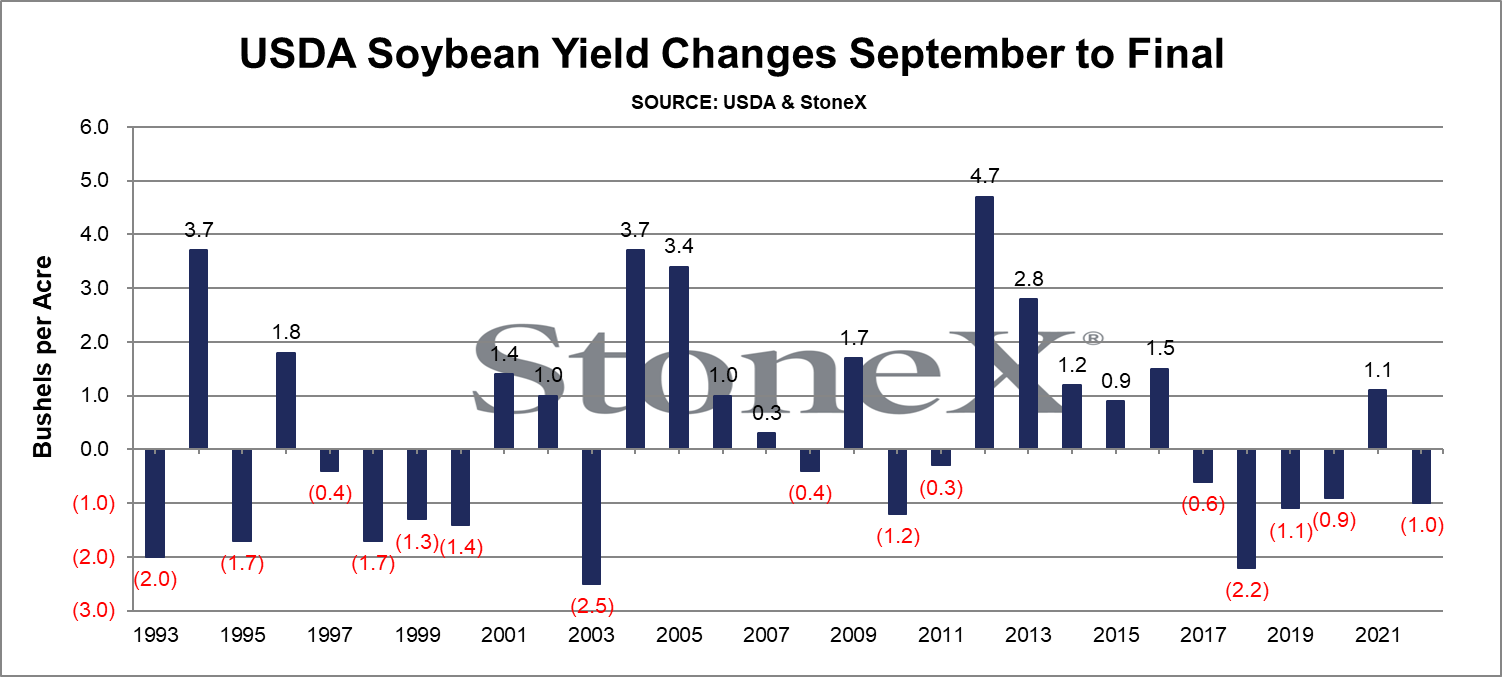
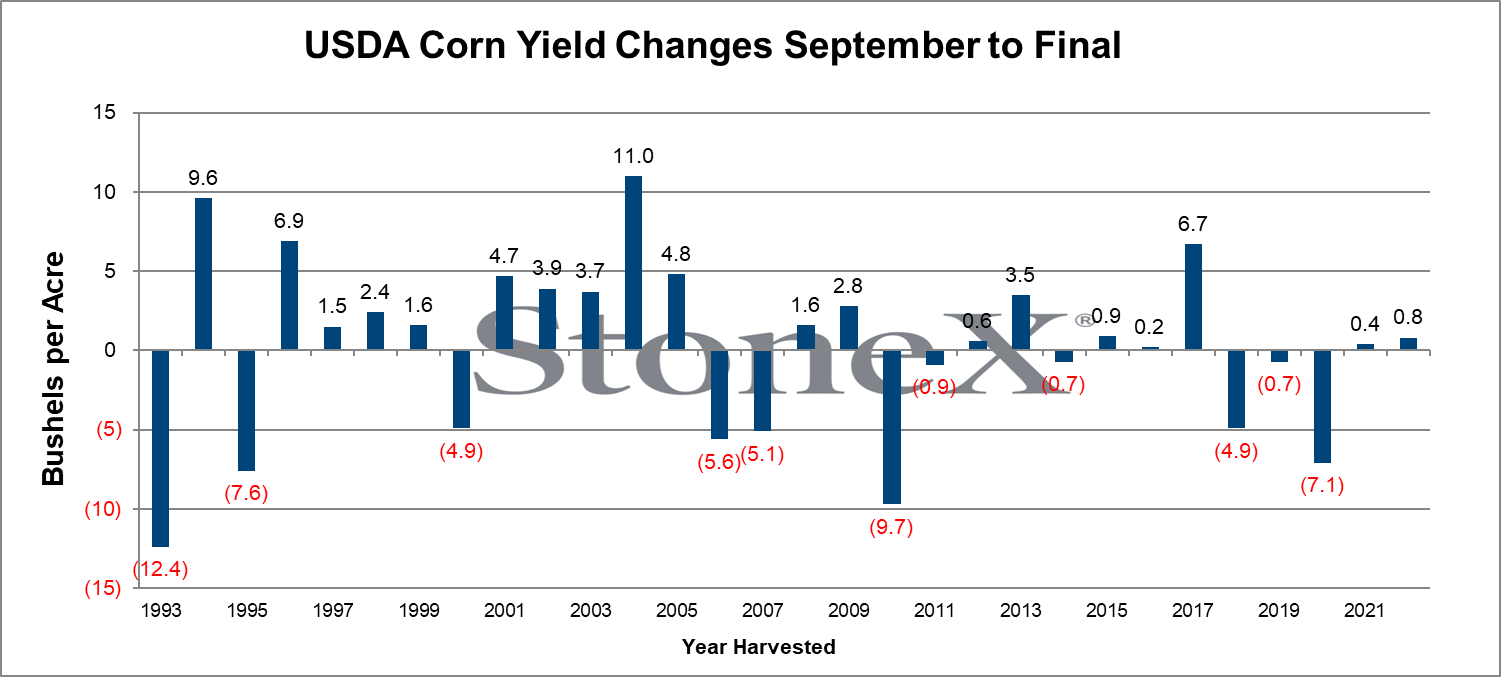
USDA cut its soybean yield estimate for this year's crop to 50.1 bushels per acre on Tuesday, while cutting its corn yield estimate to 173.8 bpa, down from 50.9 and 175.1 bpa respectively the previous month. The old adage of small crops get smaller will be the assumption of the trade going forward, leading to expectations of an even lower number in the October report. Ironically, a look back at the past 30 years shows no correlation at all to lower yields in both August and September leading to a lower yield in October. I do expect to see a lower yield in October, but it has to do more with my background in agronomy and understanding of how the season ended than it does a historical trend. I believe that the harsh finish that we had to the growing resulted in smaller seed size, and possibly lower test weight. There were hints of that in the corn data in yesterday's USDA report, although the soybean data didn't indicate such. USDA reports that 18% of the corn crop was mature as of September 3 as the agency was wrapping up its field sampling for this report, whereas the same was true for 16% of the soybeans. The mature field samples are the ones that are weighed, and the earliest maturing fields would be the ones least impacted by the late-season stress. That's why I expect to see more seed issues show up in the October report when the bulk of the crops should be mature. However, I do not necessarily expect seed size and test weight issues to be as great as they would have been had all of August been hot and dry. We likely saw some benefit from the cool and wetter first half of August to reduce the losses that otherwise would have been the case. The graphic below provides the history of yield changes that we've seen from September to the final yield over the past 30 years.