The RBA raised the cash rate by 25bp to 4.6% and maintained a hawkish stance as inflation pressures remain elevated. Yet the Australian dollar has weakened broadly, with markets now focused on how much further the RBA may need to tighten.
RBA Raises Rates to 4.6% as Inflation Pressures Remain Elevated
Summary of the statement:
- RBA hikes by 25bp to 4.6%
- Inflation remains elevated and some of the upside risks flagged in August are materialising
- AI-related demand is driving rapid growth in global prices for technology-related goods
- Short-term measures of inflation expectations remain elevated
- Recent inflation outcomes in Australia were stronger than expected at the previous meeting
- Growth in output has slowed but, at the margin, was stronger than expected in the June quarter
- Labour market conditions have eased broadly as expected in recent months.
- Growth in business investment and debt is strong.
The Reserve Bank of Australia raised the cash rate by 25 basis points to 4.60% at its September meeting, delivering its fourth hike of the year and taking rates to their highest level in around 15 years.
The hike itself was widely expected. More important for markets was the tone of the decision, with the RBA remaining firmly focused on persistent inflation and the risk that policy may need to become more restrictive.
The press conference reinforced that message. Bullock said the Board considered either holding rates steady or raising them by 25bp, with no discussion of a larger 50bp move. She highlighted persistent underlying inflation across services, groceries and consumer durables, suggesting price pressures extend beyond the latest energy shock.
Bullock also stressed that monetary policy works with long lags and that the RBA still needs to assess the impact of this year’s tightening. However, she did little to discourage market expectations that the cash rate could ultimately rise above 5%.
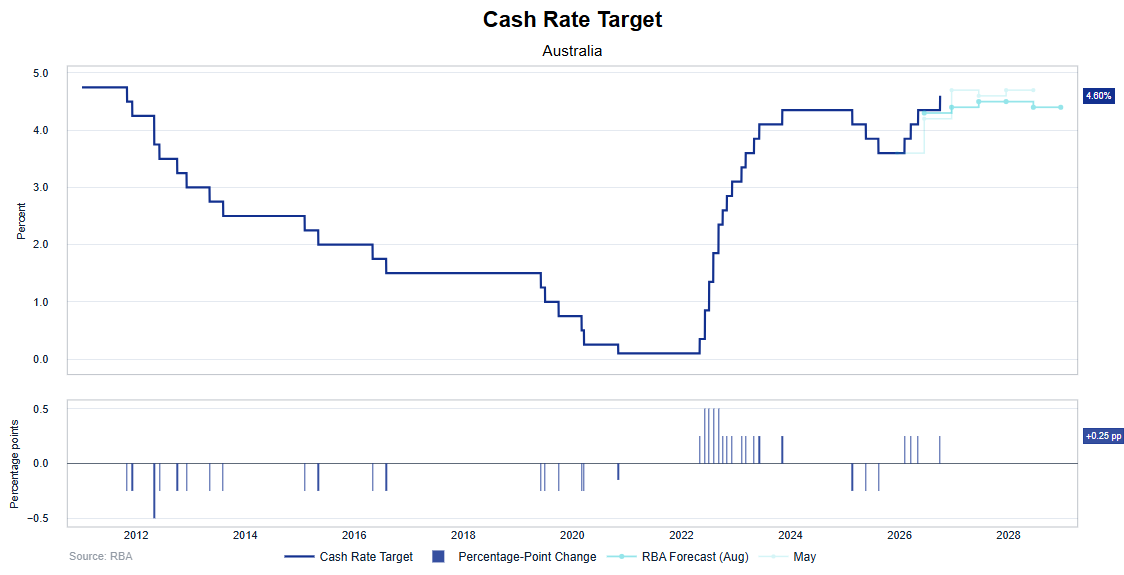
Australian cash rate chart shows the RBA lifting rates to 4.6%, with forecasts pointing to rates remaining elevated into 2027 and 2028.
Inflation Remains Uncomfortably High
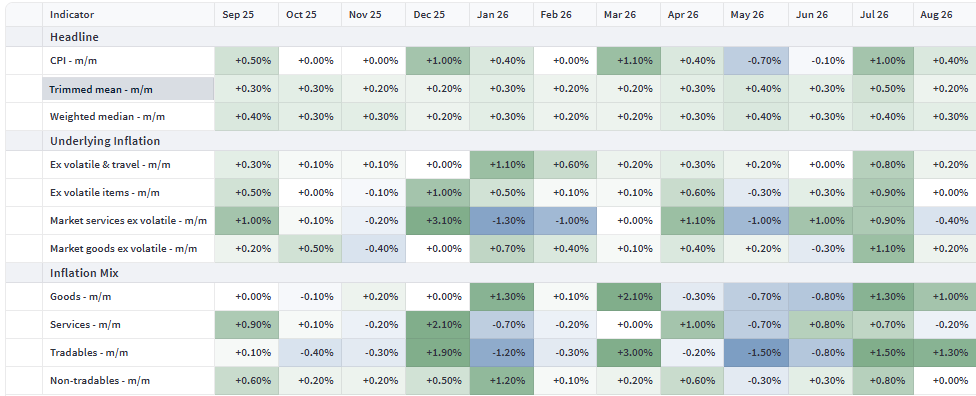
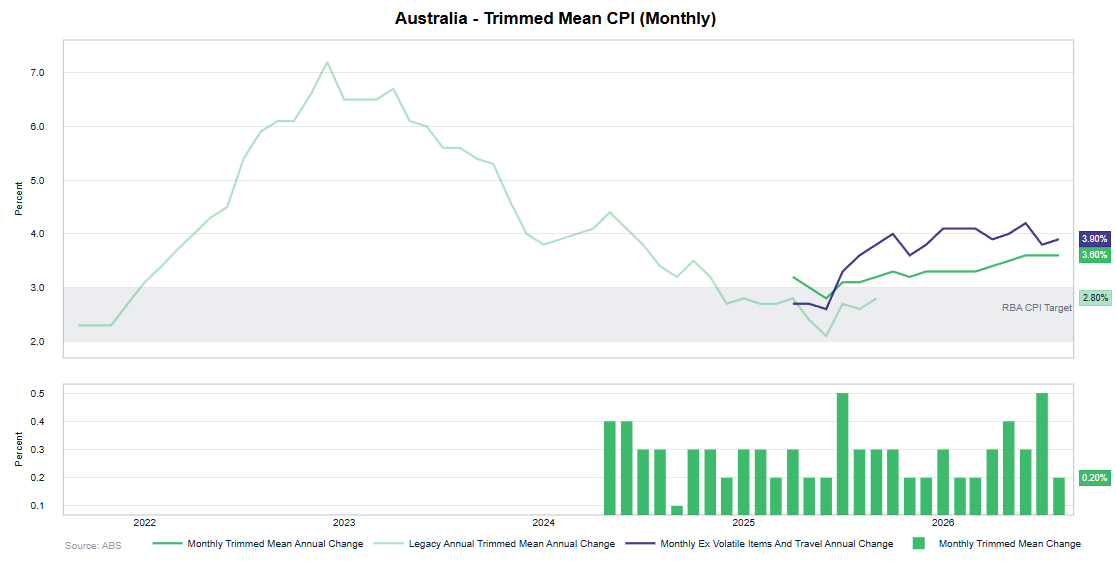
The latest inflation figures did little to challenge the RBA’s hawkish stance. Australian CPI rose 0.4% in August and remained at 4.0% year-on-year, while trimmed-mean inflation held at 3.6%.
Underlying inflation therefore remains well above the RBA’s target range despite the tightening already delivered this year.
The labour market is also providing the RBA with some room to remain hawkish. Unemployment rose to 4.6% in August, although employment increased by 39,500 and participation also climbed.
Governor Michele Bullock had previously indicated that unemployment somewhere around 4.5% to 5% could be consistent with easing inflation pressures, suggesting the current level is unlikely, by itself, to prevent additional tightening.
Household Spending Shows Early Signs of Rate Hike Impact
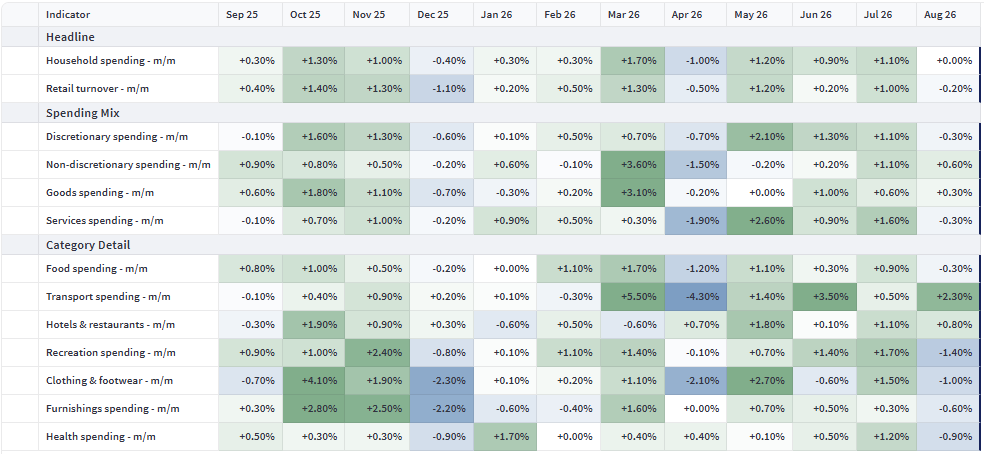
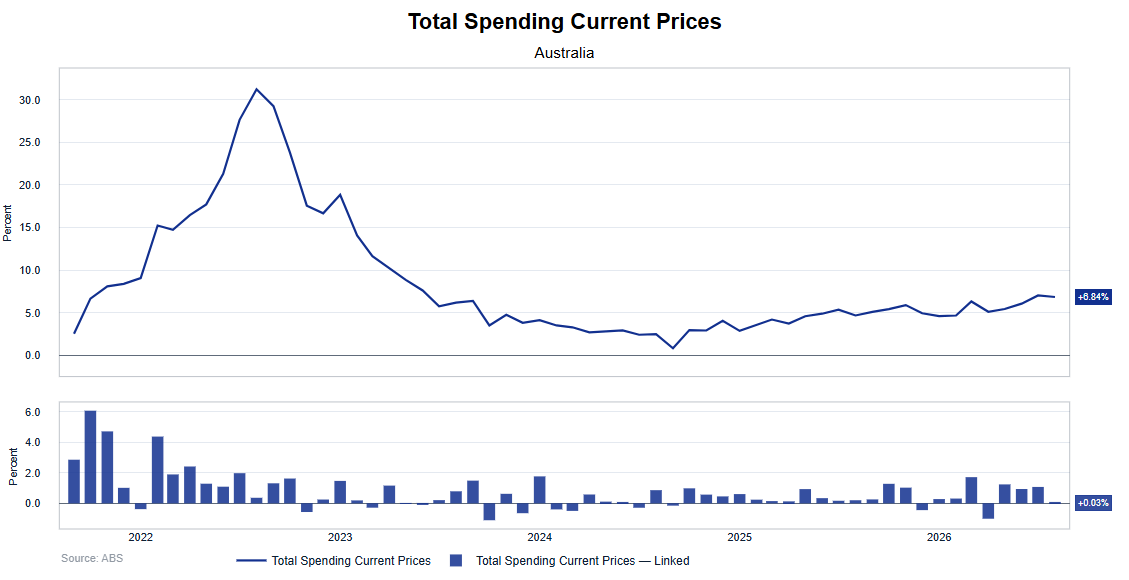
Interestingly, household spending softened in August to 0% m/m, down from 1.1% and 0.9% in the prior two months. The bulk of spending growth came from transport, which rose 2.3%.
Non-discretionary spending rose 0.6%, while discretionary spending fell 0.3%. Recreation spending dropped 1.4%, while clothing, furnishings and health spending were also lower.
It is not enough to quell bets of another hike, but it does at least suggest the three hikes leading up to this meeting are beginning to take effect.
Australian Dollar Broadly Lower Despite RBA Hike
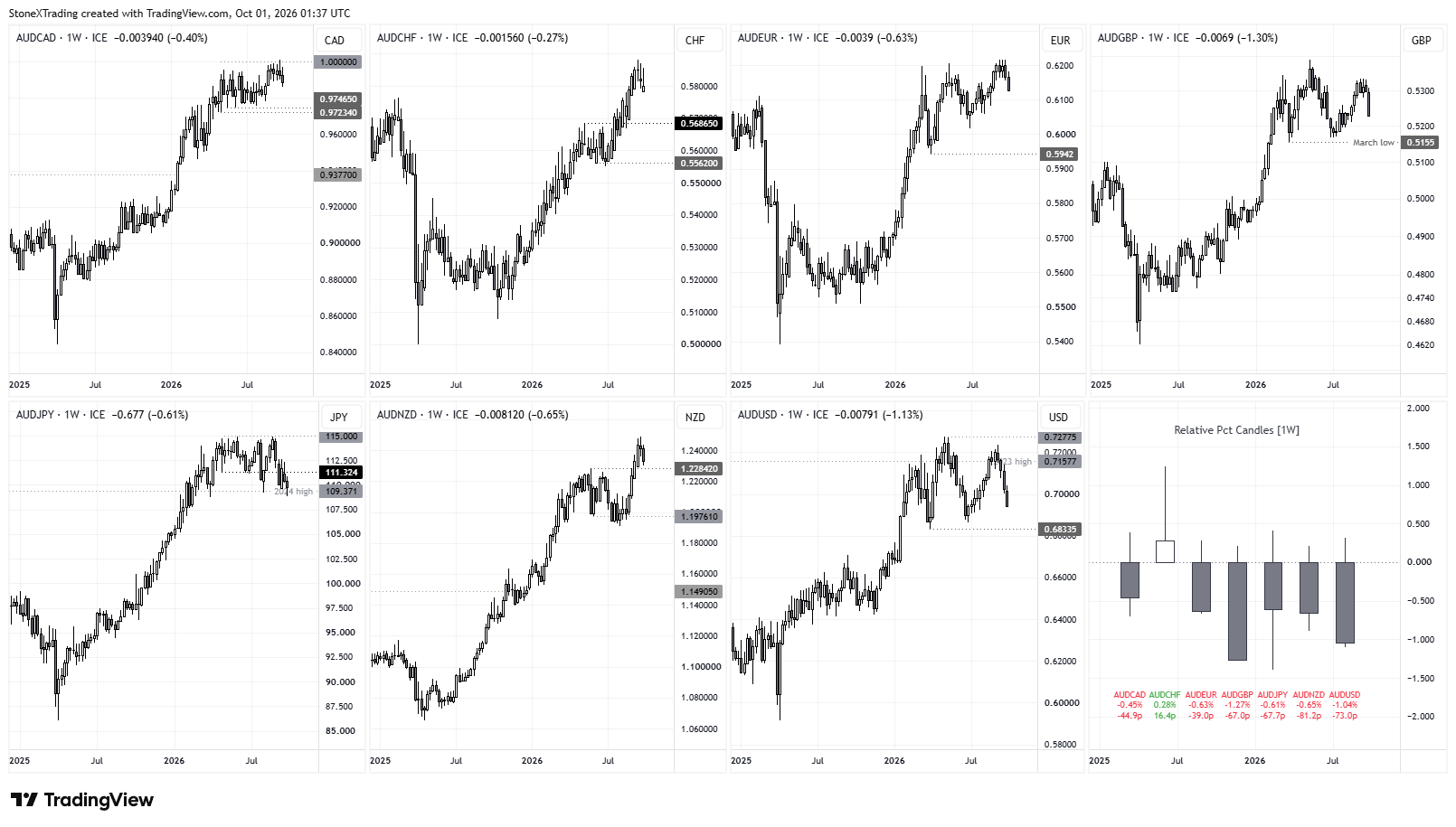
The Australian dollar is broadly lower this week despite the RBA’s hawkish 25bp hike. AUD has fallen against six of the seven major currencies shown, with AUD/GBP leading the decline at around 1.2%, followed by AUD/USD at roughly 1.0%. AUD/JPY and AUD/NZD are both down around 0.7%, while losses against the euro and Canadian dollar have been more modest. The Swiss franc is the only major currency the Aussie has gained against this week.
That broad weakness reinforces the view that markets were already positioned for the September hike and are now more focused on how much further the RBA is likely to tighten from here. Softer underlying inflation and Bullock’s emphasis on measured tightening have also reduced expectations of an immediate follow-up hike.
A softer appetite for risk is likely adding to the pressure. Middle East tensions, elevated oil prices and higher global bond yields have created a less supportive backdrop for risk-sensitive currencies such as the Australian dollar. The decline in AUD/JPY is consistent with some defensive demand, although the Aussie’s gain against the Swiss franc suggests this is not a straightforward risk-off move.
Source: ICE, TradingView
Bullock Press Conference: Most Important Comments
- Further hikes remain on the table: Bullock said the RBA will raise rates again if needed, though no further tightening may be required if inflation falls convincingly.
- The Board considered hold vs 25bp: The decision was between leaving rates unchanged and hiking 25bp, pointing to a measured tightening bias rather than aggressive moves.
- Inflation risks remain skewed higher: Domestic capacity pressures are keeping inflation elevated for longer, while additional upside risks are building.
- Policy is already restrictive: Bullock said financial conditions are tight and the RBA is near the top of its estimated neutral range, supporting a more data-dependent approach from here.
- Core inflation is the hurdle: The RBA wants quarterly core inflation around 0.6%, making upcoming underlying CPI data critical for expectations of another hike.