- World production estimated above consumption in 2023/24, according to the USDA;
- Improvement in productivity with the harvest progress in Brazil;
- USDA cuts Brazil's crop by just 1 million tonnes;
- Crop should be favorable in Argentina;
- Concerns about the pace of global demand;
- Growth prospects of area in the USA.
- More pronounced production cut by CONAB;
- USDA revises Chinese exports upwards;
- NOPA brings stronger grinding in the US in February, as official data falls below expectations;
- High net short position of spec funds;
- The Argentine situation still favors holding soybeans as insurance.
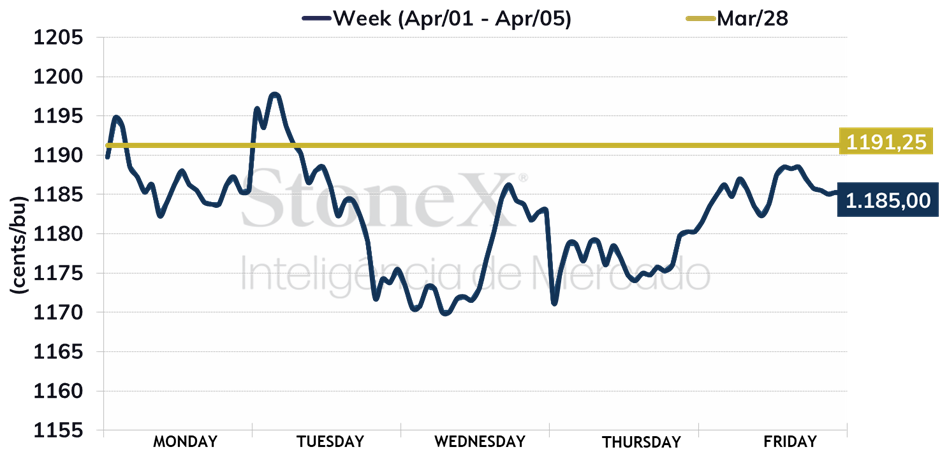
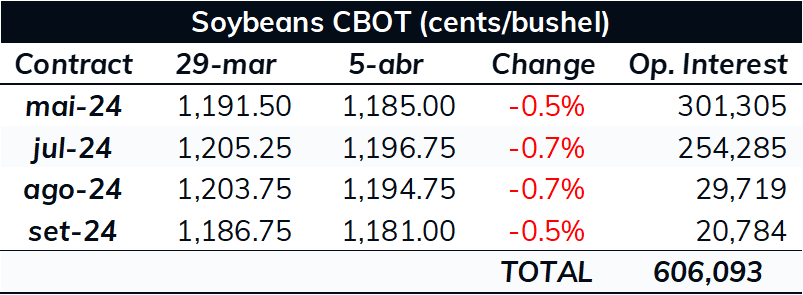
Soybean quotes in Chicago ended the previous week in negative territory, with the May contract ending Friday (5) at 1185 cents per bushel, a 0.5% decrease for the period.
The market continues to monitor the crop in South America, in addition to Brazilian exports, which are more competitive than American ones.
The US planting intention data, as highlighted in the previous report, did not bring any surprises for soybean, staying in line with expectations at 35 million hectares. Nonetheless, the lower figure for corn led to the area combination between corn and soybean also falling below expectations.
Therefore, there is the possibility of an increase in this combined acreage of the two grains, with a bet on growth in the corn planting area. Still, surprises may occur, remembering that the planting acreage report, released by USDA at the end of June, usually brings important changes compared to the planting intention figure.
Brazilian soybean exports reached 12.6 million tonnes in March, a level lower than in the same month of 2023. In the accumulated period, since January of this year, 22 million tonnes have already been exported.
These higher volumes of soybean shipments are usual in the first half of the year, and the Brazilian oilseed has remained more competitive than the American one exported through the Gulf. This situation has fueled concerns about the level of shipments and sales in the US.
In the week ending on 03/28, US export inspections reached 414.5 tmt, a lower volume than the previous week and slightly below the amount reached in the same week of 2023. Thirty-seven million tonnes were inspected, compared to 45.46 million a year earlier. Despite this difference of 8.5 million tonnes, USDA estimates a decrease in annual exports, but it is worth noting that there are still five months left until the end of the 23/24 crop year.
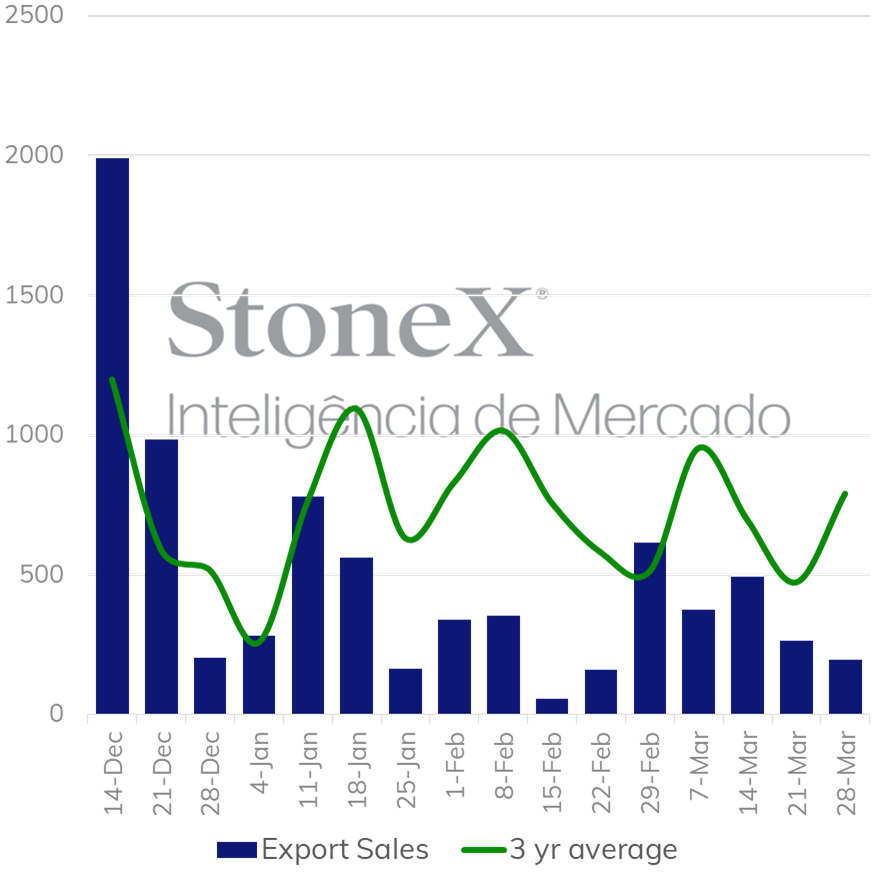
On the other hand, export sales of the 23/24 crop in the same week reached only 194.2 thousand tonnes, falling below the lower end of market estimates, which ranged from 200 to 600 thousand tonnes. In total, 40.5 million tonnes were traded, below the 49.9 million recorded last year. China is responsible for 7.5 million tonnes of this annual difference, while other destinations bought 1.8 million tonnes less. Considering the lowest estimates for the 23/24 export, the sales delay would be around 2 million tonnes.
In Argentina, the Buenos Aires Grain Exchange reported that the soybean harvest reached 1.9% last Wednesday (03). Fieldwork is becoming more widespread, but recent rains have resulted in some delays. On the other hand, the moisture is positive when 72.4% of the later planting soybean (second crop soybean) goes through the grain-filling stage. Notably, 80% of the plants record normal/good conditions.
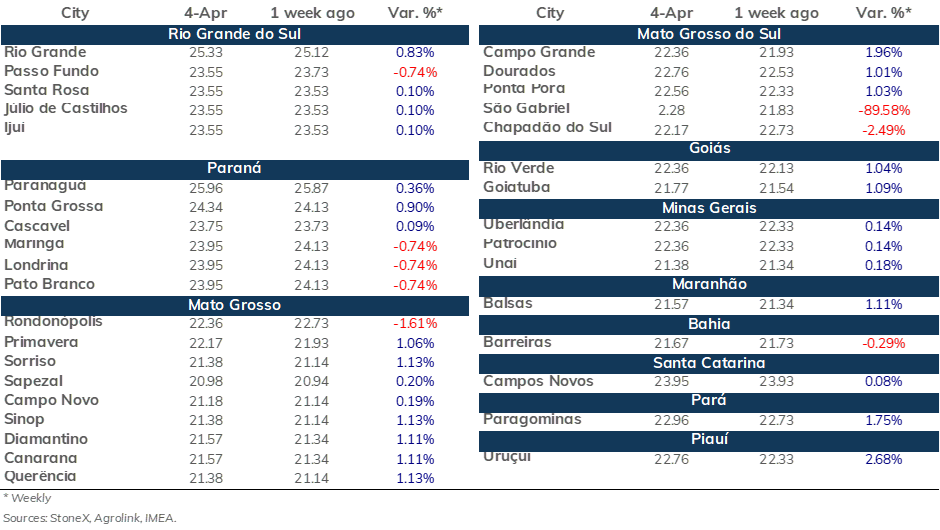
In Brazil, the soybean harvest reached 79.9% of the total last Friday (05), slightly behind last year's 82.1%.
Even with the crop around 80%, which also tends to be followed by advances in negotiations, it is worth noting that the commercialization by producers remains delayed. According to StoneX, it reached 41.3% of the total on 04/04, against 50% in the same month of 2023 for the 22/23 crop, which also recorded slowness in fixations.
This week, the monthly reports from USDA and Conab, always eagerly anticipated by the market, will be released. It is worth noting that the USDA will not release the crop 24/25 figures yet, and there should be no major surprises, with some changes for the South American crop possibly occurring. Conab may surprise, with the cycle being more advanced, as seen in the revision released in March, which placed the Company at one of the lowest levels of estimated production for Brazil in this 23/24 cycle.