- Bearish Factors
- World production in 24/25 widens the gap compared to consumption, according to the USDA.
- Improvement in productivity with the harvest progress in Brazil;
- Possible last-minute switch of corn area to soybean in the USA;
- More pressured grinding margins in China;
- Concerns about the pace of global demand;
- Growth prospects for the area in the USA.
- Bullish factors
- Impact of rains on the planting pace in the US;
- Crop losses in Rio Grande do Sul due to floods;
- Spec funds reduce short position;
- USDA continues to bet on very heated Chinese imports.
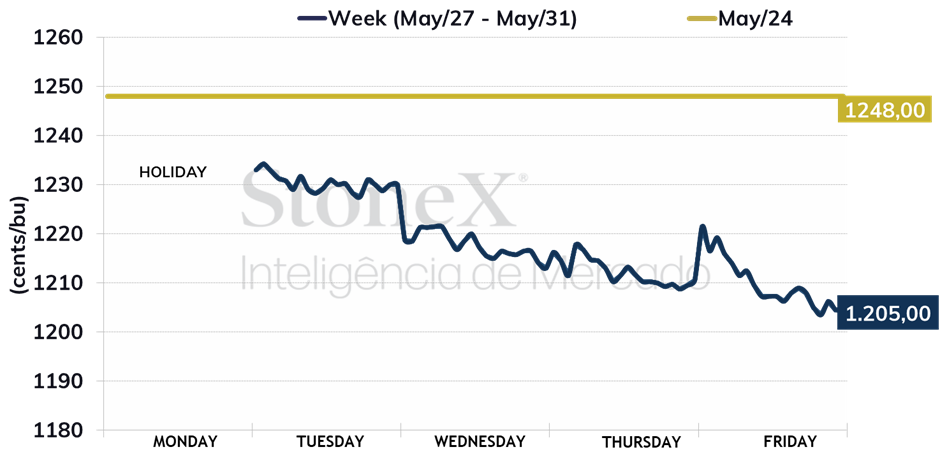
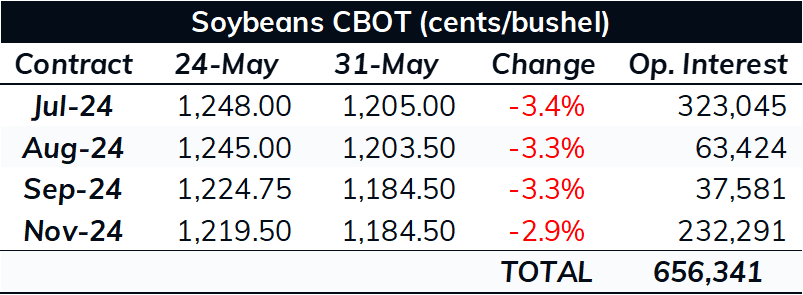
Last week in Chicago was shorter due to the Memorial Day holiday on Monday (24). When negotiations resumed on Tuesday (28), prices experienced a downward trend. The July contract closed Friday's session (31) at 1205 cents per bushel, reflecting a weekly decrease of 3.4%.
The focus of the market is increasingly on the American crop, with speculation that soybean production may increase in last-minute areas, leading to a selling movement. The planting of the 24/25 crop in the country started very fast but lost a little strength due to the occurrence of rains. Nonetheless, the pace of soybean planting continues to remain above the five-year average for the period.
In the week ending on 05/26, 68% of the planned area had already been planted, while the average was at 63%. In the same period last year, planting reached 78% of the total, remembering that in the first weeks of planting for the 24/25 crop, the percentage exceeded that of the previous year, before a slower pace due to the rains.
Even so, the producer is managing to keep the work in the field, which fuels speculation about possible area switches with corn as the cereal window is a few weeks later than that of the oilseed and the deadlines that guarantee full agricultural insurance coverage are being met. When these windows "come to an end", the insurance hedging also decreases, which happens a few weeks before for corn, and could encourage a last-minute switch to soybeans. Nonetheless, it is always good to remember that the American producer likes to plant corn, and the area disclosed in the planting intentions in March was generally considered below expectations. With that, surprises in the report at the end of June may occur.
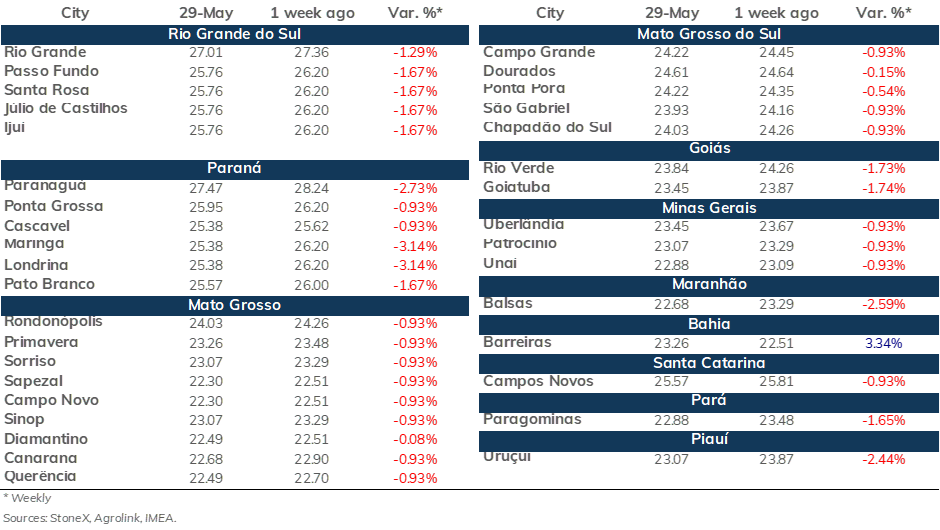
Regarding Brazil, the situation of Rio Grande do Sul and its impacts on the soybean chain as a whole are still being evaluated. StoneX maintains its estimate of a reduction of 3 million tonnes in the Rio Grande do Sul crop, considering what still needed to be harvested when the rains began. However, the state stands out in soybean grinding and biodiesel production, in addition to animal protein production. With that, the effects on the sector related to soybeans and agriculture in general need to be more carefully evaluated.
In Argentina, the soybean harvest reached 86% of the total last Wednesday (30), according to the Buenos Aires Exchange, with work focusing more on the northern part of the country. For now, the estimate remains at 50.5 million tonnes, with the Exchange highlighting variability in yields between regions, but they are balancing each other out.
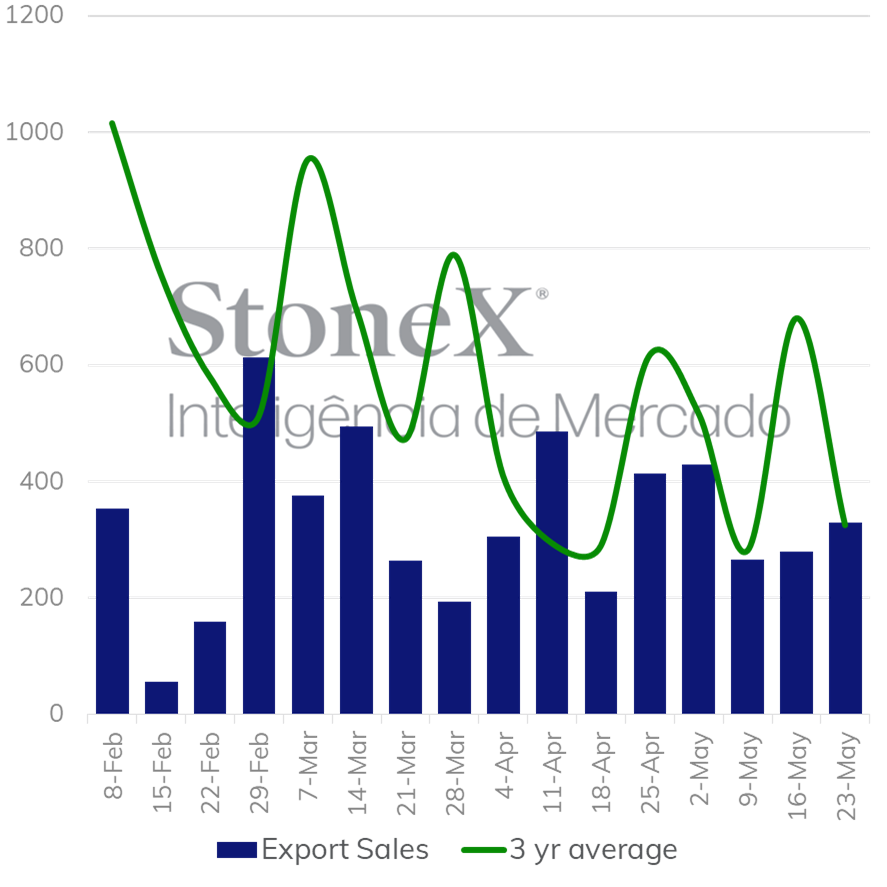
Regarding demand, US export sales in the week ended on 05/23 reached 329.4 million tonnes, a volume within the range of estimates, which ranged from 200 to 400 thousand tonnes. In total, 43.2 million tonnes were traded, a volume below last year, when it reached 50.9 million, but remember that the USDA estimates lower shipments for the 23/24 cycle, at 46.3 million tonnes. With that, considering the accumulated negotiations and the usual pace of sales, this estimate of exports is likely to be achieved.
The market monitors Chinese soybean imports, with crushing margins in the country currently under more pressure. Anyway, China has been giving preference to the Brazilian product, and is responsible for the weaker sales of the US in the 23/24 cycle, while other countries are buying more American soybeans compared to the previous year.
This week, the market should continue to monitor the progress of the US 24/25 crop, with speculation about possible last-minute area swaps. In addition, the consolidated Brazilian exports for May will be disclosed, as well as the weekly data on sales and shipments from the US.