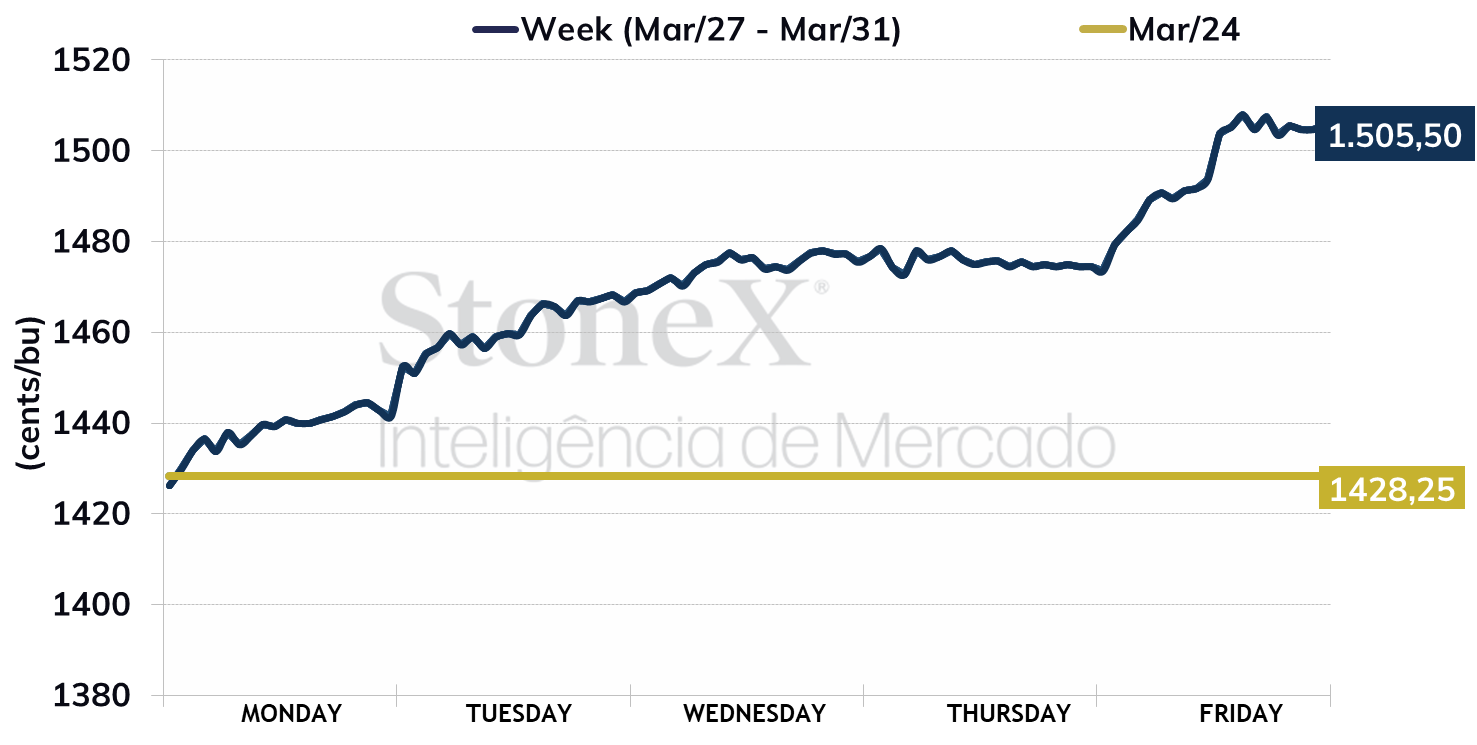
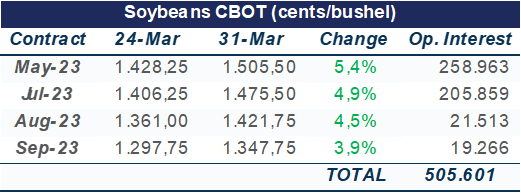
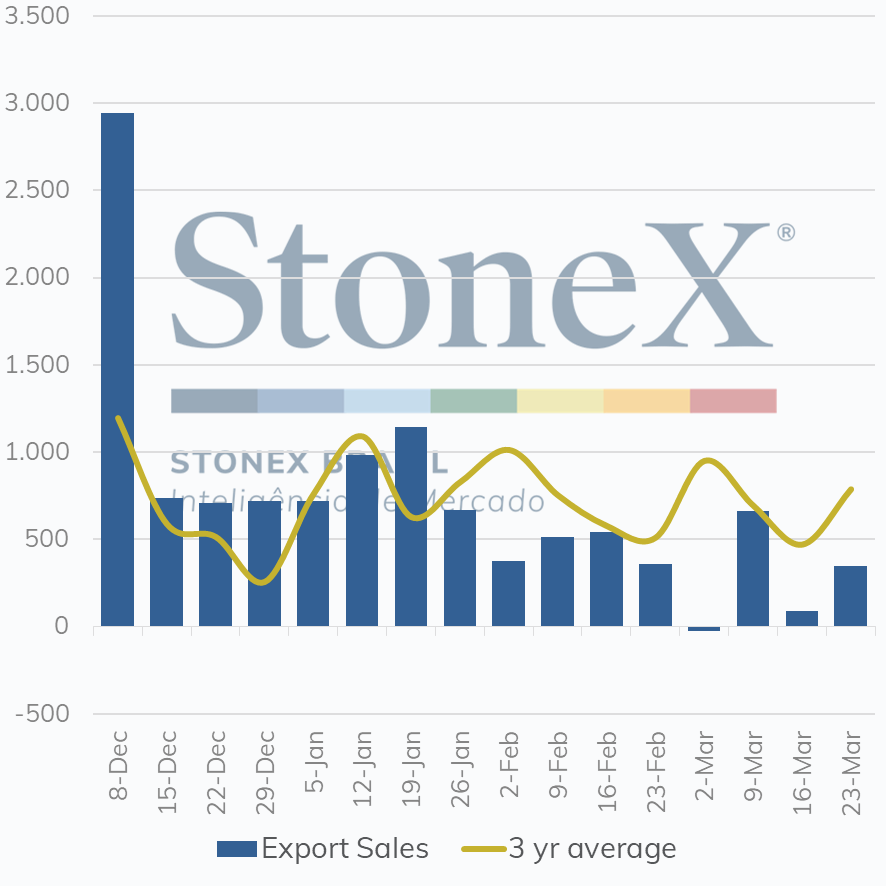
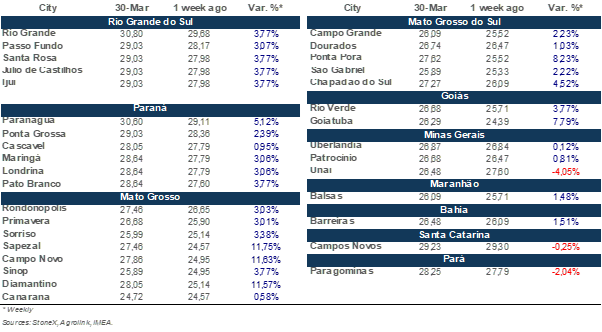
Currently, it is noteworthy that Brazilian soybeans are more advantageous for China, even more so considering the recent drops in premiums. Since Brazil is currently in its best export period, after the harvest, it is usual for China to concentrate its purchases in the country. However, cases of African swine fever and soybean crush margins in the Chinese domestic market are being watched closely.
However, the market's great expectation was the planting intentions and quarterly position report for March 1st in the US, which was released last Friday (31). In the case of planting, this is the first USDA figure based on a survey of producers in the country.
For soybeans, the 2023/24 area was reported at 35.41 million hectares, exactly in line with the Agricultural Forum number in February. It should be noted that this area also means stability in relation to the USDA's final number for 2022, at 35.39 million hectares. On the other hand, market expectations were for some growth in US area, highlighting that the country's balance sheet is not comfortable, with 2022/23 ending stocks estimated at 5.72, a situation that could get even tighter, considering the result of the March 1st stock position.
According to the USDA, on that date, the US had an availability of 45.86 million tonnes of soybeans, after six months of the 2022/23 crop (Sept/22 to Feb/23). This volume was below the average expectations, which were at 47.41 million, but still within the range, from 43.5 to 52 million tonnes.
In any case, this result shows that the country's soybean consumption (domestic and exports) was more heated between December and February and, if this trend continues, the balance of supply and demand tends to be very restricted.