- World production in 2023/24 to be far above consumption, according to the USDA;
- Weak economic indicators;
- StoneX estimates new record crop in 2023/24 for Brazil;
- Pressured margins of the hog sector in China;
- Weak US exports.
- China's heated soybean imports;
- Positive crush margins in China;
- Productivity and production cut of the US crop;
- Positive prospects for the American crush;
- Drier weather, with high temperatures in the US and worsening crop quality.
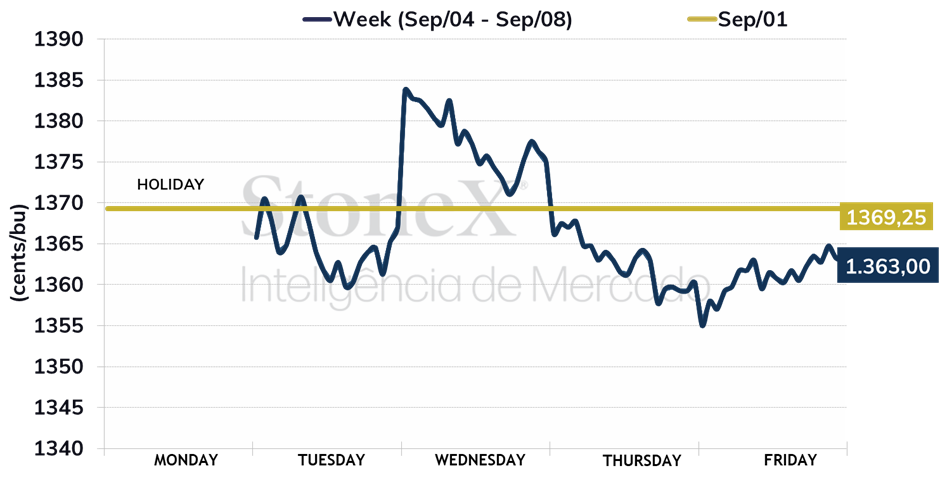
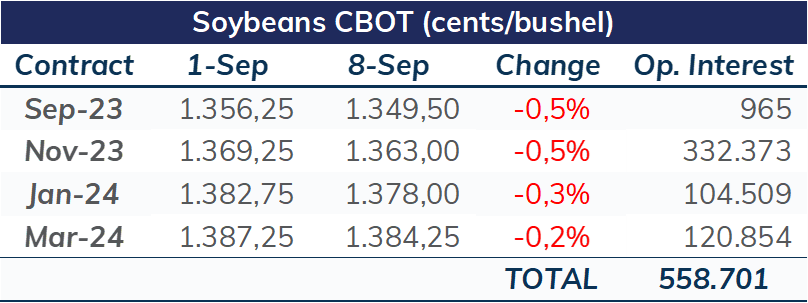
In the previous week, shorter, after Labor Day in the US, on Monday (04), soybean prices ended the period in the negative field. The November contract ended Friday (08) at 1363 cents per bushel, a weekly decrease of 0.5%.
Notably, this retreat happened even with doubts about the size of the North American crop 2023/24. The USDA crop monitoring for the week ended 09/03 brought a drop of 5 p.p. in the good/excellent percentage of the country's crops, standing at 53%, a greater decline than the market expected due to the hot and dry weather that has prevailed in the Midwest since mid-August.
After this result, the next session registered a price rally, but that was not sustained, with other factors also being monitored, in addition to the doubts about what the adjustment that the USDA will bring in the supply and demand report to be released on Tuesday (12) will be. Even with these signals, with worsening plant quality and some private estimates adjusting the outlook for the US crop downward, how much the USDA's field survey ahead of this next report will be able to capture of the potential damage caused by the weather is still in doubt.
StoneX released its estimate for the US crop based on productivity surveys and considering the official USDA area, bringing a further pullback in yield and production. The national average productivity was estimated at 3.37 tonnes per hectare, with production standing at 112.78 million tonnes. This situation would lead to an even tighter supply and demand balance than currently estimated for the country.
However, in addition to remaining doubts about the size of the North American crop, the demand side also worries.
Chinese customs data indicated that the country imported 9.36 million tonnes of soybeans in August this year, 2.2 million more than in the same month of 2022. With that, with a month to go until the end of the country's imports in the 2022/23 cycle, the current USDA estimate of 100 million tonnes may be exceeded.
Currently, Chinese crush margins remain positive, and China imported a lot of soybeans from Brazil after harvesting the record crop here. With this, in addition to the domestic crushing, the country also took the opportunity to rebuild stocks, a situation that raises doubts about what the size of imports will be in the 2023/24 crop, remembering that there has been an effort to reduce the share of soybean meal in feed, with government support. Either way, the big concern is how much China will import US soybeans after several months of very heated purchases, with a focus on Brazil. The best period of shipments from the US is right after the crop harvest, from October to December.
Still on US soybean exports, sales and shipments data were released for the 08/31 week ending the country's 2023/22 crop year. Another 155,600 tonnes of the crop that ended in the week were traded, totaling 53.4 million tonnes. Cumulative shipments reached 52.2 million tonnes.
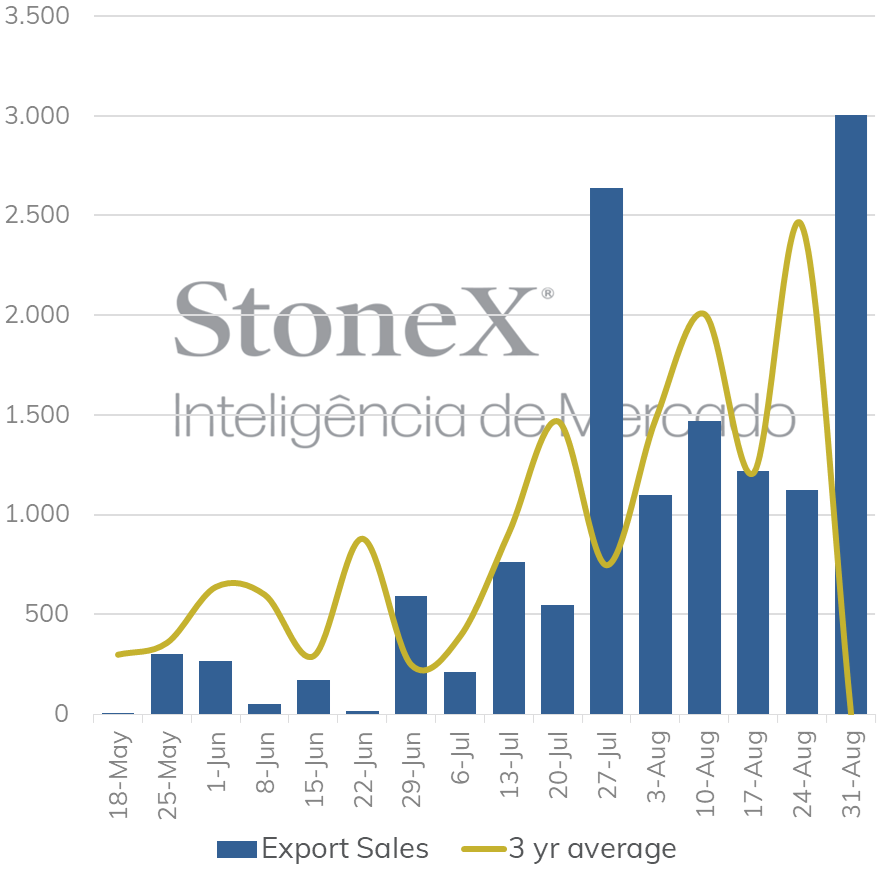
In the case of the 2023/24 crop, weekly sales reached 3 million tonnes, considerably exceeding the top of estimates by 2 million. Even so, the cumulative for the cycle remains considerably lower than that same period in previous years. Highlight the weaker pace of Chinese purchases.
In Brazil, StoneX updated its farmer sales report, with 80% of the 2022/23 crop traded, a percentage even lower than in the same period in previous years. Considering the record crop at 157.7 million tonnes, Brazilian producers still have 31.5 million tonnes left to be sold.
This week, as already mentioned, the USDA's monthly report will be released tomorrow (12), and the expectation is very high as to possible adjustments for the US crop, both in productivity and area, since the Department has already signaled that revisions in the planted area may occur.