- Bearish factors
- Global production for 24/25 above consumption, according to the USDA;
- Concerns about the pace of global demand;
- Estimate of record production for the Brazilian 24/25 crop;
- Improvement in crop conditions in Argentina;
- China increases retaliatory tariffs against the US.
- Bullish factors
- New incentive measures adopted by the Chinese government;
- The crop in Rio Grande do Sul is heavily impacted by the weather;
- Estimate of a decline in acreage for the US 25/26 crop;
- Loss of potential in the Argentine crop;
- Possible agreement between the fossil fuel and biofuels sectors in the US.
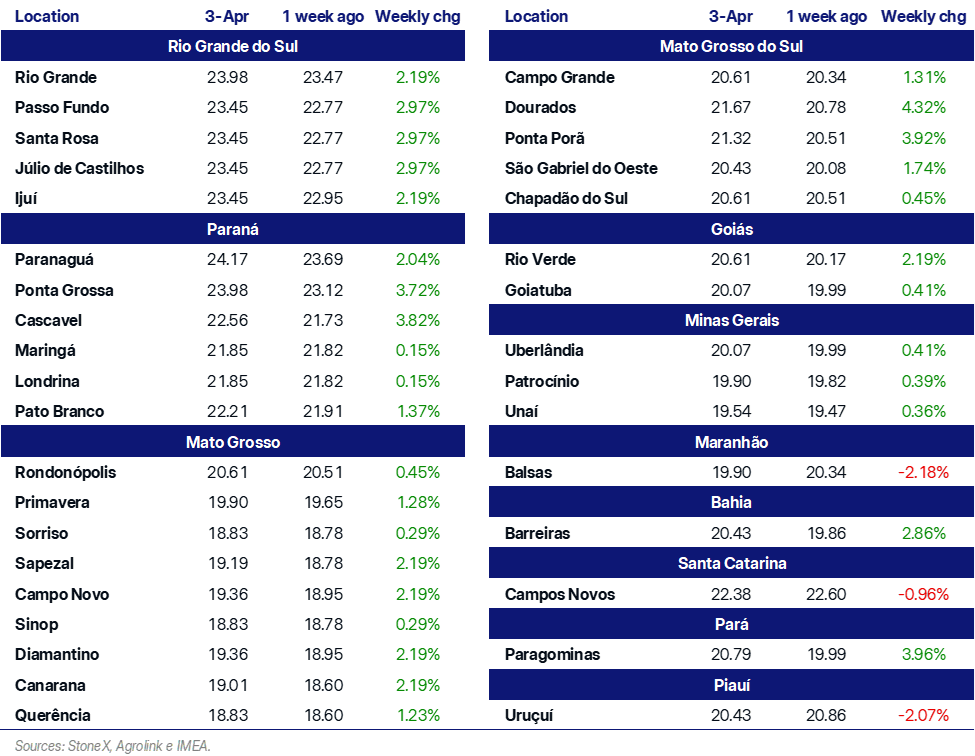
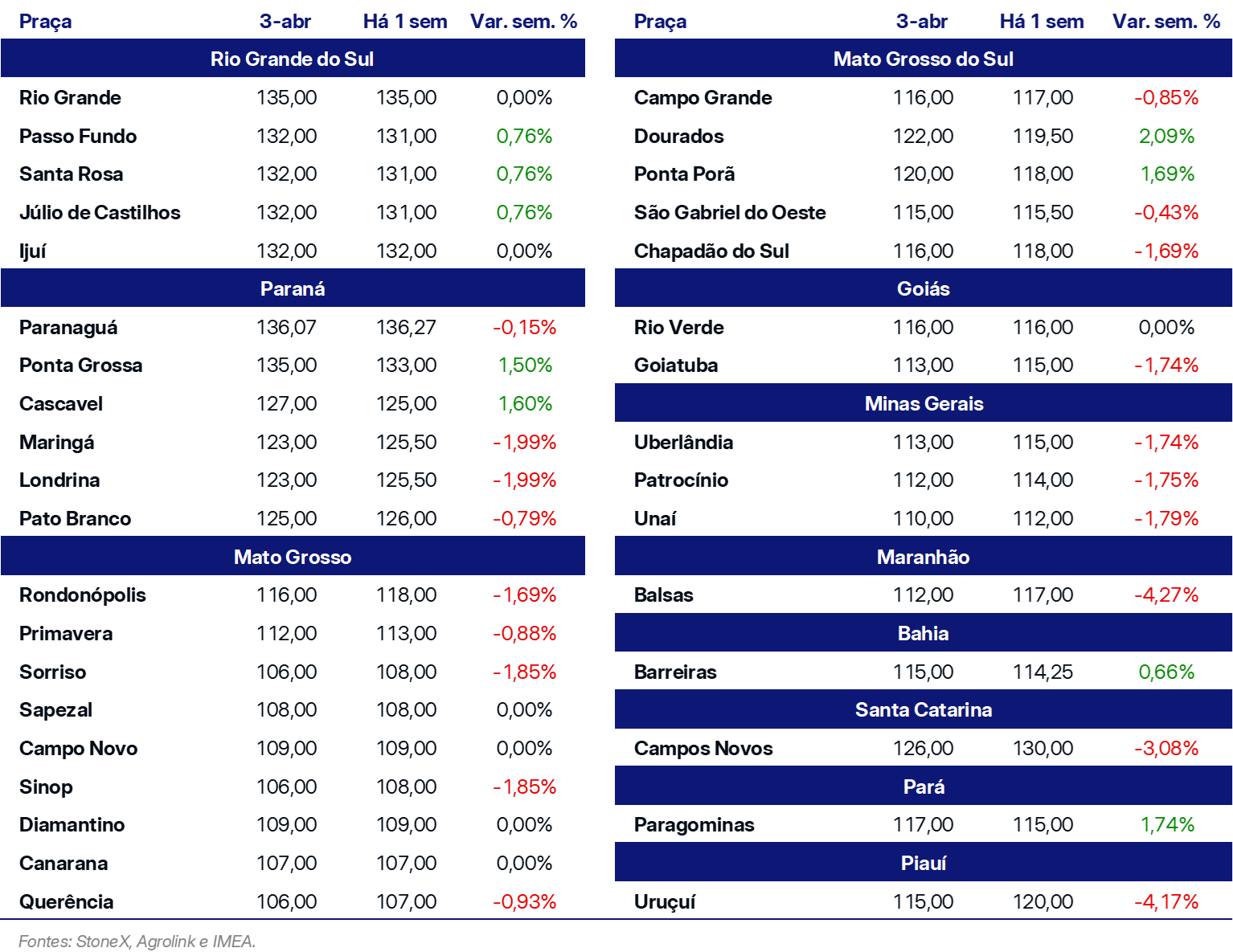
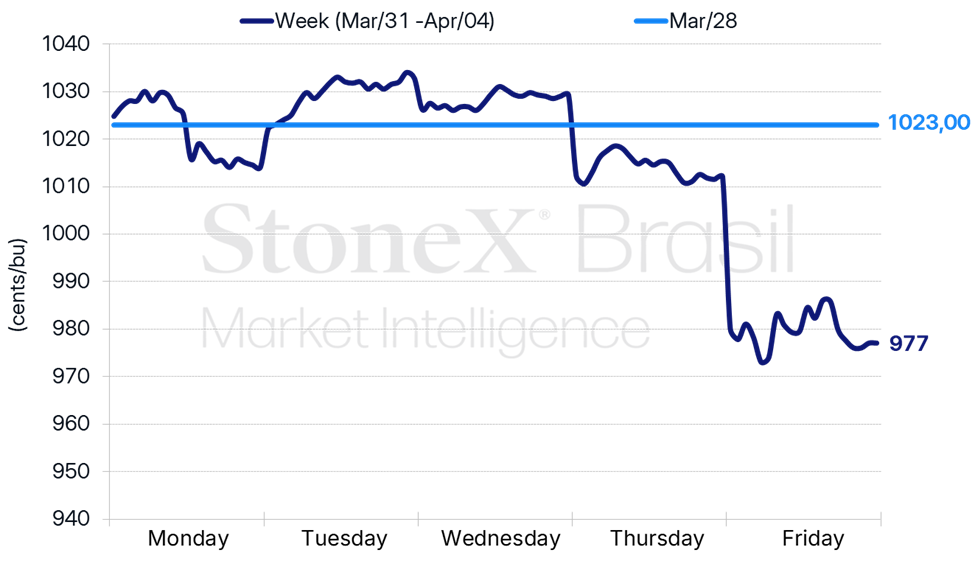
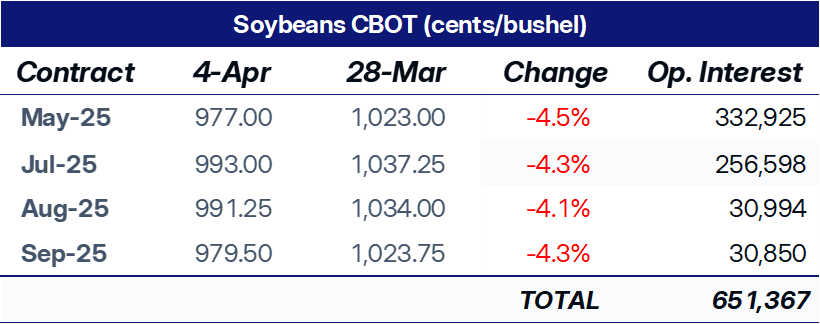
Soybean prices in Chicago closed Friday (the 04th) at 977 cents per bushel, a significant decline, falling back below the USD 10.00 level after China announced retaliations against US tariffs. Although the tariff dispute between the two countries was the main factor driving the movement in the exchange, other factors also influenced the oilseed market.
The long-awaited US Planting Intentions number for the 25/26 crop was released, which brought an expected decrease in acreage to 33.8 million hectares—about 200,000 hectares below the Agricultural Forum’s estimate and lower than last year. While not providing major surprises, the US crop is expected to remain at the center of attention. Based on this planted area and the balance data provided by the USDA Agricultural Forum in February, production would be around 118 million tonnes, with an average yield following historical trends at 3.53 tonnes per hectare, not resulting in any balance constraints. However, if any weather-related issues affect yields, the scenario changes, with the US supply-demand balance tightening. For example, if yields are in line with last year’s 3.41 tonnes per hectare, production would be 4 million tonnes lower, at 114.1 million tonnes, leading to a drop in ending stocks and a tightening situation if demand variables are confirmed.

Source: USDA and StoneX. Preparation: StoneX.
Thus, the US crop period, which already brings significant market volatility, is expected to drive prices in the coming months.
The outlook that the biodiesel and renewable diesel mandates in the US could advance strongly—after discussions between biofuel companies and the fossil fuel sector—continued to support prices, before China’s retaliatory measures against the tariffs announced by the Trump administration. Should there be a significant increase in these mandates, US soybean crushing would likely advance even further, placing more pressure on the US crop, with any loss in production potential possibly resulting in a tighter balance for the country and influencing the global equilibrium.
Regarding US demand, export sales in the week ending on 03/27 reached 410.2 thousand tonnes, taking the cumulative total for the 24/25 crop to 46.2 million tonnes—5.7 million tonnes more than last year—maintaining a pace above that required to reach the USDA export estimate of 49.7 million tonnes. Even with more accelerated negotiations, sales to China are 1.3 million tonnes lower than one year ago, with 600 thousand tonnes of what was negotiated with the country still not shipped, according to the latest information.
With the escalating tariffs, attention will be focused on the sources of US soybean purchases by China. At this time of year, US exports tend to be weaker, with Brazil standing out after harvest. In March, official data indicated that 14.7 million tonnes of soybeans were shipped from Brazilian ports, a record for the month. The trend is expected to remain strong, as Brazil is wrapping up a record crop.
Last week, StoneX updated its figure for the Brazilian 24/25 cycle, showing a reduction of 800 thousand tonnes from the previously disclosed number, reaching 167.5 million tonnes—a record level. Once again, negative adjustments in Rio Grande do Sul were the main driver of the national decline. The state suffered from a lack of rains during the crop development period, with potential production dropping from 23 million tonnes at the start of the crop to just under 15 million tonnes.
Even with the increase in the oilseed’s supply in the domestic market, premiums have remained strong, staying above the levels recorded during the same period last year. This behavior is explained by several factors, such as the tariff conflict situation—which tends to favor Brazilian soybeans—and slower sales by producers.
In any case, although China is expected to concentrate even more of its soybean purchases in Brazil, the scenario is different from that seen during Trump’s first term, when there was also Chinese retaliation against US soybeans. Between 2018 and 2019, China faced a massive outbreak of African Swine Fever, which decimated about 40% of its pig herd, contributing to a reduction in its imports. Currently, even if Chinese demand is expected to remain within normal levels, the volume the country imports annually grew only modestly between 2017 and 2024—around 10 million tonnes—while Brazil increased its exports by more than 30 million tonnes in the same period, making it better positioned to absorb a higher Chinese demand, even if some destinations shift to buying US soybeans.
Thus, although this scenario of a tariff war increases risk aversion in the markets and weighs on commodities, the direct impacts on soybeans may be more limited. Moreover, any potential agreements between the US and China are not ruled out, given that the escalation in trade tensions is very recent.
This week, the tariff situation is expected to continue setting the tone for negotiations, while US weather is also gaining relevance as the planting period approaches in the country’s main producing states.