- Bearish factors
- World production in 25/26 still surpassing consumption, according to the USDA;
- Concerns about the pace of global demand;
- Record production estimate for the Brazilian crop 24/25;
- Argentina ends crop 24/25 above 50 mmt;
- Good crop conditions in the U.S ;
- Favorable weather in the USA.
- Bullish factors
- Decrease in area in the US 25/26 crop;
- EPA announces increased mandate for biodiesel and renewable diesel in the US;
- Approval of the 45Z credit in the US, which should foster soybean oil;
- Progress in negotiations between China and the US;
- Increase of the biodiesel-diesel blend in Brazil.
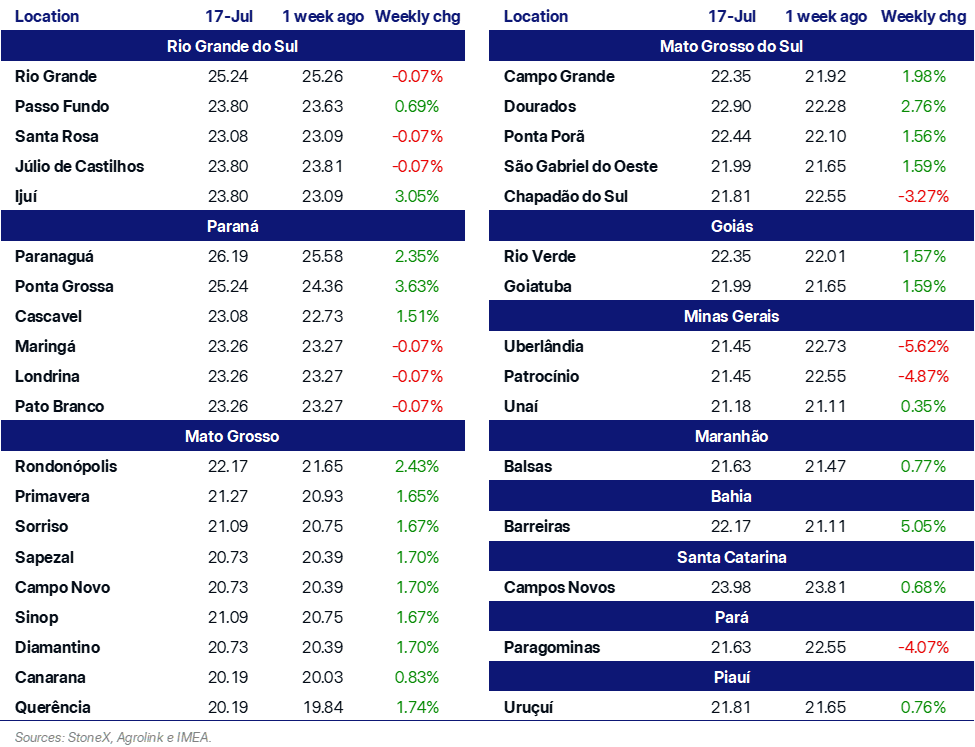
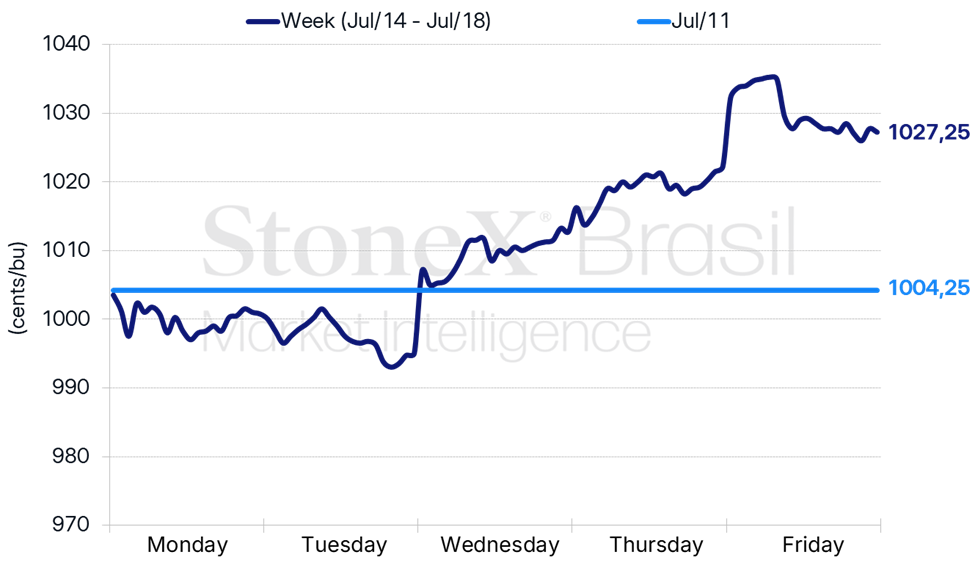
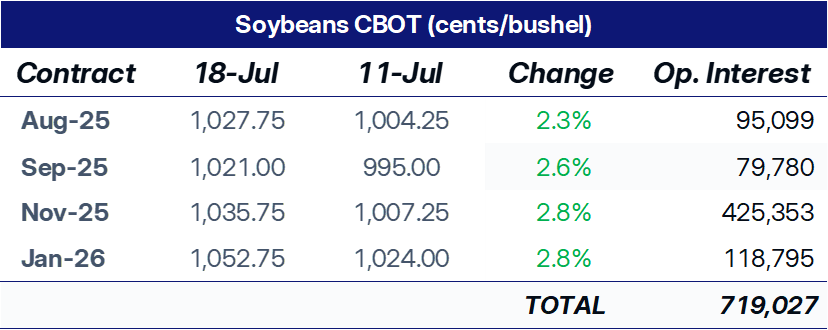
Soybean quotes rose last week in Chicago, in a technical movement and with optimism related to biofuels in the US. The August contract ended on Friday (the 18th) at 1027.75 cents per bushel, up 2.3% in the period. On the other hand, the good prospects for the supply of the grain, with the good progress of the American crop continued to limit more significant gains.
Soybean oil continues to find support in the prospects of increased mandates in the US starting next year, a situation that will boost soybean crushing in the country. On the other hand, the prices of soybean meal remain more pressured, since, with the increase in crushing to meet the demand for oil, the supply of meal will also grow and consumption is not expected to advance at the same pace. Moreover, Argentina is expected to grind usual volumes of soybean, exporting significant quantities of meal, and Brazil has also increased shipments of the protein product. As a result, competition for external demand is also expected to be great, as oil is increasingly used for biofuels.
Another point versus oil is the issue of demand for food, which is on the radar in the US. There is concern of a competition between the two uses as the biofuels sector expands, also considering that there are differences between the two sectors. The food segment uses refined oil and even if the US increases oil imports, the product would still need to be refined domestically, at a time when the sector is increasingly verticalized to meet the demand for biofuels, which does not have this need for refining. Thus, there are also concerns in the oil refining segment.
The data from the NOPA (National Oilseed Processors Association) continue to indicate lower soybean oil stocks in the US, at 619.6 thousand tonnes in June, which signals strong demand. Meanwhile, the crushing stood at 5.05 mmt last month, a level slightly above the market estimate average, with the processed level in the 24/25 crop expected to be close to the USDA estimate, at 65.86 mmt.
In any case, even though soybean oil is in the spotlight, the grain market remains without major news. The good progress of the North American crop is limiting significant gains; if current estimates are confirmed, the global supply and demand balance would continue without restrictions.
The USDA crop follow-up report for the week ending June 13 showed an improvement in the condition of the US 25/26 crops above expectations, with the G/E percentage rising to 70%, surpassing the five-year average and what was recorded in the same period of 2024.
The US soybean will still go through the grain filling stage, concentrated in August, which is crucial for productivity. However, for now, the climate has not brought major threats. Humidity conditions improved in Iowa and Illinois, which are the nation's largest producers. The forecasts for the next ten days indicate more concentrated rains in the north of the country's agricultural belt, with the weather always remaining on the radar.
In Brazil, soybean exports between July 7 and 11 reached 2.4 mmt, with the total since the beginning of the month at 4.3 mmt. Since January, 69.3 mmt of Brazilian soybean have already been shipped, with prospects that even in the second half, exports will remain strong, following the record production. The market follows the exchange rate evolution, with emphasis on the trade tensions with the USA, as the devaluation of the real tends to benefit the competitiveness of the Brazilian soybean in relation to the American one. As the US is expected to harvest a favorable crop at the end of the year, Brazilian exports, even if smaller, can compete with the American product when the country has its best shipping period.
This week, attention should remain focused on the progress of the US crop, as well as the geopolitical tensions with the US government.