Wall Street and Washington: Crypto in the Trump Era

Executive Summary
- Market trading color: Bitcoin rebounds above $106K despite ETF outflows; states, corporations, and institutions increase BTC demand.
- Theme of the week – Trump's crypto agenda reshapes U.S. regulation, fostering innovation but raising political and fiscal challenges
- Links of the week: Trump's crypto policies, institutional shifts, and innovations drive market transformation
Market Trading Color
Bitcoin has shrugged off the early-week noise stemming from Deepseek. It nearly sank below $98,000 as NVDA and the implications there dragged the broader market down with it. As the dust cleared, Bitcoin emerged from the ashes and is now pushing above $106,000 at the time of writing. BTC is quietly less than 3% below its all-time high.
ETF inflows have not yet reflected this price action, with net flows at -$347M so far this week. Despite the uptick in price, Bitcoin futures open interest remains below highs while leverage remains rather subdued. The Coinbase Premium also screens slightly negative, leading us to believe that short covering could be the driving factor behind this move higher, as shorts have been piling on over the last few days. Flipping $106,500 would likely accelerate this activity. While ETF inflows have been muted so far this week, demand looks solid today. Expect inflows to exceed $200M on the day. ETH ETFs have also struggled of late, positing one day of positive inflows over the past 5 trading sessions. While in jeopardy of dipping below $3,000, the second largest asset by marketcap has rebounded nicely, trading back above $3,275. Alts continue to look for ETH to breakthrough in order to run.
Bitcoin demand from states and corporations continues to increase. This week alone, Illinois introduced a bill to create a Bitcoin reserve fund, managed by the state treasurer, to serve as a hedge against inflation and economic volatility. Similarly, India introduced a bill exploring the application of blockchain technology to enhance state operations, encouraging investments in BTC ETFs for retirement portfolios. Texas Lieutenant Governor Dan Patrick also announced the state’s 2025 legislative priorities, which include a proposal to establish a Texas Bitcoin Reserve. These states are following the lead of Trump and his team, who have continuously added to their crypto holdings. World Liberty Finance’s portfolio holds $410M in crypto, with top holdings including BTC, ETH, TRX, and LINK. US aside, there was significant news out of Europe as Czech National Bank Governor Aleš presented a plan this week to add billions of euros worth of bitcoin to the bank's reserves.
As the digital asset related ETF filings continue to flow in, the SEC has acknowledged Canary Fund’s Litecoin ETF 19b-4 filing. This could open the door for a wave of alt coin spot ETFs.
Over $10B worth of BTC and ETH options are set to expire tomorrow. For BTC, max pain is $98,000. The largest strike by notional is $110,000. The majority of these should expire worthless. ETH on the other hand sees max pain at $3,300. We could be in store for some volatility as the price slowly approaches this number.
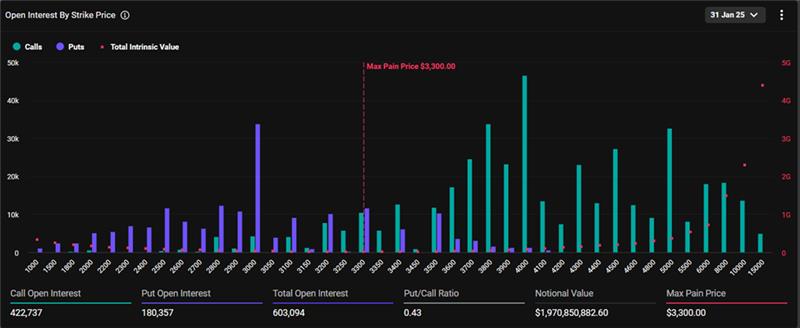
Source: Deribit
Trump Administration Ushers in Transformative Crypto Policy Era
The Trump administration’s first weeks have marked a pivotal shift in the U.S. digital asset landscape, signaling a push to reshape crypto regulation and position the U.S. as a global leader in digital assets.
Key Developments and Impacts
1. Trump’s Crypto Executive Order: Establishing a Framework for Growth
President Trump’s executive order on digital assets underscores the administration’s intent to provide clarity and foster innovation in crypto. This includes establishing a “digital asset stockpile” and appointing venture capitalist David Sacks to lead a working group tasked with overhauling crypto regulations.
The working group’s timeline:
- 30 days: Identify all regulations affecting the crypto sector.
- 60 days: Recommend modifications or rescissions of outdated policies.
- 180 days: Deliver recommendations for new frameworks to strengthen the U.S. digital asset industry.
This initiative reflects the administration’s recognition of cryptocurrency’s economic potential while addressing long-standing calls for regulatory clarity.
2. SEC Rescinds SAB 121: Easing the Burden on Crypto Businesses
Under crypto-friendly Acting SEC Chair Mark Uyeda, the SEC rescinded SAB 121, a 2022 accounting rule that imposed onerous requirements for companies holding crypto on behalf of users. The rule had required publicly traded companies to record customer-held digital assets as liabilities on their balance sheets.
At the same time, Uyeda announced a crypto-focused task force led by Commissioner Hester Peirce (aka “Crypto Mom”). The task force aims to:
- Develop a comprehensive and clear regulatory framework for crypto assets.
- Provide technical assistance to Congress as it drafts new digital asset legislation.
Further signaling a shift in approach, Gary Gensler resigned from the SEC, and Trump nominated Paul Atkins, a known crypto advocate, as the agency’s new chair.
3. Legal and Political Challenges Impacting Market Structure
The administration has introduced initiatives that could destabilize bipartisan support for critical crypto market structure legislation:
- Call for 0% Capital Gains Tax on Crypto Projects: While appealing to crypto investors, such a tax cut faces significant political opposition. Critics argue it would benefit speculators while increasing the federal deficit, already burdened by $35 trillion in debt.
- Risk to Market Structure Legislation: The push for a 0% capital gains tax risks alienating Democratic support for broader crypto reforms, complicating the path for bipartisan legislation that could establish a stable framework for the industry.
4. Banking Sector and Trump’s Mixed Signals
President Trump has been unexpectedly critical of big banks during his first weeks in office:
- Criticized banks at Davos for refusing services to conservative sectors like crypto.
- Attacked Bank of America over its business practices.
- Advocated for policies such as capping interest rates, though analysts believe this is more of a warning than a concrete agenda.
While the banking industry is signaling readiness to embrace crypto—such as Bank of America’s interest in crypto payments pending regulatory clarity—the political and fiscal environment remains uncertain.
5. Trump’s Libertarian Moves: Clemency for Ross Ulbricht
The administration granted clemency to Ross Ulbricht, the Silk Road founder, in a move viewed as aligning with libertarian crypto advocates. This has deepened Trump’s association with Bitcoin supporters and amplified debates around the ethical and political dimensions of crypto regulation.
6. Tornado Cash Ruling: A Shift in Legal Precedents
A U.S. District Court reversed sanctions on crypto mixer Tornado Cash, challenging prior regulatory assumptions about decentralized platforms and privacy technologies. This decision could set a legal precedent for how such platforms are treated under U.S. law.
7. Institutional and Market Developments
- Caroline Pham (a known pro-crypto regulator) was elevated to Acting Chair of the CFTC, and Harry Jung was named as the agency’s crypto industry lead.
- CME Group is reportedly close to launching SOL & XRP futures, with a leaked beta marketing page suggesting imminent announcements.
- 43 ETF proposals are currently under review in the U.S., including 11 assets other than BTC and ETH.
Implications for Finance Professionals
Regulatory Opportunities and Risks
The Trump administration’s efforts to streamline crypto regulations could spur institutional adoption, opening new avenues in payments, custody services, and tokenized assets. However, the political risks associated with capital gains tax proposals and potential delays in market structure legislation pose challenges for long-term stability.
Increased Institutional Participation
With top-tier banks indicating readiness to adopt crypto payments, the financial industry could see significant institutional participation. This trend could enhance market liquidity and create new opportunities for traditional investors to integrate digital assets into their portfolios.
Political Trade-offs in Regulatory Stability
Trump’s combative stance toward big banks and his administration’s libertarian-leaning policies highlight the need for finance professionals to closely monitor evolving political dynamics. Regulatory wins for crypto may come with trade-offs that impact broader market structures, such as increased scrutiny on banks or contentious tax debates.
StoneX Digital Top Links of the Week
- KuCoin Pleads Guilty, Agrees to Pay Nearly $300 Million in US Crypto Case (link)
- Memecoin ETF Filings Spark Concerns Over ‘Casino-Type’ Speculation (link)
- Crypto, Lies and Torture: Inside the Scam Compounds of Southeast Asia (link)
- Trump’s Crypto Executive Order Creates Policy Working Group (link)
- ‘Trump’s Grifting Tendencies’: How the President’s Crypto Ties Could Spur Corruption (link)
- Donald Trump’s Crypto Boost Risks Leaving the UK Behind (link)
- Crypto Markets Lose Steam After Trump’s First Policy Move (link)
- Everyone’s Talking About Trump’s Meme Coin. That’s Bad News for Crypto. (link)