According to data from the Australian Sugar Mills Council (ASMC), the cane harvest officially began in the last week of May in some of the country's mills, just as it did last year. By the end of last week, crushing had reached 92,300 tonnes, more than 75% below 2023, and 61% lower than the three-year average, even with the early start.
Weekly cane crushing in Australia (million tonnes) 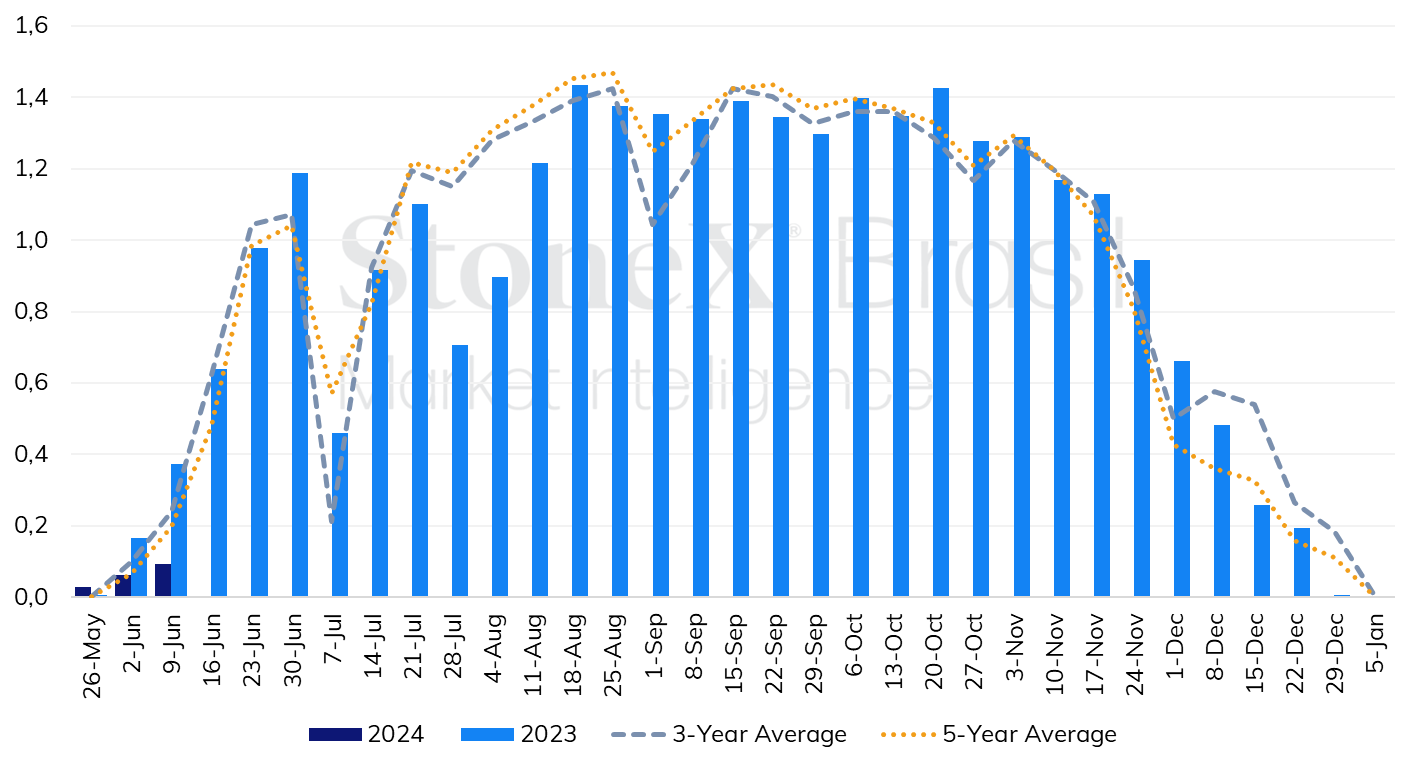
Source: ASMC. Design: StoneX.
The 2024/25 cycle in Australia, whose harvest usually lasts from June to December, has good prospects in terms of productivity, since rainfall during the inter-crop period in the main producing state (Queensland, where 96% of the country's sugarcane area is located) was 18.2% above the 10-year average. As a result, the ASMC already estimates a 3.8% increase in crushing for the current cycle, with an estimated 31.02 MMT of cane.
Rainfall in Queensland* (mm)
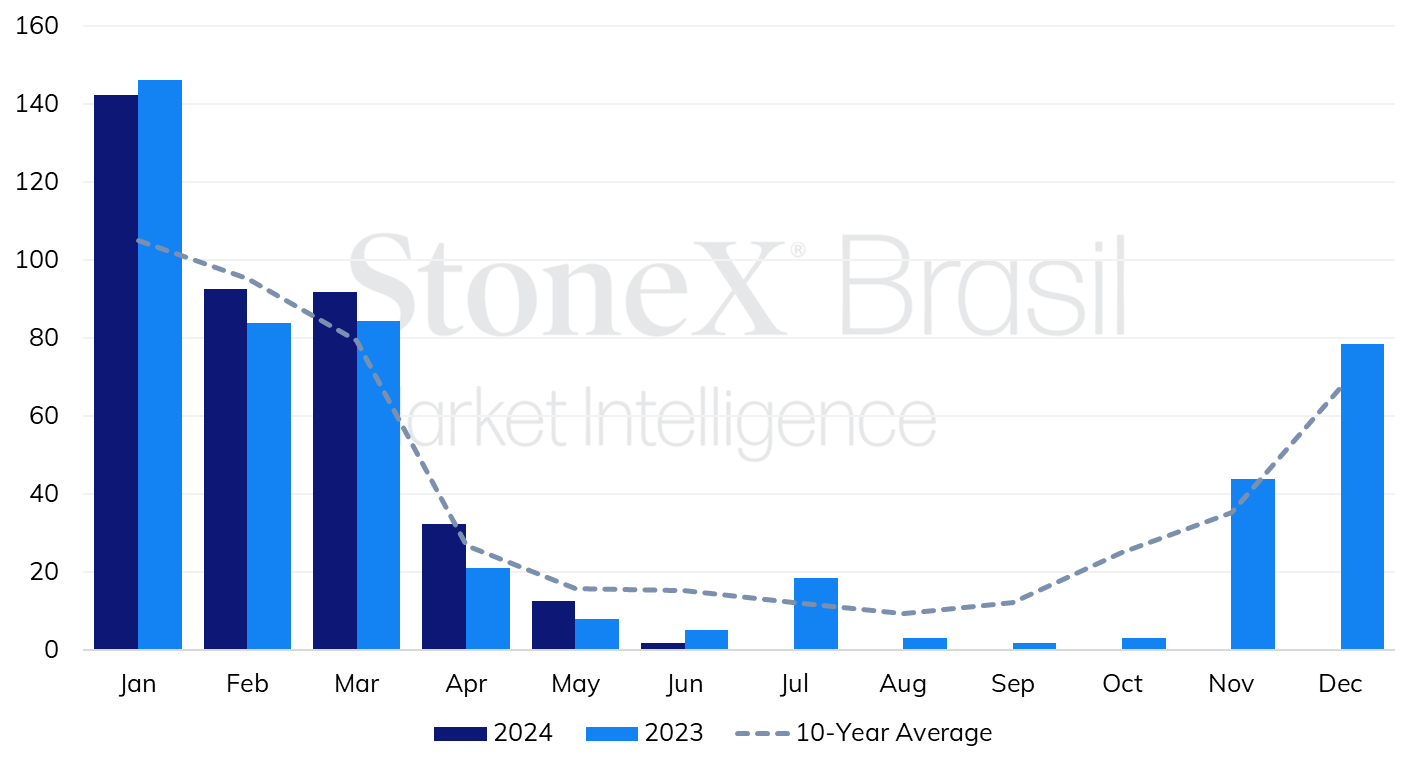
 *Data up to June 9, 2024. Source: Refinitiv. Design: StoneX.
In its latest Global Balance report, released in May/24, StoneX estimated an increase in Australian sugar production, which would come from a 2.7% gain in productivity in 2024/25, after it fell by 10.9 t/ha in 2023 (-11.1%), reflecting flooding in some areas in 2022, which worsened the harvest the following year, in addition to a shorter inter-crop period in 2022 because of excessive rainfall in that year, which worsened the mills' planning. As such, sugar production this year is estimated at 4.25 million tonnes, an increase of 3.0% compared to last year, as a result of crushing that is expected to reach 31.5 MMT.
Sugar production in Australia (million tonnes)
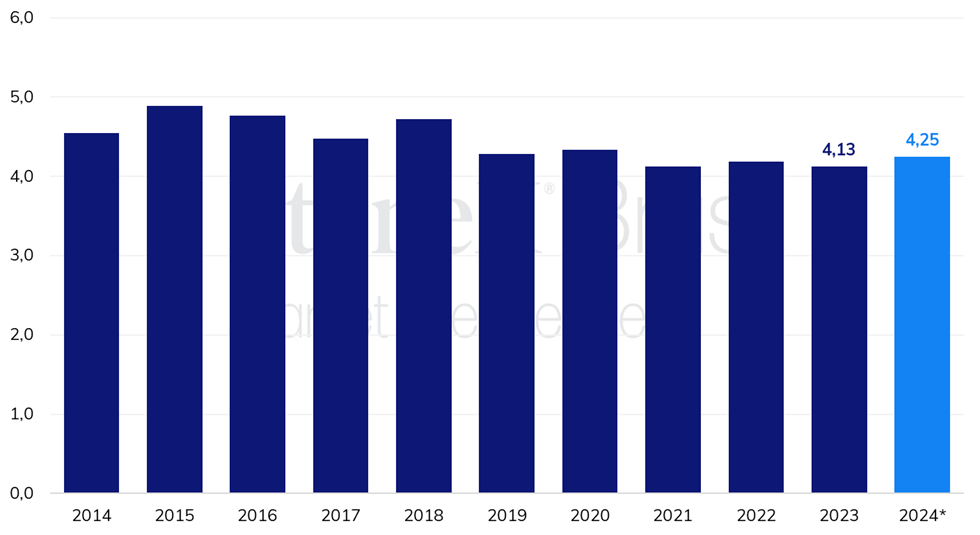 *StoneX estimate. Source: ASMC. Design: StoneX.
However, since May, workers at Australia's largest sugar group (Wilmar) have been on strike and, at the start of operations at the group's eight mills, work was interrupted. This is likely to cause a slight delay in crushing at some of these units, with reports that a small portion of the cane that was due to be crushed has already been lost. However, according to news released on Thursday, officials from both the local unions and the group of mills have already announced negotiations and the strike should come to an end, with harvesting resuming in a period that is still beneficial.
However, the drastic reduction in crushing this year is already a reflection of the delay in the start-up of these units, which account for almost half of national production. From now on, Australian production should pick up pace and the impact (or lack thereof) of this delay will be evident.
In recent days, the market has been concerned about conditions in the Oceania producer, which is responsible for annual exports of around 3.3 million tonnes and is an important supplier to Asian countries. In a context of high dependence on Brazilian supply, any risk in other exporters becomes a point of attention for agents.
Daily recap
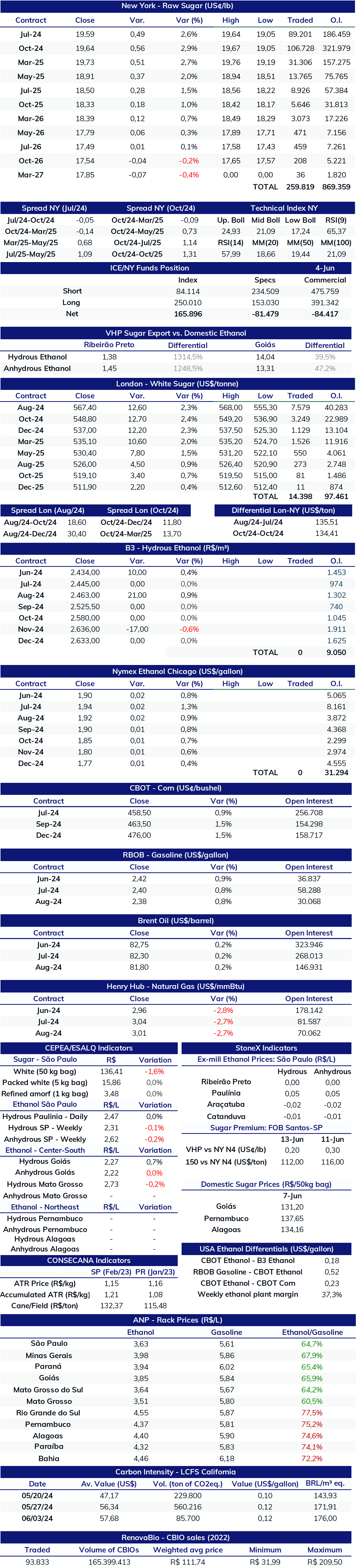
On Thursday, the prices of raw and white sugar recorded an upward trend on the futures markets. For raw SBV4 (Oct/24), the day ended at US¢ 19.64/lb, up 2.94%. In London, the trading session saw an increase of 2.27%, ending the day at US$ 567.4/t.
Raw sugar trading in NY broke out of the stagnation that had been taking place between US¢18 - 19/lb, rising by almost 100 points in the last two days. The market is awaiting UNICA's crop update for the Center-South, which is due on Friday (14), and is responding to the Indian government's statement that it intends to intensify ethanol blending in gasoline, a factor that could lead to a greater volume of sugar being used to produce the biofuel.