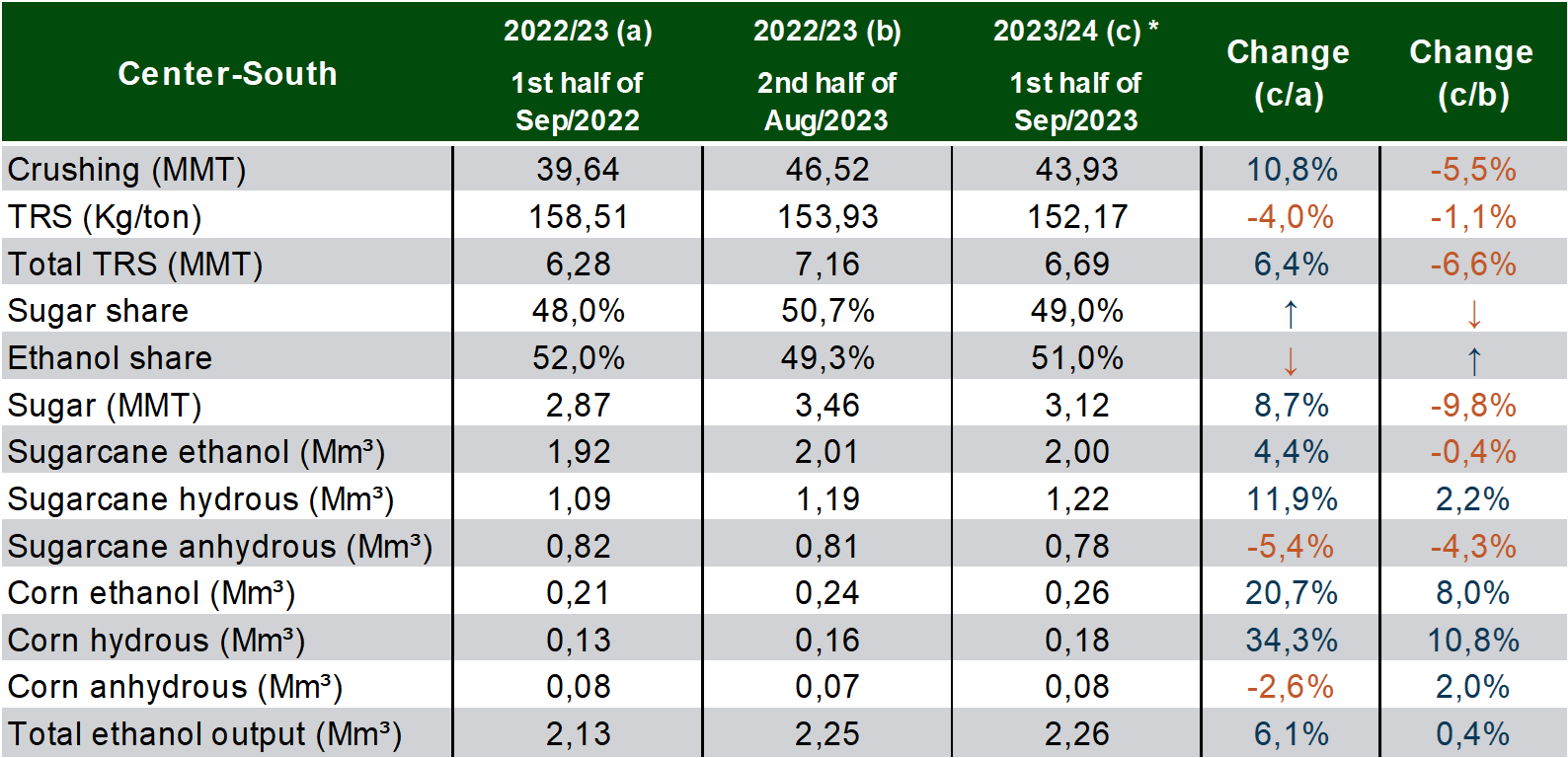
Given the processing of 43.93 million tonnes for the first half of September, combined with a TRS of 152.17 kg/t and a sugar-directed mix of 49%, the expectation is for a production of 3.12 million tonnes of sugar in the period, 6.6% higher than the previous crop. As a result, accumulated production in the 2023/24 season should reach 24.65 million tonnes under the estimated base scenario, maintaining the status of the highest production in the accumulated historical series for the period, with the pessimistic scenario being a production of 2.89 million tonnes in the two-week period and the optimistic scenario being 3.21 million tonnes.
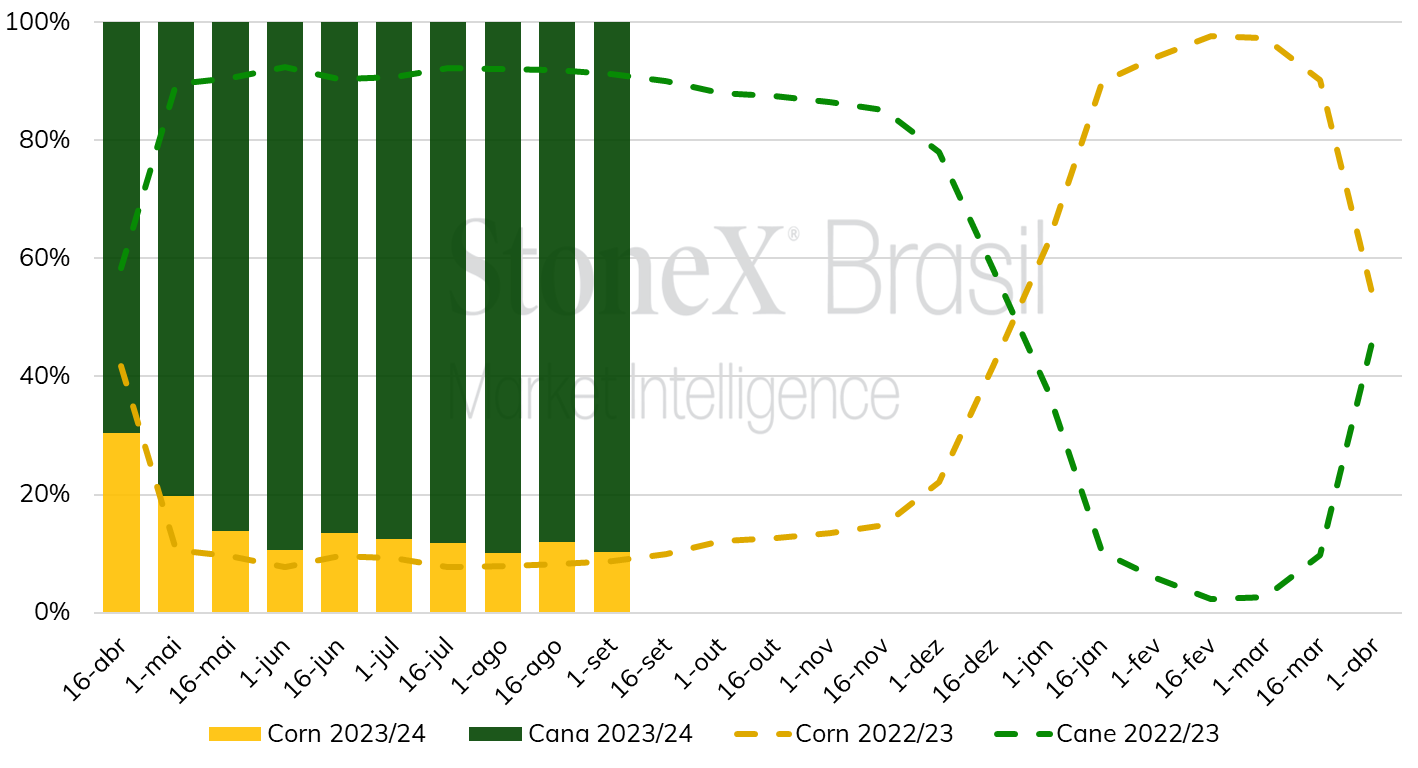
In more detail, the expected scenario for the production mix takes into account both a gradual seasonal downward trend in the sugar-directed mix as well as a resumption of hydrous ethanol consumption, a fact already demonstrated by the sharp increase in hydrous sales during the month of August. According to UNICA data, total ethanol sales in the Center-South rose by 16.3% last month, with a 36% increase for hydrous and a 5% drop for anhydrous.
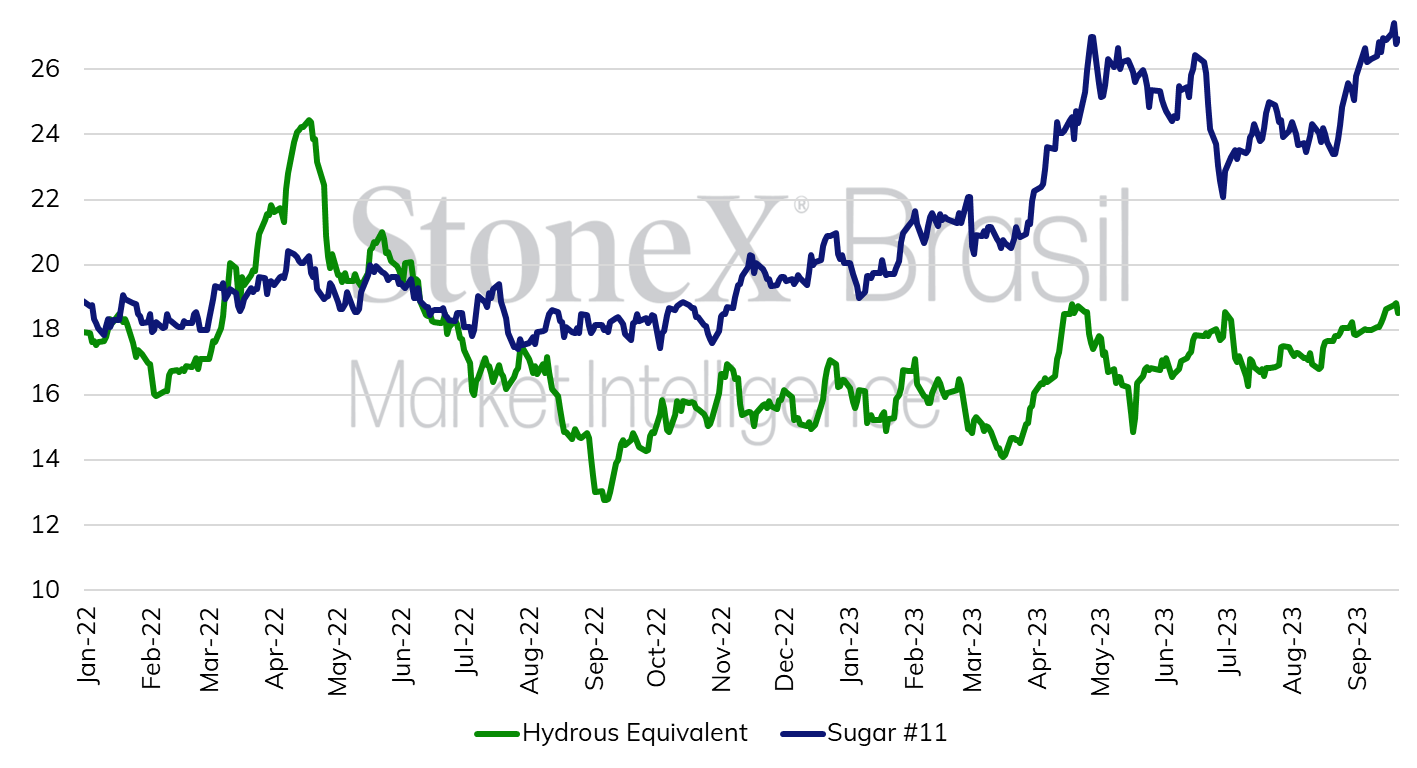
In this sense, the figures revealed by the mills already reflect greater demand at the end of the biofuel's chain, as a result of the lower parity between ethanol and gasoline in the Center-South, favoring hydrous consumption. Despite this, it is worth noting that sugar still has a significantly higher return than hydrous ethanol, which should keep the sugar-directed mix significantly higher than in other crops.
- Weekly summary
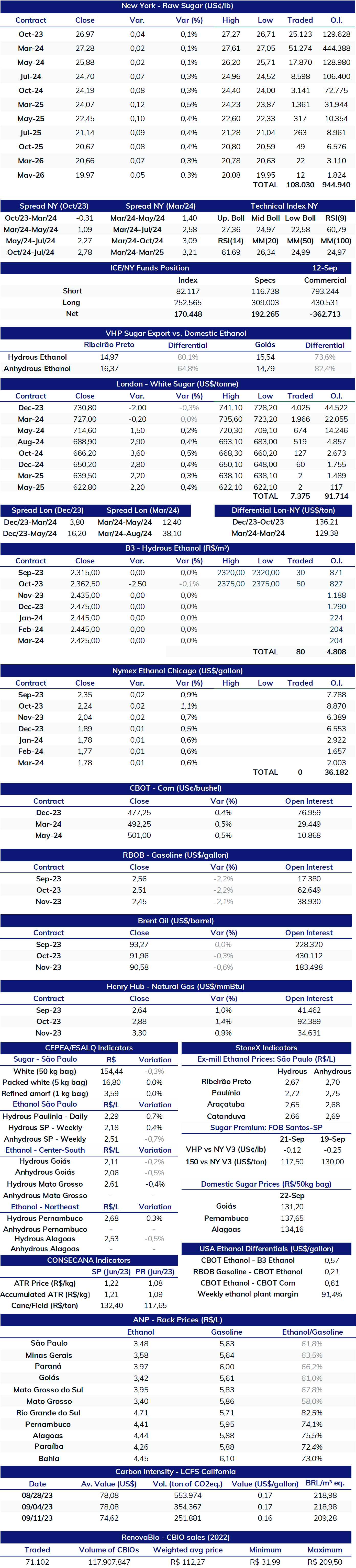
Last week, the most active raw sugar contract closed higher in four of the five trading sessions. Despite this, Friday's close was 27.28 c/lb for March/24, up just 0.4% from the previous week's close, the result of a downward movement of 2.06% on Wednesday (20). For white sugar, after reaching a nearly 12-year high last Tuesday (19), the most active contract traded in London also registered stability, ending the week with a variation of 0.07% at USD 730.8/t.
After following a strong upward trend since the end of October, reaching a level just above 27.00 c/lb, sugar has shown some resistance to reaching even higher levels. In addition, last Wednesday's trading session was affected by monetary policy decisions in a number of central banks globally, triggering a movement of risk aversion and profit-taking amid high sugar prices.
In addition, improved rainfall in India during September may have been a factor in curbing the commodity's stronger climbs. However, the outlook for India is still a crop failure during the 2023/24 season (Oct-Sept) and the country's exit from the export market until at least the second quarter of 2024. In this sense, prices are still responding to the scenario of apprehension caused by El Niño, a phenomenon whose peak should be between November 2023 and January 2024, reaching a level rated as strong during the period, which amplifies its effects.
- Australian crop expected to increase in the current cycle
Australia's current sugarcane crop has accumulated 14.1 million tonnes of processing from the beginning of June to September 10, an increase of 1% over the same period in the previous cycle. From this amount, a total of 1.87 million tonnes of sugar was produced, up 9.5% over the same period in the previous crop, as a result of improved sugar recovery rates. After being affected by excessive rainfall during July 2023, the current Australian crop has picked up in recent weeks and is expected to increase its production to 4.4 million tonnes of sugar during the 2023/24 cycle. For more details, click here.
- Chinese imports up in August, but still lower than expected
According to China's General Administration of Customs, during August the country imported a total of 370,000 tonnes of sugar, 45% less than the same period in 2022. Since February this year, China has reported import volumes significantly below the historical average due to an unfavorable import margin for the commodity in the country. As a result, the country, which is a net importer of the commodity, has seen its sugar stocks dwindle, which should prompt a return to imports, albeit gradual, as sugar prices on the international market consolidate at a higher level in the current crop. For more details, click here.
- Proposal to increase the anhydrous ethanol blending rate
At the end of last week, Brazil's federal government launched a project entitled "Fuel for the Future", which includes, among other measures, an increase in the blending rate of anhydrous ethanol into gasoline from 27% to 30%, subject to technical feasibility. According to Mines and Energy Minister Alexandre Silveira, a technical group has already been formed to study the proposal, which will have to be consulted by representatives of the relevant sectors.
- Ethanol prices remain stable in the week
Last week, hydrous ethanol prices in the state of São Paulo remained at around BRL 2.67/liter, with occasional trades (in smaller volumes) being closed at up to BRL 2.60/liter for more distant markets. In the current context, after reaching peak crop production, some mills in the state are close to their maximum tankage capacities, which could trigger occasional sales at lower levels. According to UNICA data, ethanol sales have already responded to the lower parity at the pumps, but the pressure from growing ethanol production is likely to keep the biofuel under pressure in the coming weeks.