The web of systemic fundamental drivers is making its best effort to break the seasonal norms of quiet for risk trends. A record US federal debt drew intense scrutiny thanks to a middling Treasury promise. And even if the S&P 500 holds, the Dollar will find little ‘summer support’.
Talking Points:
- While the US-Iran conflict and AI are still active themes, US Treasury Secretary Bessent may have shifted focus to a larger, slow-moving concern: deficits
- Risk trends have frayed and efforts at extending rallies – as with the S&P 500 – have been cut down, but seasonal liquidity buffers are keeping markets steady
- Top event risk over the come week has a few discreet catalysts like Nvidia earnings; but most listings will draw on complicating themes like Jackson Hole, NFP revisions and more
Bessent Brought an Overlooked Fundamental Threat to the Forefront
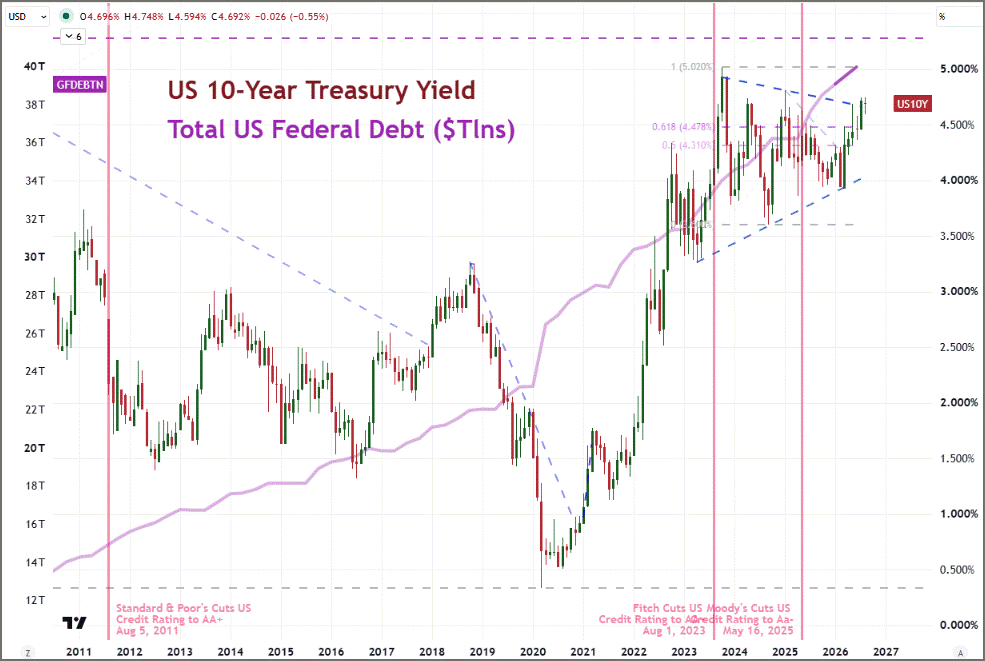
For weeks, many of the major capital market benchmarks have been happy to overlook the provocative headlines and updates around systemically-important themes to either hold their ‘risk on’ altitude or even defy gravity and advance. That collective understanding of complacency was challenged this past week, however, by US Treasury Secretary Scott Bessent. With financial and political headlines announcing the United States’ public debt had climbed past the $40 trillion-mark, the finance minister took to CNBC to offer platitudes about his belief that the big figure was just a number of no substance and that he believed it would peak in President Trump’s term. Alone, that would have generated little attention, but the announcement previous to this that the Treasury would double its buybacks from $2 billion to $4 billion – and Bessent saying it “could be more” than that figure – made the market pay closer attention. A ballooning debt and deficit has been a long-term issue with no real solutions being pursued, but a remarkably underwhelming effort like this to address it suggests growing concern with the administration. This approach has been likened to ‘paying your mortgage with your credit card’ by JPMorgan’s James Sullivan. That is an apt description. This could roll back out of the news cycle if DC keeps quiet, but the Fed’s struggle with inflation or a second sovereign credit rating cut (Standard & Poor’s removed the US ‘AAA’ rank 15 years ago) are probable and high-impact threats to monitor.
Chart of the US 10-Year Treasury Yield Overlaid with the US Federal Debt (Monthly)
Source: TradingView.com; US Treasury; John Kicklighter
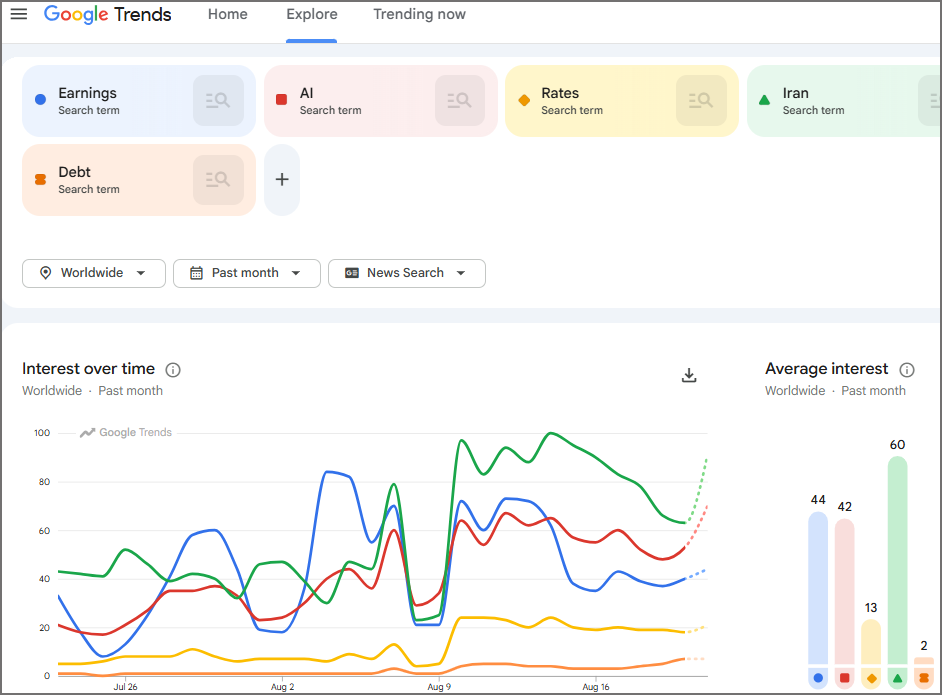
Even if the markets seem to be listless with little fealty to a particular fundamental line, we should keep close tracking on the multiple, active themes given their potential to dramatically change our direction and tempo. Consulting global news search trends via Google, the ‘debt’ headline is only starting to gain some measure of traction. ‘Rates’ and monetary policy is still garnering more attention, but we are still weeks out from the next major central banks’ policy decision run. The lingering conversation around earnings will have some final gasps of global macro interest thanks to Nvidia’s important update ahead and perhaps Broadcom the week after given that they will also draw on the still-buoyant ‘AI’ conversation. Perhaps it is the sheer volume of the top searched theme – around the US-Iran conflict – that keeps it from transmitting tangible market volatility. The rhetoric between the two is decidedly worse but the present actions looks to be more a competition of slow economic attrition (Iran vs US vs the rest of world) rather than appetite for ‘hot war’ we have seen in previous months.
Worldwide News Search for Key Themes Via Google Trends
Source: Google Trends; John Kicklighter
Where Risk Trends Can Draw on Seasonality, The Dollar is Exposed…
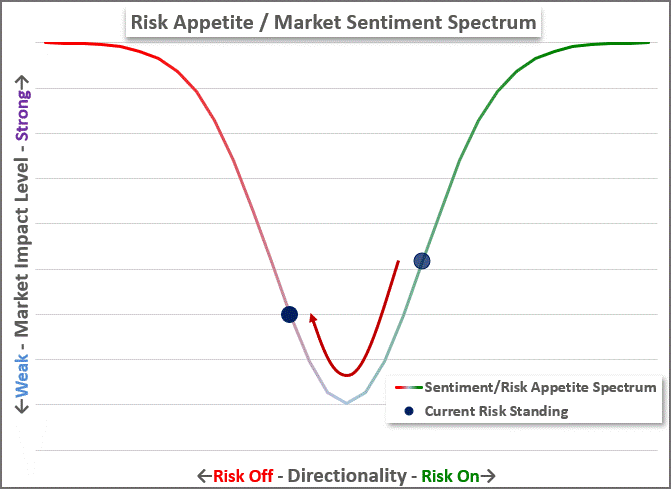
Amid the fundamental provocations and some noteworthy technical development on both sides of the sentiment spectrum, risk appetite seems remains firmly uncommitted to a particular course setting. The charge to fresh record highs from the speculative-favorite S&P 500 two weeks ago was reverse this past week. Notably, when looking at the ‘breadth’ of sentiment via other asset type and regional benchmarks, there was some contrast to US indices. Measures like the VEU ‘rest of world’ equity ETF, EEM emerging market ETF and Yen-backed carry trades were firming through the end of the week. That said, their jog higher comes from a significantly lower level than the SPX, so it ultimately manifests as an uncommitted range default. The willingness to adhere to a strong speculative value and interpret theme and event risk through that prism remains weak; which in turn suggests capable event risk is more likely to cause volatility than spur trend, and developments will follow more regionalized considerations (like a resurgence of the ‘sell US’ pressure).
Risk Spectrum
Source: John Kicklighter
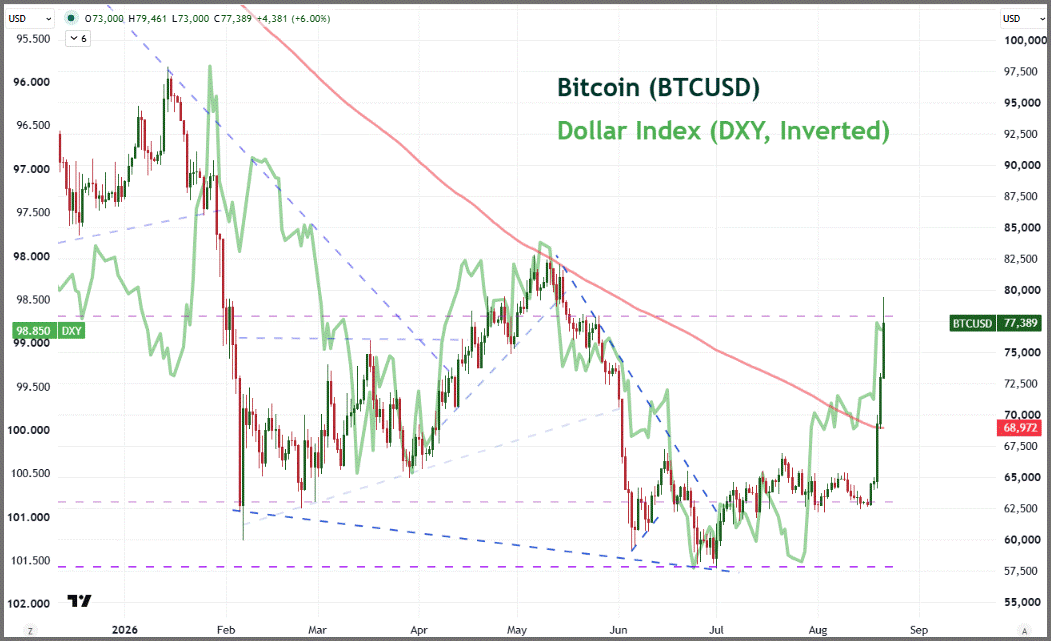
While it is possible that an erosion of confidence in US-based benchmarks (dollar, sovereign debt, equities) can turn into a cascade in sentiment; in our present environment, it can still unfold but represent more a transfer of capital from US coffers to another country/region. That seems to be the order of the past week given the DXY Dollar Index suffered its biggest single-day drop in nearly four months on the ‘$40 trillion debt’ and ‘Treasury buy back’ headlines. That alone wouldn’t necessarily rise to the occasion of a symbolic loss of confidence in the Greenback, but the simultaneous charges in gold (the old hand anti-fiat) and Bitcoin (the younger generation’s alternative) suggest this was indeed the motivation. The three-day rally for the precious metal was an impressive 6.2 percent to 3-month highs, but Bitcoin’s own charge over the same period was an astounding 21 percent – the biggest such charge in over five years. The (inverse) correlation of these moves to the Dollar’s own tumble is hard to miss.
Chart of Bitcoin Overlaid with an Inverted ICE US Dollar Index (Daily)
Source: TradingView.com; ICE; John Kicklighter
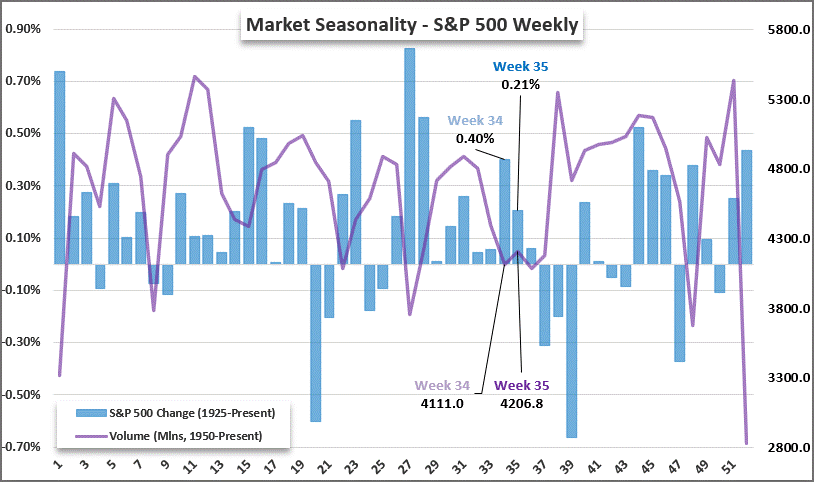
With so much headline activity and some standout movement from major market measures, what is the probability of a restoration of trend to underlying ‘risk’ interests? While seasonal influences are statistically profound – especially in terms of participation versus price direction – it doesn’t preclude outlier conditions whereby we pass some critical tipping point in complacency. The -4.2 percent August drop in 2022 and sharp -6.3 percent in 2015 were motivated by a hawkish shift at a Jackson Hole symposium and China’s surprise yuan devaluation respectively. Those seem to be remarkably topical to our current newsreel. That said, the more common realignment set for the 38th week of the year – two after this coming week – with one of the heaviest volume weeks on average of the calendar year aligning to a critical acceleration of the already-rising VIX given historical averages.
Chart of the S&P 500’s Weekly Performance and Volume
Source: Standard & Poor’s; John Kicklighter
A Hefty Economic Calendar Is Ahead but Events Tied to Top Themes Key
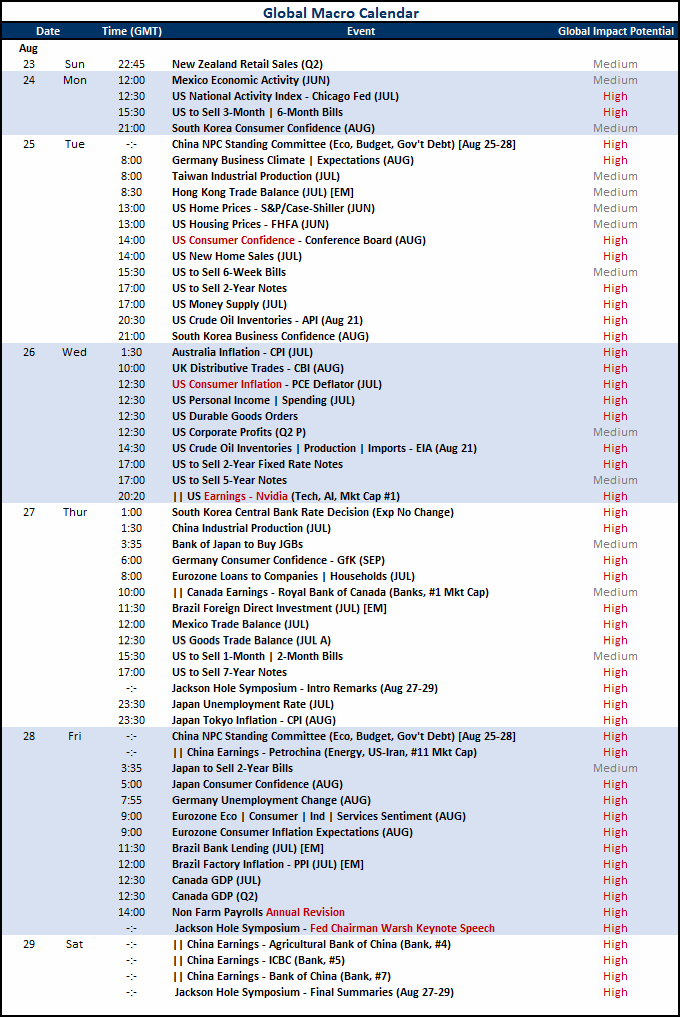
Whether we are facing a restricted surge of volatility in direct impact targets or finally seeing an unseasonal return to trend, the economic docket will likely be playing a heavy role in this week’s activity landscape. The only event on tap that could be described as its own self-contained and capable catalyst is Wednesday’s Nvidia earnings, but even that will borrow its appeal from a core theme of interest: the promise or over-promise of AI. It is worth watching some of the key US event risk like the Conference Board’s consumer sentiment survey and PCE deflator, but the items of greater influence will be those that reflect on arguably less discounted themes like an energy market threshold in weekly oil inventories or faltering global confidence in the United States’ financial picture through regular Treasury auctions. Further, with the US and Canada’s trade discussions collapsing over the weekend and retaliatory tariffs set for the near future, even dated data updates like the US and Canada trade balance figures will garner closer investigation.
Calendar of Major Macro Economic Event Risk
Source: John Kicklighter
The Late Peak in Earnings…Does AI Still Have the Thematic Weight?
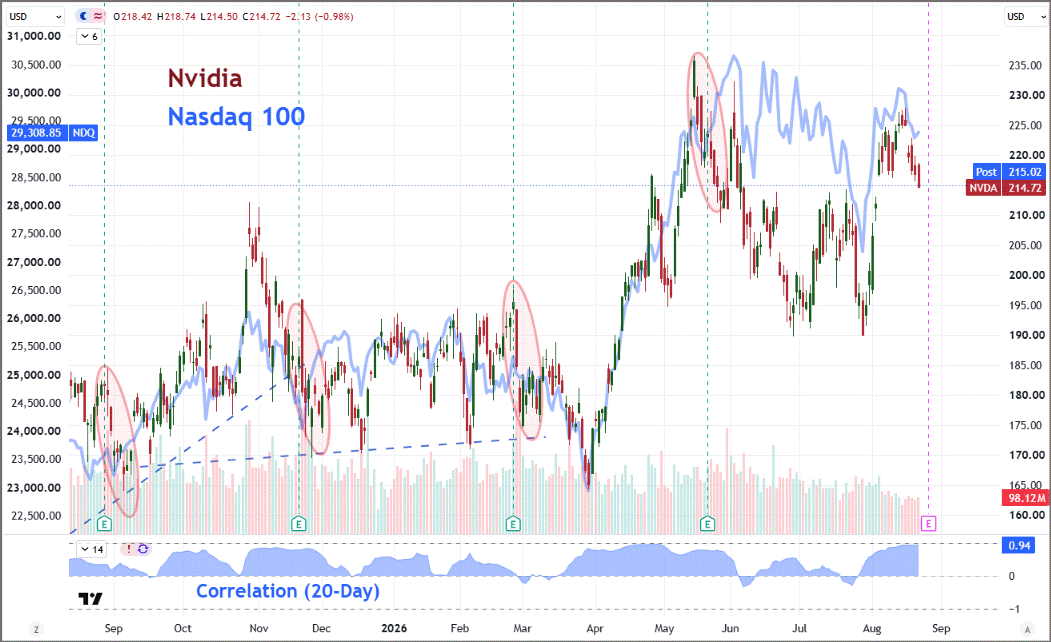
While there is some recognition to pay to some of the ‘high’ profile docket listings through the first half of the week – like the Conference Board’s sentiment survey after the UofM slump or PCE deflator given the Fed’s inflation predicament – the first, truly loaded event comes after the US close Wednesday. Nvidia remains the largest market cap company in the world and plays a leadership role in the thematic assessment of corporate profitability around the AI theme. Then again, this theme has seen a tenor shift these past months with a seemingly limitless imagination of the profits a leading model and adoption could bring to serious concern surrounding the costly expenditures going into data centers, acquisitions and other cash-burning steps. Benchmarks for this tech theme have recovered somewhat (SOX, KOSPI, NDQ-DJIA ratio), but we are lacking a sign of core conviction one way or the other. Could NVDA push us out of this stasis? Will it live up to its historical tendency to see a price retreat after its reporting? We will soon find out.
Chart of Nvidia with Earnings Releases Overlaid with Nasdaq 100 (Daily)
Source: TradingView.com; John Kicklighter
An Employment Figure Even More Controversial than the Monthly Payrolls
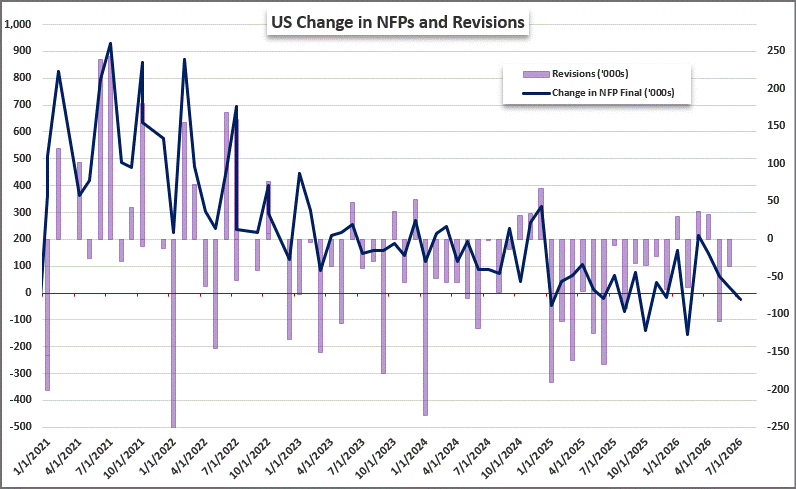
August nonfarm payrolls are not due until the Friday after next, but the August 28th update on the state of the labor market may prove just as consequential as the monthly change – perhaps even more so. On Friday, the Bureau of Labor Statistics is set to release their annual revisions of the famous jobs report data. It is true that we have seen the BLS adjust their previous months’ tallies as more data comes in to provide better survey sampling, but the amplified scrutiny over the accuracy of the data – made especially pronounced given the President’s belief that interest rates should be much lower than where they are at present – make us particularly headline prone in this area. Fed Chairman Keven Warsh actioned five different task forces to investigate various aspects of central bank interest that are due to present their findings in a few months, and for which the public is supposed to be made aware by the end of the year. One of those task forces is meant to look at ‘data’ (Raj Chetty, Doug McMillon and Kevin Murphy), which could very well introduce a change in measurements and even prioritization of data. Another large, aggregated revision in payrolls could raise the pressure to amend this benchmark.
Chart of Monthly Change in NFPs and Subsequent Revisions
Source: US Bureau of Labor Statistics; John Kicklighter
What Message is Chairman Warsh Going to Deliver at Jackson Hole…
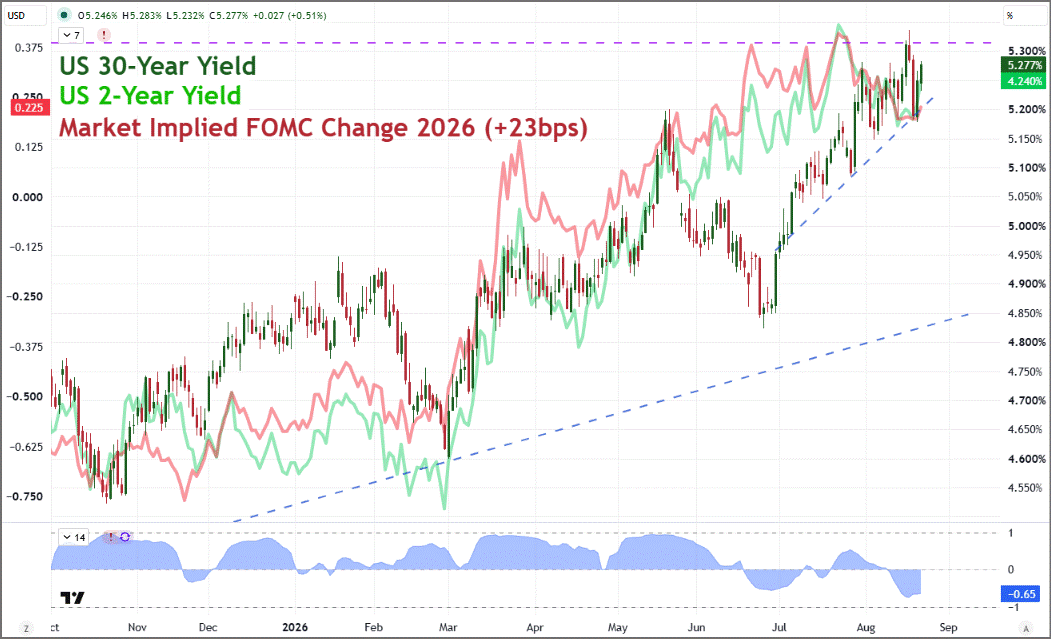
Perhaps one of the messiest – but profound – events on tap for this week is the Jackson Hole symposium. This annual gathering of central bankers, business leaders and academics is meant to discuss important matters to the global economy and financial markets. This year’s stated theme is ‘Financial Innovation: Implications for Payments and Policy’. There are some notable matters to draw from this topic such as the role digital assets will play or the complications for stability-oriented policy concerning new classes of derivatives, but the market’s focus will likely be elsewhere. That said, Chairman Warsh will not be able to escape the collective expectations being placed on him to soothe broad concerns. After Bessent’s Treasury buying commitment, the threat to inflation and complications to monetary policy make the backdrop materially more complicated. With the United States’ financial and economic health seemingly increasingly at risk, Warsh will have to walk a fine line between reassuring the central bank’s commitment to the dual mandate while not also exacerbate the credibility issue surrounding US policy. I don’t think he will be able to fully thread this needle.
Chart of US 30-Year and 2-Year Yields Overlaid with Implied Fed Change in 2026 (Daily)
Source: TradingView.com; CME; US Treasury; John Kicklighter
Access More Global Macro Insights, Forecasts and Tools
Stay connected to timely global macro analysis designed to help market participants navigate shifting economic conditions and evolving risk. Gain access to regular market commentary, updated quarterly forecasts, a comprehensive two-week forward economic event calendar, and specialized tools built to support informed trading and risk management decisions.
Sign Up
-- Written by John Kicklighter, Global Head of Content