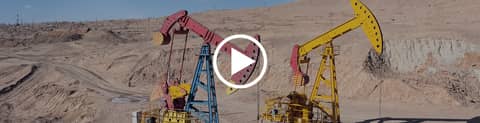
America's record surge in crude oil production has created an awkward byproduct in the Permian Basin. Permian natural gas prices have turned negative because the region produces far more associated gas than its pipelines can carry away, leaving producers to pay others to take it off their hands. The gas is not the prize, crude oil is, yet every barrel pulled from the ground brings up a stream of natural gas that has to go somewhere. When there is nowhere for it to go, its local price can collapse below zero.
Alex Hodes is Director of Energy Market Strategy at StoneX, where he tracks U.S. and global supply flows, inventory balances, refinery run rates, and the takeaway and processing dynamics that connect crude production to natural gas markets like the Permian.
Key Themes from the Discussion
Permian natural gas prices have fallen to negative levels as associated gas outpaces available takeaway capacity.
Crude oil drilling in the Permian produces excess natural gas that must be moved, processed, or converted to LNG.
The Permian hit a similar squeeze years ago before new gas capacity arrived, and is nearing the limit again.
Every barrel of crude oil pulled from the Permian Basin comes with a flood of associated natural gas that producers have to move off site. The gas is a consequence of the hunt for oil rather than the target, and it needs to be routed to processing plants or liquefied natural gas terminals to hold any value. According to Hodes, "when drillers are drilling for crude oil, they produce a lot of excess natural gas, and they need to take this natural gas away to either be processed or converted into LNG". As a result, the economics of the Permian depend not only on the price of crude oil but on whether there is enough pipeline space to carry the gas that comes up with it. When that space runs short, the excess gas turns from a bonus into a liability.
Permian Gas Prices Fall Below Zero as Takeaway Fills
"The natural gas pricing you're seeing in the Permian has hit negative levels, so people are paying people to take it off their hands", Hodes said. Permian natural gas prices have turned negative because the pipelines that carry gas out of the basin, known as takeaway capacity, have filled up faster than new lines can be built. When there is more gas than the system can move, the only way to keep the crude flowing is to give the gas away or even pay to offload it. That leaves producers absorbing a cost on one product simply to keep selling the other, a squeeze that tightens whenever drilling activity climbs.
Permian Takeaway Limits Return After an Earlier Buildout
The Permian Basin has run into this natural gas takeaway constraint before, only to reach it again as production climbs. A few years ago the same bottleneck pushed regional gas prices down until operators added new pipelines to relieve the pressure, and that relief has since been used up. The pattern matters because it signals that infrastructure buildouts buy time rather than permanently solve the problem, and each fresh wave of drilling can outrun the last expansion. Hodes, reflecting on how familiar the situation has become, noted that "you saw it several years back before they added additional natural gas takeaway capacity in the Permian Basin, and now you're seeing that running into that constraint as well".
Frequently Asked Questions
What does it mean when Permian natural gas prices go negative?
Negative prices mean sellers pay buyers to take the gas rather than receiving payment for it. In the Permian Basin this happens when so much associated natural gas is produced alongside crude oil that there is not enough pipeline capacity to move it, so producers offload it at a loss to keep their oil wells running.
Where does the excess natural gas from the Permian Basin need to go?
The gas has to be carried away by pipeline to be processed or converted into liquefied natural gas. When that takeaway and processing capacity is full, the gas has no outlet, which is what can drive its local price below zero.
Why does producing crude oil create so much natural gas?
Drilling for crude oil in the Permian Basin brings up large volumes of associated natural gas as a byproduct of the process. Producers focused on selling oil still have to manage that gas, which becomes a problem when the infrastructure to move it runs short.
Make Energy Insights Your Competitive Advantage
Access live prices, supply and demand data and actionable market commentary across commodities, equities, currencies and more. Sign up for StoneX Market Intelligence today and receive a 14-day trial.
--- Written by Gus Farrow, Senior Manager, StoneX Media
--- Expert: Alex Hodes, StoneX Director Energy Market Strategy
Energy
The subsidiaries of StoneX Group Inc. provide financial products and services, including, but not limited to, physical commodities, securities, clearing, global payments, risk management, asset management, foreign exchange, and exchange-traded and over-the-counter derivatives. These financial products and services are offered in accordance with the applicable laws in the jurisdictions in which they are provided and are subject to specific terms, conditions, and restrictions contained in the terms of business applicable to each such offering. Not all products and services are available in all countries. The products and services offered by the StoneX Group of companies involve risk of loss and may not be suitable for all investors. Full Disclaimer. This content is not intended for residents of any particular country, and the information herein is not advice nor a recommendation to trade nor does it constitute an offer or solicitation to buy or sell any financial product or service, by any person or entity in any jurisdiction or country where such distribution or use would be contrary to local law or regulation. Please refer to the Regulatory Disclosure section for entity-specific disclosures. No part of this material may be copied, photocopied or duplicated in any form by any means or redistributed without the prior written consent of StoneX Group Inc. The information herein is provided for informational purposes only. This information is provided on an ‘as-is’ basis and may contain statements and opinions of the StoneX Group of companies as well as excerpts and/or information from public sources and third parties and no warranty, whether express or implied, is given as to its completeness or accuracy. Each company within the StoneX Group of companies (on its own behalf and on behalf of its directors, employees and agents) disclaims any and all liability as well as any third-party claim that may arise from the accuracy and/or completeness of the information detailed herein, as well as the use of or reliance on this information by the recipient, any member of its group or any third party.
Our market expertise, advanced platforms, global reach, culture of full transparency and commitment to our clients’ success all set us apart in the financial marketplace.
Reach
With access to 40+ derivatives exchanges, 180+ foreign exchange markets, nearly every global securities marketplace and numerous bi-lateral liquidity venues, StoneX’s digital network and deep relationships can take clients anywhere they want to go.
Transparency
As a publicly traded company meeting the highest standards of regulatory compliance in the markets we serve; our financials and record of accomplishment are matters of public record. StoneX’s commitment to “doing the right thing over the easy thing” sets us apart in the industry and helps us build respect, client trust and new partnerships.
Expertise
From our proprietary Market Intelligence platform, to “boots on the ground” expertise from award-winning traders and professionals, we connect our clients directly to actionable insights they can use to make more informed decisions and achieve their goals in the global markets.