

Crypto Fundamental Analysis: Strong NFP Data Fails to Sustain Crypto Market Confidence
As September gets underway, the week has delivered a mixed backdrop for confidence across the cryptocurrency market. At the beginning of the week, demand showed signs of recovering; however, that momentum began to fade toward the end of the period following the release of the U.S. NFP report.
Written by
Julian Pineda
Market Analyst
As September gets underway, the week has delivered a mixed backdrop for confidence across the cryptocurrency market. At the beginning of the week, demand showed signs of recovering; however, that momentum began to fade toward the end of the period following the release of the U.S. NFP report. The possibility of a more aggressive Federal Reserve has started to affect confidence around risk assets such as cryptocurrencies and has once again given way to a more balanced market environment. As long as this situation remains relevant, a phase of indecision could continue to play an important role in market activity over the coming sessions.
NFP Fails to Sustain Confidence
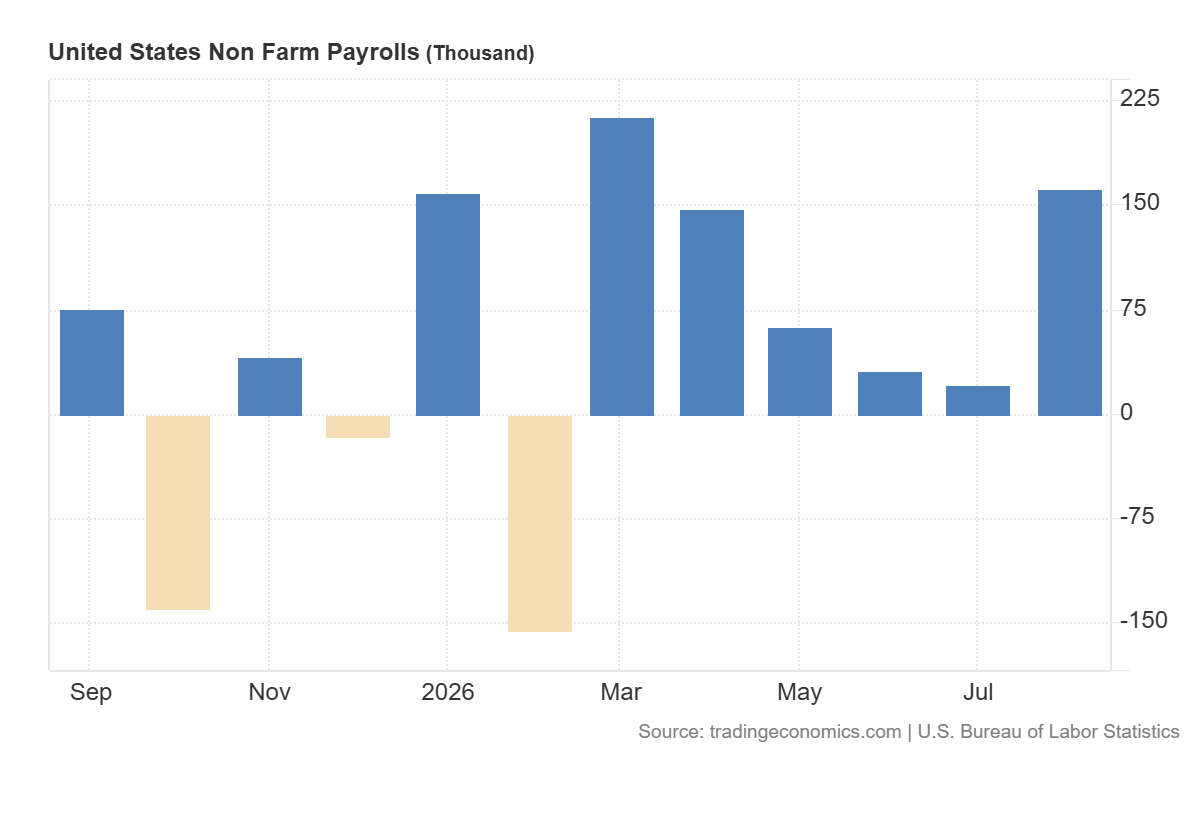
The final trading session of the week was particularly important due to the release of the U.S. Non-Farm Payrolls (NFP) report, which measures changes in employment during August. Although markets were expecting around 55,000 new jobs, the official figure surprised to the upside, showing the creation of more than 160,000 jobs during the month.
This reading reflects a significant recovery in the labor market, which had shown considerably weaker performance during June and July. In fact, the latest figure returns employment growth to levels not seen since March and reinforces the perception that the slowdown observed in previous months may not have been as pronounced as initially expected.
Source: TradingEconomics
The most important takeaway is that this report has started to provide a clearer picture of the path the Federal Reserve could follow in the months ahead. A strong labor market gives policymakers greater room to maintain a restrictive stance while inflation concerns remain present.
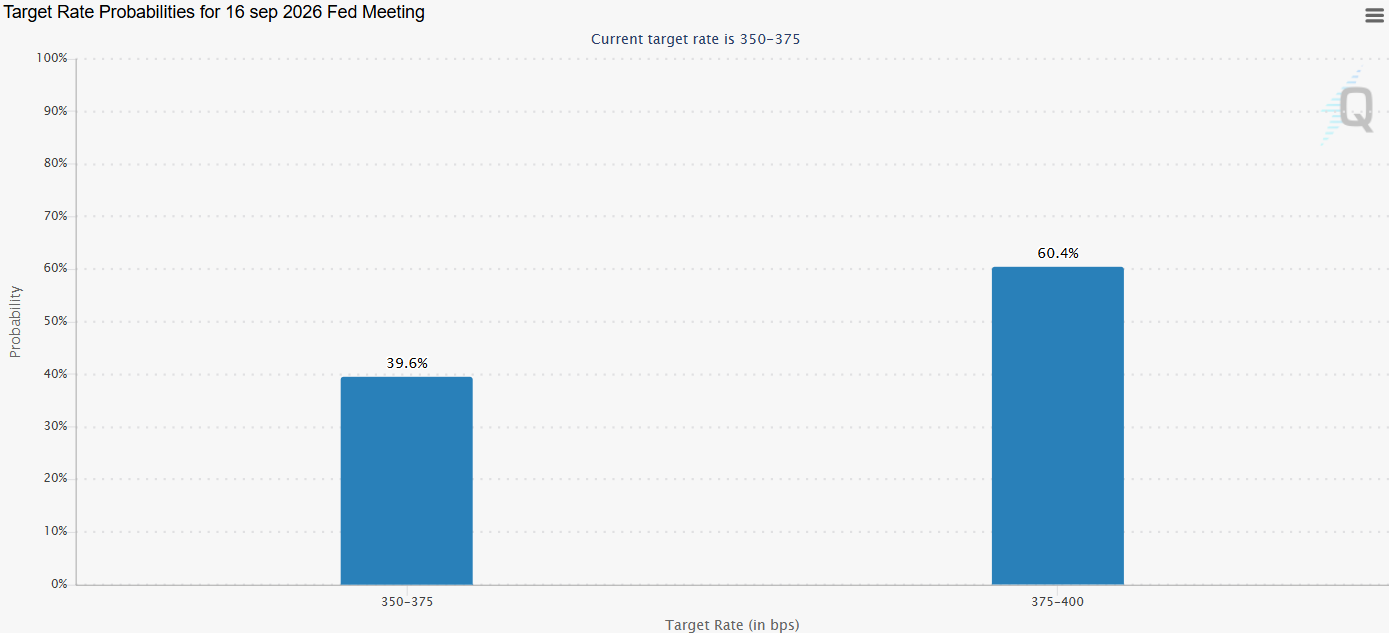
That appears to have been the market's interpretation toward the end of the week. Following the NFP release, the CME Group probability tracker once again assigned roughly a 60% probability to a rate hike at the September 16 meeting, compared with around 40% odds of rates remaining unchanged. This suggests that a significant portion of the market interpreted the employment data as supportive of a more aggressive Federal Reserve in upcoming policy decisions.
Source: CMEGROUP
This environment tends to be less favorable for cryptocurrencies because elevated interest rates often reduce the liquidity available for risk assets while increasing the relative attractiveness of more stable alternatives. As a result, part of the market's capital could begin shifting toward lower-risk investments, limiting the recovery potential of cryptocurrencies in the short term.
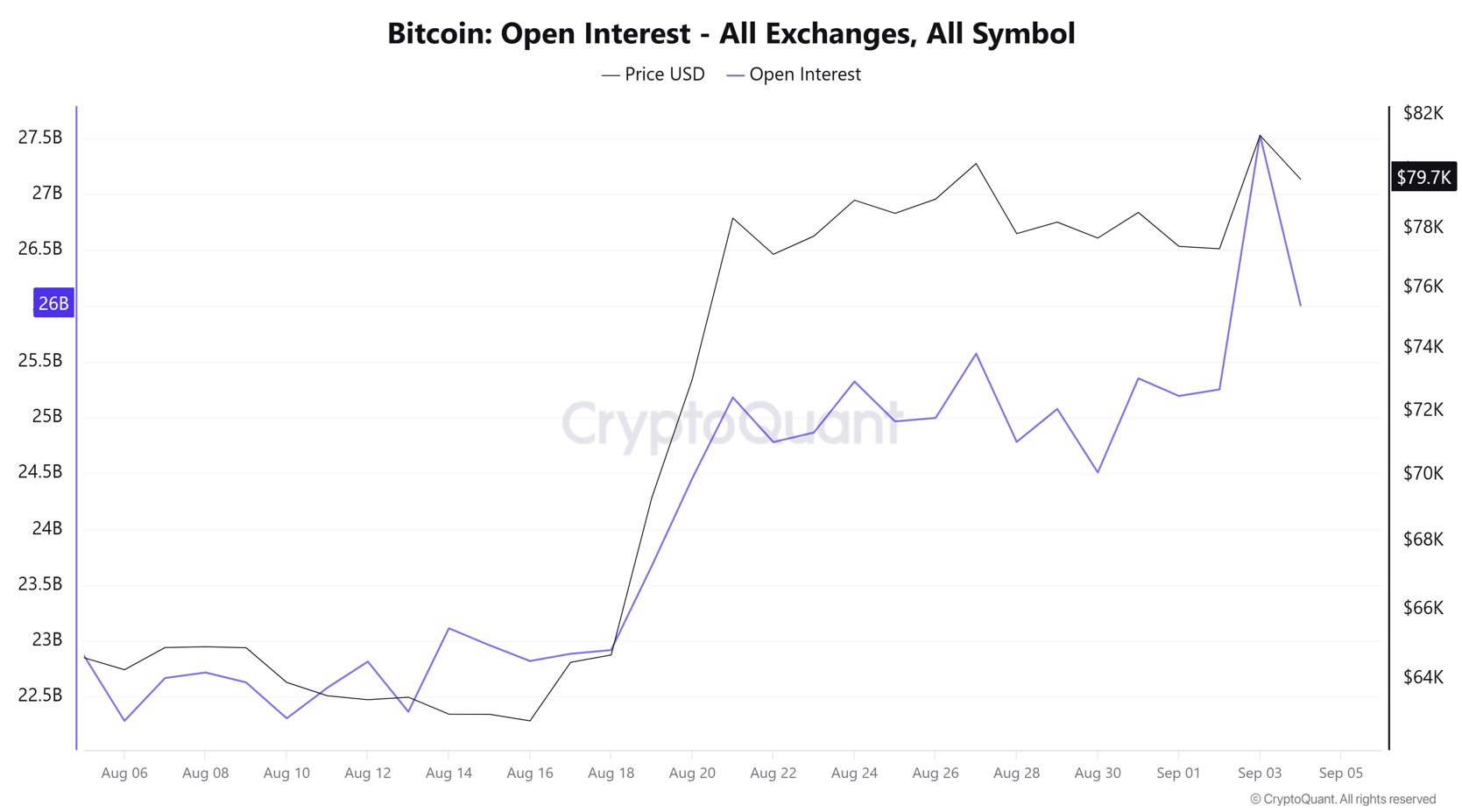
In fact, this dynamic has already started to appear in Bitcoin market indicators. On September 4, coinciding with the NFP release, Open Interest declined toward the $26 billion area after reaching recent highs. Since this indicator measures the total number of open positions in the market, the decline points to capital leaving the market.
Furthermore, when this behavior is combined with the weakness observed in BTC prices, it becomes possible to infer that part of these outflows may correspond to long positions being closed. This suggests weaker demand activity at a time when uncertainty surrounding a potentially more restrictive Federal Reserve continues to increase.
Source: CryptoQuant
Taking all of this into account, it appears that the prospect of a more aggressive U.S. central bank is not helping activity across the cryptocurrency market stabilize in a consistent manner. As long as this catalyst remains relevant, a broader period of indecision could continue gaining importance across the sector in the weeks ahead.
Bitcoin Relative to Other Markets
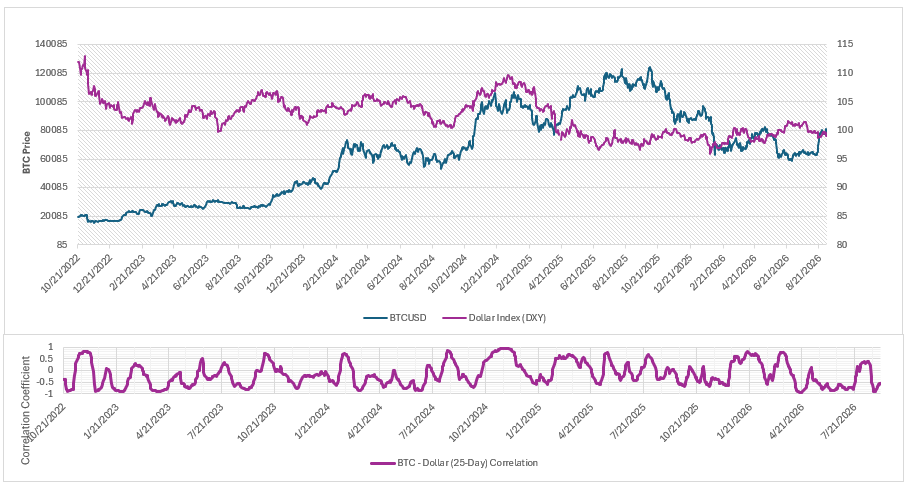
It is also important to monitor Bitcoin's relationship with traditionally more stable assets, particularly the U.S. dollar. Currently, the correlation coefficient between the two markets remains close to -0.5, a reading that continues to reflect a meaningful inverse relationship over the last 25 trading sessions.
This suggests that as the U.S. dollar regains strength, Bitcoin tends to face greater challenges in sustaining a recovery. Correlation coefficients can change over time.
Source: Data – TVC, StoneX, Tradingview
This relationship remains particularly relevant because a large portion of Bitcoin's recovery in previous weeks coincided with a period of weakness in the U.S. dollar. However, conditions began to change toward the end of the week. The dollar regained stability following the NFP release, while Bitcoin showed increasingly visible signs of losing momentum.
This behavior suggests that part of the market's capital flows may be moving back toward more defensive assets amid concerns that the monetary environment could become less favorable for risk-oriented investments such as Bitcoin and cryptocurrencies in general. If this correlation remains in place and the dollar continues to recover, it could limit the conditions needed for a stronger rebound across the crypto market and reinforce a broader phase of indecision in the near term.
Confidence Begins to Moderate
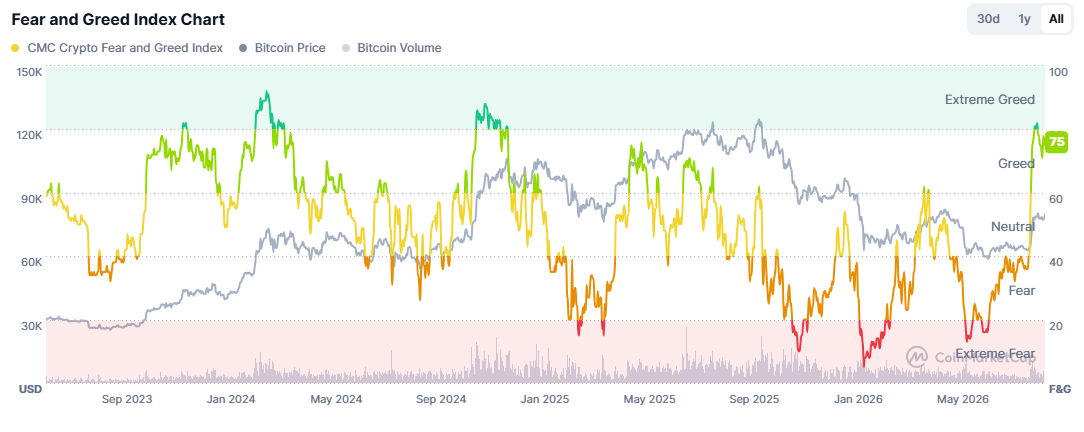
The cryptocurrency Fear & Greed Index continues to fluctuate near the 75-point area. While this reading still places the market firmly within "Greed" territory, it has moved noticeably away from the "Extreme Greed" zone, suggesting that the strong demand observed in previous weeks has begun to moderate.
Source: Coinmarketcap
The evolution of this indicator remains important because it often acts as a gauge of risk appetite across the broader market. Although current readings still reflect optimism, the recent decline suggests that some of the enthusiasm observed in previous weeks has started to cool.
If the indicator continues to weaken in the coming sessions, it could reinforce the sense of caution that emerged following the NFP release and make it more difficult for demand to stabilize across the cryptocurrency market. Under that scenario, the lack of direction could remain one of the most important themes to monitor over the coming weeks.
Written by Julian Pineda, CFA, CMT – Market Analyst
Follow him on: @julianpineda25
Latest market news











Web Trader platform
Our sophisticated web-based platform is packed with features.
Open an account today
Experience award-winning platforms with fast and secure execution.
Economic calendar
Related articles

Bitcoin Forecast: BTC/USD Back to $80K Ahead of Warsh’s Jackson Hole Speech
After surging over $15,000 in the past 10 days alone, there is risk of a near-term pullback if Warsh says anything remotely hawkish at Jackson Hole - what are the levels to watch from here?


Bitcoin, Gold Price Outlook: US CPI & Overbought Risks in Focus
Bitcoin, Gold Price Outlook Following a steep risk-on rally across US equity indices and precious metals, several major markets are approaching critical technical levels as momentum becomes increasingly stretched.


Bitcoin, Dow Jones Outlook: Dow Tests Major Resistance and Bitcoin Lags Below $67,000
Bitcoin, Dow Jones Outlook: Bitcoin remains below $67,000 while the Dow Jones tests major multi-year resistance. Key technical levels that could determine the next market move.