


Forex Seasonality – July 2026: Will See a Recovery in EUR/USD and GBP/USD?
Historically, July has been a bullish month for both EUR/USD and GBP/USD, though June’s broad-based strength in the US Dollar could overwhelm the seasonal tendency.
Written by
Matt Weller
Head of Market Research
July Forex Seasonality Key Points
- With the US-Iran conflict (likely) behind us, traders are refocusing on the fundamental economic drivers of major currencies.
- Historically, July has been a bullish month for both EUR/USD and GBP/USD, though June’s broad-based strength in the US Dollar could overwhelm the seasonal tendency.
- USD/JPY traders continue to “play chicken” with the Ministry of Finance, daring it to intervene against a fundamentally bullish trend.
The beginning of a new month marks a good opportunity to review the seasonal patterns that have influenced the forex market over the 50+ years since the Bretton Woods system was dismantled in 1971, ushering in the modern foreign exchange market.
As always, these seasonal tendencies are just historical averages, and any individual month or year may vary from the historic average, so it’s important to complement these seasonal leans with alternative forms of analysis to create a long-term successful trading strategy. In other words, past performance is not necessarily indicative of future results.
Euro Forex Seasonality – EUR/USD Chart

Source: TradingView, StoneX. Please note that past performance is not necessarily indicative of future results.
Historically, July has been a moderately positive month for EUR/USD, with the world’s most widely-traded currency pair sporting an average return of +0.3% over the last 50+ years. In June, EUR/USD defied its historical seasonal bullishness, falling -2% to test 1-year lows near 1.1400. The greenback continues to benefit from the relative strength of the US economy, and with this week’s inflation figures out of the Eurozone pushing back expectations for additional ECB rate hikes, the near-term downtrend could continue despite the modestly bullish seasonal tendency.
British Pound Forex Seasonality – GBP/USD Chart

Source: TradingView, StoneX. Please note that past performance is not necessarily indicative of future results.
Looking at the above chart, GBP/USD has, on average, seen relatively strong performance in July, with average returns of around +0.4% since 1971. Like the euro, the British pound fell against the greenback in June, though it has broadly held up better than its mainland rival. Moving forward, the critical level to watch in GBP/USD will be around 1.3150, with a break below that support line exposing the 15-month low near 1.30 next.
Japanese Yen Forex Seasonality – USD/JPY Chart
Source: TradingView, StoneX. Please note that past performance is not necessarily indicative of future results.
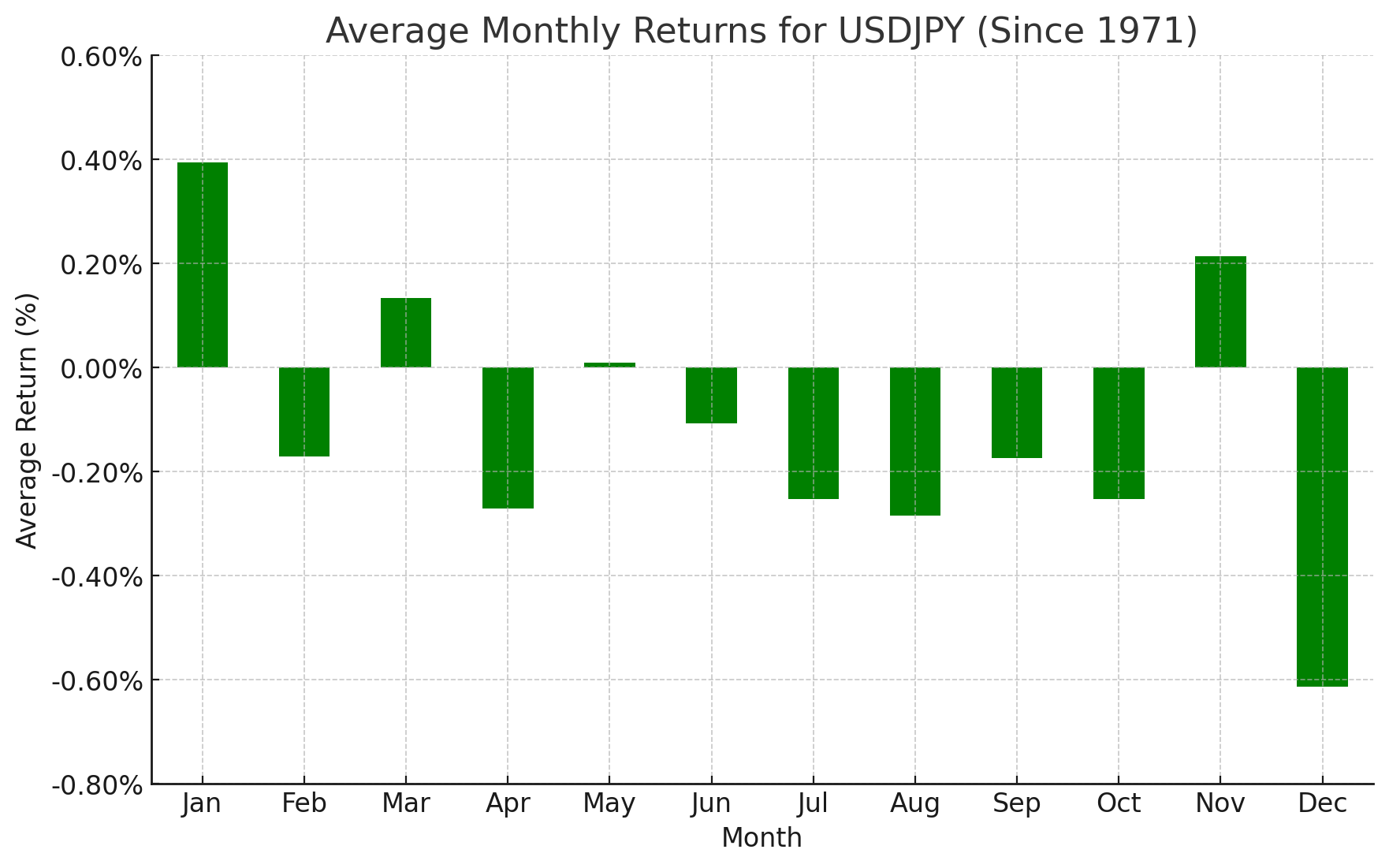
July has historically been a bearish month for USD/JPY, with the pair falling -0.3% on average since the Bretton Woods agreement. USD/JPY surged higher in June, unwinding the earlier intervention by Japanese authorities rallying to its highest level in 40 years above 162. Despite a (widely expected) interest rate hike from the BOJ, traders continue to “play chicken” with the Ministry of Finance, daring it to intervene against a fundamentally bullish trend. Intervention (or lack thereof) on the part of Japanese authorities remains the dominant theme to watch this month, regardless of USD/JPY’s long-term monthly tendencies.
Australian Dollar Forex Seasonality – AUD/USD Chart
Source: TradingView, StoneX. Please note that past performance is not necessarily indicative of future results.
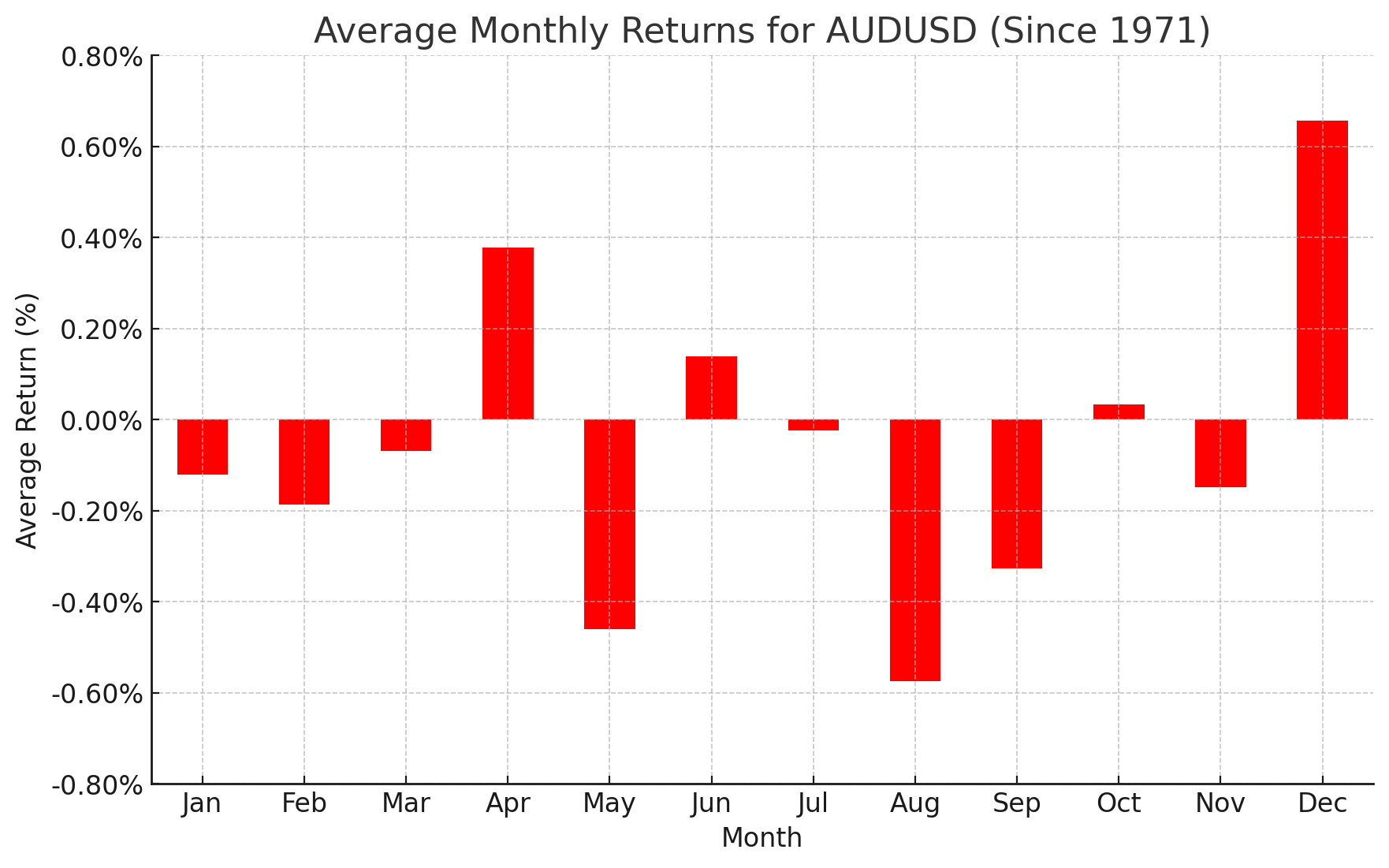
Turning our attention Down Under, AUD/USD has historically traded mixed in July, with an average return of 0.0% going back to 1971. Last month, the Aussie fell sharply against the greenback, taking the pair back below 0.7000 to the same area where it traded in Q1. The monthly chart shows a bearish “shooting star” formation, suggesting that there could be more downside to come from a technical perspective, and that pattern will remain intact as long as AUD/USD holds below the May high in the mid-0.7200s.
Canadian Dollar Forex Seasonality – USD/CAD Chart
Source: TradingView, StoneX. Please note that past performance is not necessarily indicative of future results.
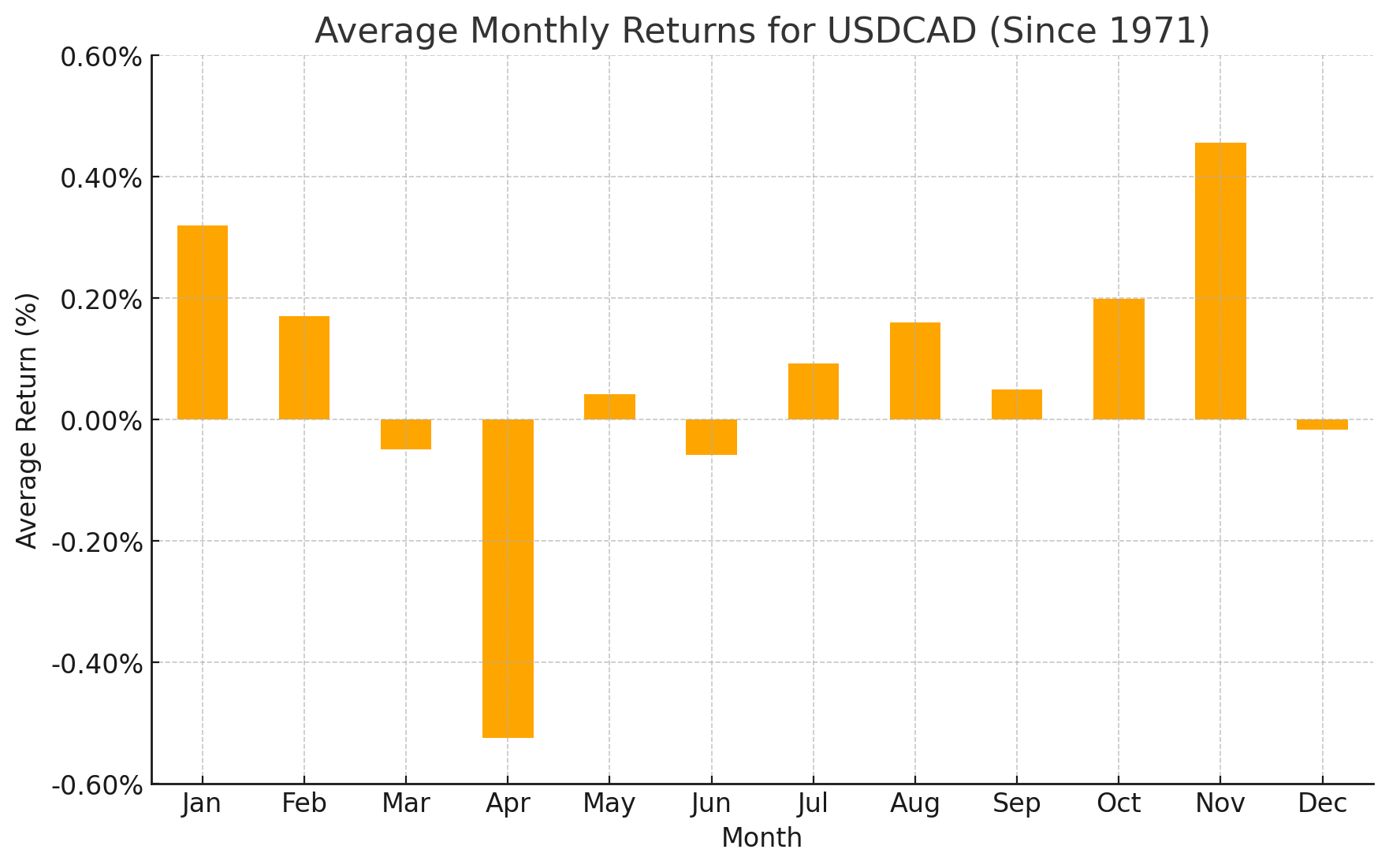
Last but not least, July has been a neutral month on average for USD/CAD, with an average historical return of +0.1%. The North American pair surged by roughly 3% in June to hit its highest level in 15 months above 1.4200. For this month, the upcoming 6-year “joint review” of the USMCA (July 20) will be a key event risk for the pair, with President Trump hinting that he was reticent to renew the pact as is. In that scenario, additional uncertainty around the trade relationship between the US and Canada could weigh on both currencies, but the impact on the Canadian Dollar would likely be larger, potentially extending the gains from June for another month.
As always, we want to close this article by reminding readers that seasonal tendencies are not gospel – even if they’ve tracked relatively closely so far this year – so it’s important to complement this analysis with an examination of the current fundamental and technical backdrops for the major currency pairs.
-- Written by Matt Weller, Global Head of Research
Check out Matt’s Daily Market Update videos on YouTube and be sure to follow Matt on Twitter: @MWellerFX








Web Trader platform
Our sophisticated web-based platform is packed with features.
Open an account today
Experience award-winning platforms with fast and secure execution.
Economic calendar
Related articles

Canadian Dollar Forecast: USD/CAD Weekly Reversal Puts Yearly Uptrend Back in Focus 8 29 2026
USD/CAD has staged its strongest weekly advance since June, shifting the focus to whether a more durable low is finally taking shape.


USD/JPY weekly outlook: Payrolls may challenge the Fed’s hawkish reset
USD/JPY has finally woken from its slumber. Payrolls now loom as the key test of whether the latest hawkish repricing sticks or sinks.


Euro Short-term Outlook: EUR/USD Pullback Nears Pivotal Uptrend Support 8 28 2026
Warsh's comments accelerated the EUR/USD selloff, raising the stakes as buyers look to stabilize the broader recovery.