

Crypto Fundamental Analysis Risk appetite weakens again
The second week of July continues, and one of the most relevant events for the cryptocurrency market is the renewed loss of strength in short-term demand.
Written by
Julian Pineda
Market Analyst
The second week of July continues, and one of the most relevant events for the cryptocurrency market is the renewed loss of strength in short-term demand.
Part of this dynamic is due to the uncertainty generated during the week by a possible escalation of the conflict in the Middle East. Although the event did not escalate further, it did increase the appeal of safe-haven markets such as the bond market. This could be affecting interest in risk assets such as cryptocurrencies, especially in an environment where other substitute markets appear more attractive.
If this uncertainty remains in place, sentiment could shift into a relevant phase of indecision or weakness in the cryptocurrency market in the short term.

Is the Middle East becoming a concern again?
This week has been quite active for financial markets from a geopolitical perspective. In the middle of the week, tensions escalated again around the Strait of Hormuz, with the start of new military operations.
Although some comments from the United States have suggested that negotiations remain ongoing, the episode raised the market’s risk premium. This pushed the WTI oil barrel back above 70 dollars and increased caution over potential additional inflationary pressures.
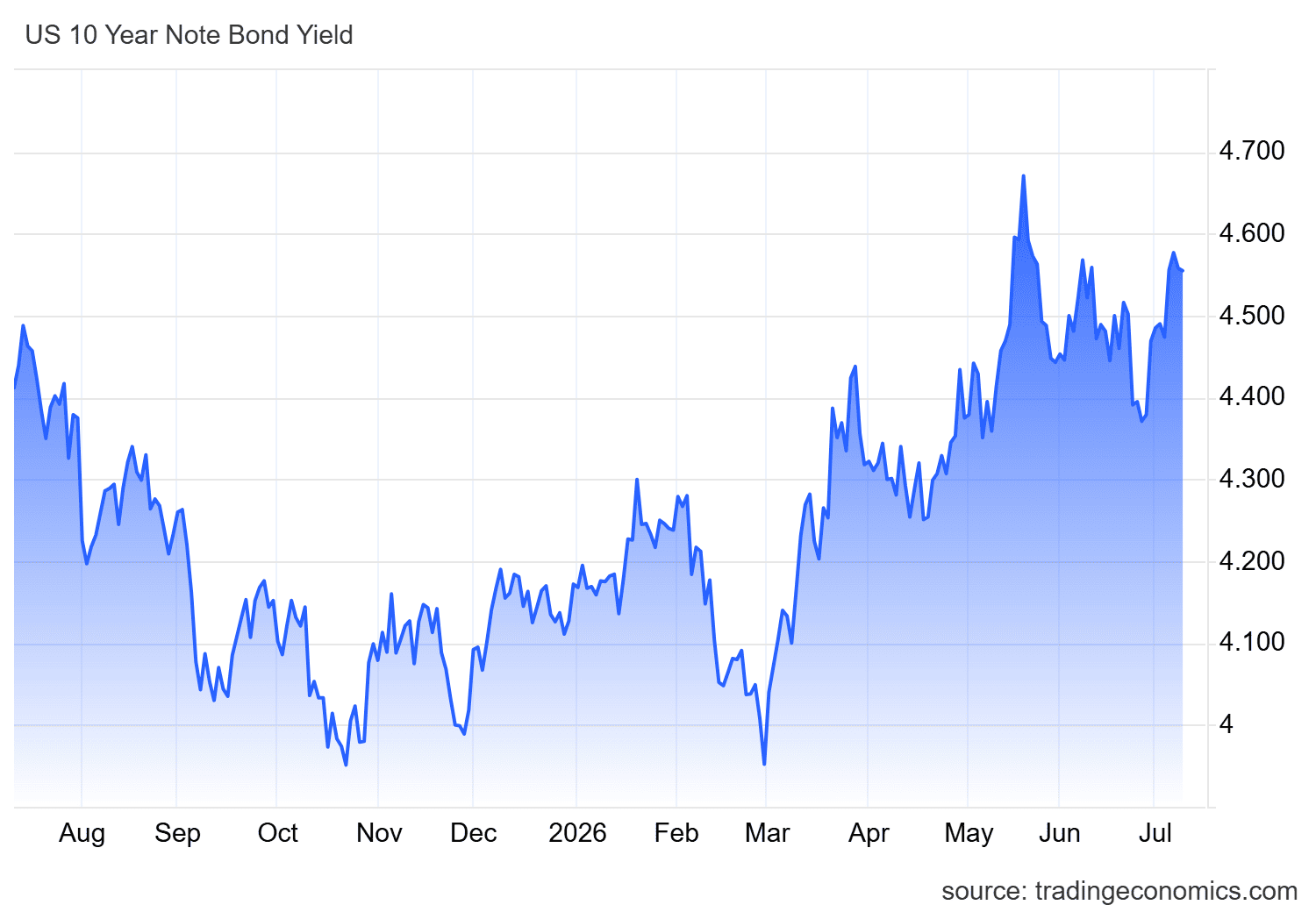
Source: TradingEconomics
The effect also moved into the bond market. In the case of 10-year U.S. bonds, yields once again showed an upward slope and moved above 4.5%, restoring the appeal of this market compared to higher-risk assets such as cryptocurrencies.
This environment may have contributed to a slowdown in crypto demand. At the start of the week, Bitcoin ETFs were recording positive inflows of more than 300 million dollars, but as concerns over the conflict increased, flows started to turn negative. On July 8, outflows of more than 100 million dollars were recorded.
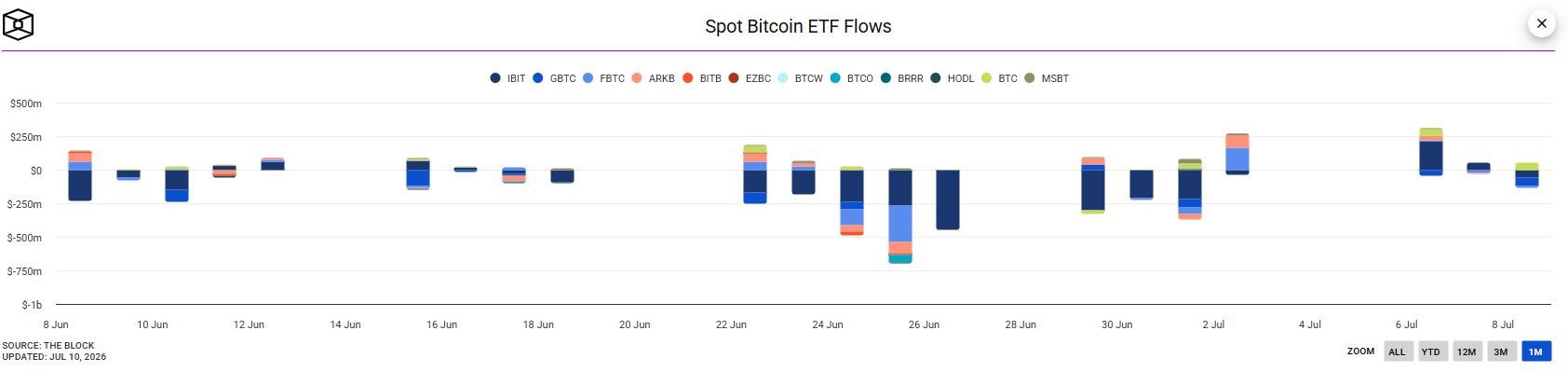
Source: Theblock
This dynamic is relevant because, while there is no clearer resolution to the conflict in the Middle East, caution could continue to limit appetite for risk assets. If bonds and other substitute markets maintain greater appeal, demand for cryptocurrencies could remain weak or indecisive over the next few sessions.
Bitcoin versus other markets
One of the most relevant short-term behaviors is the increase in the negative correlation between the DXY, the U.S. dollar index, and Bitcoin movements. Now, the coefficient remains very close to the -1 area, showing an important inverse relationship between both markets over the last 25 sessions.
This means that, recently, Bitcoin movements have tended to move in the opposite direction to the U.S. dollar. However, it is important to remember that the correlation coefficient can change over time.
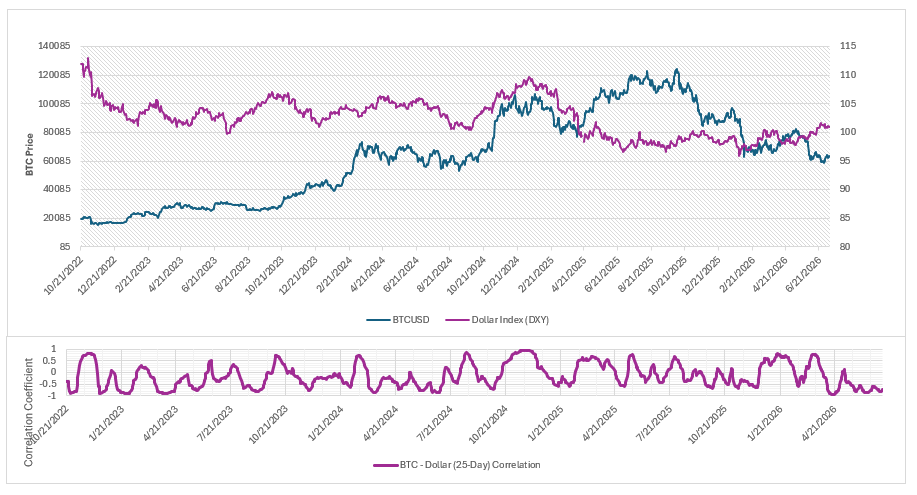
Source: Data – TVC, StoneX, Tradingview
This relationship is important because the recent weakness and neutrality in Bitcoin coincides with some strength in demand for the U.S. dollar. This suggests a possible rotation of capital toward more stable markets, such as the dollar, reducing interest in higher-risk assets like cryptocurrencies in the short term.
Likewise, when looking at the average daily variation over the last trading week, most of the crypto market shows a reduction in volatility compared to movements from one month and three months ago. This highlights the recent lack of activity in the market and may be associated with a slowdown in demand observed recently.
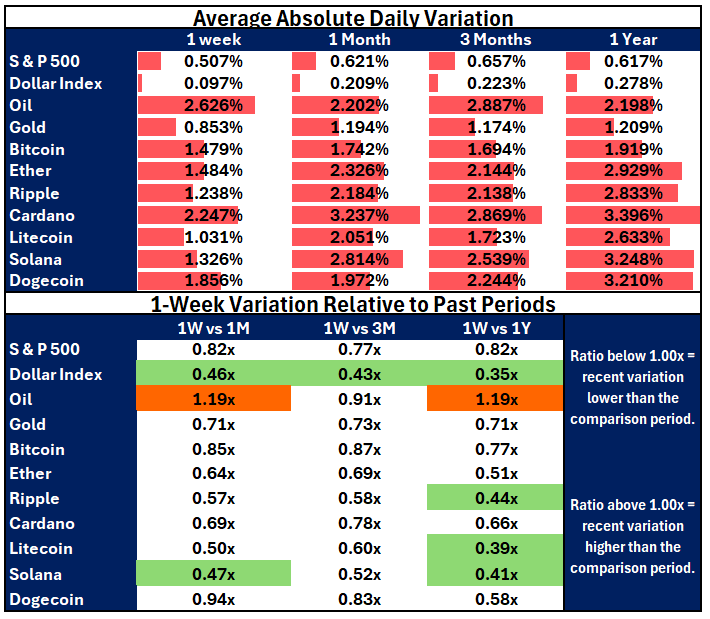
Source: Data – TVC, StoneX, Tradingview
With all of this in mind, as long as relevant market movements fail to appear and more stable substitute assets continue to show greater appeal, weak cryptocurrency demand could remain important. This could keep the crypto market in a phase of indecision or weakness in the short term.
Confidence remains in sensitive territory
Looking at the behavior of the Fear and Greed Index for cryptocurrencies, despite the slight recovery seen in recent sessions, the indicator still remains near the 30-point area, within the “fear” zone in the short term. This shows that confidence in the crypto market remains in sensitive territory.
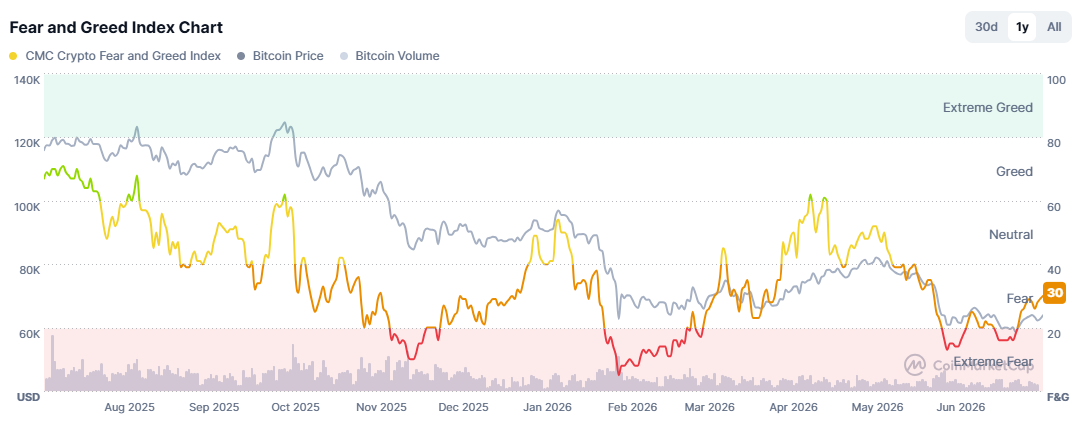
Source: Coinmarketcap
This dynamic suggests that, for now, there is not enough stability to support dominant demand. As long as the index fails to move into positive territory, confidence could continue to show fragility and reflect a phase of indecision or weakness in the market over the next few sessions.
Written by Julian Pineda, CFA, CMT – Market Analyst
Follow him on: @julianpineda25







Web Trader platform
Our sophisticated web-based platform is packed with features.
Open an account today
Experience award-winning platforms with fast and secure execution.
Economic calendar
Related articles

Bitcoin Forecast: BTC/USD Back to $80K Ahead of Warsh’s Jackson Hole Speech
After surging over $15,000 in the past 10 days alone, there is risk of a near-term pullback if Warsh says anything remotely hawkish at Jackson Hole - what are the levels to watch from here?


Bitcoin’s failed breakouts are becoming hard to ignore
Three failed breakout attempts and fading momentum have put Bitcoin bulls on notice. Another rejection could open the door lower just as attention swings back towards NVIDIA and the AI trade.


US Dollar, Gold & Bitcoin Weekly Technical Outlook 8 24 2026
Key levels on active technical setups in DXY, Gold, and Bitcoin heading into the start of the week.