


EUR/USD Update: Will Fed Expectations Keep Pressure on the Euro?
The week continues to present challenges for the euro's short-term strength. This is reflected in the recent performance of EUR/USD, which has declined by nearly 0.6% over the last three trading sessions
Written by
Julian Pineda
Market Analyst
The week continues to present challenges for the euro's short-term strength. This is reflected in the recent performance of EUR/USD, which has declined by nearly 0.6% over the last three trading sessions. For now, selling pressure remains a relevant factor around the pair, while the U.S. dollar continues to find support from expectations of a more restrictive Federal Reserve. This situation maintains a significant interest-rate differential relative to Europe and could continue to limit the euro's ability to stage a more consistent recovery in the sessions ahead.
Do Central Bank Dynamics Matter?
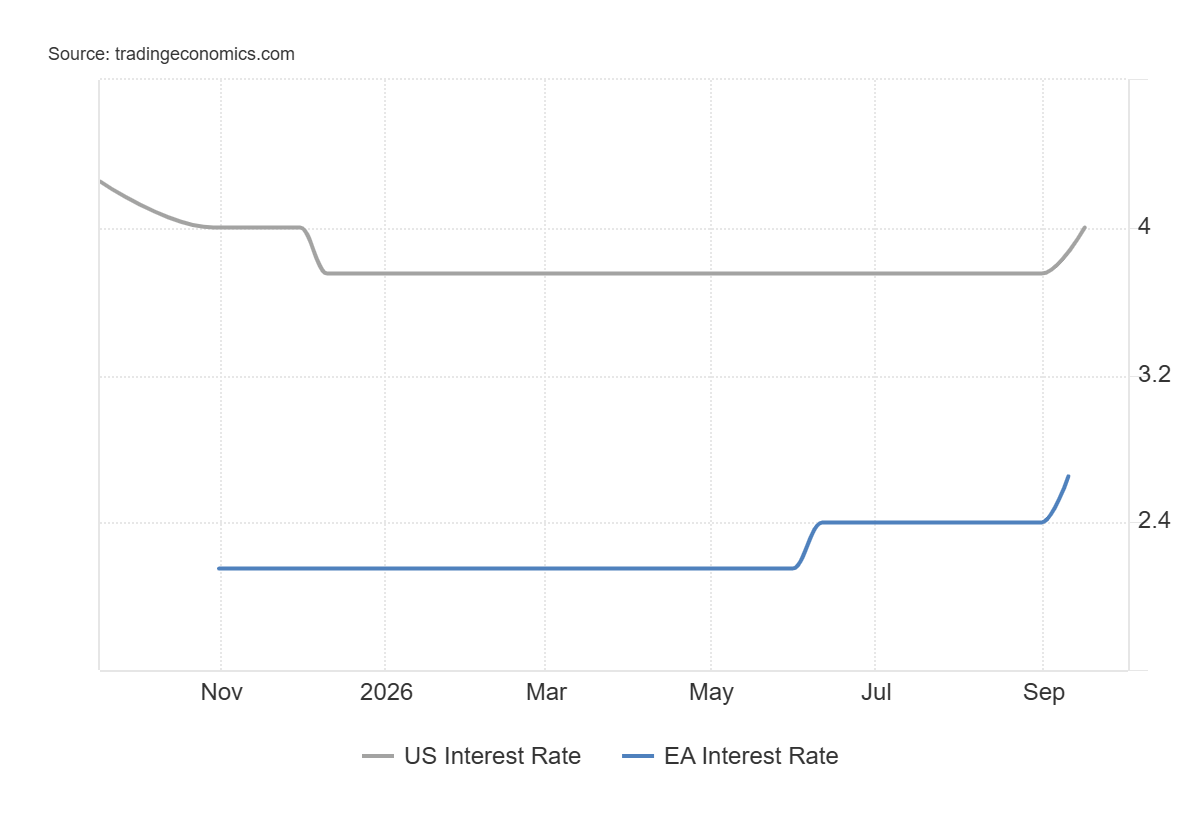
One of the factors that continues to influence both the dollar and the euro is the divergence in outlook between their respective central banks. The United States currently maintains an interest rate around 4.00%, while the European Central Bank benchmark rate stands at 2.65%. Although both institutions have raised rates in recent months, the gap remains significant and continues to favor the U.S. market.
This dynamic remains relevant because higher interest rates in the United States continue to enhance the relative attractiveness of U.S. fixed-income assets and support capital flows into dollar-denominated instruments. As a result, the USD continues to maintain a meaningful advantage over the euro from an interest-rate differential perspective.
Source: TradingEconomics
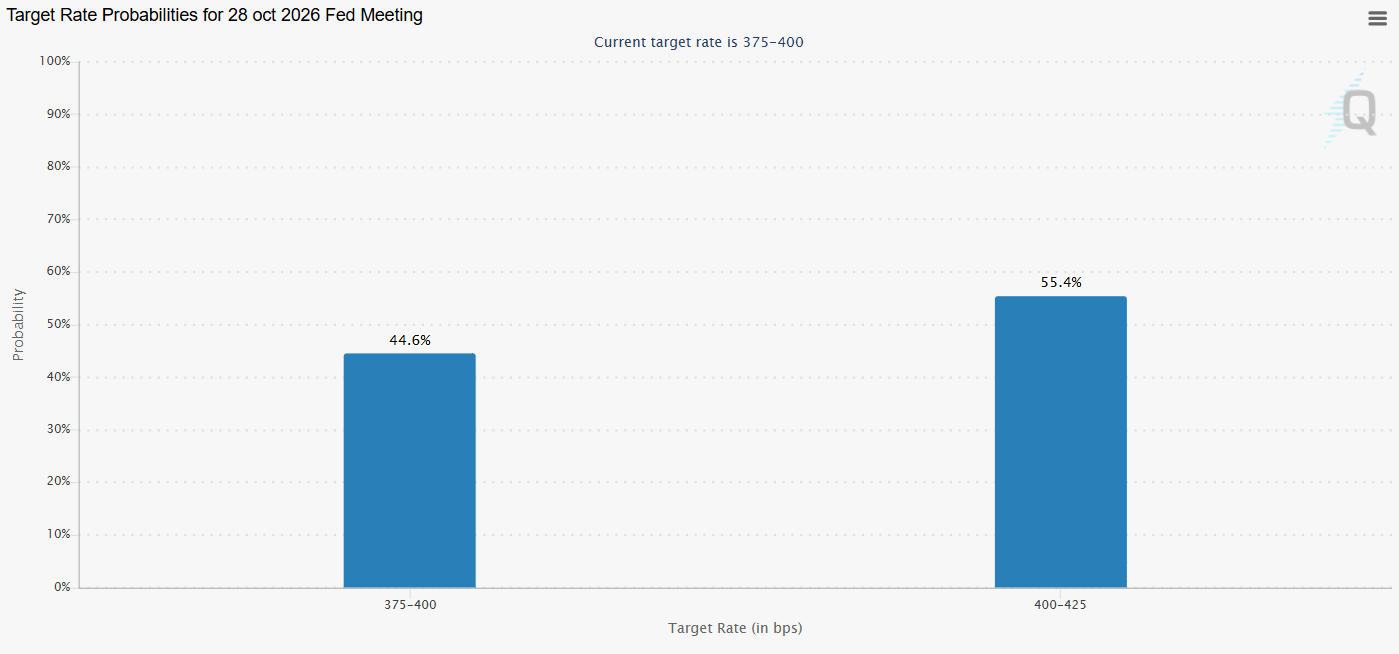
Against this backdrop, it is important to assess whether this gap could widen further in the months ahead or whether Europe may have room to reduce part of the current differential. From the Federal Reserve's perspective, markets continue to price in a relatively aggressive policy stance. According to current market probabilities, there remains roughly a 55% chance that interest rates could rise again to the 4.25% area at the October 28 meeting, suggesting that expectations for additional tightening remain intact.
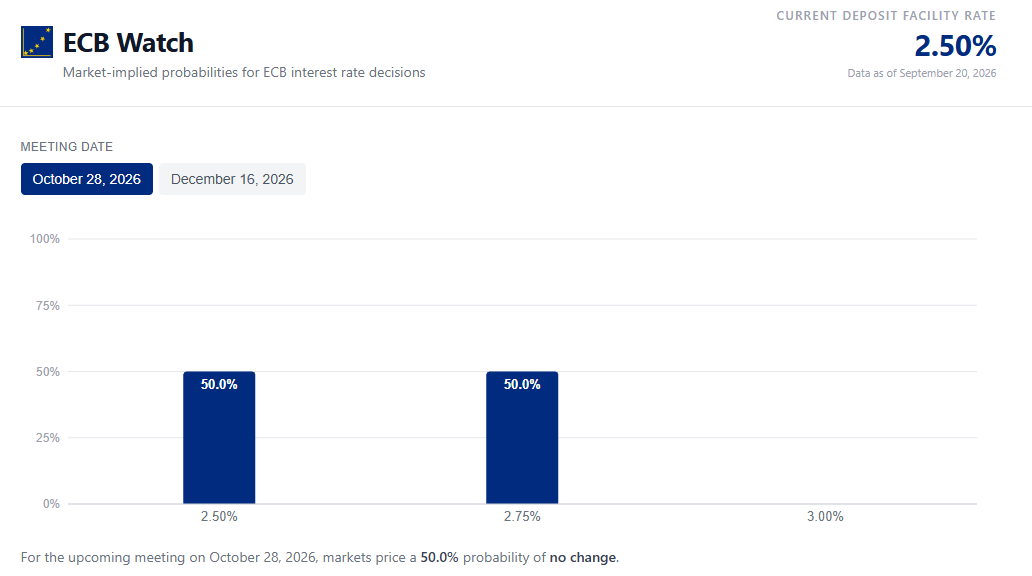
The outlook is less clear for the European Central Bank. Ahead of its own October 28 meeting, market probabilities remain almost evenly split between keeping rates unchanged and delivering another increase. This reflects greater uncertainty surrounding the future path of European monetary policy and suggests that, for now, there is not the same level of conviction regarding a more aggressive rate trajectory as there is in the United States. This is important because it increases the likelihood that the interest-rate differential could continue widening in favor of the dollar.
Source: CMEGROUP
Source: ECBWATCH
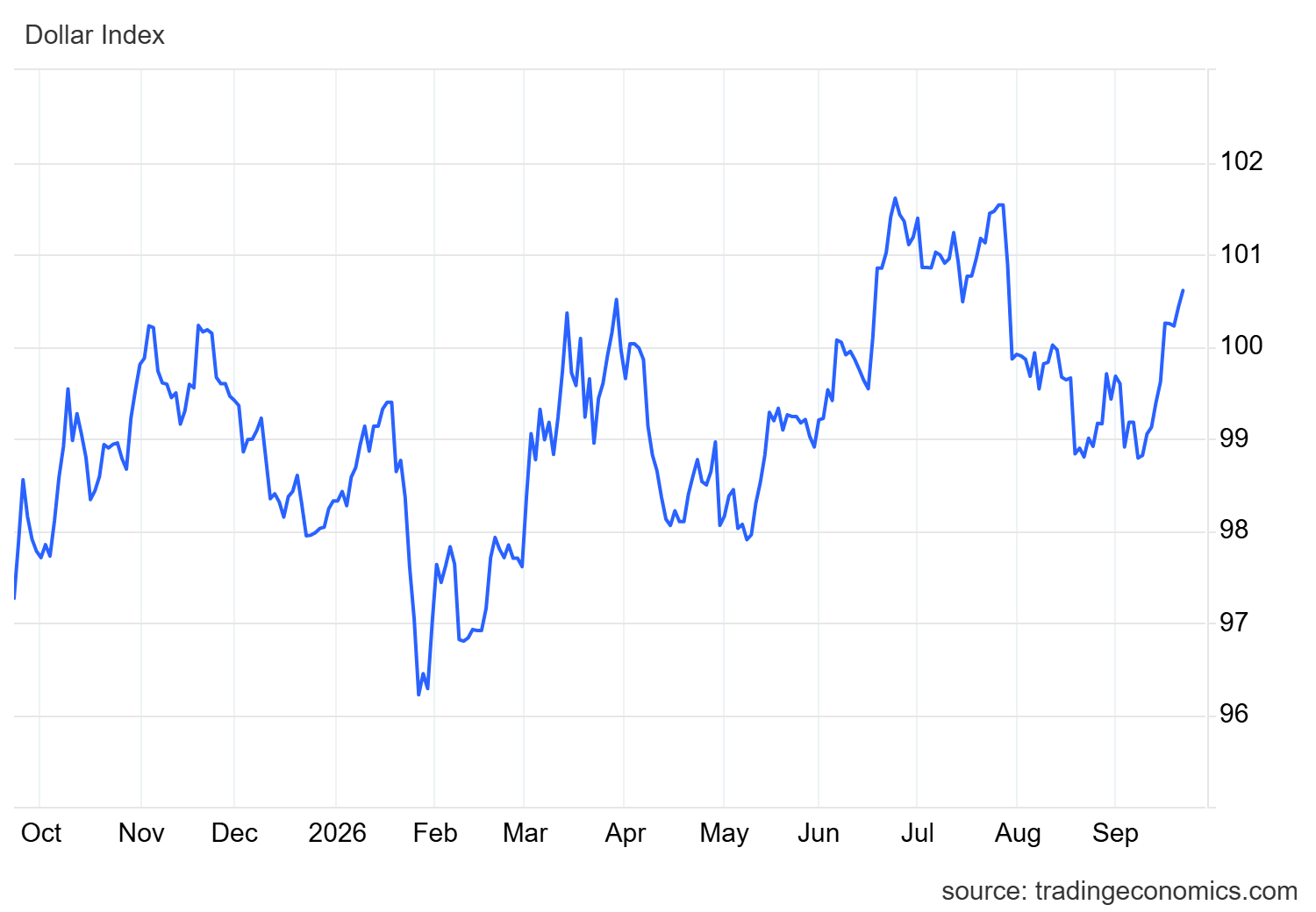
This combination of interest-rate differentials and monetary policy expectations has continued to support demand for the U.S. dollar. This can be observed in the recent performance of DXY, the index that measures the dollar's strength against its main rivals. The index continues to trade above the 100-point level while maintaining a relevant upward trend. This suggests that investors continue to favor the dollar thanks to relatively more attractive rate expectations compared with those seen across other developed economies.
Source: TradingEconomics
Taking all of this into account, the euro continues to face a challenging environment. Not only does a significant interest-rate differential remain in place, but there is also a growing perception that the Federal Reserve could remain more aggressive than the European Central Bank over the coming months. This reduces the euro's relative appeal against the dollar and could continue to complicate a more sustained recovery in EUR/USD. Therefore, as long as expectations for a more restrictive Fed remain intact, selling pressure may continue to be an important factor influencing the pair's performance in the near term.
EUR/USD Technical Forecast
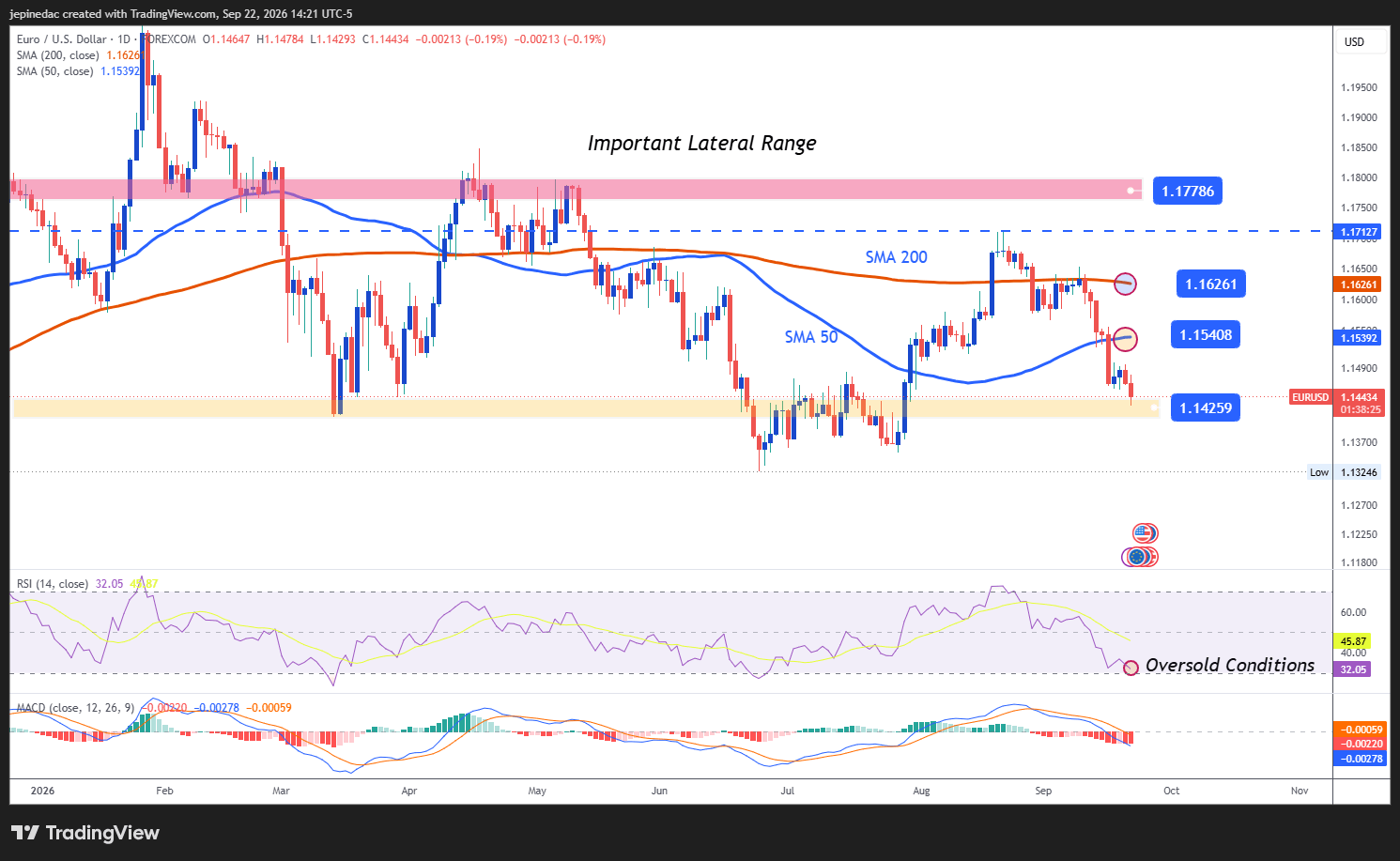
Source: StoneX, Tradingview
- Trading range regains relevance: In the absence of a clear directional trend, a broad trading range that had faded into the background weeks ago is beginning to regain importance. The structure currently maintains resistance at 1.1778 and support at 1.14259. Price action continues to develop within these levels, suggesting that the dominant market dynamic remains a lack of clear direction. As long as these barriers continue to hold, indecision may remain an important feature of EUR/USD price action over the coming sessions.
- MACD: The MACD histogram continues to develop below the 0 neutral level, a signal indicating that short-term moving-average momentum continues to favor a bearish bias. As long as this dynamic remains intact, downside pressure could continue to play a relevant role within the chart.
- RSI: A similar picture can be observed in the RSI, which remains below the 50 neutral level. This reading continues to highlight the importance of selling momentum within the market. However, it is also worth noting that the indicator is gradually approaching the 30 oversold area, a situation that may be signaling an excessive buildup of recent selling pressure and could leave room for short-term corrective rebounds.
Key Levels:
- 1.16261 – Key Resistance: This level coincides with the 200-period simple moving average and remains one of the most important upside barriers on the chart. Price action moving back toward this area could once again highlight the prevailing lack of direction and reinforce the importance of the current trading range.
- 1.15408 – Near-Term Barrier: This level aligns with the 50-period simple moving average and remains the closest reference to monitor in the event of short-term bullish corrections.
- 1.14259 – Critical Support: This level coincides with the lower boundary of the trading range and represents the most important downside barrier on the chart. Sustained price action below this area could give way to a more dominant bearish bias and open the door to a more established downtrend over the coming weeks.
Written by Julian Pineda, CFA, CMT – Market Analyst
Follow him on: @julianpineda25
Latest market news











Web Trader platform
Our sophisticated web-based platform is packed with features.
Open an account today
Experience award-winning platforms with fast and secure execution.
Economic calendar
Related articles

EUR/USD forecast: All eyes on Warsh at Jackson Hole - Forex Friday
For much of this week, the EUR/USD has been edging lower with the US dollar regaining some ground after last week’s sell-off that was triggered, in part, by the bond market worries. Investors have been unwilling to bet further against the US dollar so far this week ahead of Kevin Warsh’s keynote speech at the Jackson Hole summit, due later today.


DAX and EUR/USD forecast: Lower energy prices, yields offer support
But the question, of course, is how much further oil prices and bond yields can fall. For now, the combination is supportive of risk assets and is helping to sustain a relatively benign decline in the dollar. The focus today will be on US core PCE inflation, due for release shortly, while Nvidia’s second-quarter earnings will provide another test for risk appetite after the US markets close – not just for US indices but for global tech-heavy indices given the influence Nvidia has over the global tech and AI names.

Oil, EUR/USD Forecast: Two trades to watch 2608
Oil falls further on diplomatic hopes for a Middle East resolution. EUR/USD consolidates ahead of U.S. inflation and Jackson Hole.
