


EURUSD Analysis Euro ends the week under pressure
It was not an easy week for the euro. Now, EUR/USD has accumulated a decline of more than 0.4% over the last 2 trading sessions, reflecting significant short-term weakness in the European currency.
Written by
Julian Pineda
Market Analyst
It was not an easy week for the euro. Now, EUR/USD has accumulated a decline of more than 0.4% over the last 2 trading sessions, reflecting significant short-term weakness in the European currency.
For now, selling pressure remains relevant, in a context where the European Central Bank decision failed to generate greater appeal for the euro. In addition, the U.S. dollar continues to show some strength as global risk events drive demand for liquidity and more defensive assets.
If this dynamic continues, selling pressure could continue to shape EUR/USD movements over the next few trading sessions.

Does the ECB fail to support the euro?
During the week, the European Central Bank held its interest rate decision. The deposit rate remained unchanged at 2.25%, while the refinancing rate stayed stable at 2.4%.
In its message after the meeting, the central bank maintained a cautious pause. The institution noted that inflationary pressures could remain relevant, but also highlighted that economic dynamics in Europe may not support consistent interest rate increases.
For this reason, the ECB showed a fairly neutral stance toward possible changes in monetary policy. It also emphasized that future decisions will depend on economic data meeting by meeting, without committing to a specific path in the short term.
After the event, the central bank’s neutrality did not generate a relevant increase in the euro’s relative appeal. This is mainly because the ECB did not confirm an outlook for higher rates, while in the United States, the Federal Reserve continues to show signs that it could adopt a more aggressive stance over the coming months.
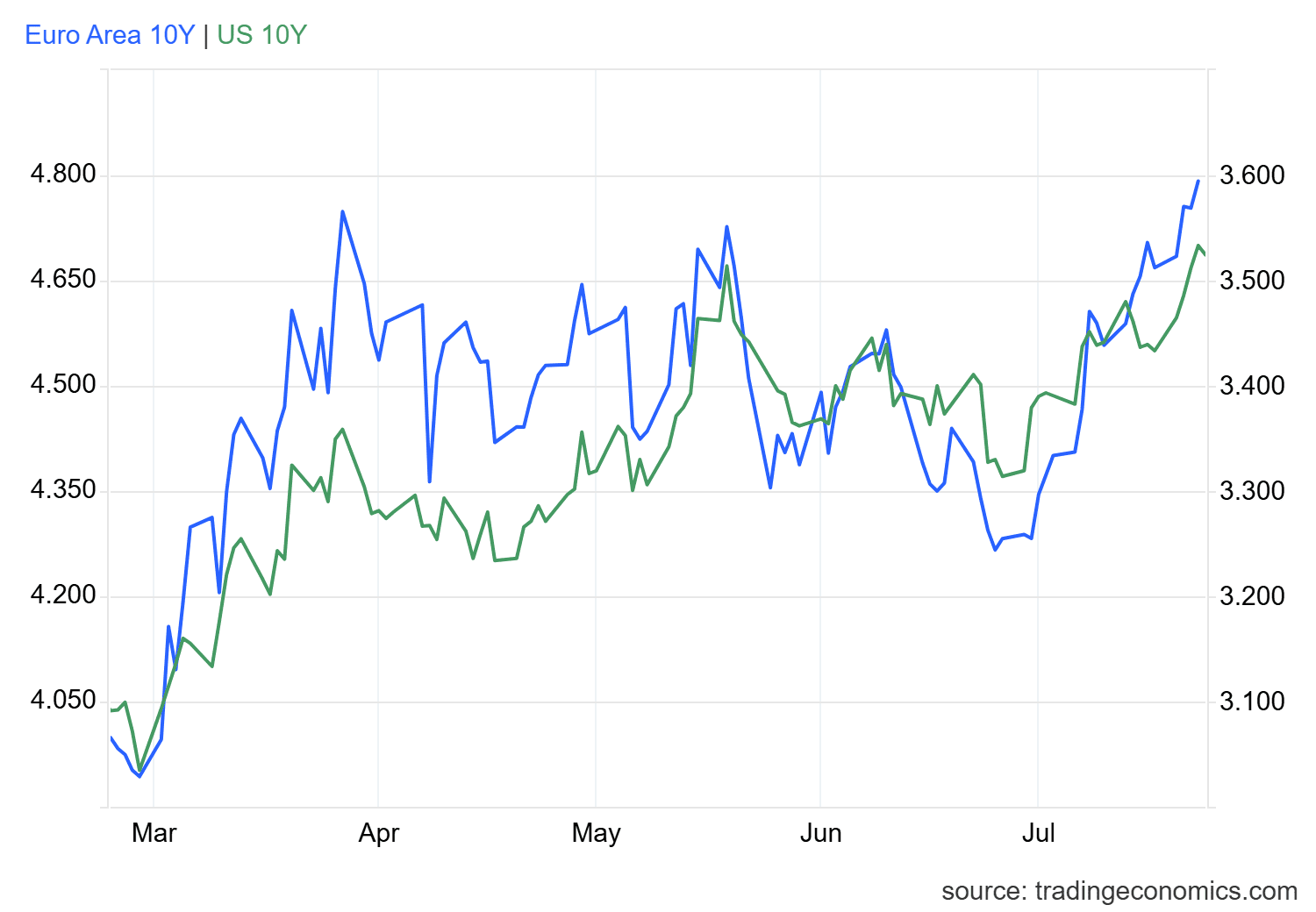
This difference keeps in place a dynamic that has been relevant for several months in the bond market. Currently, U.S. 10-year Treasury yields remain above 4.6%, while European bond yields barely reach the 3.6% area.
Source: TradingEconomics
The differential between both markets continues to favor dollar-denominated investments. The United States maintains a more attractive bond market, supported by a potentially more aggressive Fed, while Europe faces a more indecisive central bank and a less competitive bond yield.
This dynamic could continue to limit appetite for the euro in the short term. If the rate differential remains in place, EUR/USD could continue to face selling pressure over the next few trading sessions.
Is uncertainty becoming relevant?
The week was also marked by important risk events for markets. On one hand, new escalations in the Middle East conflict pushed WTI crude oil above 90 dollars per barrel. On the other hand, new comments from the U.S. government pointed to a global tariff plan of up to 12.5% for several countries.
Both events have revived market concerns about a broader trade conflict and possible additional inflationary pressure. This combination could be affecting risk sentiment and driving flows toward safe-haven assets in the short term.
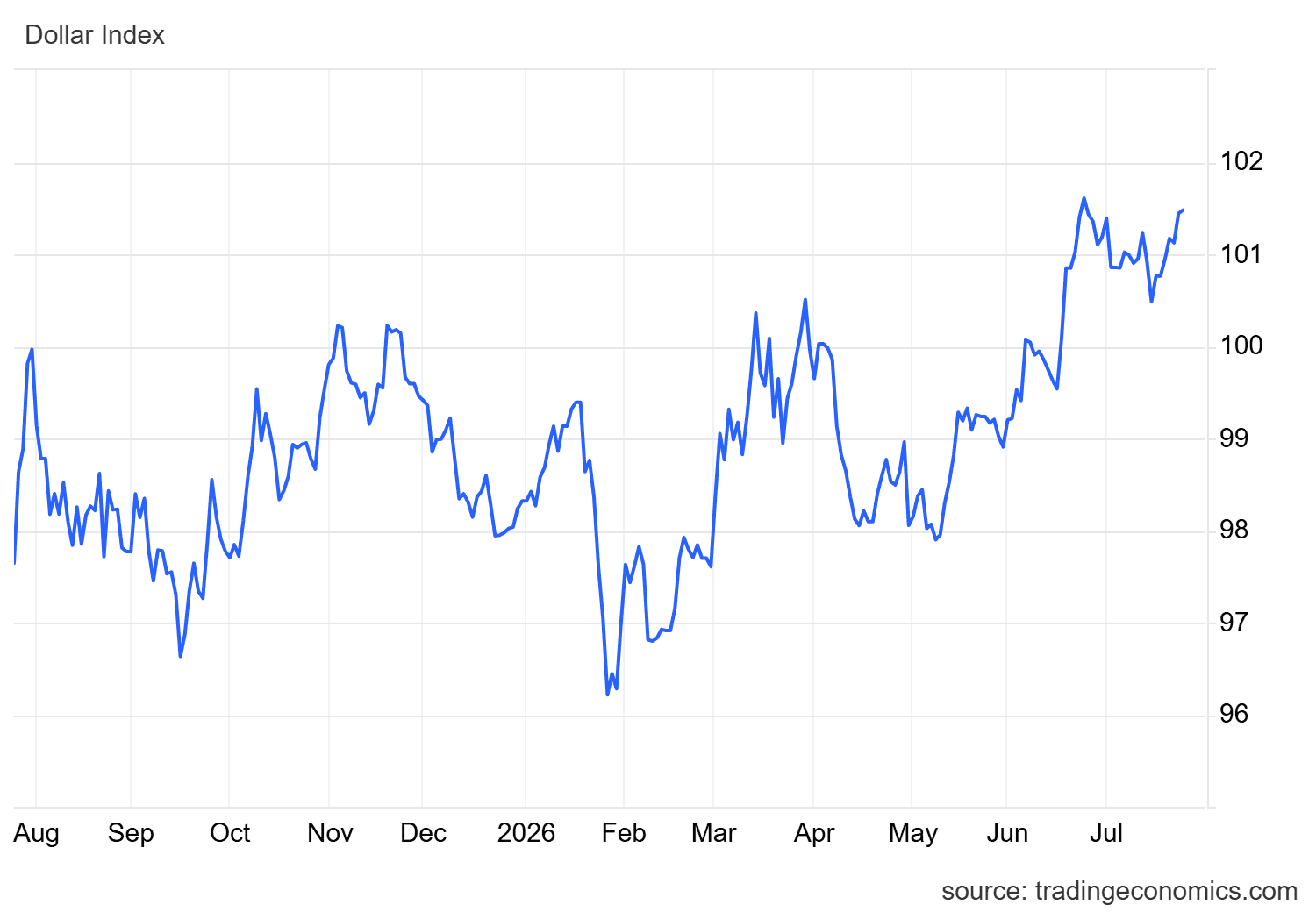
In this scenario, the behavior of the U.S. dollar is key. In previous months, the currency had already acted as one of the market’s main liquidity safe havens. During this week, that dynamic became evident again in the DXY index, which measures the dollar’s strength against its main peers.
As risks increased across markets, the DXY maintained consistent gains and moved back above the 101-point area, approaching the year’s highs again. This behavior reflects relevant demand for the dollar in an environment of greater uncertainty.
Source: TradingEconomics
The role of the U.S. dollar remains fundamental. If the market once again sees the currency as a liquidity safe haven, and risk events continue to generate uncertainty, demand for the USD could remain strong.
This would make a consistent recovery in the euro more difficult and could continue to generate selling pressure on EUR/USD over the next few trading sessions.
Technical forecast for EUR/USD
Source: StoneX, Tradingview
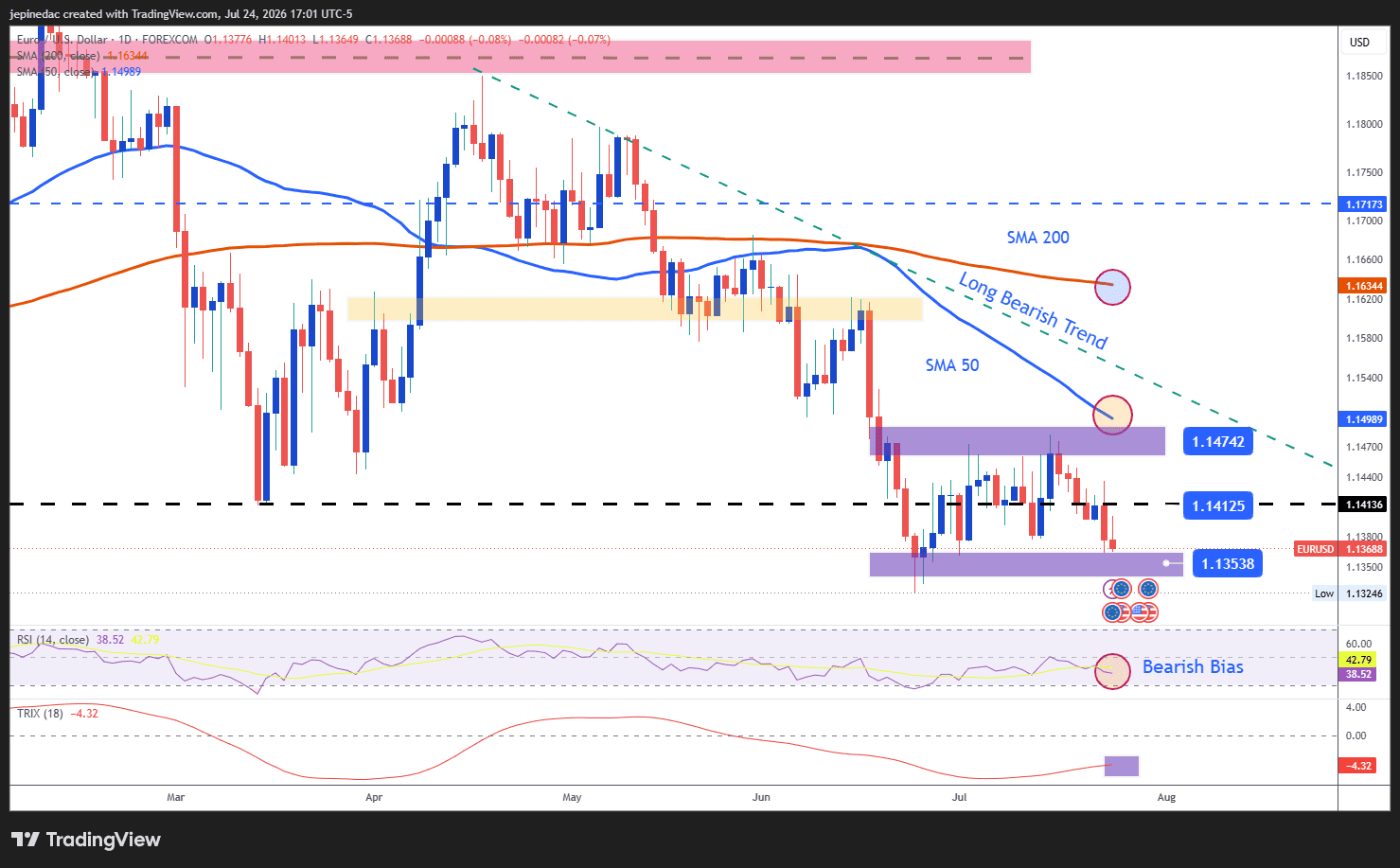
- Sideways range begins to emerge: Although the daily EUR/USD chart still maintains a major long-term bearish trend line, a short-term sideways range has also started to form. This range has an upper barrier near 1.14742 and a lower area around 1.13538. If selling pressure fails to stabilize consistently, this sideways structure could remain relevant over the next few trading sessions.
- RSI: Now, the RSI remains below the neutral 50 level, suggesting that selling impulses continue to dominate the average of the last 14 sessions. If this dynamic continues, the indicator could keep highlighting a relevant selling bias in EUR/USD over the next few sessions.
- TRIX: The TRIX also remains below the neutral 0 line, indicating that bearish strength in the exponential moving averages remains relevant. This reading reinforces the possibility that the selling bias could continue to be important in the short term.
Key levels:
- 1.14742 – Relevant resistance: This recent weekly high coincides with the area of the 50-period simple moving average. Price movements above this level could start to put the bearish structure and current sideways range at risk, opening room for a more relevant buying bias over the coming weeks.
- 1.14125 – Near-term barrier: This level corresponds to an important retracement area on the daily chart. If price fails to move consistently away from this reference, it could continue to highlight a phase of indecision and give more relevance to the current sideways channel over the next few sessions.
- 1.13538 – Definitive support: This level corresponds to the 2026 low zone and represents the most important bearish barrier in the short term. Moves below this area would mark new relevant lows for the year and could reinforce a dominant selling bias, potentially extending the long bearish trend line over the coming weeks.
Written by Julian Pineda, CFA, CMT – Market Analyst
Follow him on: @julianpineda25







Web Trader platform
Our sophisticated web-based platform is packed with features.
Open an account today
Experience award-winning platforms with fast and secure execution.
Economic calendar
Related articles

Euro Short-term Outlook: EUR/USD Pullback Nears Pivotal Uptrend Support 8 28 2026
Warsh's comments accelerated the EUR/USD selloff, raising the stakes as buyers look to stabilize the broader recovery.


Nasdaq 100 Forecast: NDX slips ahead of Fed Chair Warsh’s speech
U.S. stocks are edging lower on Friday, giving back some of yesterday's gains after Nvidia's strong outlook revived the tech trade. The focus has now shifted firmly to Fed Chair Kevin Warsh's Jackson Hole speech, with investors looking for more clarity on the outlook for interest rates.


EUR/USD forecast: All eyes on Warsh at Jackson Hole - Forex Friday
For much of this week, the EUR/USD has been edging lower with the US dollar regaining some ground after last week’s sell-off that was triggered, in part, by the bond market worries. Investors have been unwilling to bet further against the US dollar so far this week ahead of Kevin Warsh’s keynote speech at the Jackson Hole summit, due later today.
