


EURUSD Update Dollar strength keeps weighing on the euro
These remain difficult sessions for the euro in the short term. Despite the recovery attempt at the start of the week, EUR/USD is still down by a little more than 0.1% during the session and is once again trading below the 1.1400 area. This shows that the bearish bias has not fully disappeared in the short term.
Written by
Julian Pineda
Market Analyst
These remain difficult sessions for the euro in the short term. Despite the recovery attempt at the start of the week, EUR/USD is still down by a little more than 0.1% during the session and is once again trading below the 1.1400 area. This shows that the bearish bias has not fully disappeared in the short term.
The selling pressure that has been in place for several weeks has come alongside a stronger US dollar, supported by Federal Reserve policy expectations. In Europe, however, the European Central Bank and inflation dynamics have not shown signs of a more aggressive stance, which for now limits the appeal of euro-denominated investments. This scenario could remain relevant and keep selling pressure on EUR/USD over the next few trading sessions.

Is the European Central Bank failing to convince?
Several weeks have already passed since the latest European Central Bank decision, and since then, the institution’s main message has been to maintain a wait-and-see stance. The central bank has not committed to a specific path for the remainder of 2026, as inflation data still show some pressure, but economic growth could limit the possibility of more consistent rate hikes over the coming months.
At the moment, the probability table for the next European Central Bank decision remains fairly stable. It shows a probability close to 93.00% that the 2.25% deposit rate will remain unchanged, suggesting that the market does not expect a phase of steady rate hikes over the next few months of trading.
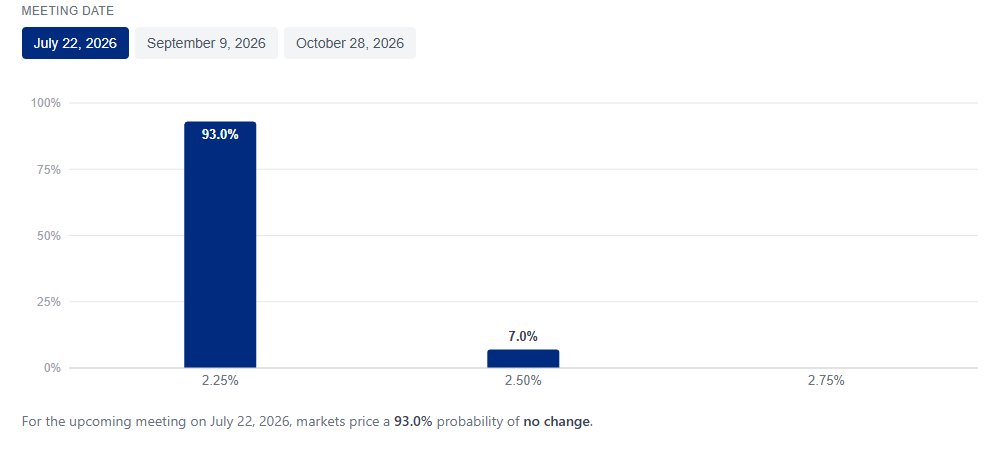
Source: ECBWATCH
The reason behind this outlook is that, although inflation remains an important pillar for the European Central Bank’s monetary policy and is still above the 2.00% target, recent pressures have started to show some signs of easing. Most of the increase in annual inflation took place between February, March, and April, when the rate moved from 1.6% to 3.00%. However, in May, the figure came in at 3.2%, showing a slowdown compared with the pace of increase seen in previous months.
This dynamic could be giving the central bank room to stay in wait-and-see mode, instead of adopting a more aggressive monetary policy stance over the next few months. If inflation data continue to show signs of moderation, it may become less likely that the ECB enters a new phase of rate hikes and instead maintains a more cautious approach.
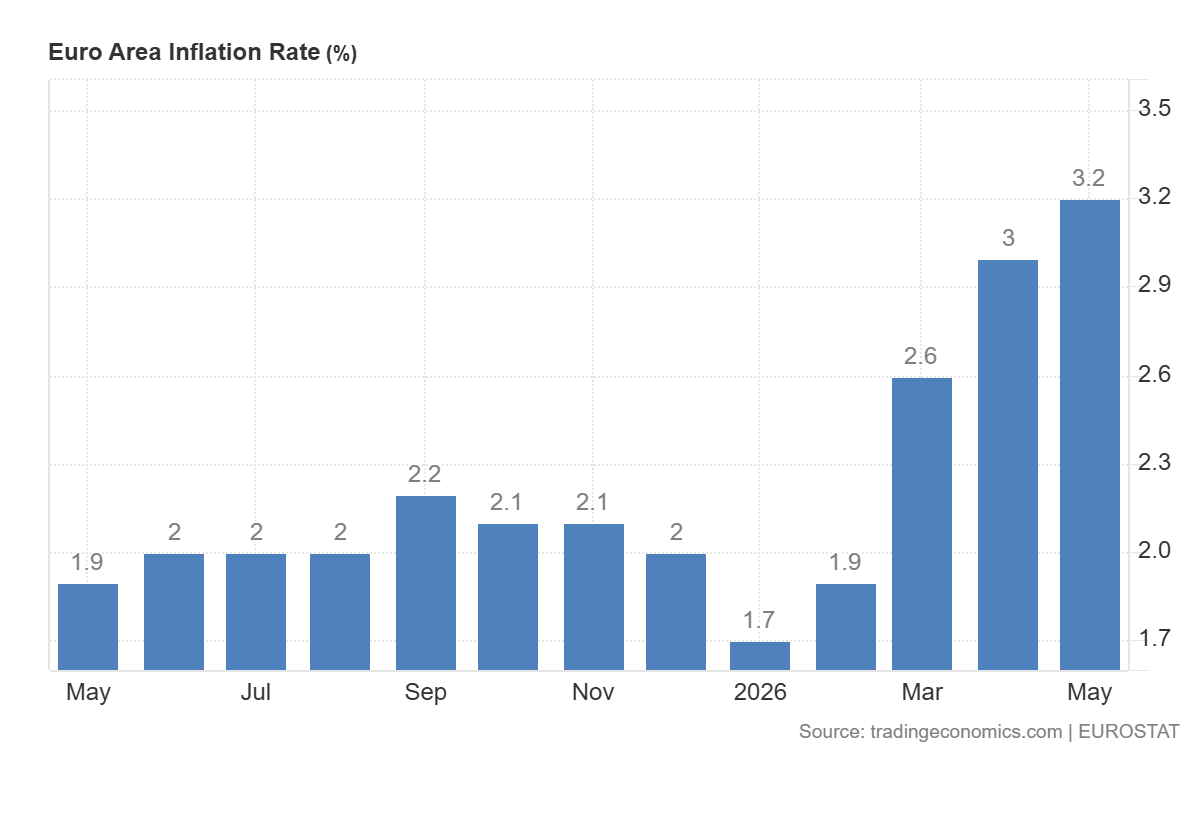
Source: TradingEconomics
This scenario puts European bonds in a difficult position. Over the past few sessions, yields have remained relatively stagnant near the 3.2% area, without any relevant increases. Meanwhile, US 10-year Treasury yields have shown more consistent gains and continue to offer a more attractive yield, close to 4.4%.
This shows that, on one hand, a potentially more aggressive Federal Reserve continues to support the stability and appeal of US bonds. On the other hand, a more neutral and cautious stance from the European Central Bank is not helping the gap between both markets narrow in the short term.
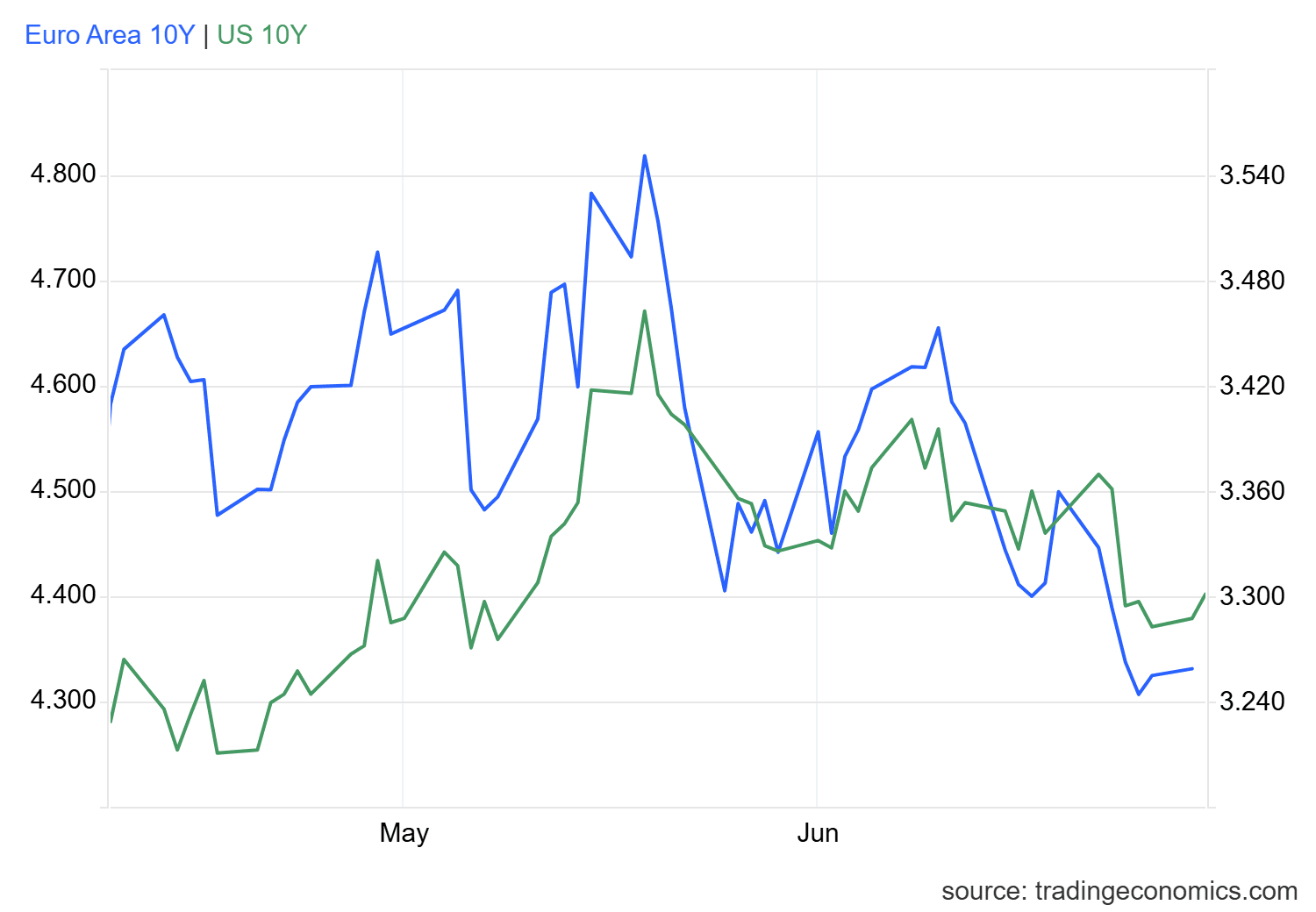
Source: TradingEconomics
As long as the US bond market continues to offer more attractive yields than European bonds, the dollar could keep a relative advantage over the euro. This dynamic reinforces the appeal of dollar-denominated investments and makes it harder for EUR/USD to find a consistent recovery scenario in the short term.
For this reason, if inflation in Europe continues to give the central bank room to remain cautious and no clear signs of new rate hikes appear, the relative rate differential with the United States could continue to pressure EUR/USD over the next few trading sessions.
Technical outlook for EUR/USD
Source: StoneX, Tradingview
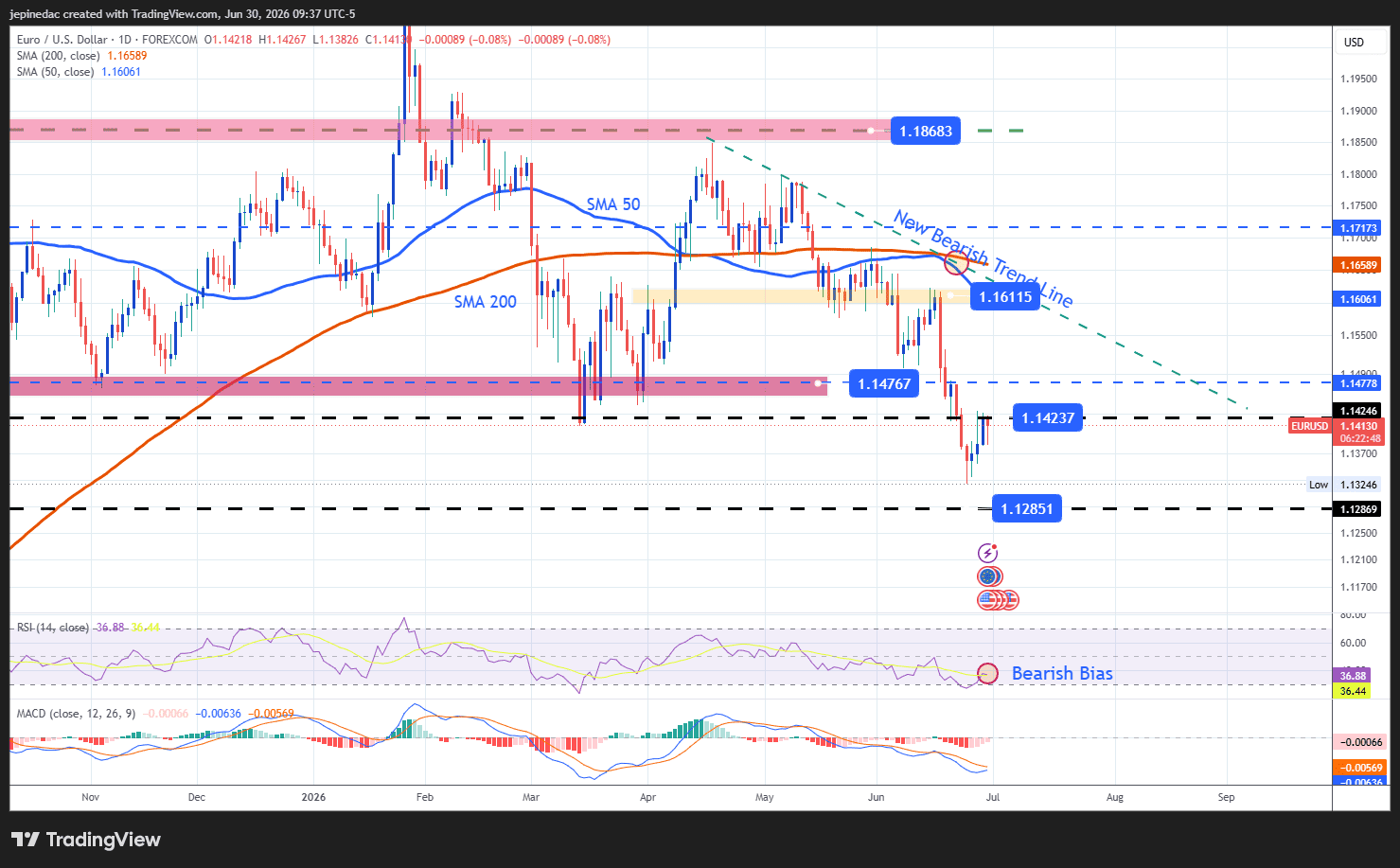
- The bearish trendline remains dominant: Since late April, EUR/USD has been forming a bearish trendline on the daily chart, as price action started to weaken in the short term. So far, there have been no relevant bullish corrections over the past few weeks, meaning there are no clear signs that the bearish structure is at risk. For now, this trendline remains the most important technical structure to watch. If selling pressure continues over the next few sessions, the bearish trend could keep extending and remain the main driver of EUR/USD price action in the short term.
- RSI: The RSI continues to trade below the 50 neutral area, indicating that the average selling impulses over the last 14 sessions remain relevant. As long as this dynamic continues, bearish pressure could keep weighing on the chart over the next few sessions.
- MACD: A similar dynamic can be seen in the MACD, as the histogram continues to move below the 0 line. This reflects important selling strength in the average of short-term moving averages and reinforces the relevance of the bearish bias on the daily chart.
Key levels:
- 1.16115 – Relevant resistance: This level is located near the latest highs recorded in previous weeks and coincides with the 50-period simple moving average. For now, this area remains the most important upside barrier. A return toward this level could put the bearish trendline at risk and open the door to a possible shift in bias over the coming weeks.
- 1.14767 – Nearby barrier: This level previously acted as an important support and now becomes a relevant neutrality zone. Several price pullbacks have taken place around this point, so movements close to this area could reinforce a phase of indecision and even open the door to the formation of a sideways range in the short term.
- 1.12851 – Definitive support: This level is associated with a neutrality zone observed in May 2025 and now works as the main support to watch. If price continues to move closer to this area, the selling bias would be reinforced, increasing the possibility of an extension of the bearish trendline over the coming weeks.
Written by Julian Pineda, CFA, CMT – Market Analyst
Follow him on: @julianpineda25







Web Trader platform
Our sophisticated web-based platform is packed with features.
Open an account today
Experience award-winning platforms with fast and secure execution.
Economic calendar
Related articles

Euro Short-term Outlook: EUR/USD Pullback Nears Pivotal Uptrend Support 8 28 2026
Warsh's comments accelerated the EUR/USD selloff, raising the stakes as buyers look to stabilize the broader recovery.


Nasdaq 100 Forecast: NDX slips ahead of Fed Chair Warsh’s speech
U.S. stocks are edging lower on Friday, giving back some of yesterday's gains after Nvidia's strong outlook revived the tech trade. The focus has now shifted firmly to Fed Chair Kevin Warsh's Jackson Hole speech, with investors looking for more clarity on the outlook for interest rates.


EUR/USD forecast: All eyes on Warsh at Jackson Hole - Forex Friday
For much of this week, the EUR/USD has been edging lower with the US dollar regaining some ground after last week’s sell-off that was triggered, in part, by the bond market worries. Investors have been unwilling to bet further against the US dollar so far this week ahead of Kevin Warsh’s keynote speech at the Jackson Hole summit, due later today.
