


USDCAD Forecast Canadian dollar shows indecision ahead of employment data
Since the final days of June, the Canadian dollar has been unable to build relevant strength against the U.S. dollar. Now, average USD/CAD movements remain close to 0.2% in the short term, showing a neutral bias that has become evident again in the behavior of both currencies.
Written by
Julian Pineda
Market Analyst
Since the final days of June, the Canadian dollar has been unable to build relevant strength against the U.S. dollar. Now, average USD/CAD movements remain close to 0.2% in the short term, showing a neutral bias that has become evident again in the behavior of both currencies.
For now, CAD has not managed to regain confidence ahead of the employment data release. An additional slowdown in this indicator could keep the Bank of Canada on a neutral policy path, limiting the support from higher rates and making it harder for the Canadian dollar to regain appeal in the short term.
In addition, new updates around the conflict in the Middle East could be key for USD strength. Together, these events could continue to highlight a phase of indecision, or even relevant buying pressure, around USD/CAD over the next few sessions.

What to expect from employment in Canada?
Tomorrow’s session is expected to bring the release of Canada’s employment change data. So far, expectations point to a significant decline from the previous reading, with the creation of around 11.2 thousand jobs in June. This figure would come in well below the May reading, which stood near 87.8 thousand jobs created.
Looking at the broader behavior of employment in Canada over the last few months, the data shows a mixed dynamic, with consistent signs of weakness. May was the only month that managed to post a solid figure, but overall, employment data has shown fragility. This trend could be confirmed with tomorrow’s release, especially if the result comes in below expectations, as it would reaffirm a relevant labor market problem in Canada compared to other countries where the slowdown is not as significant.
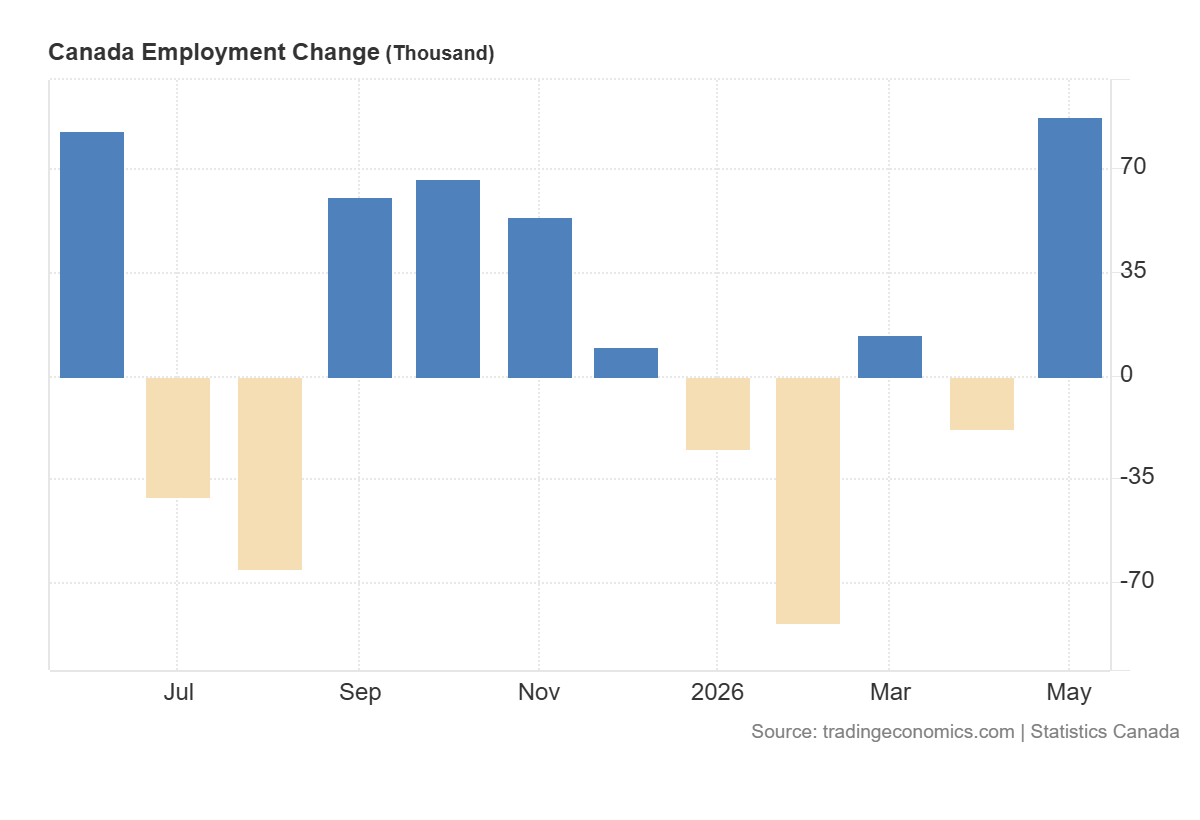
Source: TradingEconomics
This outlook could be relevant for the Bank of Canada, as weaker employment, or even a reading below expectations, could reduce the need to raise the interest rate, which currently remains around 2.25%. This could lead the central bank to maintain a wait-and-see stance before considering meaningful changes to monetary policy.
In fact, so far, the probability table shows an 88% chance that the interest rate will remain unchanged at the July 15 decision. For the September decision, a probability above 70% has also started to emerge that this dynamic will persist.
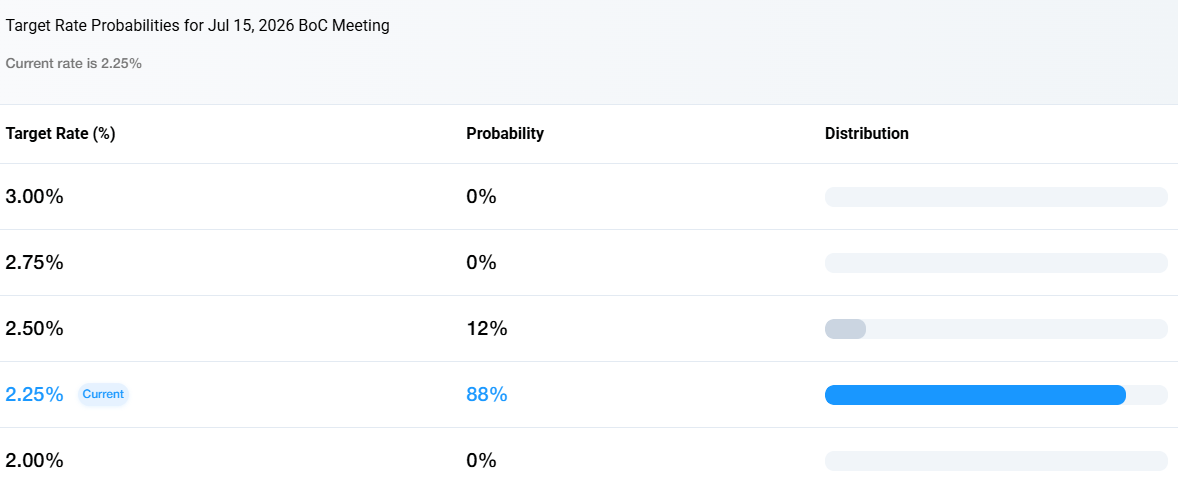
Source: Bankofcanadaodds
The employment data release is key. If the report confirms a sharper-than-expected slowdown, expectations for a neutral monetary policy stance from the Bank of Canada could be reinforced over the coming months.
This would limit the appeal of rates in Canada, especially compared to a Federal Reserve that is still approaching scenarios of potential rate hikes. In this context, the differential against the 3.75% rate in the United States could continue to favor USD-denominated investments over those denominated in CAD.
For this reason, a significant decline in employment change could maintain a phase of indecision or even relevant buying pressure in USD/CAD over the next few sessions.
Does the Middle East matter?
Another important event to consider is the situation in the Middle East. The latest updates have shown that the United States would be willing to sit down for negotiations, while Trump’s comments continue to point toward maintaining a diplomatic path.
However, an environment of confusion has developed, as during the last 2 sessions a new escalation of the conflict seemed inevitable amid fresh attacks. This has increased doubts over whether a potential peace agreement can take place in the short term.
In this scenario, the behavior of the U.S. dollar is key. The DXY index, which measures the dollar’s strength, showed a relevant increase above the 101-point area in previous sessions as new attacks returned. During the latest session, however, it weakened again amid the relative calm generated by additional comments from the United States.
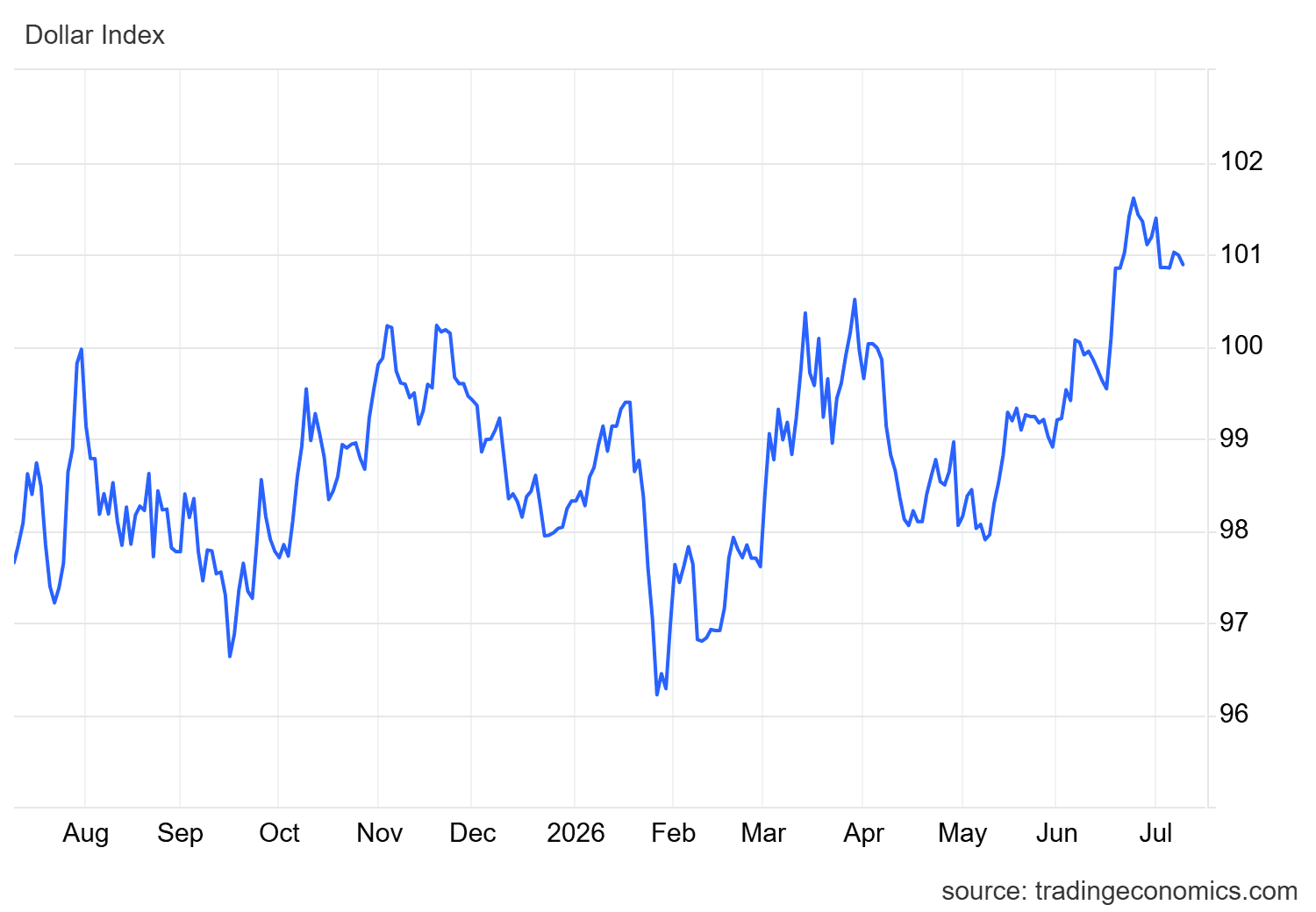
Source: TradingEconomics
This point is important because, for months, the dollar has been considered a liquidity safe-haven currency during repeated escalations of the conflict. This could become relevant again if no concrete negotiations are seen in the short term.
In that scenario, additional safe-haven demand for the U.S. dollar could appear, making it harder for the Canadian dollar to recover ground in the short term. This could also open the door to relevant buying pressure around USD/CAD over the next few sessions.
Technical outlook for USD/CAD
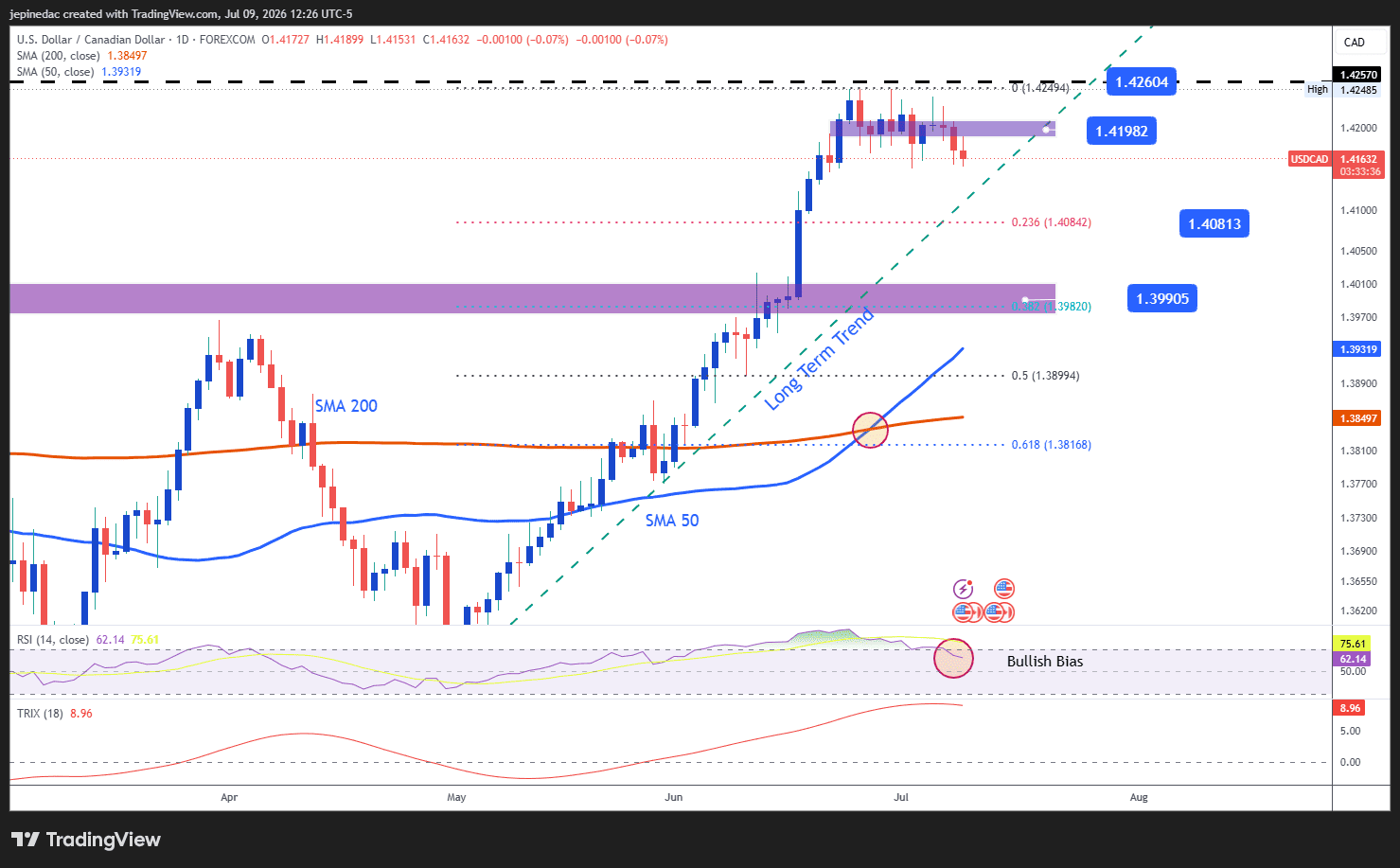
Source: StoneX, Tradingview
- Bullish trend continues to dominate: Since the first days of May, USD/CAD has maintained a relevant bullish trend line. This structure has marked an important buying bias, also reinforced by the bullish crossover of the 50-period moving average above the 200-period moving average, signaling a shift from a bearish structure to a more relevant bullish structure. For now, there is no bearish correction strong enough to put this technical pattern at risk, which is why it remains the most important structure to watch and could continue to dominate movements over the next few sessions.
- RSI: The RSI remains above the 50 level, suggesting that buying momentum has remained relevant over the last 14 sessions. If the indicator continues to hold above the neutral area, this could continue to reflect an important buying bias over the next few sessions.
- TRIX: The TRIX line maintains a bullish slope above its neutral zone, reinforcing the presence of buying strength in long-term exponential moving averages and highlighting the importance of a broad buying bias. However, the curve has also started to flatten steadily, which may be signaling exhaustion in buying strength. This could reflect a relevant phase of indecision over the next few sessions or a possible pause in the buying bias seen in previous weeks.
Key levels:
- 1.42604 – Relevant resistance: This important high has not been seen consistently since April 2025 and represents the main short-term bullish barrier. Moves toward this zone would reinforce the current buying bias and could open room for an extension of the bullish trend line over the next few sessions.
- 1.41982 – Near-term barrier: This is the most relevant neutral and retracement zone from recent trading sessions. Price movements too close to this level could highlight consistent neutrality and even open room for a possible short-term sideways range.
- 1.40813 – Crucial support: This bearish barrier coincides with the area marked by the 23.6% Fibonacci level. Price movements that begin to approach this level could end the bullish trend line and open room for a more dominant selling bias over the coming trading weeks.
Written by Julian Pineda, CFA, CMT – Market Analyst
Follow him on: @julianpineda25








Web Trader platform
Our sophisticated web-based platform is packed with features.
Open an account today
Experience award-winning platforms with fast and secure execution.
Economic calendar
Related articles

Euro Short-term Outlook: EUR/USD Pullback Nears Pivotal Uptrend Support 8 28 2026
Warsh's comments accelerated the EUR/USD selloff, raising the stakes as buyers look to stabilize the broader recovery.

EUR/USD forecast: All eyes on Warsh at Jackson Hole - Forex Friday
For much of this week, the EUR/USD has been edging lower with the US dollar regaining some ground after last week’s sell-off that was triggered, in part, by the bond market worries. Investors have been unwilling to bet further against the US dollar so far this week ahead of Kevin Warsh’s keynote speech at the Jackson Hole summit, due later today.


AUD/CAD breakout puts the Bradman barrier in sight
A bullish breakout has pushed AUD/CAD to its highest level since early 2021. Whether it can clear 0.9994 may determine if the move extends well above parity.
