


USDJPY Forecast Will Inflation Data Be Enough to Move the Yen?
It has not been an easy week for the Japanese yen. Over the last four trading sessions, USD/JPY has posted a move of only around 0.3%, reflecting a market that continues to lack clear direction and remains trapped in a phase of neutrality.
Written by
Julian Pineda
Market Analyst
It has not been an easy week for the Japanese yen. Over the last four trading sessions, USD/JPY has posted a move of only around 0.3%, reflecting a market that continues to lack clear direction and remains trapped in a phase of neutrality. This dynamic is partly driven by expectations surrounding Japan's preliminary inflation figures, released today, as well as market caution ahead of developments that could influence the U.S. dollar during tomorrow's session. As a result, this lack of consensus could continue to favor a more balanced and indecisive environment around USD/JPY in the coming trading sessions.
Preliminary Inflation Data Day Arrives in Japan
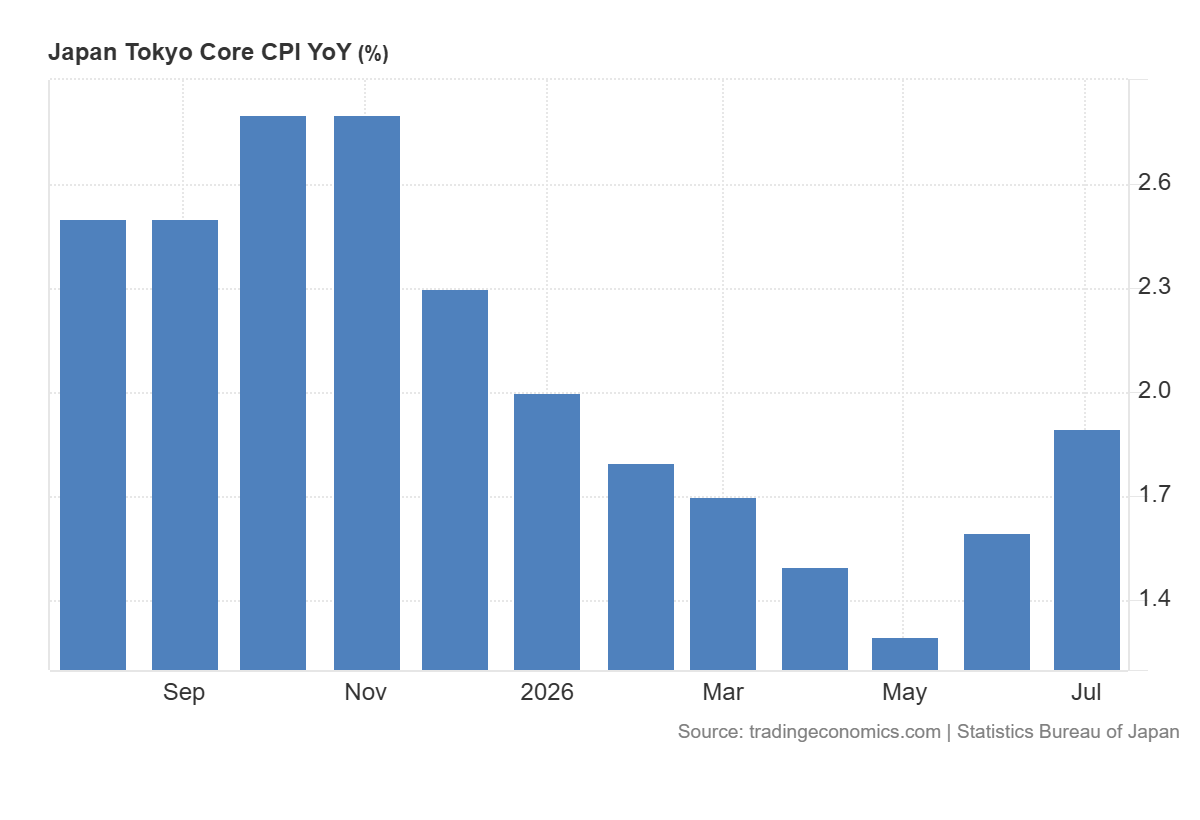
Today's focus is on the release of the Tokyo Core CPI, an indicator that measures underlying inflation in Tokyo while excluding food prices, one of the most volatile components of the consumer basket. Market expectations point to a slight slowdown toward 1.8%, down from the 1.9% recorded in July.
The data is particularly relevant because core inflation has followed a relatively steady upward path since May, when it stood near 1.3%. This trend has kept investors focused on inflationary pressures in Japan and on how the Bank of Japan may respond over the coming months.
Source: TradingEconomics
The release could have important implications for the yen, especially after recent comments from Deputy Governor Ryozo Himino, who suggested that additional rate hikes may be necessary to prevent inflation from accelerating further. In fact, markets currently assign a probability of more than 80% to a rate increase at the Bank of Japan's meeting scheduled for mid-September.
For this reason, the inflation reading carries particular significance. A figure above the previous month's level could reinforce the view that inflation remains a challenge for the Japanese economy, increasing pressure on the central bank to maintain a more hawkish stance. Under such a scenario, confidence in yen-denominated assets could receive additional support.
However, the yen's outlook does not depend solely on expectations surrounding the Bank of Japan. Even if markets continue to price in a more restrictive monetary policy, that alone may not be enough to trigger a significant recovery in the currency. Nevertheless, it could act as a supporting factor that limits the ability of rival currencies, particularly the U.S. dollar, to extend gains in a consistent manner. As a result, a stronger inflation reading could ultimately reinforce the current environment of balance and indecision within USD/JPY price action.
The U.S. Dollar Also Reaches a Critical Point
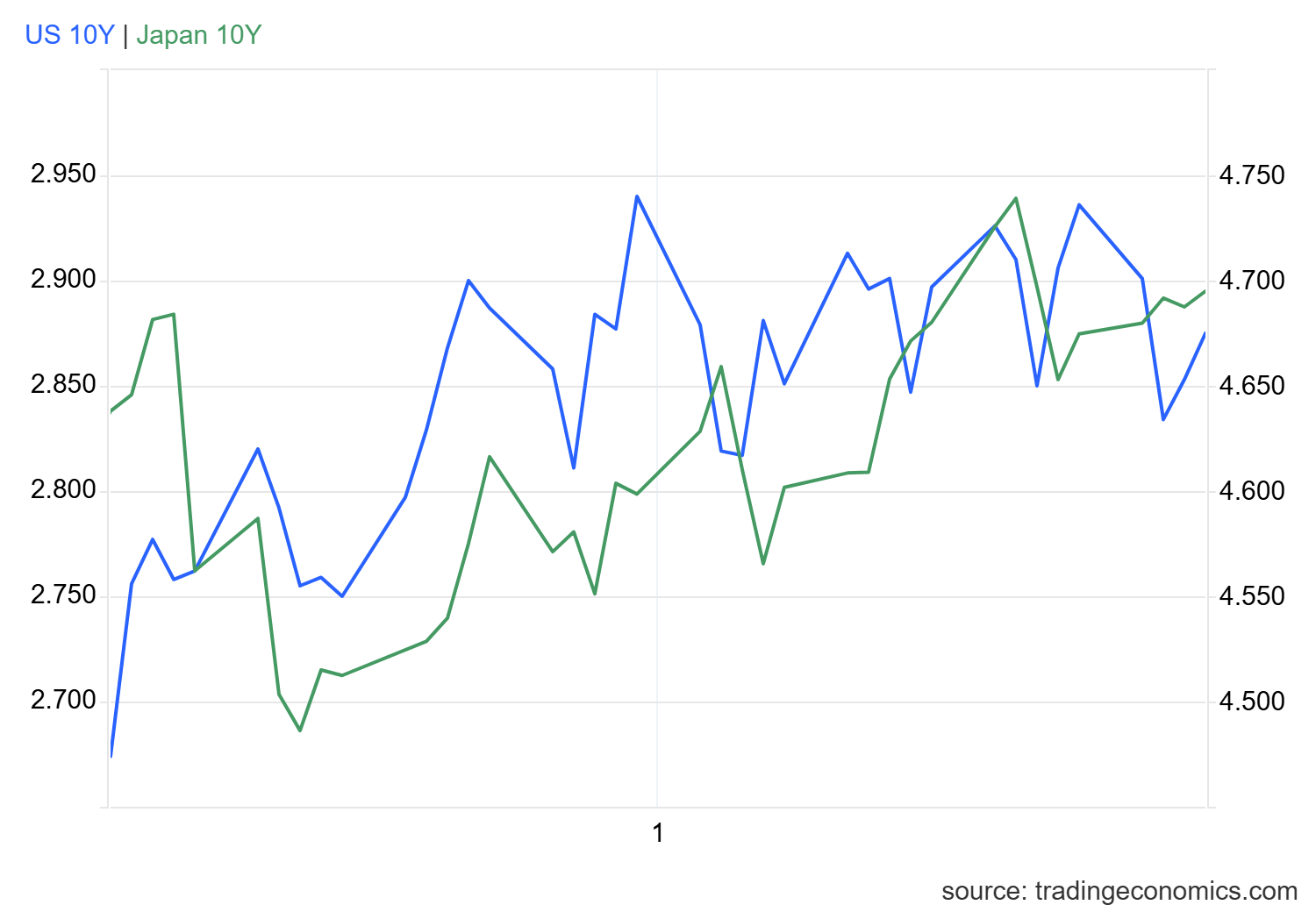
Another important factor for USD/JPY is the recent behavior of bond markets in both Japan and the United States. Japanese 10-year government bond yields remain relatively stable around 2.9%, while their U.S. counterparts have regained strength and are once again approaching the 4.7% area.
This recovery in U.S. yields is noteworthy because it tends to improve the relative attractiveness of dollar-denominated assets, helping sustain demand for the U.S. currency in the short term.
Source: TradingEconomics
Part of this dynamic is tied to market expectations surrounding Kevin Warsh's appearance at the Jackson Hole symposium. Investors remain attentive to any signals that could provide greater clarity regarding the Federal Reserve's policy path over the coming months.
Should Warsh's comments point toward a more hawkish stance from the U.S. central bank, Treasury yields could find additional support and further strengthen the dollar's position. In such a scenario, the yen could face increasing difficulty in regaining ground, and the current period of neutrality may begin to tilt modestly in favor of the U.S. dollar within USD/JPY trading.
USD/JPY Technical Outlook
Source: StoneX, Tradingview
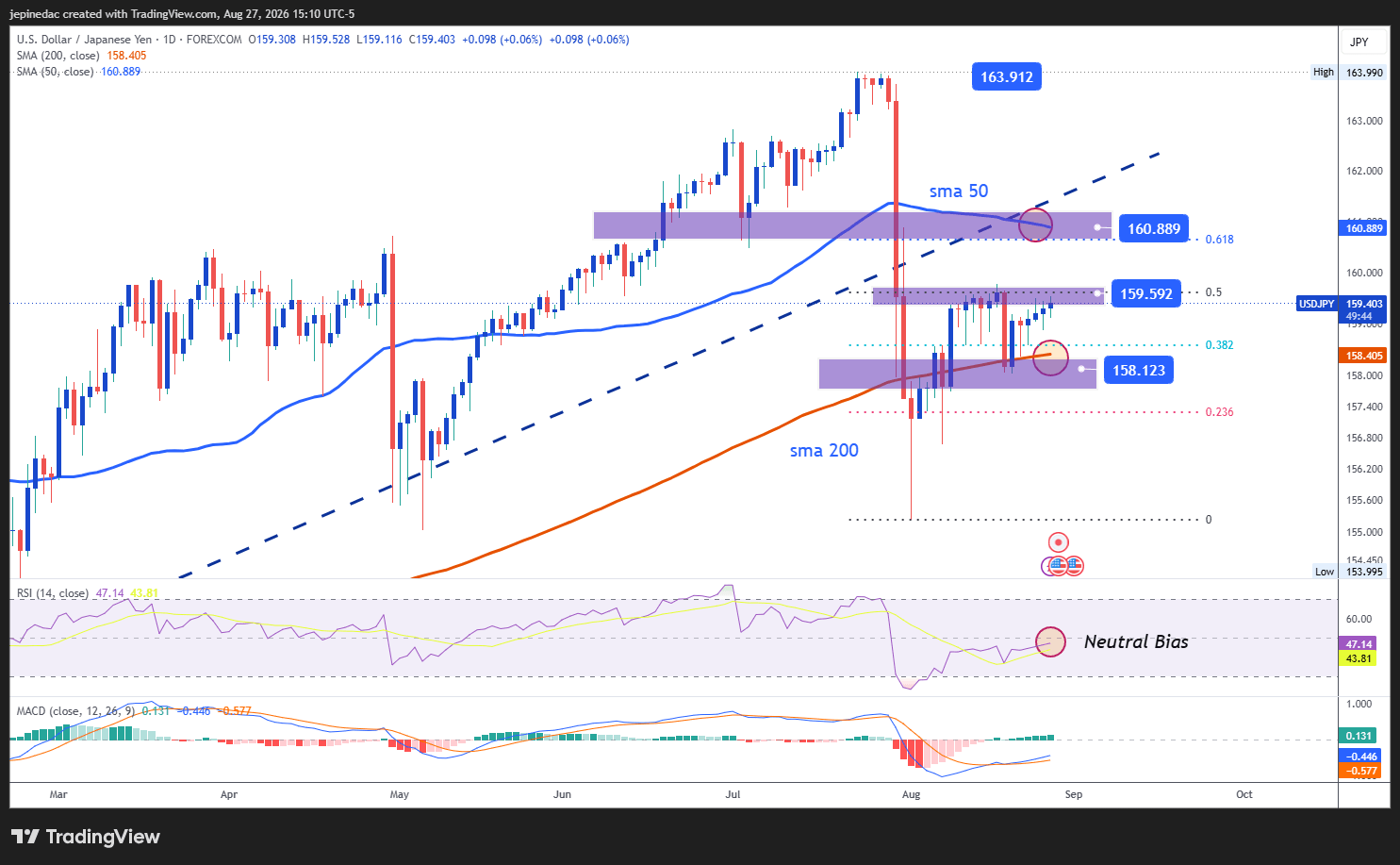
- Lack of Direction Remains the Dominant Theme: After USD/JPY broke away from the major bullish trendline that had dominated much of the price action over recent months, the market entered a more balanced phase. Unless prices manage to break through key technical levels, this lack of direction could continue to dominate and may even open the door to a more defined consolidation range in the sessions ahead.
- RSI: The RSI continues to fluctuate around the neutral 50 level, signaling a balance between bullish and bearish momentum over the past 14 trading sessions. As long as this reading remains in place, the absence of a clear directional bias is likely to remain a key feature of the chart.
- MACD: A similar picture can be seen in the MACD, where the histogram remains close to the neutral 0 line. This behavior reflects equilibrium in the average strength of short-term moving averages and reinforces the possibility that a neutral market environment could remain relevant over the coming sessions.
Key Levels to Watch:
- 160.889 – Key Resistance: This level coincides with the most relevant 61.8% Fibonacci retracement on the chart and also aligns with the 50-period moving average. Price action that manages to establish itself above this area could favor the emergence of a stronger bullish bias and restore relevance to the previous bullish structure.
- 159.592 – Nearby Barrier: This level represents one of the chart's main equilibrium zones and aligns with several important retracement areas from previous sessions. As long as prices continue trading around this level, an indecisive environment could remain dominant and potentially reinforce the formation of a short-term consolidation range.
- 158.123 – Primary Support: This area corresponds to recent lows and also aligns with the 200-period Simple Moving Average. A sustained break below this level could reinforce a more pronounced bearish bias and potentially open the door to the formation of a short-term downtrend.
Written by Julian Pineda, CFA, CMT – Market Analyst
Follow him on: @julianpineda25
Latest market news










Web Trader platform
Our sophisticated web-based platform is packed with features.
Open an account today
Experience award-winning platforms with fast and secure execution.
Economic calendar
Related articles

EUR/USD forecast: All eyes on Warsh at Jackson Hole - Forex Friday
For much of this week, the EUR/USD has been edging lower with the US dollar regaining some ground after last week’s sell-off that was triggered, in part, by the bond market worries. Investors have been unwilling to bet further against the US dollar so far this week ahead of Kevin Warsh’s keynote speech at the Jackson Hole summit, due later today.


Bitcoin Forecast: BTC/USD Back to $80K Ahead of Warsh’s Jackson Hole Speech
After surging over $15,000 in the past 10 days alone, there is risk of a near-term pullback if Warsh says anything remotely hawkish at Jackson Hole - what are the levels to watch from here?


DAX and EUR/USD forecast: Lower energy prices, yields offer support
But the question, of course, is how much further oil prices and bond yields can fall. For now, the combination is supportive of risk assets and is helping to sustain a relatively benign decline in the dollar. The focus today will be on US core PCE inflation, due for release shortly, while Nvidia’s second-quarter earnings will provide another test for risk appetite after the US markets close – not just for US indices but for global tech-heavy indices given the influence Nvidia has over the global tech and AI names.