


USDCAD Forecast Canadian dollar stays weak ahead of NFP
Over the last few trading sessions, a phase of neutrality has become more evident in USD/CAD. The average move over the last four sessions has barely exceeded 0.15%, reflecting a lack of clear short-term direction.
Written by
Julian Pineda
Market Analyst
Over the last few trading sessions, a phase of neutrality has become more evident in USD/CAD. The average move over the last four sessions has barely exceeded 0.15%, reflecting a lack of clear short-term direction.
This dynamic remains in place as the market waits for the US NFP release. The data could affect the strength of the US dollar, especially if it shows a stronger-than-expected labor market. A strong reading could revive concerns about a more aggressive Federal Reserve and bring renewed appeal to the USD, creating buying pressure in USD/CAD again. Until the data is released, however, indecision could remain the dominant scenario.

NFP day is approaching
Tomorrow, July 2, at 8:30 a.m. ET, the US NFP employment report will be released. This will be one of the most important events of the week, as it could confirm or change expectations around Federal Reserve policy and directly affect the strength of the US dollar in the short term.
Now, the market expects the report to show the creation of 114,000 jobs in June, below the 172,000 jobs recorded in May. Still, the labor market has remained relatively solid since March, with no significant drops in employment figures. For this reason, it will be important to see whether the data remains above 100,000 jobs, as a strong reading could keep inflation concerns alive in the United States. A robust labor market can support consumption and, in turn, reinforce price pressures.
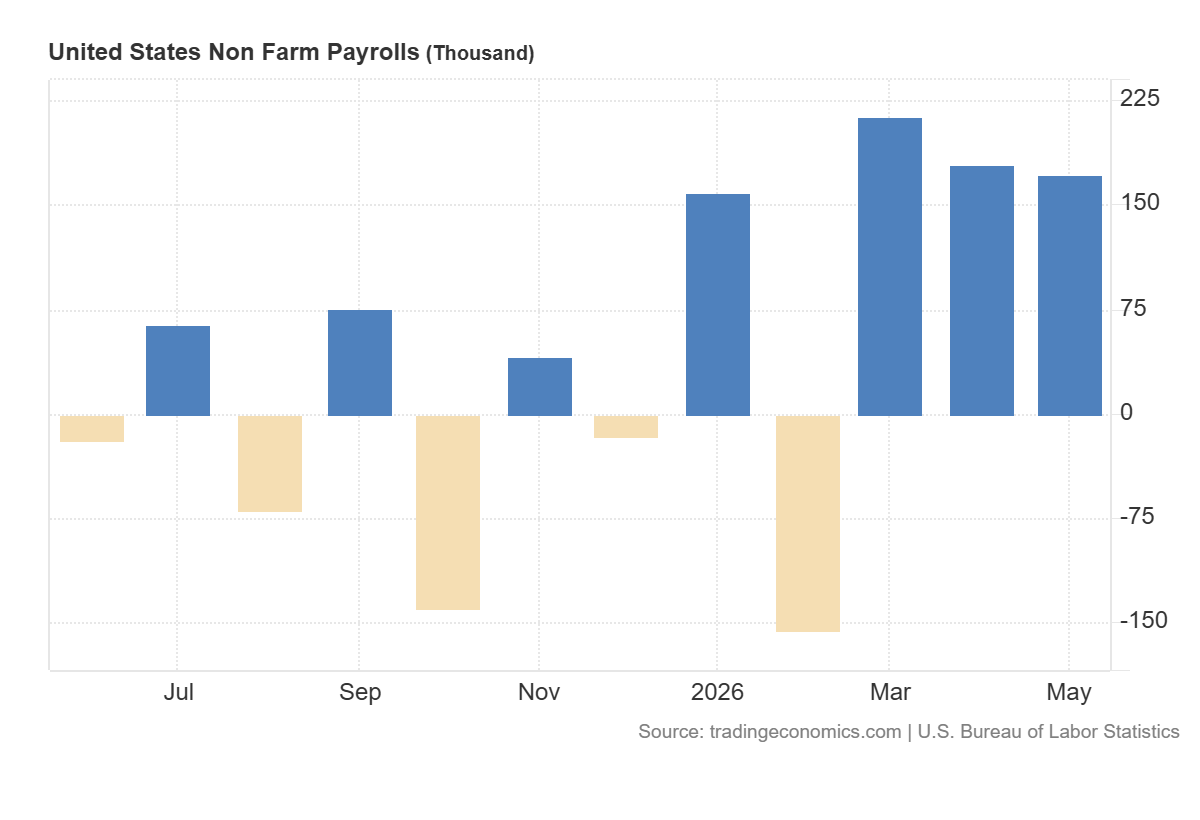
Source: TradingEconomics
In this context, the employment report is key for US monetary policy. So far, the market does not expect major surprises, as the Federal Reserve probability table has not shown meaningful changes. For the September decision, there is still a probability above 50% of a possible rate hike toward the 4.00% area, from the current 3.75%.
Compared with one week ago, there have also been no major changes, as the probability of a rate hike was close to 49% at that time. This suggests that the market has not yet found enough reasons to change its view on the Fed before the NFP release.
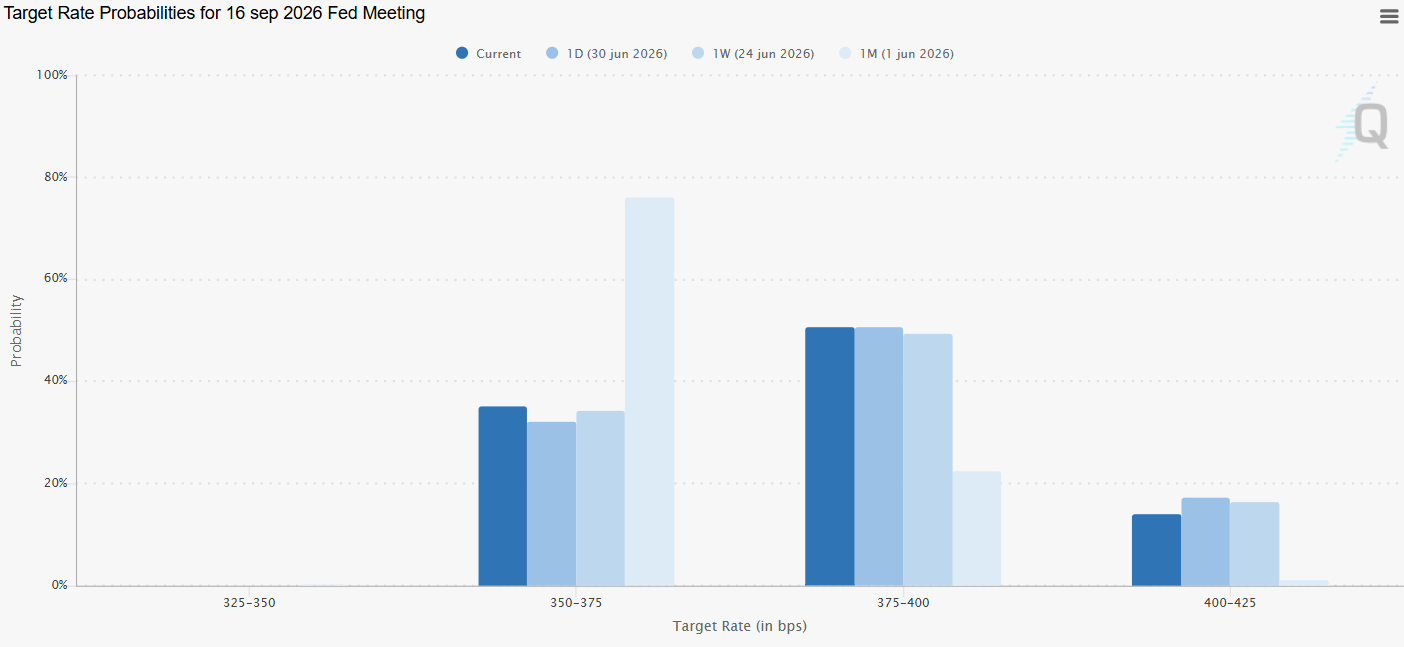
Source: CMEGROUP
Over the last few weeks, and even months, one of the factors supporting the US dollar against the Canadian dollar has been the rate differential. The United States currently has a reference rate of 3.75%, while Canada stands at 2.25%. This difference has made dollar-denominated assets look more attractive.
In the current scenario, this dynamic remains relevant. The possibility of a more aggressive Federal Reserve has been one of the main drivers behind the recent strength in the USD, as it could widen the gap with Canada even further over the next few months. This is also reflected in the DXY index, which measures the dollar’s strength against a basket of currencies. The index has managed to hold above 101 points, an area not seen for several months, showing that demand for the dollar remains firm.
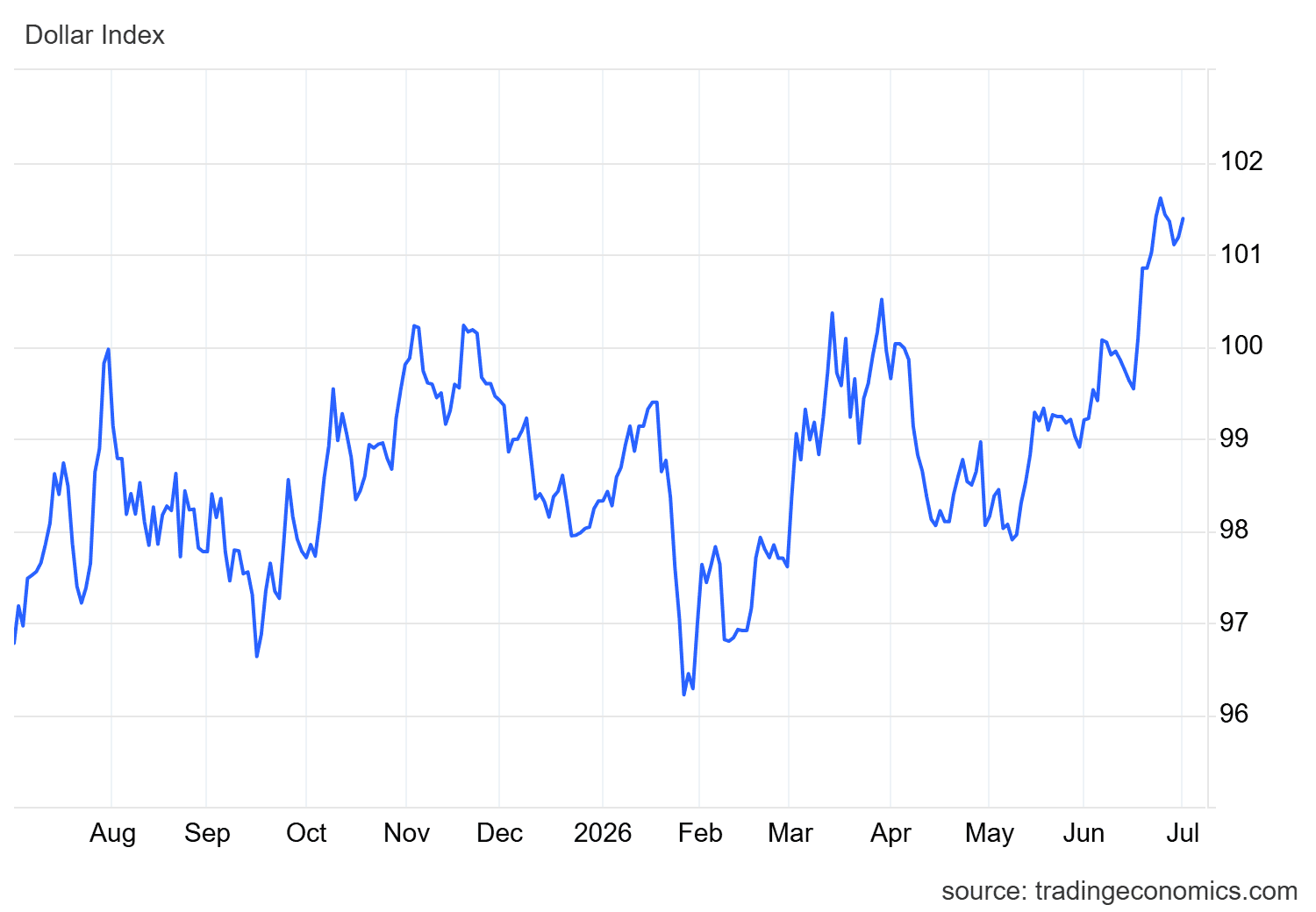
Source: Tradingeconomics
This makes the setup important for USD/CAD. An NFP reading above expectations could give the Federal Reserve more reasons to maintain a restrictive stance or even consider new rate hikes. This would reinforce the appeal of dollar-denominated investments against peers such as Canada.
In this environment, the Canadian dollar could continue to struggle to recover ground in the short term, while USD/CAD could maintain relevant buying pressure over the next few trading sessions.
Technical outlook for USD/CAD
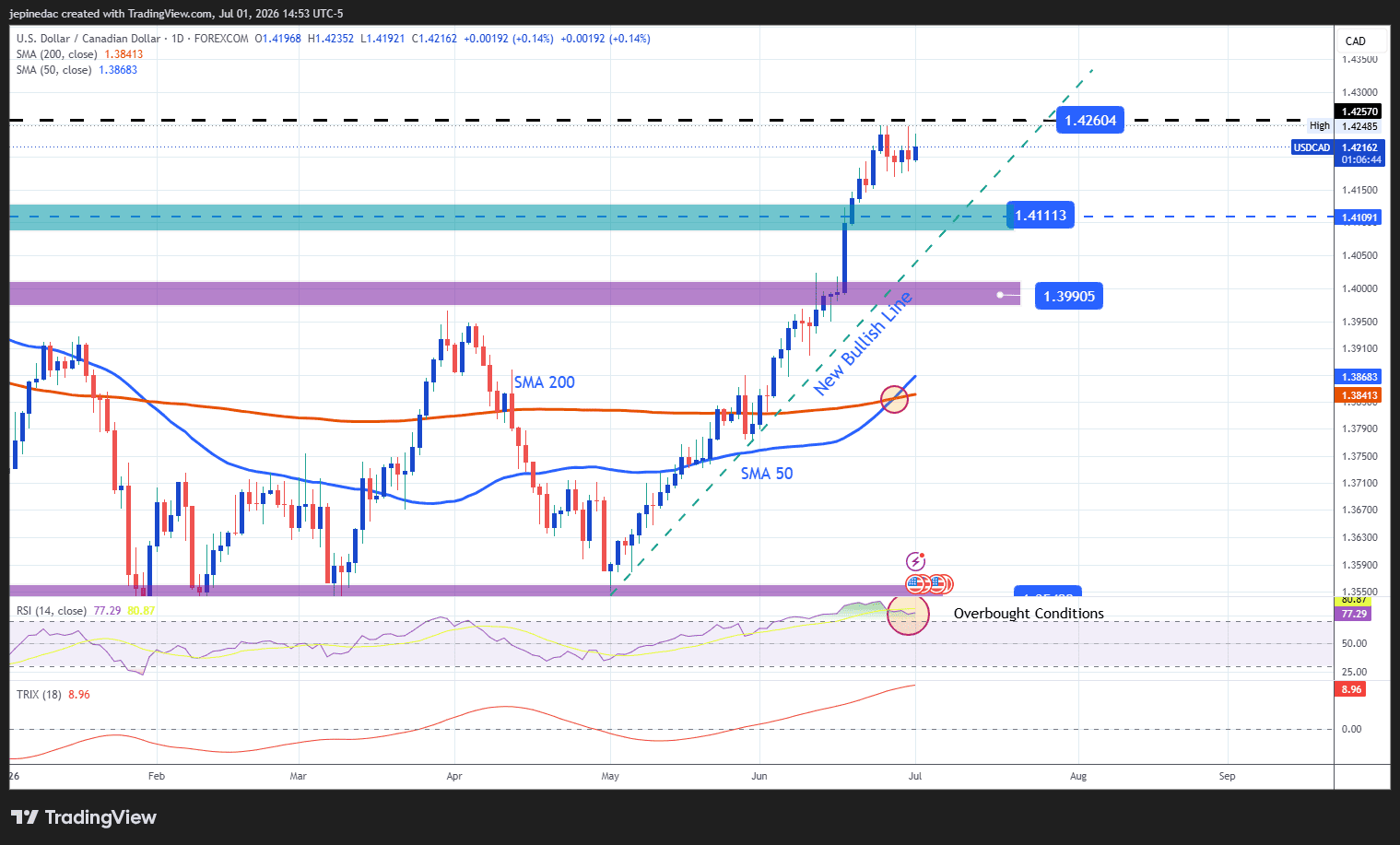
Source: StoneX, Tradingview
- The bullish trend continues to dominate: Since the first days of May, USD/CAD has maintained a relevant bullish trendline. This structure has supported an important buying bias, also reinforced by the bullish crossover of the 50-period moving average above the 200-period moving average. For now, there is no bearish correction strong enough to put this structure at risk. Because of this, the bullish trendline could remain the most important technical pattern over the next few trading sessions.
- RSI: The RSI remains above the 50 level, suggesting that buying momentum is still relevant. However, the indicator also remains above the 70 overbought area, which may signal an excess of bullish strength. This could open the door to short-term bearish corrections over the next few sessions.
- TRIX: The TRIX line maintains a bullish slope above its neutral zone, reinforcing the presence of buying strength in long-term exponential moving averages. From a broader perspective, this indicator continues to favor relevant bullish pressure on the chart.
Key levels:
- 1.42604 – Relevant resistance: Important high area that has not been seen consistently since April 2025 and represents the main short-term upside barrier. Moves toward this zone would reinforce the current buying bias and could allow the bullish trendline to extend over the next few sessions.
- 1.41113 – Nearby barrier: Neutrality zone that coincides with highs from previous months. This level stands as a tentative barrier if short-term bearish corrections begin to form in USD/CAD.
- 1.39905 – Crucial support: Level associated with a relevant pullback zone from November 2025 and, for now, the most important downside barrier. It also aligns with the base of the bullish trendline. Moves toward this point could put the current buying structure at risk and open the door to a more relevant selling bias over the coming weeks.
Written by Julian Pineda, CFA, CMT – Market Analyst
Follow him on: @julianpineda25







Web Trader platform
Our sophisticated web-based platform is packed with features.
Open an account today
Experience award-winning platforms with fast and secure execution.
Economic calendar
Related articles

Canadian Dollar Forecast: USD/CAD Weekly Reversal Puts Yearly Uptrend Back in Focus 8 29 2026
USD/CAD has staged its strongest weekly advance since June, shifting the focus to whether a more durable low is finally taking shape.


USD/JPY weekly outlook: Payrolls may challenge the Fed’s hawkish reset
USD/JPY has finally woken from its slumber. Payrolls now loom as the key test of whether the latest hawkish repricing sticks or sinks.


Euro Short-term Outlook: EUR/USD Pullback Nears Pivotal Uptrend Support 8 28 2026
Warsh's comments accelerated the EUR/USD selloff, raising the stakes as buyers look to stabilize the broader recovery.