


USDMXN Forecast What comes next for the peso after Banxicos decision
USD/MXN has started to move lower, falling close to 0.66% during the latest trading session, shortly after the Bank of Mexico announced its policy decision. This move reflects a mild recovery in the Mexican peso after the weakness it had accumulated against the US dollar.
Written by
Julian Pineda
Market Analyst
USD/MXN has started to move lower, falling close to 0.66% during the latest trading session, shortly after the Bank of Mexico announced its policy decision. This move reflects a mild recovery in the Mexican peso after the weakness it had accumulated against the US dollar.
However, the central bank’s stance still points to a cautious environment. For now, the peso’s recent recovery has not been enough to remove the phase of neutrality and indecision that continues to shape USD/MXN in the short term, a dynamic that could remain relevant over the next few trading sessions.

Banxico takes center stage
During today’s session, the Bank of Mexico announced its latest interest rate decision and kept the policy rate unchanged at 6.5%. The decision was unanimous and confirms that the central bank board remains in a wait-and-see phase before making any further monetary policy adjustments.
Banxico emphasized that it considers it appropriate to keep rates stable, which does not point clearly to either new hikes or additional cuts in the short term. Instead, the message suggests a central bank focused on caution over the coming months.
In this context, it is important to consider that the Bank of Mexico may have ended the rate-cutting cycle that had been in place since 2024. Although the policy rate has fallen significantly from its highs near 11.25%, it still remains one of the highest among major central banks, especially compared with the Federal Reserve, whose reference rate stands at 3.75%.
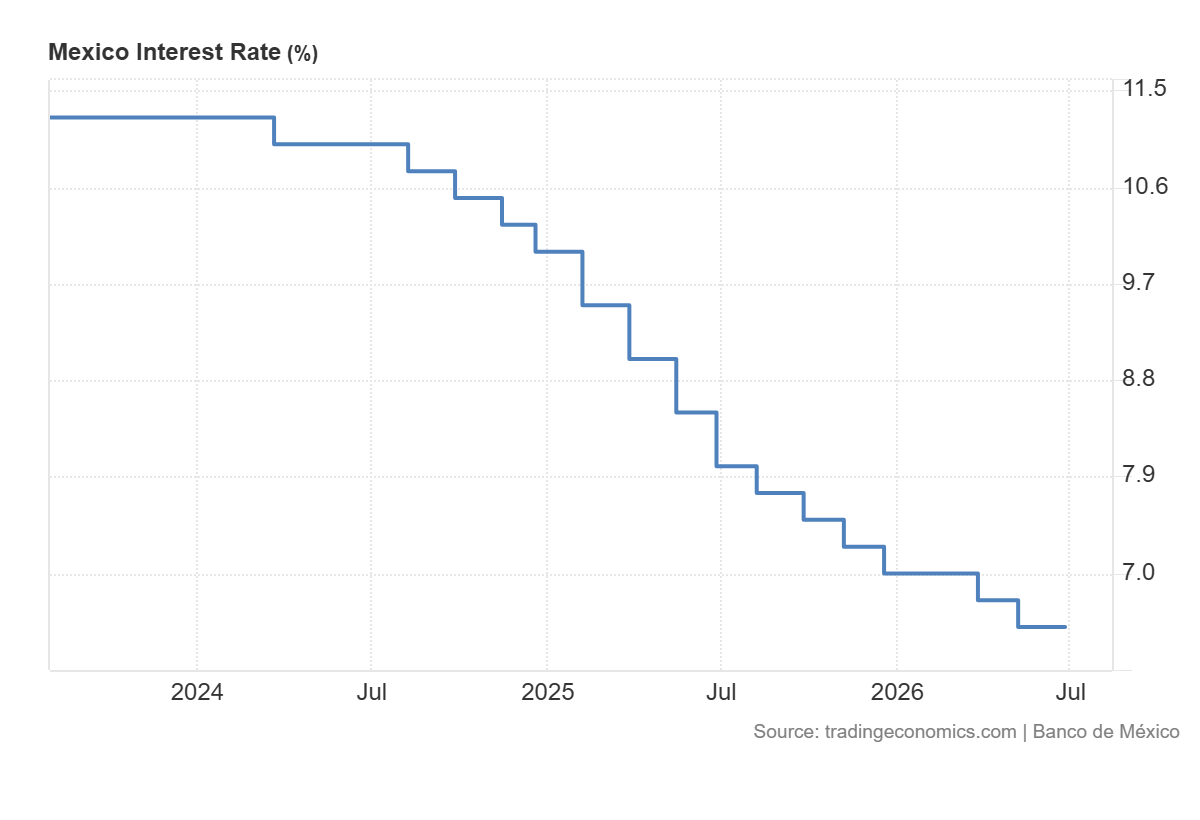
Source: TradingEconomics
Banxico’s more cautious tone may be linked to the recent behavior of inflation in Mexico. Annual inflation has fallen from this year’s peak of 4.59%, while the latest May reading came in at 3.94%. This shows some moderation in inflationary pressures, although inflation remains above the 3.00% target.
For that reason, the current backdrop does not seem to call for new rate hikes in the short term, but it also does not open the door to a steady cycle of additional cuts. This balance partly explains the more cautious stance shown by the central bank in its latest decision.
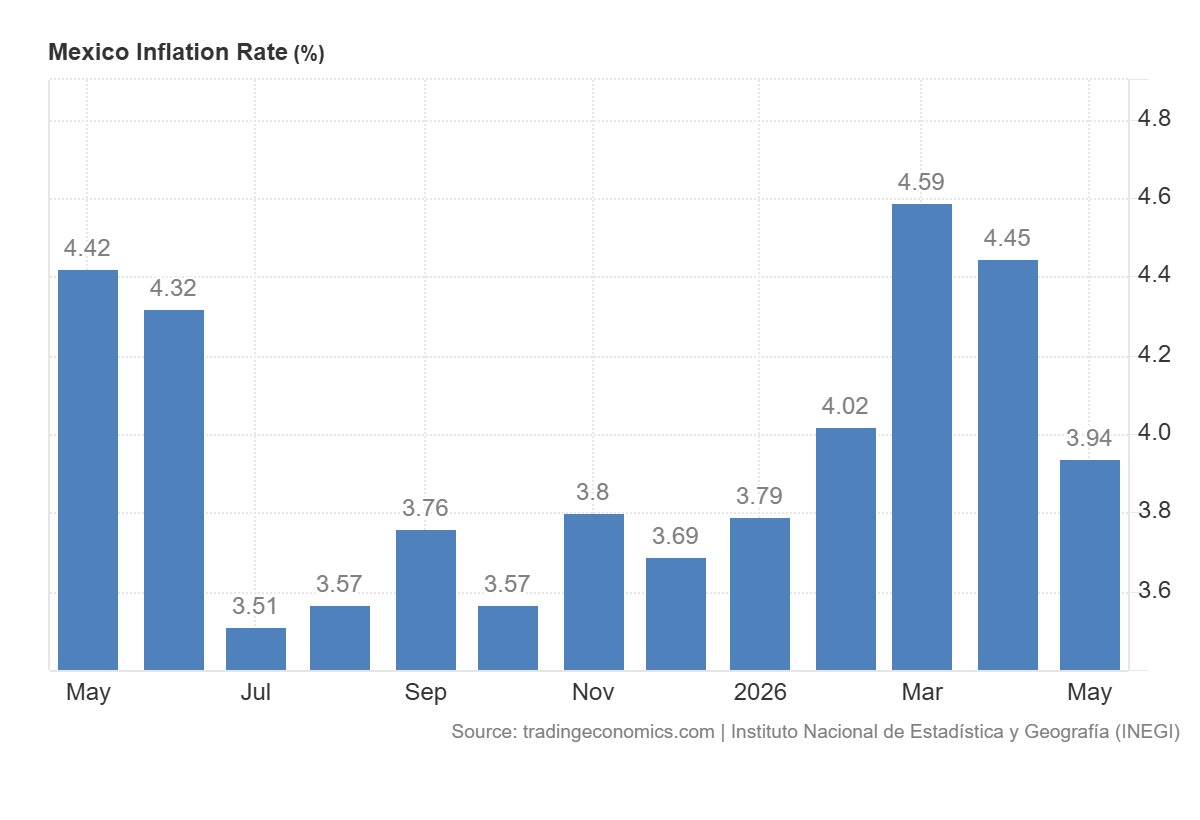
Source: TradingEconomics
In the short term, the absence of new rate cuts could bring back some appeal to the Mexican peso, as Mexico’s interest rate remains high compared with the United States. However, this advantage may not be strong enough over the medium term. Looking at recent moves in Mexican bonds, yields fell by around 0.45% after the decision, dropping below 9.00%. In contrast, US 10-year Treasury yields have shown more stability around the 4.4% area.
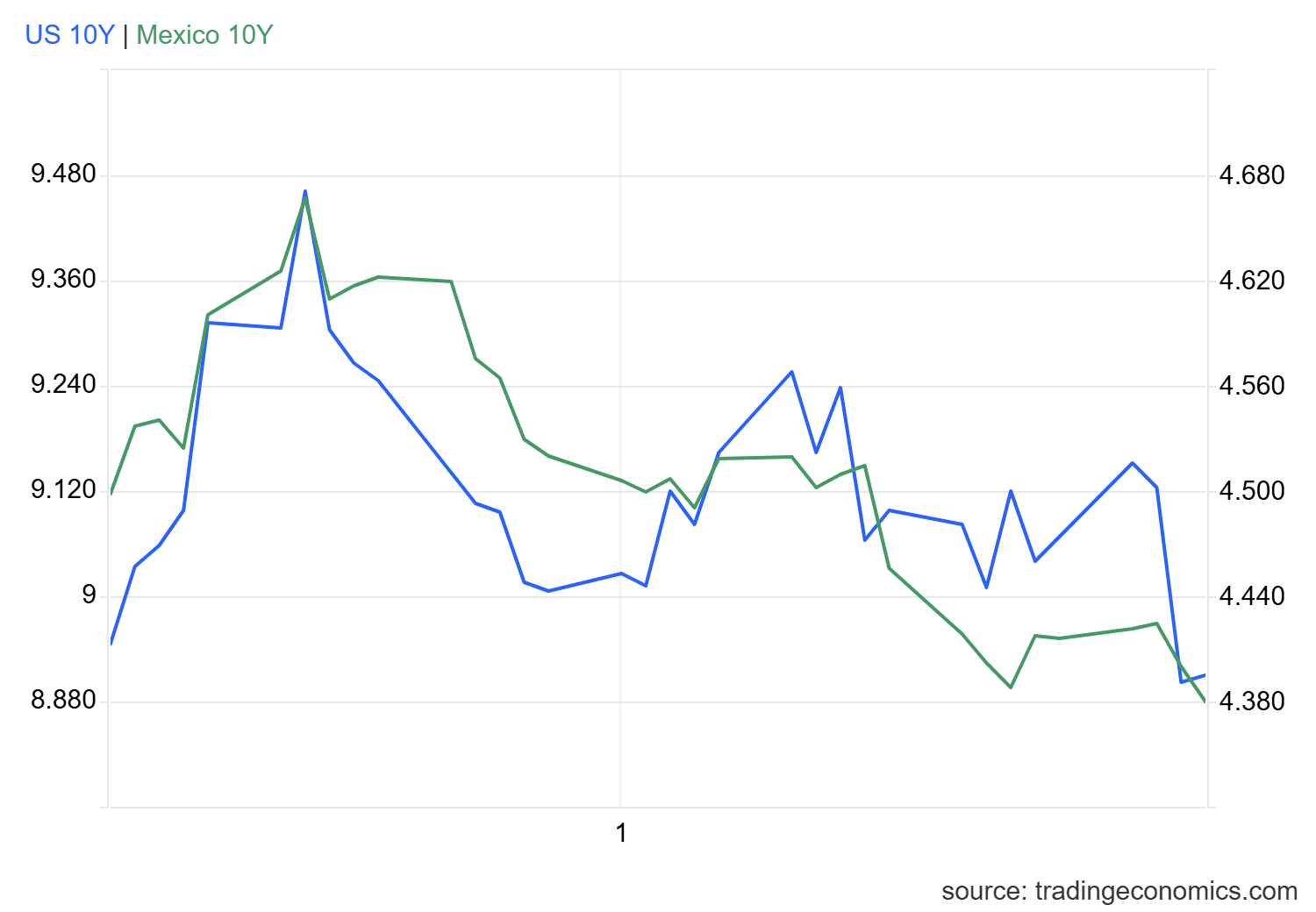
Source: TradingEconomics
This is important because the rate differential was one of the factors that, in previous months, helped the Mexican peso hold up better against the US dollar. However, that dynamic now appears to have stalled. Although rates in Mexico are still higher, dollar-denominated assets are perceived as safer, which also supports the appeal of the USD.
At the same time, markets are starting to price in the possibility that the Federal Reserve could raise rates over the coming months, while Banxico maintains a neutral stance. This difference in expectations could reduce part of Mexico’s rate advantage and limit a stronger recovery in the peso. Still, Mexico’s elevated rates could also prevent the dollar from becoming fully dominant. For now, the dynamic between both central banks could continue to point to a phase of greater indecision in USD/MXN over the next few weeks.
Technical outlook for USD/MXN
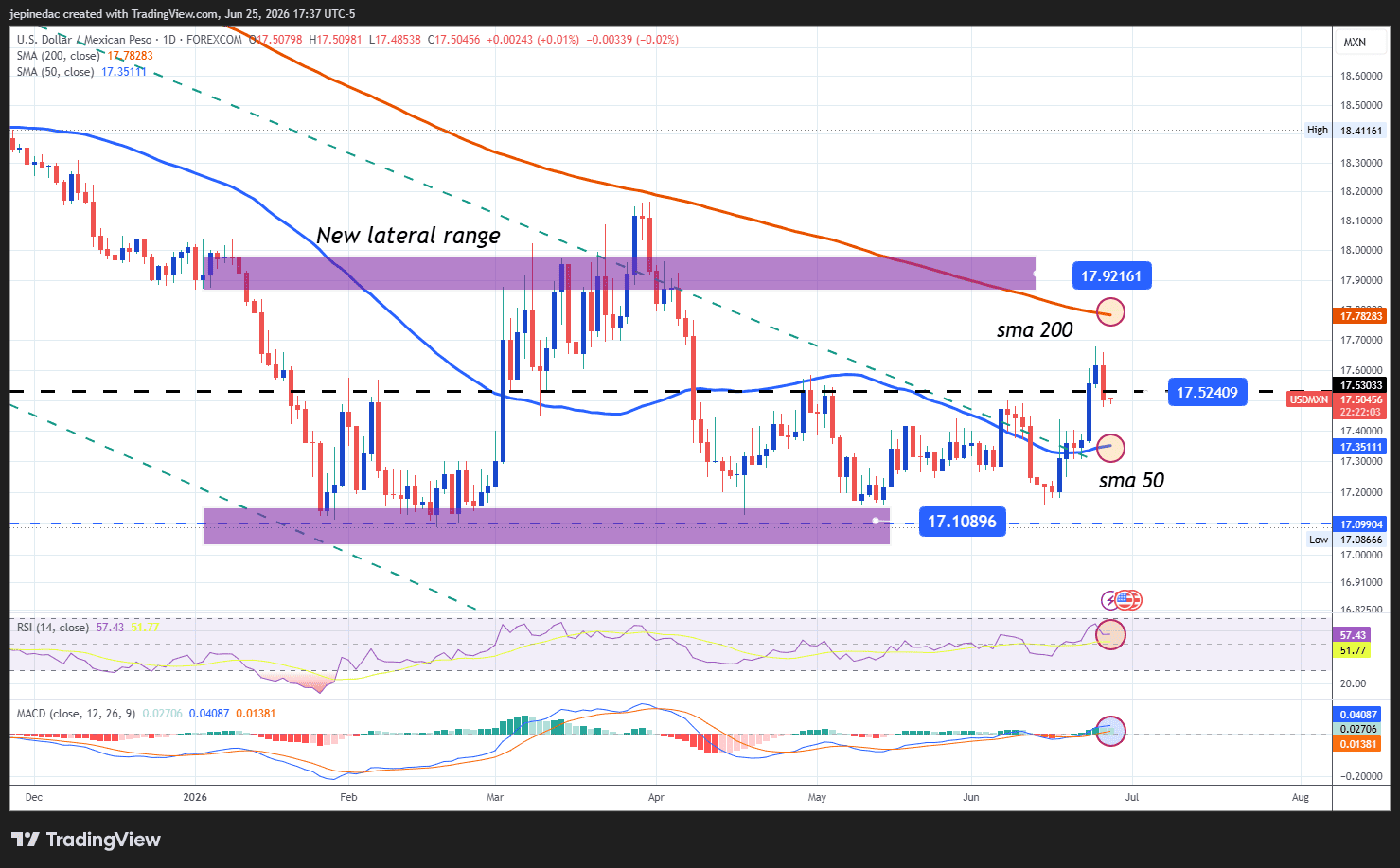
Source: StoneX, Tradingview
- A sideways range starts to gain relevance: Since February 2026, USD/MXN has struggled to define a clear direction or consolidate a more structured trendline. So far, price action remains inside an important sideways range, with resistance near 17.92 and support around 17.10. As long as the pair remains within these barriers, it will be difficult to confirm a stronger trend, meaning indecision may remain the dominant technical pattern.
- RSI: The RSI has started to flatten near the 50 neutral area, suggesting a balance between short-term bullish and bearish impulses. This reinforces the idea of a neutral phase on the chart.
- MACD: The MACD is showing a similar reading, with the histogram staying close to the 0 level. This reflects balance in the strength of short-term moving averages and confirms that indecision remains present in USD/MXN price action.
Key levels:
- 17.90 – Main resistance: Recent high area that also coincides with the 200-period simple moving average. Sustained moves toward this zone could mark the start of a more consistent buying bias and open the door to the possible formation of a bullish trendline over the coming weeks.
- 17.52 – Current barrier: Relevant pullback level from recent weeks and an important neutrality zone to watch. If price fails to move far away from this level, the phase of indecision could strengthen and the sideways range could extend over the medium term.
- 17.10 – Relevant support: 2026 low area and the main downside barrier for now. Moves toward this level could bring selling pressure back into focus and open the door to a continuation of the descending channel that had been the dominant structure in previous months.
Written by Julian Pineda, CFA, CMT – Market Analyst
Follow him on: @julianpineda25






Web Trader platform
Our sophisticated web-based platform is packed with features.
Open an account today
Experience award-winning platforms with fast and secure execution.
Economic calendar
Related articles

Euro Short-term Outlook: EUR/USD Pullback Nears Pivotal Uptrend Support 8 28 2026
Warsh's comments accelerated the EUR/USD selloff, raising the stakes as buyers look to stabilize the broader recovery.


EUR/USD forecast: All eyes on Warsh at Jackson Hole - Forex Friday
For much of this week, the EUR/USD has been edging lower with the US dollar regaining some ground after last week’s sell-off that was triggered, in part, by the bond market worries. Investors have been unwilling to bet further against the US dollar so far this week ahead of Kevin Warsh’s keynote speech at the Jackson Hole summit, due later today.


AUD/CAD breakout puts the Bradman barrier in sight
A bullish breakout has pushed AUD/CAD to its highest level since early 2021. Whether it can clear 0.9994 may determine if the move extends well above parity.
